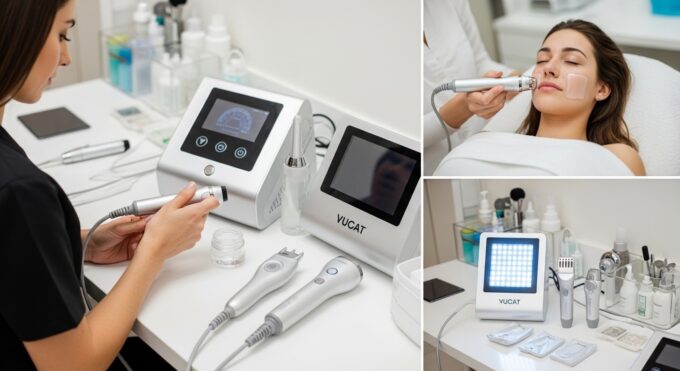
Researched overview. This guide is based on published dermatology guidance and device evidence, not on hands-on product testing by BeautyKob. No product in this guide was tested by us, and no product is recommended.
Table Of Content
- Quick answer
- What a face machine is
- Microcurrent machines
- Radiofrequency (RF) machines
- LED light therapy devices
- Ultrasonic and vibrational devices
- Combination machines
- What the evidence shows — honestly
- What no machine can do
- The foundation that matters more
- Choosing a machine
- Using it safely
- Cleaning and storage
- Home vs professional
- When to see a dermatologist
- Summary
Quick answer
No face machine removes wrinkles. That is the honest starting point for this whole guide. What at-home machines can do, at best, is soften the look of fine lines a little, make skin feel firmer for a while, and keep the surface in good condition — if they are used regularly for weeks, and if the rest of the routine is right.
The evidence is thin and device-specific: small studies, modest results, and no proof that any home device gives lasting wrinkle removal. Sunscreen and retinoids do more for wrinkles than any machine in this guide, and they cost far less. A machine is an optional add-on to a good routine, not a replacement for it.
This guide explains what each kind of face machine is, what the evidence actually shows, what each one cannot do, and how to use one safely if you decide to. It is general information, not medical advice.
Contents: What a face machine is · Microcurrent · Radiofrequency · LED light therapy · Ultrasonic · Combination machines · What the evidence shows · What no machine can do · The foundation that matters more · Choosing a machine · Using it safely · Cleaning and storage · Home vs professional · When to see a dermatologist
What a face machine is
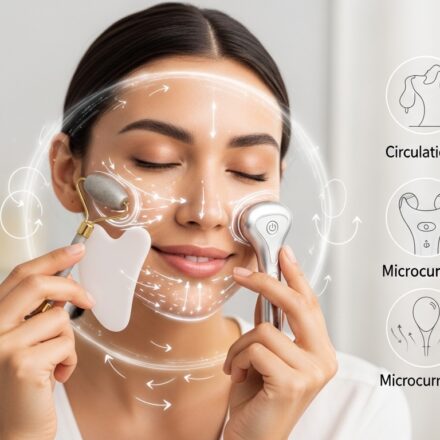
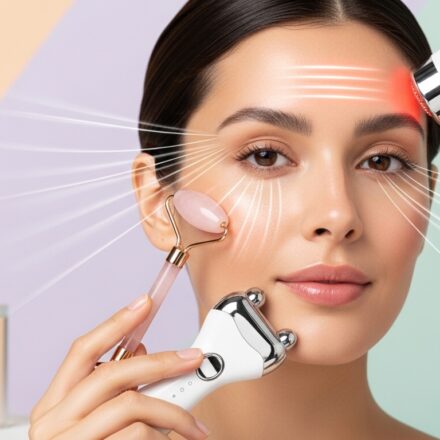
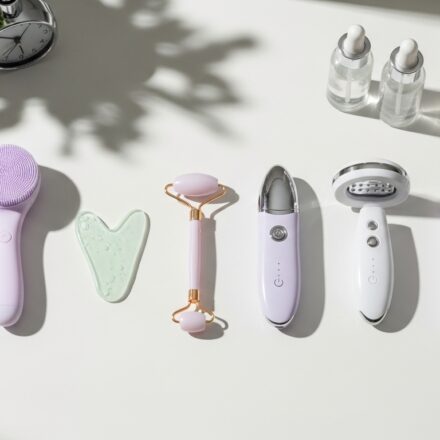
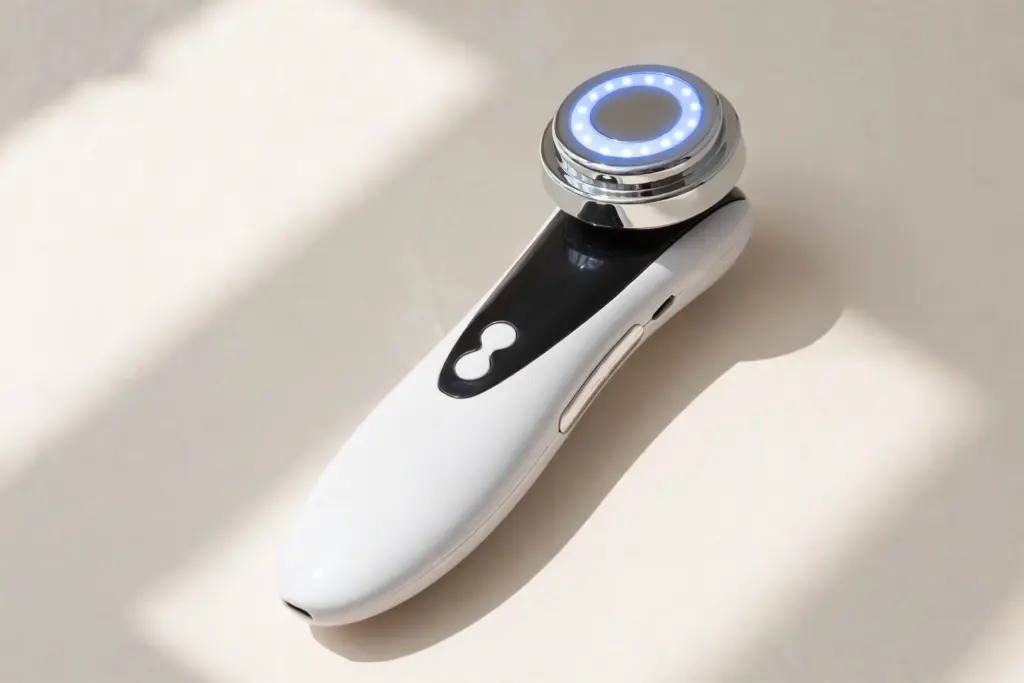
A face machine is a powered device made to improve the look of skin — usually fine lines, firmness or texture. Home machines come in handheld form; professional versions are larger, stronger, and used by trained operators. The four main technologies are microcurrent, radiofrequency (RF), LED light therapy, and ultrasonic vibration. Combination machines put two or more of these in one device.
The important distinction is power. Home machines run at much lower energy than professional equipment, and they include safety features to reduce the risk of burns, pigment changes and scarring. Lower energy means lower risk — and lower, slower results. Any claim that a home machine matches a clinic treatment is not supported by the evidence.
Microcurrent machines
Microcurrent machines send low-level electrical currents through the skin to stimulate the facial muscles, giving a temporary lifted look — the muscles tighten briefly, so the face looks more defined for a few hours.
The evidence is limited to small studies, and the benefits are modest and temporary. A few small trials have found improved firmness and reduced wrinkle appearance after weeks of regular use, but the results are subtle, they need ongoing use to maintain, and they do not compare with in-office treatments. Microcurrent does not build lasting collagen, does not replace sunscreen or retinoids, and is not a substitute for botulinum toxin, which has approved evidence for specific wrinkle types.
Use it only on clean, healthy skin, with the conductor gel the manufacturer requires, starting at the lowest intensity. Never use it on broken, inflamed or sunburnt skin. If you have a pacemaker or other implanted electronic device, ask your doctor before using any electrical facial device.
Radiofrequency (RF) machines
RF machines pass an alternating current through the skin, where tissue resistance turns it into heat in the deeper layers. The heat denatures some existing collagen and triggers a wound-healing-like response that builds new collagen over weeks. That is the real mechanism — and it is also why RF needs respect: too much heat burns.
Home RF has the best evidence of the powered technologies in this guide, and it is still modest. Some home RF devices produced measurable improvements in wrinkles, texture, firmness or dermal thickness in small clinical studies — the best-studied are NEWA and TriPollar STOP — but the studies were short, the results were usually modest, the evidence is device-specific (a study of one device proves nothing about another), and a 2026 scoping review graded home RF for rejuvenation as moderate evidence only. Combination devices are especially hard to judge: if a device uses RF plus red light, microcurrent or a cream, no study can tell how much of the result came from the RF.
One distinction matters: RF microneedling is not at-home RF. RF microneedling delivers radiofrequency energy through needles inserted into the skin. In October 2025 the FDA issued a safety communication documenting burns, scarring, fat loss, disfigurement and nerve damage from RF microneedling, and stated plainly that it is “a medical procedure, not a cosmetic treatment.” Do not confuse the two, and do not attempt anything needle-based at home.
For at-home RF: use it only as the manufacturer directs, start at the lowest setting, never use it on broken or inflamed skin, and stop if you feel pain, see blistering, or the skin stays red. If you are pregnant, ask your doctor first.
LED light therapy devices
LED devices shine specific wavelengths of light onto the skin. Red and near-infrared light (roughly 630–850 nm) is the wavelength range used for ageing skin; blue light is used for acne.
Of all the technologies in this guide, red and near-infrared LED has the strongest evidence: studies have found increased collagen and reduced signs of ageing with regular use over 8–12 weeks. The effects are still modest and gradual — smoother-looking skin and slightly better tone, not wrinkle removal — and they fade if use stops. LED is the gentlest powered option, which is why it suits the most skin types, including sensitive skin. It is still maintenance, not treatment.
Never look directly into a bright LED device, and do not use it near the eyes. If you take a medicine that increases light sensitivity, ask your doctor first.
Ultrasonic and vibrational devices
Ultrasonic devices use high-frequency vibration to loosen debris and exfoliate the surface. They clean more evenly than hands alone and can make skin feel smoother. They do not push serums deeper into the skin — there is no good evidence that any tool increases how much product the skin absorbs — and they do not lift or firm skin.
Vibrational devices are sometimes sold with lymphatic-drainage claims. There is no good evidence that vibration drains lymph or changes skin structure. Treat these devices as a gentle cleansing and exfoliating aid, not as an anti-ageing treatment. Use light pressure, short sessions, and stop if the skin reddens or stings.
Combination machines
Many modern machines combine two or more technologies — microcurrent and RF, or ultrasonic and LED — in one device. The idea is to address several concerns in one session. The problem is evidence: a study of a combination device cannot tell which technology did the work, so combination machines are harder to judge than single-technology ones. They are also easier to overuse, because each technology adds stimulation. If you use one, follow the manufacturer’s sequence, start at the lowest settings, and do not stack extra sessions hoping for faster results.
What the evidence shows — honestly
Pulling the four technologies together:
- LED (red/near-infrared): the best-evidenced of the group; modest, gradual improvement in fine lines and tone over 8–12 weeks of regular use.
- Home RF: some devices showed measurable improvements in small studies; results modest, short studies, device-specific; moderate evidence overall.
- Microcurrent: small studies, modest and temporary lifting; needs ongoing use; no lasting structural change shown.
- Ultrasonic/vibrational: gentle cleansing and exfoliating aid; no evidence of lifting, firming or increased absorption.
A 2026 review of at-home skin devices (Layne and Weiser, Facial Plastic Surgery) found the same pattern across all of them: evidence comes mostly from small clinical studies, results are generally more gradual and less pronounced than in-office treatments, and many devices are cleared by the FDA — which means they meet safety standards for their stated use, not that they work as well as their marketing claims.
What no machine can do
- Remove wrinkles. No home machine completely removes wrinkles. The honest claim is a modest, temporary softening of fine lines.
- Replace a facelift or professional treatment. Deep wrinkles and severe sagging need professional care.
- Work without consistency. Results, where they exist, come from weeks of regular use — and fade when use stops.
- Replace sunscreen or retinoids. Sunscreen is the single most effective anti-ageing step there is (Hughes et al. 2013). Retinoids are the strongest topical for fine lines: they take 3–6 months, should be started slowly (two or three nights a week, pea-sized amount), and must not be used in pregnancy. A machine used on skin that is not protected from the sun is wasted effort.
- Work on damaged skin. No device should be used on broken, inflamed, sunburnt or infected skin, or during a rosacea or eczema flare.
The foundation that matters more
Before spending money on a machine, the routine underneath it should be right:
- Sunscreen every morning. Broad-spectrum SPF 30 or higher, reapplied every two hours when outdoors. The American Academy of Dermatology recommends this daily, including on cloudy days.
- A gentle cleanser. Lukewarm water, a mild fragrance-free cleanser, fingertips only, pat dry.
- A moisturiser. It keeps the barrier intact, which is what makes skin look and feel better.
- A retinoid, if your skin tolerates it. The strongest topical for fine lines — start slowly, expect 3–6 months, and do not use it in pregnancy.
- Patience. Skin changes slowly. Any product or device promising visible change in days is promising more than the evidence supports.
Choosing a machine
- Check the clearance and the claim. Look for FDA clearance (or the equivalent in your country) and read its stated intended use. Clearance is about safety and intended use. At-home RF devices are typically cleared for narrow, modest claims such as “temporary improvement in the appearance of fine lines and wrinkles” — not “non-surgical facelift”. A device whose box promises far more than its clearance covers is overselling.
- Look for device-specific evidence. A study of one named device does not prove that a different device works. If the manufacturer cannot point to a study of its own device, treat its claims as unproven.
- Start simple. One technology, adjustable intensity, removable or washable attachments. A combination machine is harder to judge and easier to overuse.
- Check the practical details. How long is a session? How often? What does it need (conductor gel, replacement heads)? What is the warranty, and are replacement parts available? A device you cannot maintain is a device you will stop using.
- Do not choose by price. Expensive machines are not automatically better, and cheap unbranded devices may lack safety testing. A mid-range device with clearance and a study behind it beats a costly one with neither.
No recommendation is made here. No device in this guide is named, ranked or recommended, and no price is stated — because the evidence does not support picking a winner.
Using it safely
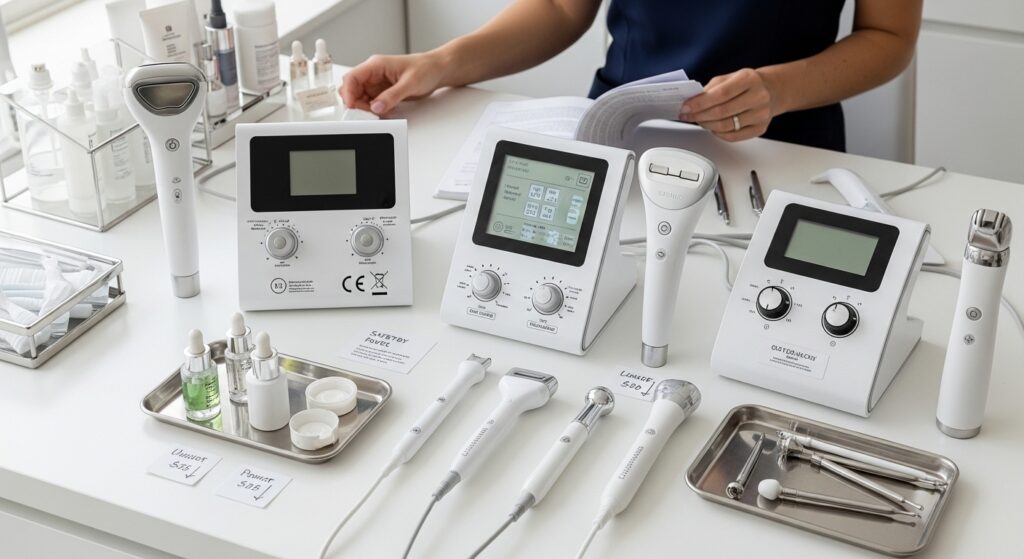
- Start with clean skin. Lukewarm water and a gentle cleanser. Do not use a machine over makeup or sunscreen.
- Apply conductor gel or serum only where the manufacturer requires it. Microcurrent needs it; other devices may not.
- Start at the lowest intensity. Increase only if your skin stays comfortable.
- Follow the manufacturer’s duration. Most home sessions are a few minutes per area. Longer is not better — it only adds irritation.
- Use slow, gentle movements. Lift upwards and outwards, or glide — never press hard or hold the device still in one place.
- Do not combine devices in one session when starting out. One device at a time, so you know what caused any reaction.
- Patch test any new product first. Apply a small amount to a quarter-sized patch of skin on the inside of your arm or the bend of your elbow, twice a day for 7 to 10 days. The American Academy of Dermatology recommends this length because allergic reactions can take several days to appear, and a 24-hour test can miss them.
- Stop and get advice if you get persistent redness, stinging, blistering, swelling or pain, or if the skin does not settle in a few days.
Do not use any face machine if you: have a pacemaker or other implanted electronic device (ask your doctor first); are pregnant (ask your doctor first, especially for RF); have broken, inflamed, sunburnt or infected skin; have a skin condition such as eczema, rosacea or psoriasis that is flaring; or take a medicine that increases light sensitivity (ask your doctor first, especially for LED).
Cleaning and storage
A face machine touches your face every time you use it, so a dirty machine puts oil, dead skin and product residue back onto clean skin.
- Wipe the treatment head after every use with a soft cloth. Microcurrent and RF heads can be wiped with a cloth dampened with 70% isopropyl alcohol. Do not wet the main body — water damages the electronics.
- LED panels: wipe with a dry microfibre cloth. Do not use harsh chemicals or abrasive materials.
- Ultrasonic spatulas: wipe the metal head with a mild soap solution, then dry fully.
- Let everything dry fully before storing. Do not store a damp device in a closed case.
- Store in a dry, ventilated place. Do not keep electronic devices in a damp bathroom. A dry shelf or a storage bag in a bedroom is better.
- Check regularly for worn heads, frayed cords or loose parts. A damaged device should be repaired or replaced, not kept in use.
Home vs professional
Home machines are accessible, affordable and convenient — and weaker, slower and more limited than professional equipment. That is the trade: lower risk and lower cost for modest, gradual results.
Professional treatments are the better choice when: wrinkles are deep or sagging is severe; you want a visible change rather than maintenance; you have a skin condition that needs assessment; or you have tried a home device consistently for months with no result. A dermatologist or trained esthetician can assess your skin and choose a treatment that fits it — including options a home device cannot offer.
The best approach for most people is a hybrid: a good daily routine (sunscreen, retinoids, moisturiser) plus a home device used gently and regularly, with professional care when a real change is wanted.
When to see a dermatologist
See a dermatologist promptly if: a mole has changed shape, colour or size; a sore does not heal; a rash, blister or open sore keeps coming back; your skin is persistently red, painful or blistering after using a device; or your acne is deep, painful or scarring. A dermatologist can diagnose the cause and prescribe treatment that no home device can provide.
Summary
No face machine removes wrinkles. LED has the best evidence of the home technologies, home RF has modest device-specific evidence, microcurrent gives a modest temporary lift, and ultrasonic devices are a gentle cleansing aid — and none of them replaces sunscreen or retinoids, which do more for wrinkles than any machine. Check FDA clearance and read its stated intended use, look for a study of the actual device, start at the lowest intensity, never use a machine on broken or inflamed skin, and clean it after every use. RF microneedling is a medical procedure, not a cosmetic treatment — do not confuse it with at-home RF. If you want a visible change rather than maintenance, see a professional.
Sources: American Academy of Dermatology, 7 Rosacea skin care tips (patch-test method: apply a new product to a quarter-sized patch of skin on the inside of the arm for 7–10 days); American Academy of Dermatology, How to select anti-aging skin care products (broad-spectrum sunscreen, SPF 30 or higher every morning, reapply every two hours outdoors). This is a researched overview, not a hands-on review.