Researched overview. This guide is based on published dermatology guidance, not on hands-on product testing by BeautyKob. No product in this guide was tested by us.
Table Of Content
- Quick answer
- What “affordable” and “beginner-friendly” actually mean
- The starter kit: what to buy first
- Face tools for beginners
- Silicone cleansing brushes
- Soft-bristle cleansing brushes
- Face rollers
- What to skip for now: extractors
- Hair tools for beginners
- Wide-tooth combs and detangling brushes
- Scalp massagers
- Microfibre hair towels
- Heat: keep it low while you learn
- Body tools for beginners
- Silicone body scrubbers and loofahs
- Foot and hand care tools
- What not to buy yet
- How to judge a cheap tool before you buy it
- A simple daily routine with the starter kit
- Cleaning and storing tools on a budget
- Mistakes beginners make, and how to avoid them
- When and how to upgrade
- Patch test first
- Frequently asked questions
- When to get help
- The bottom line
Quick answer
You do not need expensive equipment to start a beauty routine. A small starter kit of three to five simple tools — a silicone cleansing brush, a wide-tooth comb, a microfibre hair towel, a soft face towel and a headband — covers most of what a beginner needs for face, hair and body. Buy those first, learn to use them gently and keep them clean, and add anything else only when you know what problem it would solve.
Tools do not replace products, and they do not do the work for you. They help with cleaning, detangling and application — and they can harm skin and hair if they are used too hard, too often, or while dirty. The rules that matter most are simple: light pressure, clean tools, and the right tool for your skin and hair type.
What “affordable” and “beginner-friendly” actually mean
Cheap does not mean poor quality, and easy to use does not mean useless. An affordable tool is one that fits a modest budget, lasts a long time with proper care, needs no special skill to use, and does not need an expensive replacement. A beginner-friendly tool is one that is forgiving: it is gentle, simple, and hard to get badly wrong on the first try. It does not depend on heat, high pressure, or a complicated technique.
When you are new to beauty care, your skin and hair are still getting used to your habits. Starting with simple tools means your routine stays calm while you learn what your skin and hair actually respond to. That is more useful than a drawer full of devices you do not understand yet.
The starter kit: what to buy first
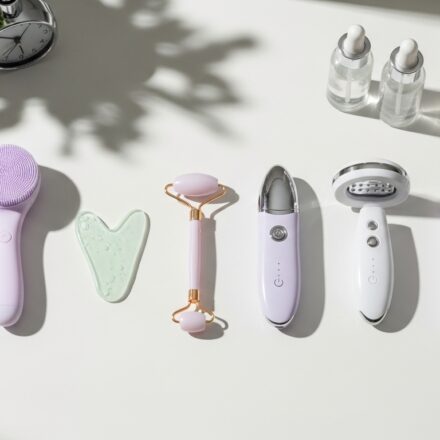
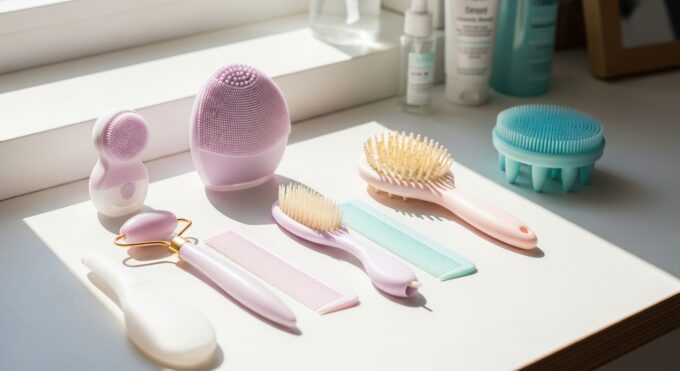
You do not need many tools to start. Three to five simple tools cover face, hair and body:
- A silicone cleansing brush. Soft, easy to wash, and gentle enough for daily use with a mild cleanser.
- A wide-tooth comb. The safest choice for detangling damp hair.
- A microfibre hair towel or wrap. Dries hair with less friction and frizz than an ordinary cotton towel.
- A soft face towel and a headband. They keep the face clean and the hair out of the way while you wash or apply products.
- A basic nail set. A clipper, a file and a cuticle pusher.
That is the whole starter kit. Everything else in this guide is an optional extra, not a requirement.
Face tools for beginners
Silicone cleansing brushes
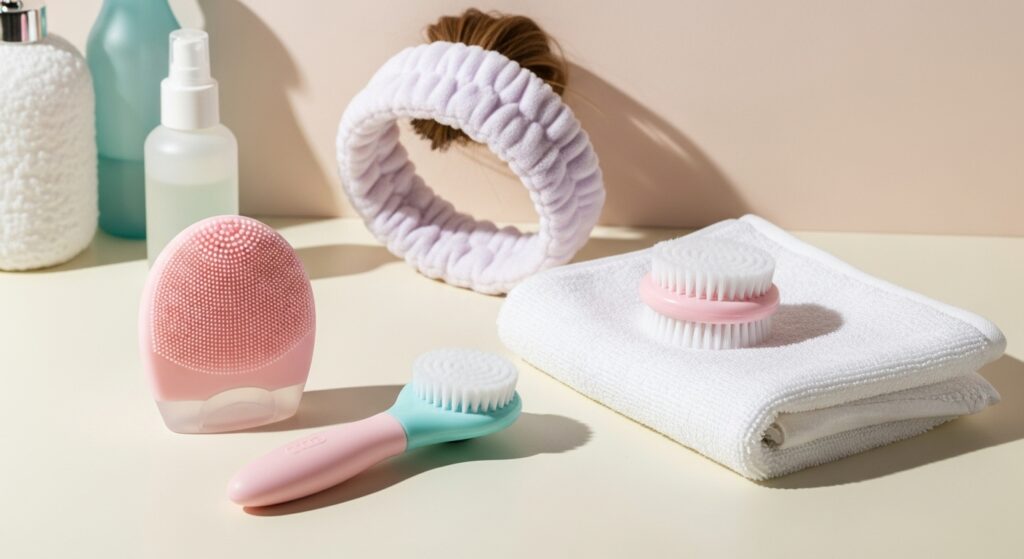
A silicone cleansing brush is one of the safest first tools. The soft silicone tips do not scratch the skin, the brush is easy to wash, and it is gentle enough to use every day with a mild cleanser. It helps lift away the day’s residue — oil, sunscreen and pollution — that hands alone can leave behind. Use it with lukewarm water and a gentle cleanser, in slow circular movements, and let the tool do the work. Do not press hard.
Soft-bristle cleansing brushes
A soft-bristle brush cleans a little more deeply than silicone. It can help if your skin feels rough or dull, but it needs more care: use it once a day at most, with light pressure, and stop if your skin feels sore or looks red. Hard bristles are not for beginners — they can irritate the skin and damage the skin barrier. Soft bristles are enough to remove dead surface cells without irritation.
Face rollers
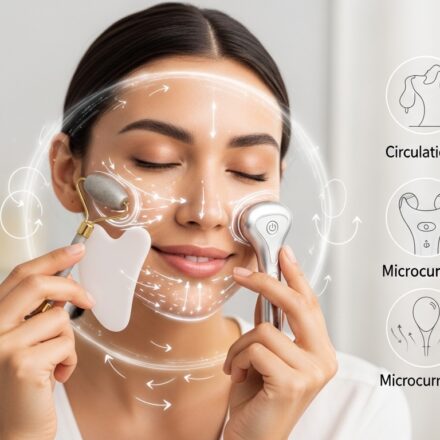
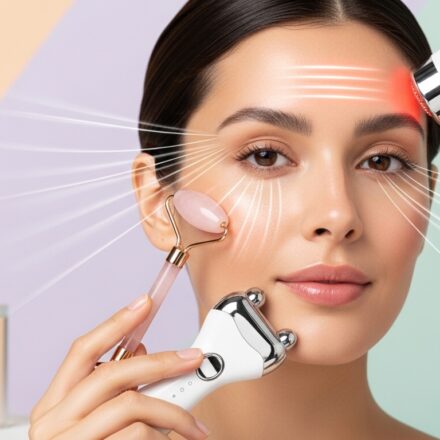
A face roller is a simple, inexpensive massage tool. A cool roller can feel soothing and can temporarily reduce the look of puffiness. There is no good evidence that rollers drain lymph, firm skin, or change skin structure — treat the roller as a pleasant, optional step, not a treatment. Use light pressure, glide outward from the centre of the face, and never pull hard, especially around the under-eye area, where the skin is thinnest. A roller kept in the fridge feels cooler and can help the soothing effect.
What to skip for now: extractors
A comedone extractor can help with a blackhead, but used wrongly it can cause scarring. The dermatology guidance is simple: do not pop a pimple. Beginners should leave extractors alone until they are confident about gentle technique, softened skin and sterilising the tool before and after use. Pores have no muscles and cannot open or close — steam and warm water soften the skin around them, they do not open them.
Hair tools for beginners
Wide-tooth combs and detangling brushes
The wrong brush can cause breakage, frizz and hair fall. A wide-tooth comb is the safest choice for beginners, especially on damp hair, and it suits most hair types, including curly and wavy hair. A detangling brush is designed to slide through knots without tugging. Wet hair is more fragile than dry hair, so detangle damp hair with conditioner in it, starting at the ends and working upward, and never detangle dry hair roughly.
Scalp massagers
A manual scalp massager used during shampooing can help spread shampoo evenly, feels relaxing, and can help with a dry scalp. The evidence that scalp massage grows hair is very thin — the one study often cited had only 9 men and no control group — so treat it as a comfort and hygiene step, not a growth treatment. Use soft circular movements and light pressure.
Microfibre hair towels
An ordinary towel causes friction and frizz. A microfibre towel is softer and causes less breakage, and it is cheap and easy to use. Wrap damp hair gently rather than rubbing it.
Heat: keep it low while you learn
Limit heat tools while you are learning gentle drying habits. If you use a blow dryer, use the lowest heat that gets the job done, keep the dryer about 15 cm from the hair and moving continuously, and apply a heat protectant first. A dryer with temperature control reduces damage, it does not eliminate it.
Body tools for beginners
Silicone body scrubbers and loofahs
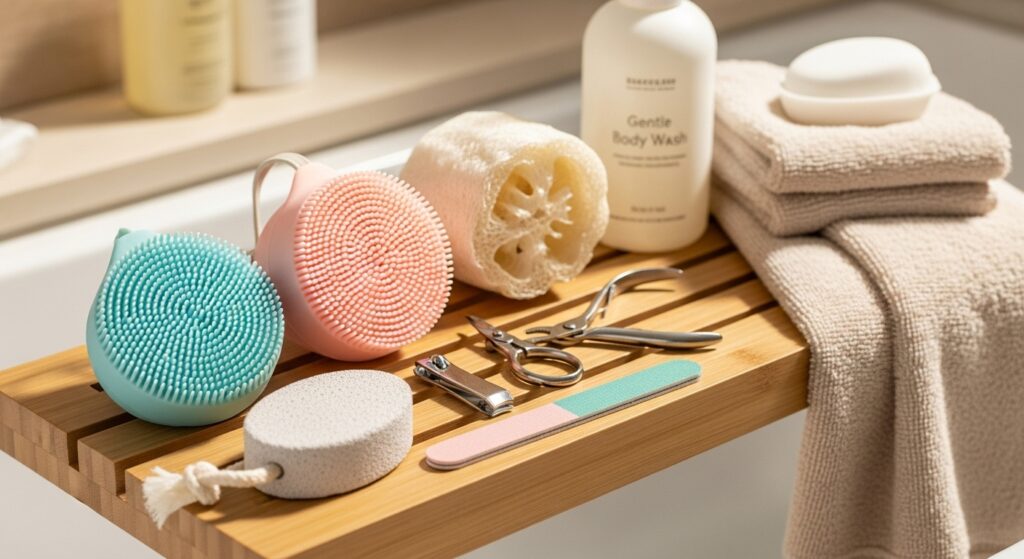
A silicone body scrubber or a soft loofah helps a body wash spread and removes dead surface skin. Silicone scrubbers are easy to wash and are not rough. Use them a few times a week, not every day, and do not scrub hard — aggressive washing can damage the skin barrier.
Foot and hand care tools
Rough feet and hands are a common beginner concern. A pumice stone or foot file removes hard skin, and a nail clipper and nail file keep hands tidy. File in one direction rather than sawing back and forth, clip nails straight across, and push cuticles back gently rather than cutting them. Clean your instruments after use.
What not to buy yet
Some tools need experience and skin knowledge. Beginners should wait before buying:
- Microcurrent devices. They apply a low-voltage current to the face and are marketed as firming, but the evidence for lasting firming is limited and mostly comes from small or manufacturer-run studies. They are not necessary for healthy skin.
- LED therapy devices. Blue light has some evidence for acne; red-light evidence for collagen is limited. They are not a treatment for stubborn acne or early ageing on their own.
- Home microdermabrasion devices. These use fine abrasion or suction to remove surface skin. They are strong tools, not a beginner step, and overuse can slow healing and irritate the skin.
- High-heat styling tools and sharp-edged tools. These cause the most damage when used without experience.
Waiting avoids harm and builds confidence. The foundation is made by low-cost tools; advanced tools come later, if at all.
How to judge a cheap tool before you buy it
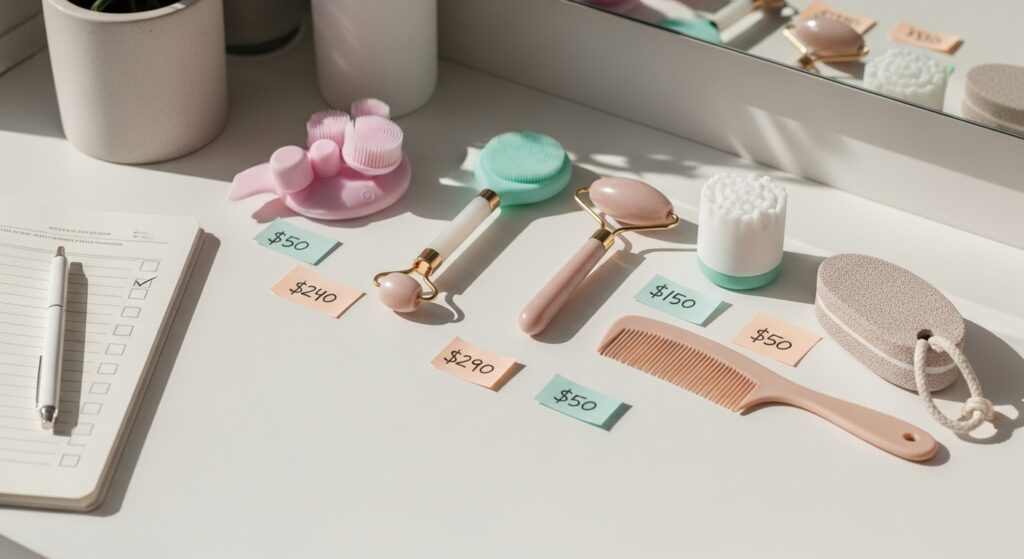
Before buying any tool, ask one question: what problem will this tool solve right now? If you cannot answer clearly, wait.
A few practical checks help:
- Feel it first if you can. Edges should be smooth, with no rough seams or sharp points that could scratch skin.
- Check the material. Silicone and smooth stone are easy to wash; rough or porous materials trap dirt and are harder to keep clean.
- Check that it can be washed. A tool you cannot clean properly will become a source of irritation, not a help.
- Ignore promises of dramatic results in a short time. Slow, steady progress is more plausible and less risky than a quick fix.
- Read reviews about long-term use, not first impressions. A cheap tool that works well for months is better than one that feels exciting for a week.
A simple daily routine with the starter kit
A routine does not need to be long. Consistency matters more than perfection.
Morning (under ten minutes). Wash your face with your hands or a soft silicone brush, using a mild cleanser and lukewarm water. If you use a face roller, use it for one or two minutes after cleansing, with light pressure. Then moisturiser and sunscreen — broad-spectrum SPF 30 or higher, reapplied every two hours outdoors. Detangle your hair gently with a wide-tooth comb, starting at the ends.
Evening. Cleanse again, especially if you have been out in the sun or worn make-up. A soft-bristle brush can help here, but hands are fine for sensitive skin. Use a scalp massager during shampooing if you like it, with soft circular movements. Use a silicone scrubber or loofah on the body a couple of times a week, not daily.
Weekly. Use exfoliating or massage tools two or three times a week at most. Use foot and body tools once or twice a week. More is not better — overuse dries the skin and weakens the surface layer.
Cleaning and storing tools on a budget
Tools do not need expensive cleaners. Simple habits work best:
- Wash facial brushes and rollers with mild soap and warm water, rinse well, and let them dry fully before storing.
- Wash hair brushes weekly, removing trapped hair and washing the bristles.
- Wash scalp massagers and body scrubbers after use and leave them to dry.
- Store tools in dry places. Damp storage shortens their life and attracts bacteria.
Dirty tools spread bacteria, which can cause breakouts and irritation — especially for beginners, whose skin is still adjusting. A clean tool works better and lasts longer.
Mistakes beginners make, and how to avoid them
- Using too much pressure. Beginners often think firmer pressure works better. It does not. If your skin turns red or feels painful, stop. Light, steady movements work better in the long run.
- Using dirty tools. Dirty tools spread bacteria and undo the work of a good routine. Clean them regularly.
- Switching tools too often. Chasing every new trend makes it impossible to tell what is actually helping. Stay with a few tools for at least a month and watch how your skin and hair respond.
- Expecting instant results. Inexpensive tools improve touch, comfort and cleanliness over time. They do not change skin overnight. In the first few weeks, the signs you are on the right track are small: skin feels cleaner, hair feels smoother, and your habits feel easier.
Stop and check. If something is wrong, stop. Rest your routine and go back to basics. Beginners often miss the early signs of irritation — learning to notice them is part of learning care.
When and how to upgrade
There is no rush to upgrade. Consider a slightly more advanced tool only when your skin is stable, your simple routine is working, and you can say exactly what the new tool would add. Upgrade as a gradual step, not a leap: keep the foundation tools, add one new tool at a time, and give it a few weeks before judging it. If your hair routine feels ordinary and your skin is calm, that is a good time to try something new — not a reason to buy a whole set at once.
Patch test first
Before you use a new product on your face — including any product used with a tool, such as a cleanser with a brush or a serum with a roller — patch test it. Apply a small amount to a quarter-sized patch of skin on the inside of your arm or the bend of your elbow, twice a day, for 7 to 10 days. If there is redness, itching or swelling, do not use it on your face. A short test of a day or two can miss a reaction that takes several days to appear.
Frequently asked questions
Do low-cost beauty tools work for beginners? Yes. Used regularly and gently, simple tools help with cleansing, detangling and basic care just as well as expensive ones. How you use them matters more than what they cost.
How often should a beginner use beauty tools? Gentle tools such as a silicone brush, a roller or a wide-tooth comb can be used daily. Exfoliating or massage tools should be used two or three times a week at most, to avoid irritation.
How many tools do I need to start? Three to five simple tools are enough to cover face, hair and body. Focus on consistency, not quantity.
How do I clean cheap beauty tools? Wash silicone rollers and brushes with mild soap and warm water, rinse and let them dry fully. Wash hair brushes once a week. Rinse body scrubbers after use and let them dry.
When should I switch to advanced tools? When your simple tools are working well, your skin and hair are stable, and you can say exactly what the new tool would add. Treat upgrading as a small step, not a shopping spree.
When to get help
See a clinician promptly if you have a rash, blisters or open sores; swelling that lasts more than a day or two; pain or vision changes near the eyes; or a reaction to a new product or tool that does not settle after you stop using it. If a skin concern persists despite a steady routine, a dermatologist can identify causes a routine alone will not fix.
The bottom line
You do not need an expensive device or complicated equipment to begin. A few cheap, simple tools — used regularly, gently and kept clean — will improve the condition of your skin, hair and body without costing much. Start small, learn how your skin and hair respond, and build the habit over time. Patience and simplicity are the whole method: the cheapest tools, used well, are the right place to begin.
Sources: American Academy of Dermatology, 7 Rosacea skin care tips (patch-test method: apply a new product to a quarter-sized patch of skin on the inside of the arm for 7–10 days); American Academy of Dermatology, How to select anti-aging skin care products (broad-spectrum sunscreen, SPF 30 or higher, reapply every two hours outdoors). This is a researched overview, not a hands-on review.