Researched overview. This guide is based on published dermatology guidance, not on hands-on product testing by BeautyKob. No product in this guide was tested by us.
Table Of Content
- Quick answer
- What “nourishment” means here — and what it doesn’t
- The skin–hair connection, honestly
- A simple daily routine
- Skin — morning
- Skin — evening
- Hair — morning and evening
- Weekly care
- Skin
- Hair
- Food and drink — what helps and what doesn’t
- Patch test first
- Sleep, stress and seasons
- Choosing products
- Signs to change something
- Frequently asked questions
Quick answer
Skin and hair share the same blood supply, the same nutrients and, in the case of the scalp, the same skin. A good routine for both is therefore mostly one routine: gentle cleansing, moisture, sun protection, and a few weekly extras — plus the ordinary habits that support general health, like eating well, sleeping enough and managing stress.
Food matters, but not in the way this topic is usually sold. A balanced diet gives your body the raw materials it needs. No single food, vitamin or oil grows hair, repairs damage or clears skin. What does the visible work is the routine itself, done steadily.
What “nourishment” means here — and what it doesn’t
Nourishment is the slow part of the routine: keeping the skin barrier intact, keeping hair from breaking, and giving the body what it needs to do its own maintenance. It is not a treatment. If you have a skin condition, heavy shedding, or a scalp problem that does not settle, food and creams are not a substitute for a clinician’s advice.
Three things this guide will not promise:
- No food or supplement in this guide is presented as a treatment for hair loss, acne or ageing.
- No timeline is given for visible results. Skin and hair change over weeks to months, and it varies a lot from person to person.
- Damaged hair cannot be repaired. Conditioners and oils can make it easier to comb and less likely to break, but only trimming removes split ends.
The skin–hair connection, honestly
Skin and hair depend on the same inputs: water, nutrients carried in the blood, and hormones. When one of those is consistently lacking, the effects often show up in both places — dull skin and dry, breakable hair at the same time, for example.
The scalp is skin. The same rules that apply to facial skin apply to it: clean it gently, do not strip it, and protect it from the sun where it is exposed. A dry, tight scalp can make hair feel worse, and a scalp with heavy product build-up can make hair look flat and dull. Washing as often as your scalp needs — not on a fixed schedule — is the practical answer.
A simple daily routine
Keep it short. Three or four steady steps beat twelve inconsistent ones.
Skin — morning
- Cleanse gently. Lukewarm water and a mild, non-foaming cleanser. Avoid hot water and harsh scrubbing. If your skin feels tight after washing, the cleanser is probably too strong.
- Moisturise on damp skin. Apply moisturiser while the skin is still slightly damp. It helps to trap water in better than applying it to dry skin.
- Sunscreen — every morning. A broad-spectrum sunscreen with SPF 30 or higher, as the last step. Sunscreen is the single most effective anti-ageing step in any routine, and it protects the results of everything else you do. Reapply every 2 hours when you are outdoors, or after swimming or sweating.
Skin — evening
- Cleanse lightly. Remove make-up, sunscreen and the day’s dirt with the same gentle cleanser. No drying effect is needed — the aim is clean, not stripped.
- Moisturise. A nourishing cream or a light oil on damp skin to seal in moisture. Night is a practical time for a slightly richer product because you are not layering sunscreen over it — not because skin has a special night-time repair mode.
- One active at a time, if you use one. If you use a retinoid or an exfoliating acid, start slowly (two or three nights a week), use a pea-sized amount, and do not combine strong actives when you are starting out. Do not use retinoids if you are pregnant or trying to become pregnant.
Hair — morning and evening
- Wash as often as needed. There is no single right frequency. Oily, fine or straight hair often needs washing daily or nearly so; dry, curly or coily hair often does well washed every one to three weeks. Wash when the scalp feels oily or dirty, not on a fixed schedule.
- Condition the ends and mid-lengths, not the scalp. Conditioner makes hair easier to comb, which is what reduces breakage.
- Detangle damp hair, ends first. Wet hair is more fragile than dry hair, so never brush it dry to force out tangles. Coat it in conditioner, use a wide-tooth comb, and work from the ends upward.
- Protect at night. A loose braid or a silk or satin pillowcase reduces friction while you sleep. A light oil on the ends can reduce friction too — it does not repair damage or grow hair.
Weekly care
Weekly steps support the daily routine; they do not replace it.
Skin
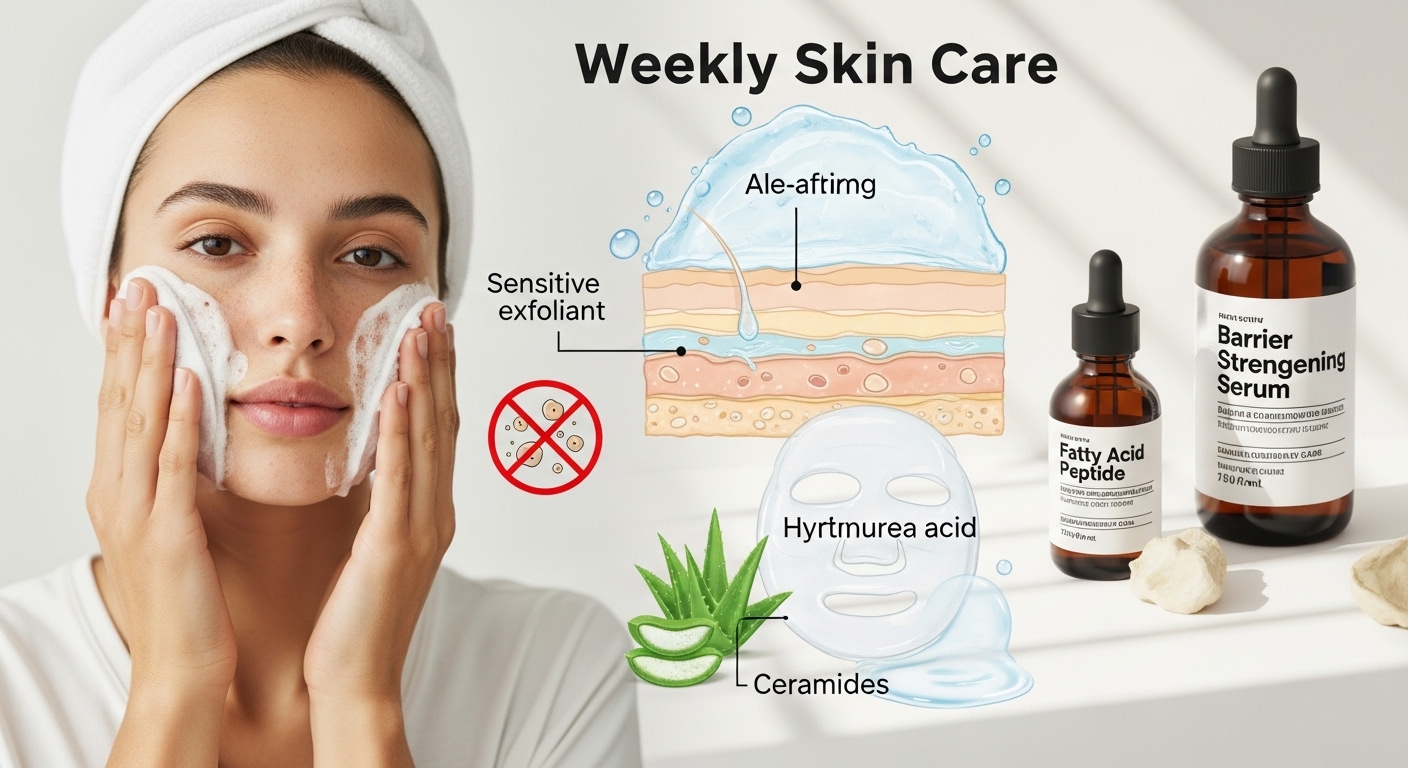
- Gentle exfoliation, once or twice a week. A mild chemical exfoliant or a soft cloth is enough. If your skin feels raw or tight afterward, scale back. Exfoliation helps products sit better on the skin; it does not make them penetrate deeper in a useful way, and overdoing it damages the barrier.
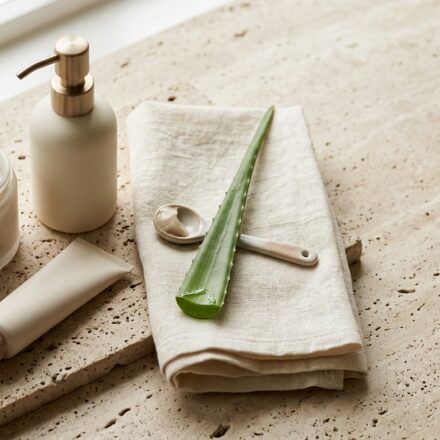
- Hydrating mask, once a week if you like. Ingredients such as aloe vera, hyaluronic acid or ceramides can soothe and hydrate temporarily. A mask is a short-term moisture boost, not a treatment.
- Barrier support. If your skin is dry or sensitive, a moisturiser with ceramides, glycerin or fatty acids helps hold the barrier together.
Hair
- Deep conditioning, once a week. Apply to the ends and mid-lengths, leave it for the time on the label, then rinse. It makes hair softer and easier to comb; it does not rebuild the hair shaft.
- Scalp care. Massage can feel pleasant and helps distribute oils, but there is no good evidence that scalp massage grows hair — the one often-cited study had nine men and no control group. If your scalp is itchy, flaky or sore, that is a scalp problem to get checked, not a massage problem.
- Clarifying wash, only when needed. If products have built up and hair feels coated or dull, a clarifying shampoo used occasionally clears it. It is not a weekly habit for most people.
Food and drink — what helps and what doesn’t
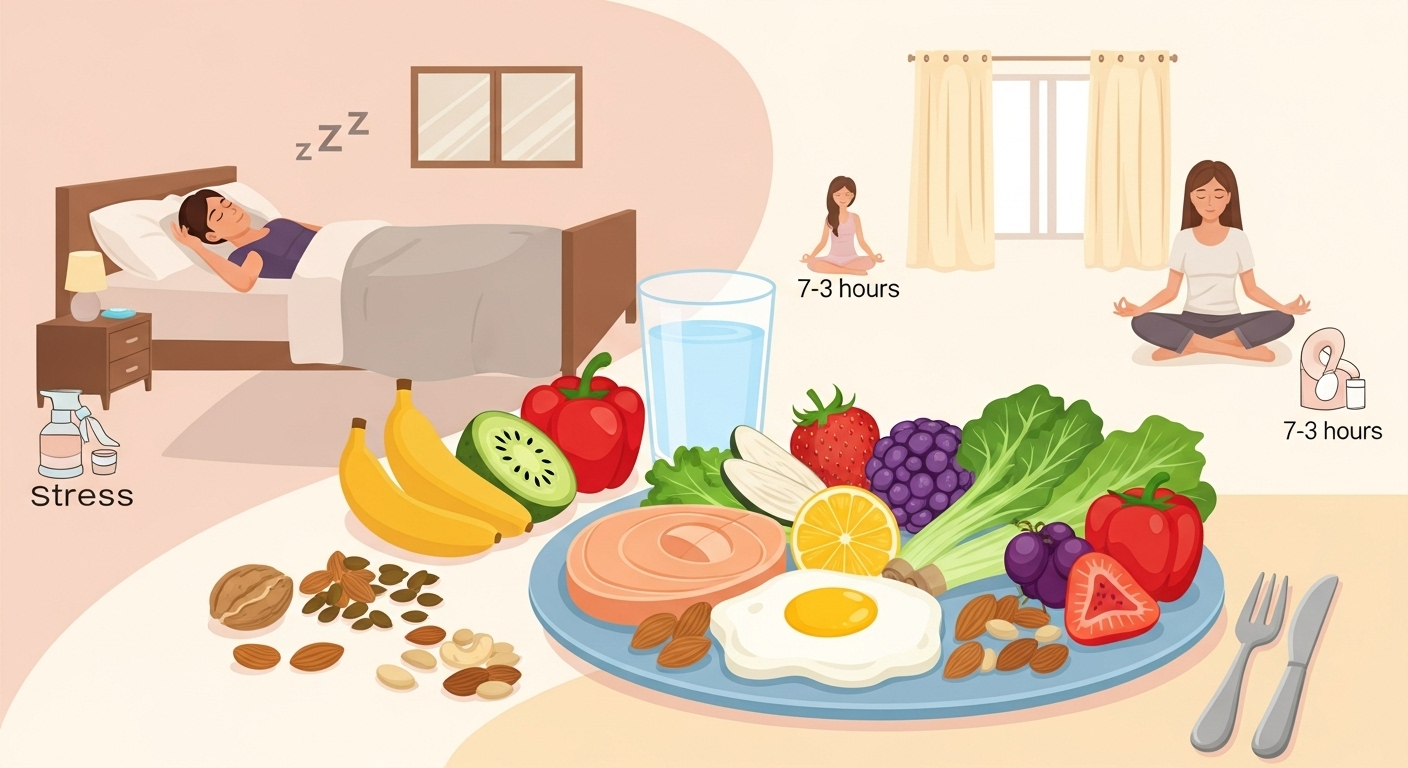
A balanced diet supports general health, and general health shows in skin and hair. That is the honest version of the claim. The details:
- Protein is the building material for skin and hair. Most people eating a normal varied diet get enough. Protein powders and “hair foods” do not add anything extra for hair that is already getting enough protein.
- Vitamins and minerals matter when you are deficient. Vitamin A, vitamin C, vitamin E, biotin and zinc all play roles in skin and hair — but taking more of them does not grow more hair. Biotin is vitamin B7, and there is no good trial showing it helps hair in people who are not deficient. High-dose biotin can also interfere with a heart-attack lab test (troponin), so tell your doctor if you take it. Iron only helps hair when you are iron-deficient, and that needs a blood test first — do not take iron supplements without one. Zinc from food is fine; keep supplement intake below 25 mg a day, because excess zinc blocks copper absorption. Too much vitamin A can itself cause hair shedding.
- Healthy fats from fish, nuts and seeds are part of a balanced diet. Omega-3 supplements have not been shown to grow hair or treat skin.
- Water is essential for health, but there is no good evidence that drinking extra water makes skin more elastic or hair stronger. Drink when you are thirsty and keep a normal intake.
- No single food treats a skin or hair condition. If a diet claims to cure acne, eczema or hair loss, it is selling something. Diet can support overall health; it is not a treatment.
Patch test first
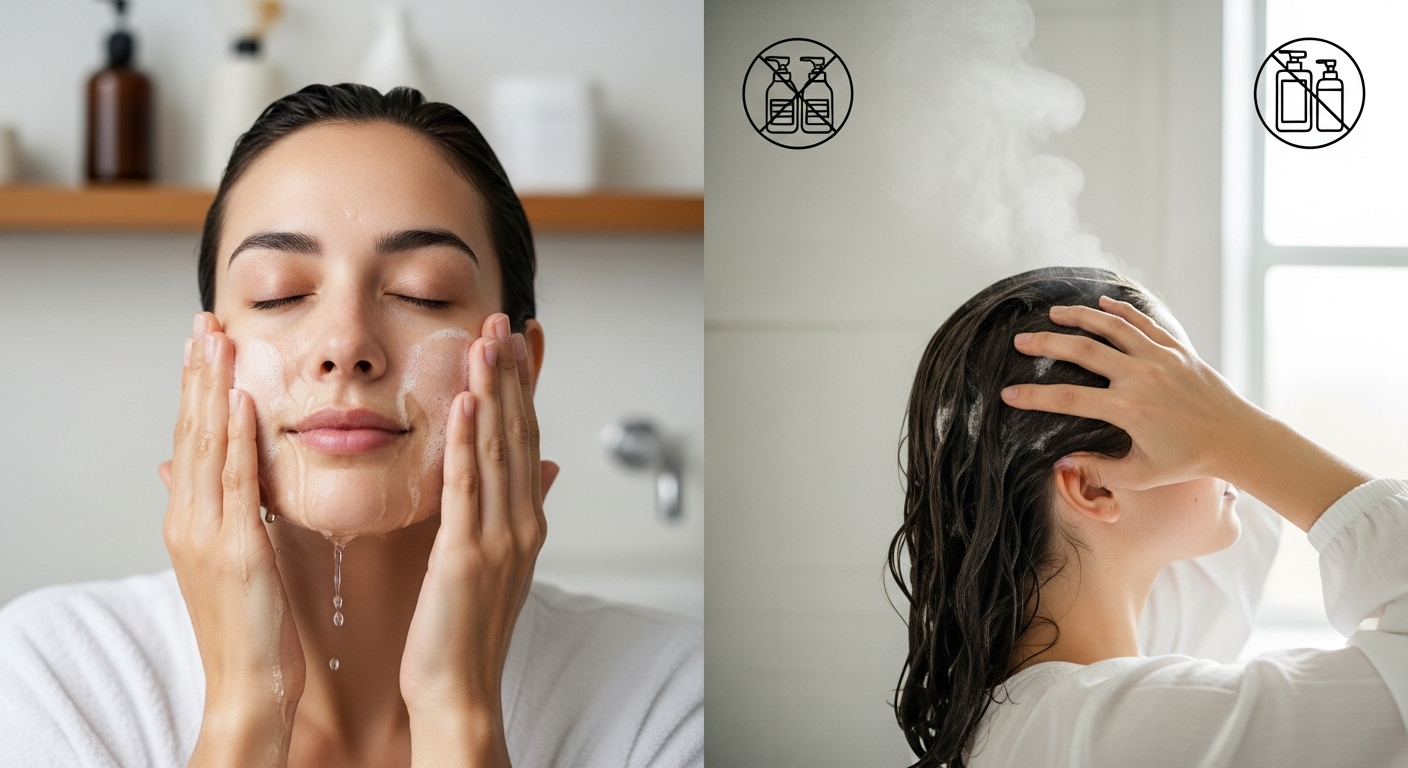
Before you use a new product on your face or scalp, patch test it. Apply a small amount to a quarter-sized patch of skin on the inside of your arm or the bend of your elbow, twice a day, for 7 to 10 days. If there is redness, itching or swelling, do not use it on your face or scalp. This matters most the first time you use a product, or when you use a higher strength.
Sleep, stress and seasons
- Sleep. Most adults need at least 7 hours a night. One small study of 60 women found that chronic poor sleepers had about double the signs of intrinsic skin ageing and slower skin-barrier recovery than good sleepers — but it was a small observational study, funded by the maker of a skincare brand, so it shows an association, not proof that poor sleep causes ageing. Sleep is still worth protecting: it is when you are not actively damaging your skin, and a steady sleep schedule supports everything else.
- Stress. Stress can make breakouts worse for some people, and a very stressful event can be followed by extra shedding two to three months later, with fullness usually returning over six to nine months. That is a normal pattern, not a sign that stress has permanently damaged your hair. Sleep, movement and a routine you can actually keep are the useful responses.
- Seasons. In winter, cold dry air usually calls for richer moisturisers, gentler cleansing and more deep conditioning. In summer, hot humid weather usually calls for lighter textures, continued sun protection, and washing as often as the scalp needs. Small shifts, not a whole new routine.
Choosing products
- Fewer, gentler products. Do not stack several new products at once. Introduce one at a time and give it weeks before judging it.
- Look at the label, not the price. A simple formulation that suits your skin is worth more than an expensive one that irritates it. Fragrance-free is a sensible default for sensitive skin.
- Record what happens. Note how your skin and hair respond over two to four weeks, rather than judging by the first day.
- Do not chase “natural”. The word “natural” has no legal definition for cosmetics, and natural ingredients can irritate too. Lemon or lime juice should never go on skin: with sunlight it can cause a burn-like reaction with blisters and dark marks that last for years.
Signs to change something
Change the routine — gently, one thing at a time — if:
- Your skin stings, feels tight, or turns red after a product.
- Your hair feels dry, breaks easily, or your scalp is itchy, flaky or sore.
- Products build up and leave a coated feeling, or breakouts increase after a new product.
When to get help: see a clinician promptly if you have a rash, blisters or open sores; swelling that lasts more than a day or two; pain or vision changes near the eyes; a scalp that is very itchy, red or swollen, or flaky patches elsewhere on the body; or hair shedding that is sudden, patchy, or does not settle after a few months.
Frequently asked questions
How long before I see a difference?
Hydration can feel better within days. Texture and tone take weeks to months, and it varies a lot from person to person. There is no fixed week by which results appear.
Can nourishment repair damaged hair or sensitive skin?
Sensitive skin can improve with gentle, consistent care. Damaged hair cannot be repaired — conditioners reduce further breakage, and only trimming removes split ends. Trim every 6 to 12 weeks if you have split ends.
Do expensive products work better?
No. A simple formulation that suits your skin, used consistently, works better than an expensive or complicated one that irritates it or that you stop using.
How often should I change my routine?
Only when your skin or hair tells you to — dryness, breakouts, breakage, or irritation — or when the season changes. Small adjustments are better than starting over.
Should I take supplements for my skin and hair?
Only if a blood test shows a deficiency, and only on a clinician’s advice. No supplement, dose or brand is recommended in this guide.
Sources: American Academy of Dermatology, 7 Rosacea skin care tips (patch-test method: apply a new product to a quarter-sized patch of skin on the inside of the arm for 7–10 days); American Academy of Dermatology, How to select anti-aging skin care products (broad-spectrum sunscreen, SPF 30 or higher, reapply every two hours outdoors). This is a researched overview, not a hands-on review.