Researched overview.
Table Of Content
- Quick answer
- What “restorative” means
- Signs your skin needs a break
- Preparing to recover
- Gentle cleansing
- Hydration
- Barrier support
- Moisturising
- Gentle massage
- Night care
- Mistakes that stall recovery
- Signs of recovery
- A weekly session
- When to skip a treatment
- Lifestyle: water, sleep, stress
- When to adjust
- Seasons
- Sun protection
- Long-term benefits
- Patch test
- When to get help
- Frequently asked questions
Quick answer
A restorative routine is for skin that has been over-treated — tight after cleansing, red for hours, stinging when you apply ordinary products, or breaking out suddenly. The fix is not more products. It is fewer: a gentle cleanser, hydration, a moisturiser, and sunscreen, used steadily while the skin barrier recovers. Patience is the treatment; new products are the risk.
If your skin is painful, blistered, or has open sores or a spreading rash, stop and ask a dermatologist or pharmacist promptly. This guide is general information, not medical advice.
Contents: What “restorative” means · Signs your skin needs a break · Preparing to recover · Gentle cleansing · Hydration · Barrier support · Moisturising · Gentle massage · Night care · Mistakes that stall recovery · Signs of recovery · A weekly session · When to skip a treatment · Lifestyle: water, sleep, stress · When to adjust · Seasons · Sun protection · Long-term benefits · Patch test · When to get help
What “restorative” means
Restoration means bringing the skin back to a comfortable, stable state. It is about repairing damage, calming irritation and strengthening the protective barrier — not about renewing or remodelling the skin quickly.
Restorative routines are quieter than aggressive ones. They use fewer steps, milder products and more patience. Gentle care avoids irritating the skin further, which is what lets the barrier recover. This works for any skin type, and especially for tired, sensitive or over-treated skin.
Signs your skin needs a break
When the skin needs repair, it shows it. Common signs include:
- Tightness after cleansing
- Redness that lingers
- Stinging when ordinary products are applied
- Greasiness that comes and goes unpredictably
- Sudden breakouts
- Skin that feels rough or papery even with moisturiser
These point to a weakened skin barrier. Once the barrier is compromised, moisture escapes easily and irritants get in easily. That is why restoration has to come first, before any new treatment.
Preparing to recover
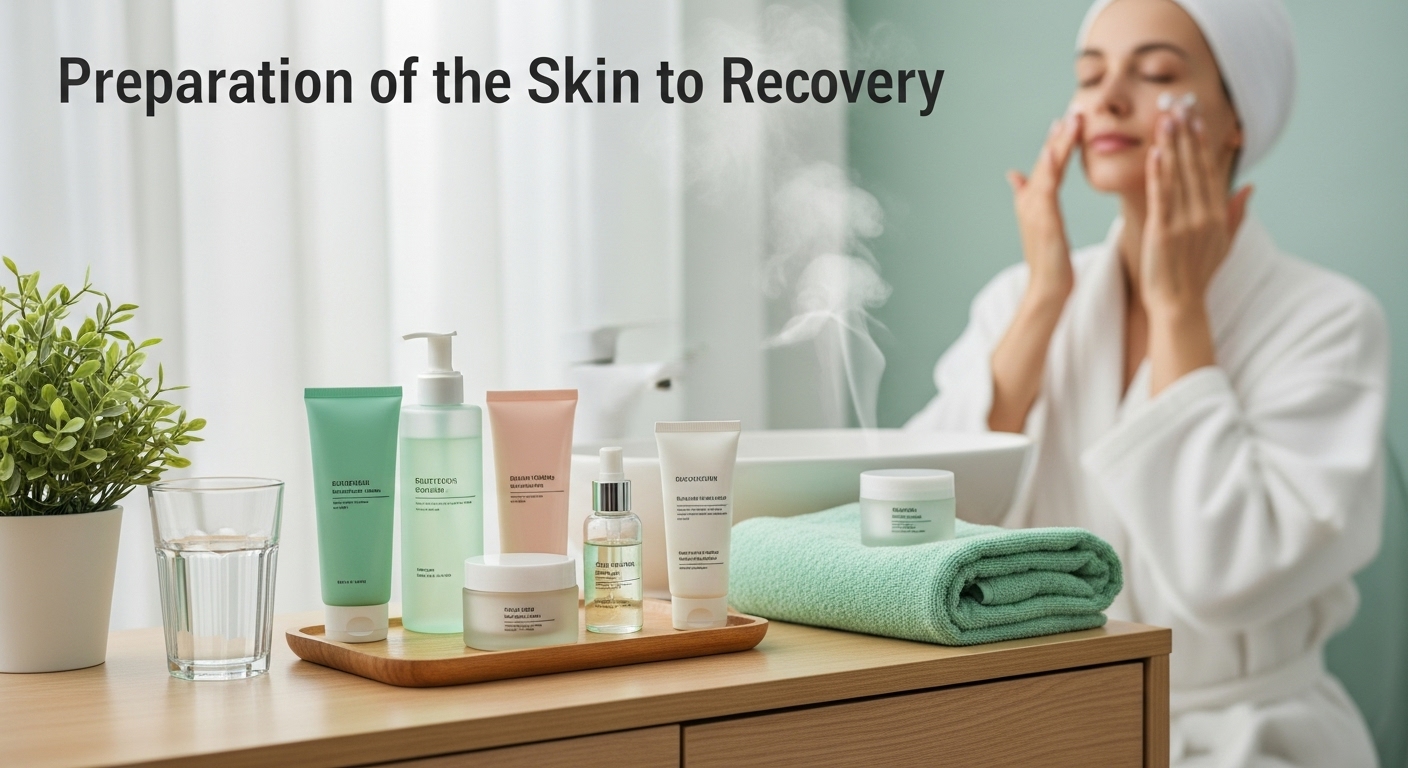
Repair starts with preparation. Products work less well on aggravated, stressed skin, so the first step is to calm things down:
- Avoid very hot water — use lukewarm water instead
- Use fewer products at the same time
- Stop exfoliating for now
- Give skincare a quiet moment instead of rushing through it
Gentle cleansing
Washing is the first step, and done wrong it does more harm than good. Rough cleansers strip the natural oils that protect the barrier, leaving the skin dry and sensitive.
A good cleanser for recovery should:
- Clean without a lot of foam
- Leave the skin soft, not tight
- Rinse away cleanly without leaving a film
Gel or cream cleansers usually suit recovery best. Avoid strong actives in the cleanser while the skin is healing.
How often: wash at night to remove the day. In the morning, plain water or a very mild cleanser is enough for most people. Washing too often slows healing and dries the skin out.
Hydration
Recovery depends on hydration. Dry skin cannot heal easily, because water is part of how the skin repairs itself. Hydrated skin feels more comfortable and reacts less to products.
Use light, gentle hydrating products in thin layers — the skin takes what it needs without feeling heavy or sticky. Moisturiser works best on skin that is slightly damp, so apply it while the skin is still a little wet after washing.
A note on water: drinking enough water supports your general health. It does not directly hydrate the skin or repair the barrier — oil and water are different things, and oily skin can still feel dry.
Barrier support
The skin barrier shields against moisture loss and outside stress. Common causes of barrier damage are over-exfoliation, harsh cleansers, too many actives at once, environmental stress and lack of sleep. Removing those stressors is what starts the repair.
Barrier-supportive care is about nourishment and protection, not stimulation. The skin needs time to restore its natural defences. The best measure of success is comfort after application: if it feels calm, it is working.
Moisturising
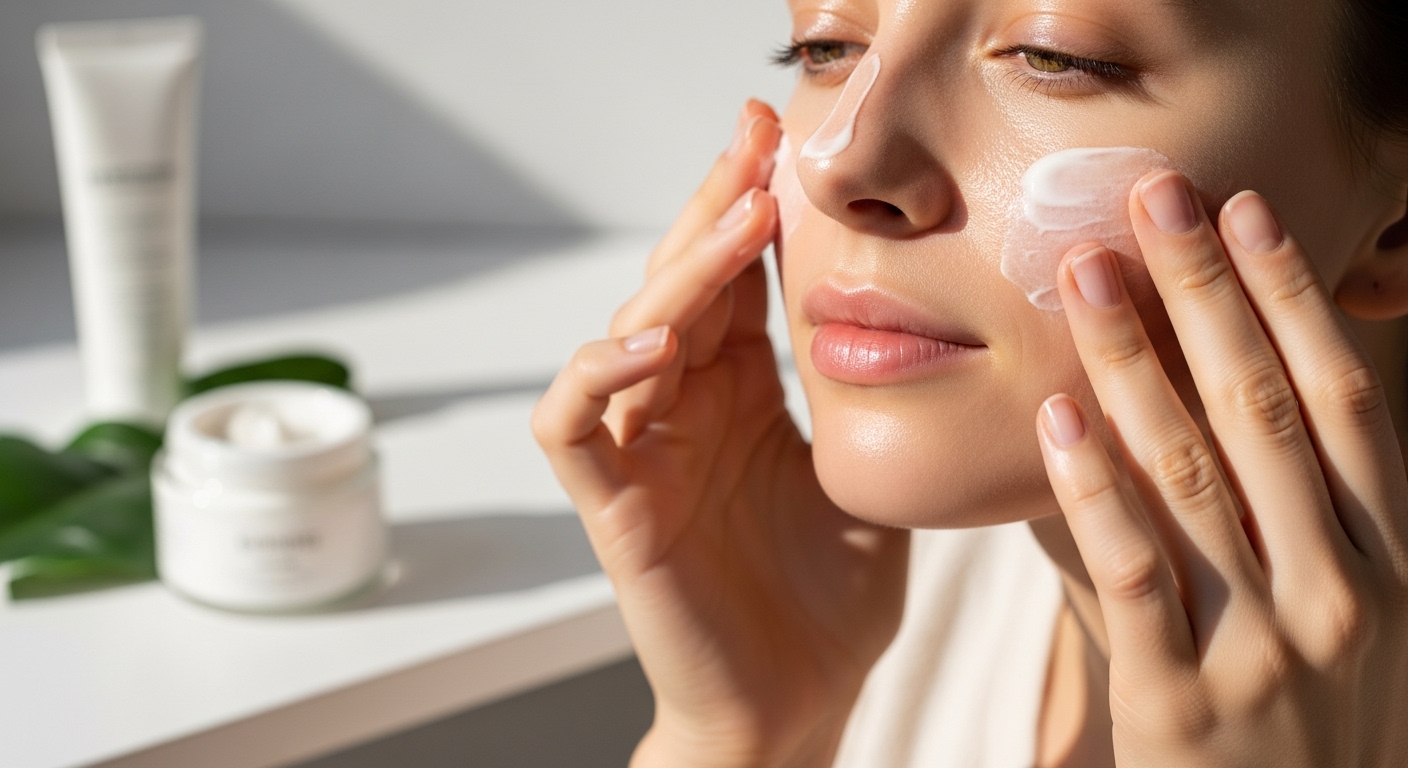
Moisturiser seals in water and protects the skin while it heals. Choose the texture for how the skin feels right now: soft, light textures usually work best during recovery, except where the skin is very dry, where a richer cream helps.
How you apply it matters:
- Use gentle upward movements
- Do not rub aggressively
- Aim for even coverage
Massage is not a treatment here. It should be slow and light, and it should not strain the skin.
Gentle massage
Facial massage can be part of a restorative routine, but only as relaxation. Use your fingertips, light pressure, slow movements. Do not tug or stretch the skin.
There is no good evidence that massage improves blood flow, increases product uptake, or speeds healing. It can help you relax and apply products evenly. That is all it needs to do. If the pressure causes redness, stop.
Night care
Night is a practical time for a simple routine: there is no sun or pollution to deal with, so the skin can rest. That is the whole reason — not a special repair window in the body clock.
Keep evenings simple:
- Gentle cleansing
- Hydration
- Moisturising
During recovery, do not add anything new at night. A stable routine helps the skin settle.
Mistakes that stall recovery
The most common way to stall healing is to add more products. Other mistakes include:
- Treating sensitivity with stronger actives
- Changing products too often
- Expecting quick changes
- Ignoring comfort signals
Recovery takes time. Skin that is left alone — gently cared for, not stimulated — settles faster than skin that is constantly treated.
Signs of recovery
Improvement is quiet. Positive signs include:
- Skin that feels comfortable after cleansing
- Redness fading gradually
- Products sitting better on the skin
- Texture that feels less tight
- Fewer sudden flare-ups
These small changes are the sign of sound healing, not of stagnation.
A weekly session
One gentle session a week can support the daily routine — a hydrating mask, a barrier-supportive treatment, a short relaxing massage. Keep it voluntary and flexible. Skip it when the skin is stressed, tight or sore: comfort is the only measure of success, and there should be no tingling, heat or redness.
When to skip a treatment
Restraint is part of restorative care. Skip a treatment when:
- The skin is tight or sore
- Redness is ongoing or unusual
- Breakouts appear suddenly
- The weather has made the skin very dry
Rest gives the skin barrier a chance to re-form.
Lifestyle: water, sleep, stress
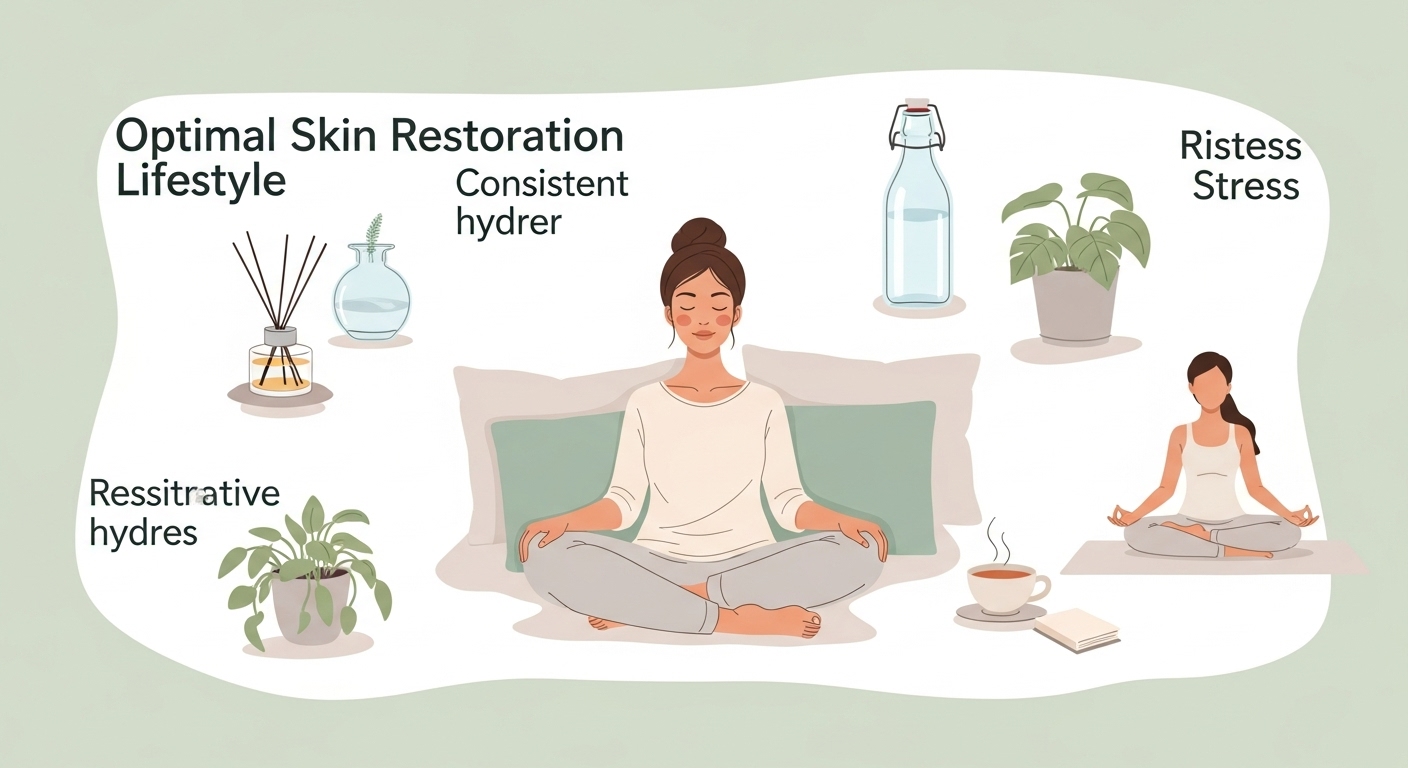
Skincare alone does not restore the skin — daily habits support it.
Water: drink enough for your general health. It does not directly hydrate the skin.
Sleep: most adults need at least 7 hours a night (CDC). Poor sleep does not destroy the skin barrier overnight, but steady sleep supports general health and the skin looks and feels better over time.
Stress: stress can make breakouts worse for some people. A slow skincare routine can help you feel calmer, because it is a few quiet minutes in the day. It is not a treatment for stress.
When to adjust
Listen to the skin. Warning signs that the routine needs adjusting are sudden redness or warmth, increased sensitivity, or tightness that does not ease. When they appear, reduce the steps, cut back on products, and focus on hydration until things settle. That is usually enough to get back on track.
Seasons
Skin needs change with the seasons. In cold weather, the air is dry and the skin loses moisture faster: wash more simply, use a richer moisturiser, and space treatments further apart. In warm weather, heat increases oil and sweat: lighter hydration feels better, and sun protection becomes essential. Adjusting the routine to the season keeps recovery on track.
Sun protection
Sunlight slows healing as well as ageing the skin. Wearing sun protection every day helps prevent inflammation, uneven tone, premature ageing and barrier breakdown. Use a broad-spectrum sunscreen of SPF 30 or higher, and reapply every two hours if you stay outdoors.
Long-term benefits
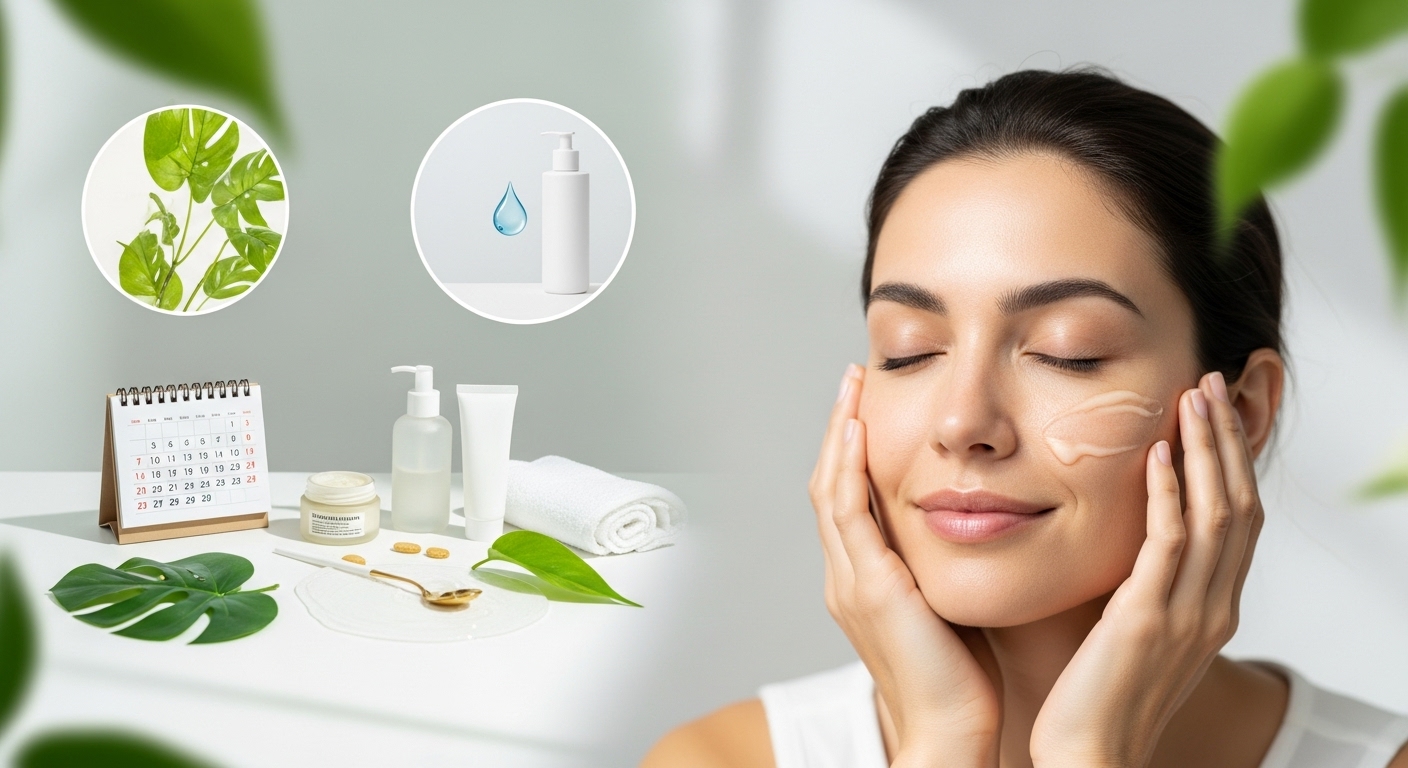
When restoration is steady, the skin changes over time: a stronger barrier, fewer flare-ups, better texture and tone, and less need for corrective products. The skin becomes more predictable and less reactive to weather, stress and everyday life. That is the point of a restorative routine — not a quick fix, but a stable base that lasts.
Patch test
Try any new product on a small patch of skin first, before using it on your face. Apply a small amount to a quarter-sized area on the inside of your arm or the bend of your elbow, twice a day, for 7 to 10 days. If there is redness, itching or swelling, do not use it on your face. For rinse-off products, about five minutes of contact is enough for the test.
This is the AAD 7–10 day patch-test method — the site-wide rule for BeautyKob.
When to get help
Stop and ask a dermatologist or pharmacist promptly if the skin is painful, blistered, or has open sores, if a rash spreads, or if redness and stinging do not improve after a few weeks of gentle care. Do not try to treat those signs with more products.
You can also read Beauty Routine for Removing Dead Skin for the gentle exfoliation steps — but only once the skin has recovered enough to exfoliate again, and only once or twice a week.
Frequently asked questions
Q1: What is a restorative beauty routine?
A routine devoted to restoring and strengthening the skin barrier with gentle, supportive care, instead of aggressive treatments. It suits skin that is tired, sensitive or over-treated.
Q2: How long does a restorative routine take to show results?
Results appear gradually. Comfort and smoothness usually improve first; texture and tone change over weeks to months, and it varies from person to person. Regularity matters more than speed.
Q3: Can a restorative routine be used on sensitive skin?
Yes. Sensitive skin is easily irritated, and these gentle practices help the barrier heal — that is exactly what they are for.
Q4: Does a restorative routine include exfoliation?
Exfoliation is optional and must be light and soft. Over-exfoliating stops restoration instead of helping it. Skip it entirely while the skin is stressed.
Q5: Do I need expensive products for restorative skincare?
No. Formulation and gentle use matter more than price. Well-chosen, simple products perform well.
Sources: American Academy of Dermatology, 7 Rosacea skin care tips (patch-test method: apply a new product to a quarter-sized patch of skin on the inside of the arm every day for 7–10 days); American Academy of Dermatology, How to select anti-aging skin care products (broad-spectrum sunscreen, SPF 30 or higher, reapply every two hours outdoors). This is a researched overview, not a hands-on review.