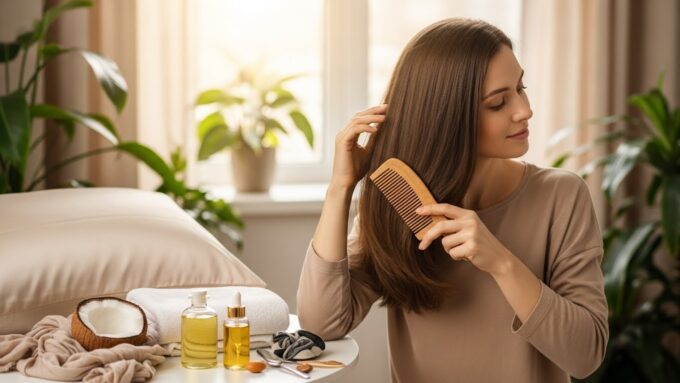
Researched overview.
Table Of Content
Quick answer
A good hair routine is short and steady: wash the scalp gently, condition the lengths, detangle from the ends up, dry gently, and protect hair from heat. That is most of it. A routine keeps hair in better condition and reduces breakage — it does not make hair grow faster, repair split ends, or guarantee a result by a fixed date.
Hair grows about 1 cm a month. Damaged hair cannot be repaired; it can only be protected while new hair grows out, or trimmed. If you are losing hair suddenly, in patches, or with scalp pain, itching or scaling, that is a reason to see a doctor, not a reason to buy a new product.
Contents: What a routine can and cannot do · Know your hair · The basic routine · How often to wash · Weekly care · Overnight treatments · Styling and heat · Long hair and protective styling · Food, water and sleep · Common mistakes · A simple week · When to get help
What a routine can and cannot do
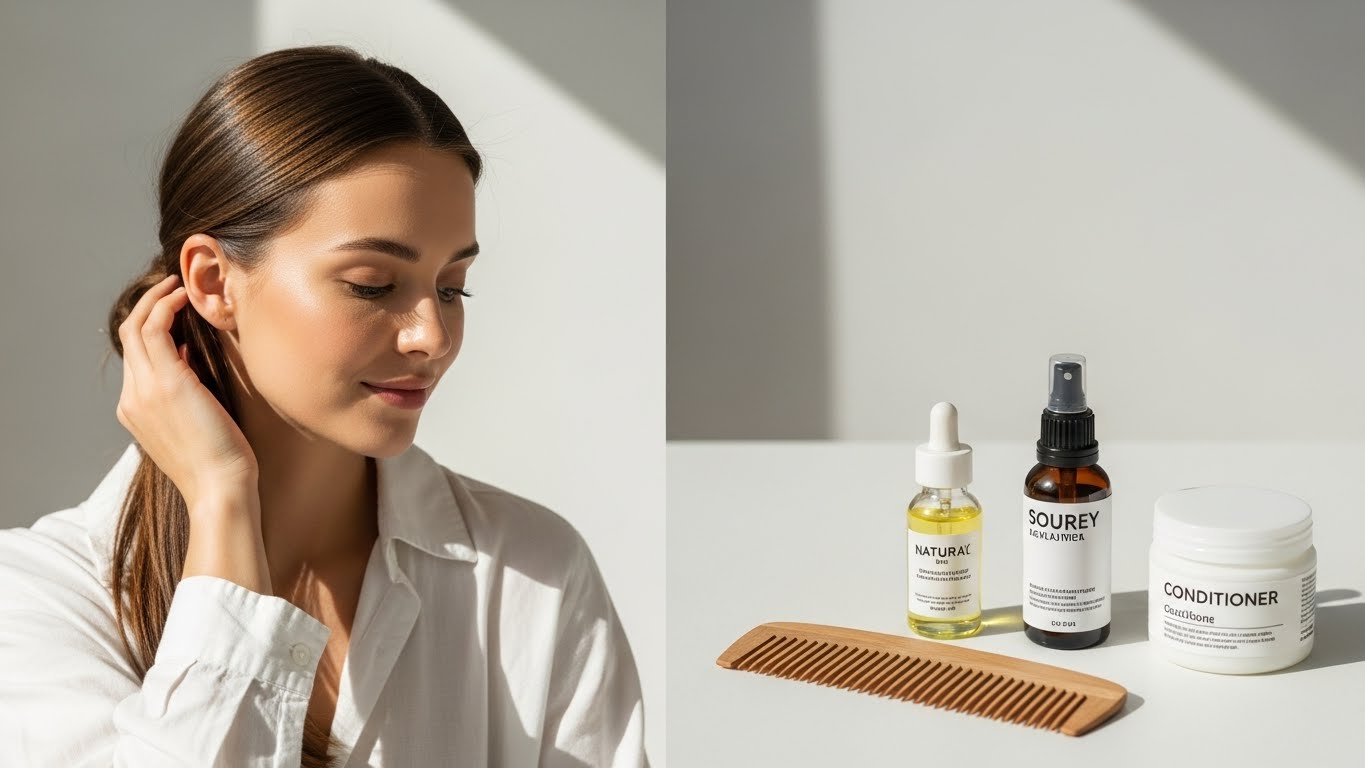
A routine can:
- Keep the scalp clean and comfortable.
- Reduce breakage from rough handling, heat and tight styles.
- Make hair feel softer and look smoother, by keeping the cuticle (the outer layer of each strand) lying flat.
A routine cannot:
- Make hair grow faster. Hair grows about 1 cm a month, and no routine changes that rate.
- Repair split ends or damaged hair. Once the hair shaft is damaged it cannot be repaired; it can only be protected or trimmed.
- Guarantee shine, thickness or growth by a fixed date. Any guide that promises a result “in a month” or “in 2–3 months” is guessing.
Keep the routine the same for a few weeks before judging it. Changing products every few days tells you nothing about what helps.
Know your hair
Hair type matters because it changes how often you wash and how much product you need — not because one type is better than another.
- Straight hair tends to look oily sooner, because oil from the scalp travels easily down a straight strand. It usually needs washing more often.
- Wavy hair sits in between: it can look oily at the roots and dry at the ends.
- Curly and coily hair tends to be drier, because oil travels slowly around bends. It usually needs washing less often and more conditioning.
Porosity — how easily your hair absorbs water — also matters. Hair that has been bleached, coloured or heat-styled a lot usually absorbs water quickly and loses it quickly. That hair needs more conditioning and more protection, not more washing.
You do not need to diagnose your hair type precisely. The routine below works for all types; only the washing frequency and the amount of conditioner change.
The basic routine
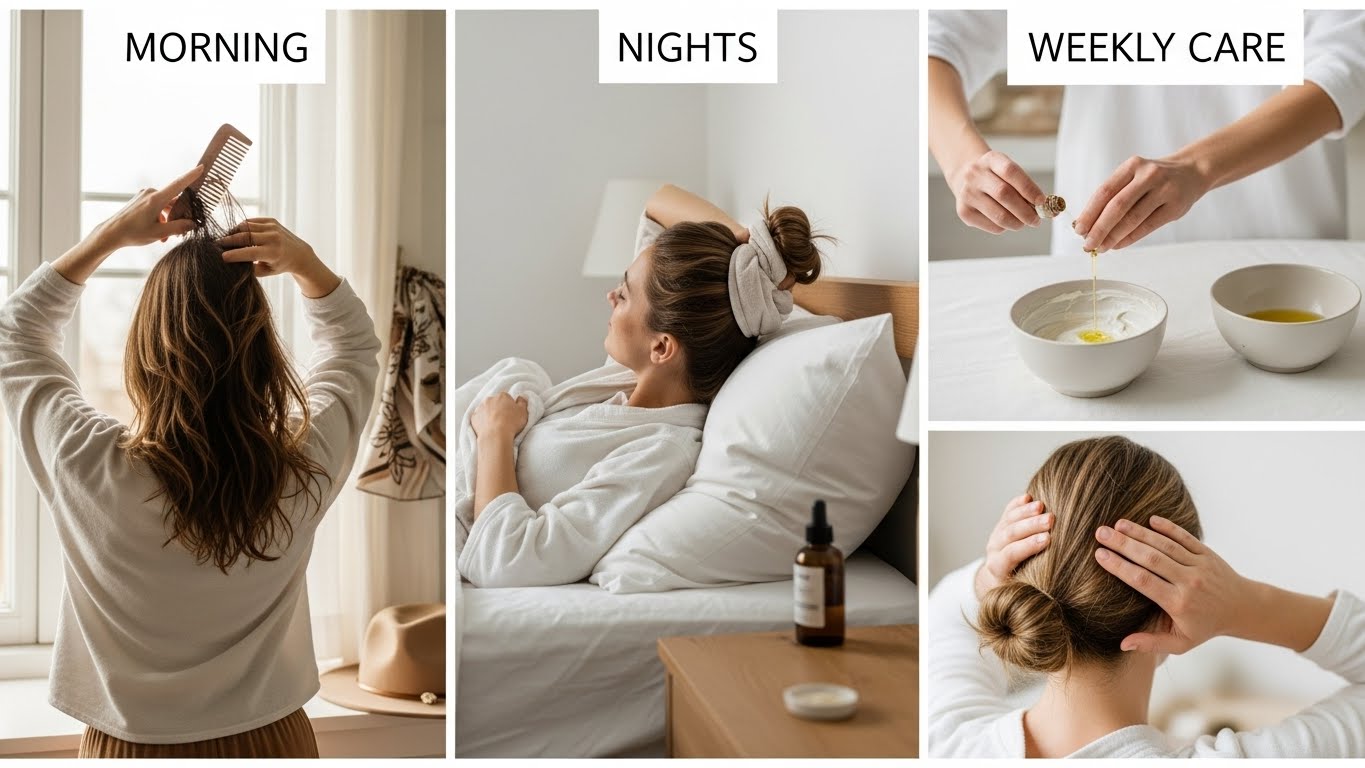
Five steps, in order:
- Wash the scalp. Shampoo is for the scalp, where oil and dirt collect. Massage it in gently with your fingertips, not your nails. Rinse with lukewarm water.
- Condition the lengths. Apply conditioner from the mid-lengths to the ends, not on the scalp. Leave it for a couple of minutes, then rinse. Conditioner after every shampoo is standard dermatology guidance.
- Detangle gently. Wet hair is fragile: it stretches and breaks more easily than dry hair. Detangle with a wide-tooth comb, starting at the ends and working up. Do not brush wet hair hard from the roots down.
- Dry gently. Pat hair with a towel instead of rubbing it. Let it air dry when you can. If you use a hairdryer, use the lowest effective heat setting.
- Protect from heat. If you use a hot tool, use a heat protectant product and the lowest heat that works. Heat protectant reduces some damage; it does not make unlimited heat safe.
How often to wash
There is no single right schedule. How often you wash depends on your scalp oiliness, your hair type, how much you exercise, and how much styling product you use.
- Oily scalp or fine straight hair: washing every day or every other day is reasonable.
- Dry or curly hair: washing two or three times a week is usually enough.
- If your scalp feels itchy, flaky or sore, or your hair looks limp and coated, the schedule or the product may not suit you — change one thing at a time.
Washing less does not “train” the scalp to make less oil. There is no good evidence for hair training. Wash when your scalp needs it.
Weekly care
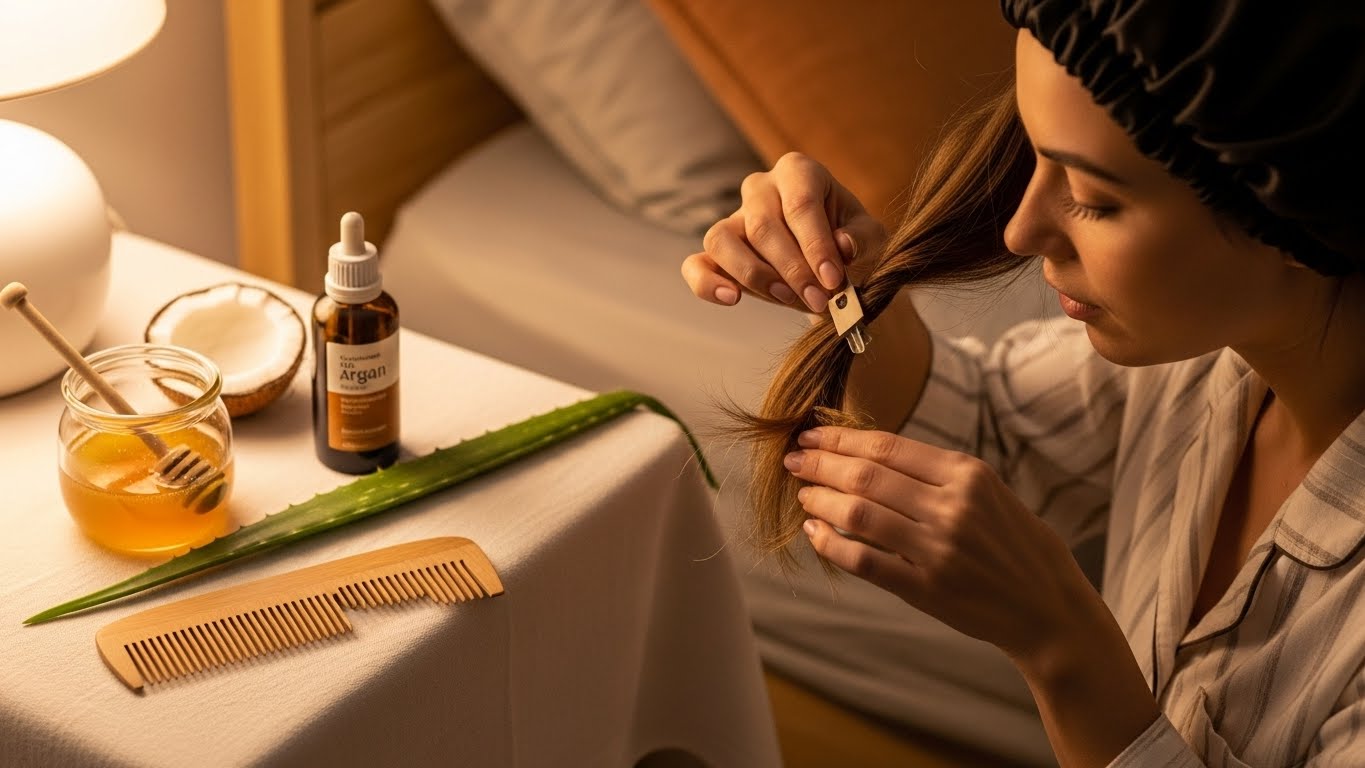
Once a week, or every couple of weeks, add one of these:
- A deep conditioning mask. A mask conditions the hair and can make it feel softer and smoother. It does not repair damage or remove split ends. Apply it to the lengths, leave it for the time on the packet, then rinse.
- An oil treatment. Coconut oil reduces protein loss from the hair shaft (Rele & Mohile 2003) — it protects the hair, it does not grow it. Warm a small amount in your hands, apply to the lengths, leave for 30 minutes or overnight, then wash out. Use less than you think; too much oil is hard to wash out and leaves hair limp. Before using a new oil or mask, patch test it: put a small amount on the inside of your arm or the bend of your elbow, twice a day for 7 to 10 days. If the skin turns red or itchy, do not use it. (This is the American Academy of Dermatology patch-test method.)
- Scalp care. A gentle scalp massage feels pleasant and helps you notice changes in your scalp. It has no good evidence as a way to grow hair. The only study often quoted (Koyama et al. 2016) had nine men and no comparison group, so it cannot support a growth claim. Do not scrub the scalp hard, and do not use a sugar scrub on the scalp — it can irritate the skin.
Do not do all three in the same week. Pick one, and see how your hair feels.
Overnight treatments
An overnight oil or mask treatment coats the hair and can make it feel softer in the morning. That is all it does: it conditions, it does not repair, and it does not feed the hair nutrients. Protect your pillow with a towel or an old pillowcase, and wash the treatment out in the morning. If your scalp becomes itchy or sore, stop the treatment.
Styling and heat
Heat is the most common cause of avoidable hair damage. The American Academy of Dermatology’s guidance is: let hair air dry when you can; if you use a hot tool, use the lowest heat setting that works; and use a heat protectant.
- Heatless styling (braids, twists, rollers) is the gentlest way to add shape.
- Loose hairstyles are kinder than tight ones. Hairstyles that pull can cause hair loss (traction alopecia). Early on it can reverse if the pulling stops, but pulling over a long time can permanently damage the follicles.
- Colouring and chemical treatments: space them out. The AAD suggests waiting 8–10 weeks between colouring sessions.
- Brushing: the old advice of “100 strokes a day” is a myth. Brush gently, only as much as needed to detangle and style.
A “natural” heat protectant such as aloe vera has no good evidence behind it. Use a product made for the purpose, and keep the heat low.
Long hair and protective styling
Long hair needs more care at the ends, because the ends are the oldest part of the hair and the most worn.
- Trim the ends regularly. Trimming is the only way to remove split ends; no product can fuse a split strand back together.
- Wear hair loosely at night — a loose braid or a silk or satin pillowcase can reduce friction. The evidence for silk pillowcases is weak, but they are harmless and many people find them comfortable.
- Protect hair from sun, wind and pollution with a hat or scarf when you are out for a long time. The scalp is skin too — an exposed parting can sunburn, so use broad-spectrum SPF 30+ sunscreen on it, or cover it with a hat.
Food, water and sleep — what they can and cannot do
A balanced diet with enough protein supports normal hair growth, because hair is mostly keratin, a protein. That is a general health point, not a treatment.
- No supplement is recommended here. Biotin is vitamin B7, not B1. It helps only when there is a deficiency, which is rare, and there is no good trial of biotin in people who are not deficient (Patel et al. 2017). Iron should never be self-started: too much iron is harmful, and it is a common cause of accidental poisoning in children. Zinc from supplements should not exceed 25 mg a day (NHS guidance). High-dose biotin can interfere with laboratory tests, including falsely low troponin, the heart-attack test (FDA warning, 2017, updated 2019).
- Omega-3 has no good trial as a hair treatment on its own.
- Water: there is no evidence that drinking 6–8 glasses of water a day changes hair texture or shine. Drink enough for your general health; it is not a hair treatment.
- Sleep: sleep is important for general health, but there is no evidence that sleep regenerates hair follicles or makes hair stronger.
If you think a deficiency is affecting your hair, ask a doctor for a blood test before taking any supplement.
Common mistakes
- Washing with very hot water and scrubbing the scalp hard.
- Brushing wet hair aggressively from the roots.
- Using high heat every day without a protectant.
- Wearing tight hairstyles every day.
- Adding a new product every week, so you never learn what helps.
- Expecting a fixed result by a fixed date.
- Treating a mask, oil or rinse as a repair. They condition; they do not repair.
A simple week
Morning: Wash the scalp if it needs it, condition the lengths, detangle gently from the ends, dry gently, style loosely.
Night: If you oiled or masked your hair, wash it out. Otherwise, detangle gently and wear hair loose or in a loose braid.
Once a week: One deep treatment — a mask or an oil treatment, not both. Check your scalp while you are at it: any new soreness, flaking or patches are worth noticing.
When to get help
It is normal to shed about 50 to 100 hairs a day. See a doctor if you notice:
- Sudden hair loss, or shedding that goes on for more than six months.
- Patchy bald spots, or a part that is rapidly widening.
- Scalp pain, itching, scaling or redness that does not settle.
- Hair loss together with other symptoms, such as tiredness, weight change or irregular periods.
A dermatologist can examine the scalp, do a hair pull test, and order blood tests or a scalp biopsy when disease is suspected. See a GP first to get a clear idea of the cause before going to a commercial hair clinic.
Summary
Wash the scalp, condition the lengths, detangle from the ends, dry gently, and keep heat low. Add one weekly treatment — a mask or an oil — and trim the ends regularly. A routine protects hair and reduces breakage; it does not make hair grow faster or repair damage. If shedding or scalp problems persist, see a doctor.
Sources: IADVL Hair Care Basics; AAD hair-loss and hair-damage guidance; NHS 111 Wales hair loss; Rele & Mohile 2003; Koyama et al. 2016; Patel et al. 2017; FDA biotin safety communication. This is a researched overview, not a hands-on review.