This article is a researched overview. It is based on published research and guidance from dermatology and health organisations, not on personal testing. It does not replace advice from a dermatologist or a doctor. This article recommends no supplement, dose or brand.
Table Of Content
- What “natural” does and doesn’t mean
- The remedies, one by one
- Coconut oil — protects the hair shaft; does not grow hair
- Rosemary oil — one small study; a rinse is not the same thing
- Castor oil — no strong evidence for regrowth
- Fenugreek — no human trials for hair growth
- Hibiscus — no good published evidence found
- Aloe vera — soothing; no growth evidence
- Egg, yogurt and honey masks — conditioning only
- Apple cider vinegar — no good evidence; can irritate
- Green tea — no good human evidence
- Homeopathy — no good evidence
- Diet and supplements — food first, tests before pills
- Mistakes people make with home remedies
- A safe starting point
- The short version
Home remedies for hair are popular, and some of them are genuinely useful. But most of them are described as treatments that grow hair or stop hair fall, and for almost all of them there is no good evidence that they do either of those things. This article goes through the common ones, one by one, and says plainly what each can and cannot do.
What “natural” does and doesn’t mean
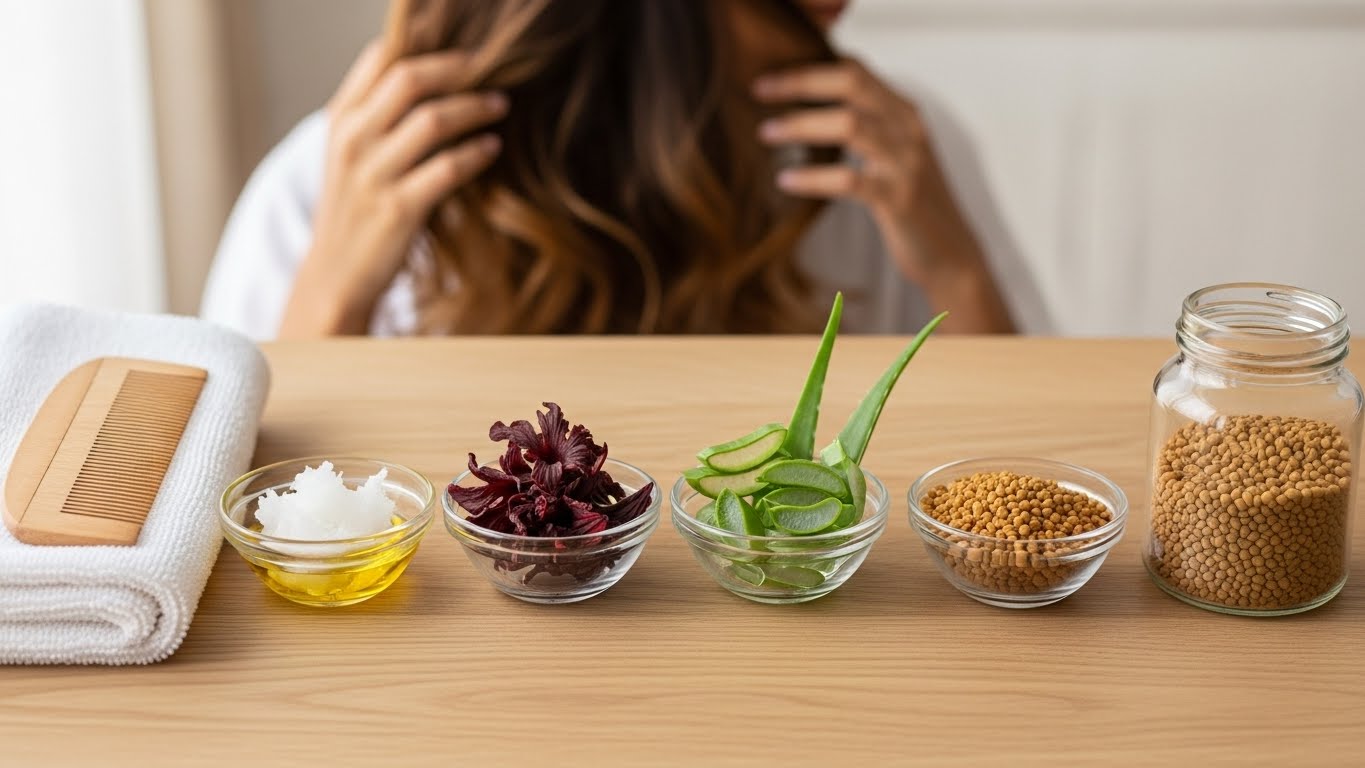
“Natural” is not the same as “safe” or “effective”. A plant extract can irritate the scalp, cause an allergic reaction, or do nothing at all. A home remedy can also be useful in one way and useless in another — coconut oil, for example, is genuinely good at protecting the hair shaft, and has no good evidence for growing hair. The two things are separate, and this article keeps them separate.
The remedies, one by one
Coconut oil — protects the hair shaft; does not grow hair
Coconut oil is the one home remedy in this article with solid evidence behind it. A published study (Rele & Mohile, 2003) found that coconut oil was the only oil of the three tested that reduced protein loss in both undamaged and damaged hair, when used before and after washing. Protein loss is what makes damaged hair weak and brittle, so reducing it is genuinely useful.
What coconut oil does not do is grow hair. There is no good evidence for that. Use it as a pre-wash treatment on the lengths if you like it — it can make hair feel smoother and break less — but do not expect new growth.
Rosemary oil — one small study; a rinse is not the same thing
Rosemary oil is often recommended for hair growth because of a single study (Panahi et al., 2015). In that study, 100 people with pattern hair loss used either rosemary oil or minoxidil 2%, twice a day, for six months. Both groups had a similar increase in hair count, and the rosemary group had less scalp itching.
That is one study, against a 2% minoxidil solution (not the stronger 5%), and it has not been repeated. It is a reason to be interested, not a reason to promise results. And it tested rosemary oil, not a rosemary water rinse. Boiling rosemary leaves in water and rinsing your hair with it is not the same thing as the oil used in the trial, and there is no evidence the rinse does anything.
Castor oil — no strong evidence for regrowth
Castor oil is widely recommended for hair growth, but a 2022 systematic review of coconut, castor and argan oils found no strong human evidence that castor oil regrows hair. There was weaker evidence that it may improve hair quality and shine, but that is not the same as growth. Castor oil is also very thick and sticky, and it can cause hair to mat and tangle, which causes breakage.
Fenugreek — no human trials for hair growth
Fenugreek seeds are often said to stimulate hair follicles and slow hair loss. There are no human trials proving this. Fenugreek has been studied in the laboratory and in animals, but that is not evidence that it grows hair on a human head.
Hibiscus — no good published evidence found
Hibiscus is often said to contain vitamins that stimulate hair growth and slow hair fall. No good published evidence was found to support this. It is a pleasant-smelling ingredient in a hair mask, not a treatment.
Aloe vera — soothing; no growth evidence
Aloe vera gel can feel soothing on the scalp, and it is a reasonable moisturiser for the hair. There is no good evidence that it grows hair or stops hair fall.
Egg, yogurt and honey masks — conditioning only
Masks made from egg, yogurt and honey can make hair feel softer and smoother, because they coat the hair shaft. That is conditioning, not treatment. They do not grow hair, repair damage, or fix hair fall.
If you use one, keep it simple and safe:
- Patch test first. Put a small amount on a quarter-sized patch of skin on the inside of your arm or the bend of your elbow, twice a day for 7–10 days. If the skin turns red or itchy, do not use it. (This is the American Academy of Dermatology patch-test method. Ask a dermatologist if you have sensitive skin or a history of allergies.)
- Egg allergy. Do not use an egg mask if you are allergic to eggs.
- Wash it out well. Leftover mask on the scalp can leave residue and odour. Rinse thoroughly and shampoo as normal.
Apple cider vinegar — no good evidence; can irritate
Apple cider vinegar rinses are said to make hair shiny and smooth. There is no good evidence for this, and vinegar is acidic — it can irritate a sensitive scalp. If you try it, dilute it well and stop if your scalp stings or turns red.
Green tea — no good human evidence
Green tea contains polyphenols, and polyphenols have been studied in the laboratory for effects on hair follicles. There is no good human evidence that green tea — drunk or applied to the scalp — grows hair or slows shedding.
Homeopathy — no good evidence
Homeopathic treatment is sometimes recommended for hair loss. There is no good evidence that homeopathy helps hair loss. This article does not recommend it.
Diet and supplements — food first, tests before pills
Hair is made of protein, and the body needs enough protein, iron and other nutrients to grow it. A normal balanced diet is usually enough. This article does not recommend any supplement, dose or brand. Supplements are only useful when there is a real deficiency, and that needs a blood test first:
- Iron has the strongest link to hair shedding of any nutrient, but iron supplements must never be self-started. Too much iron is harmful, and iron poisoning is a common cause of accidental poisoning in children. Get a blood test first.
- Biotin is vitamin B7, not B1. It helps hair only when there is a deficiency, and deficiency is rare. There is no good trial showing biotin helps hair in people who are not deficient. High-dose biotin can also interfere with laboratory tests — the US Food and Drug Administration warns it can cause falsely low troponin results, the blood test used to diagnose a heart attack. Tell your doctor about any biotin you take.
- Zinc matters, but too much zinc blocks copper absorption. The NHS advises no more than 25 mg a day from supplements.
- Omega-3 is often sold for hair, but there is no good trial of omega-3 alone for hair growth.
Crash diets are a recognised trigger for temporary shedding. If you are losing weight, do it gradually and eat enough protein.
Mistakes people make with home remedies
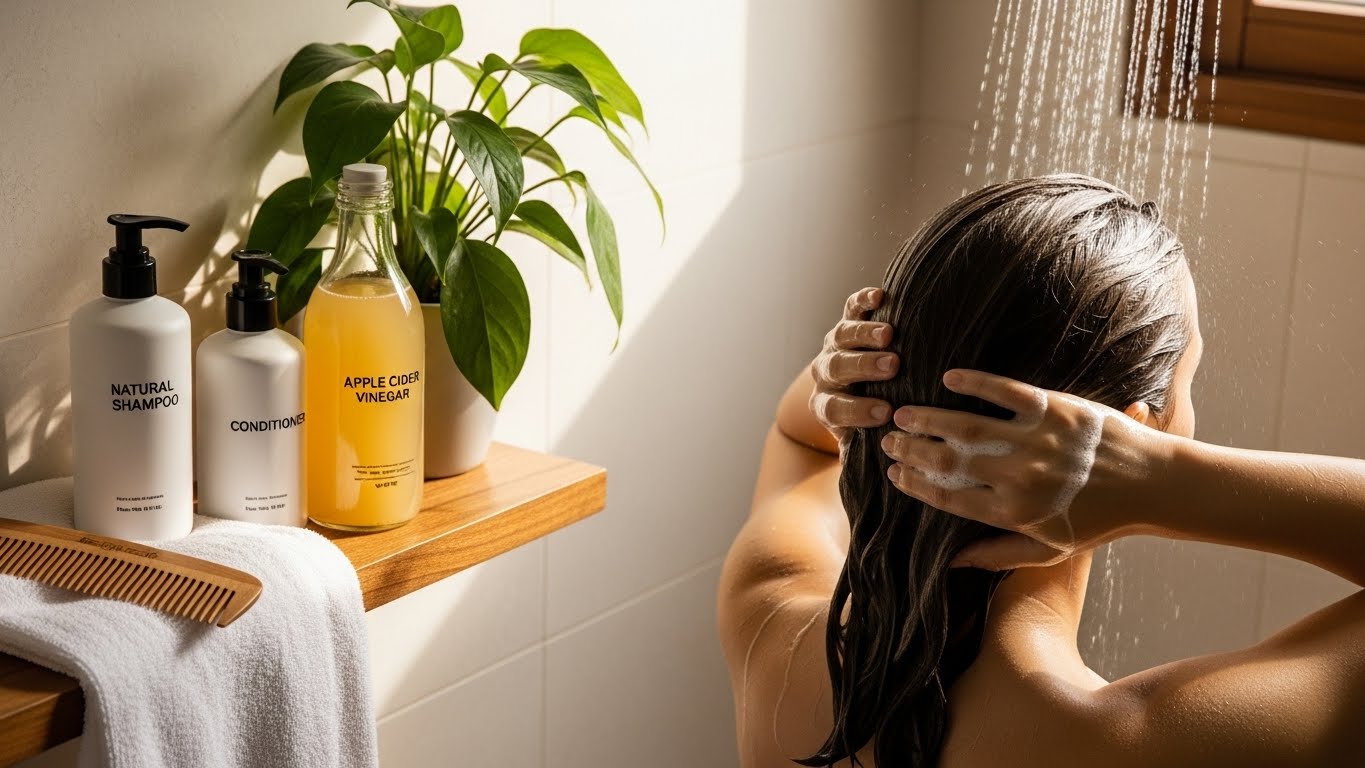
- Over-oiling. Leaving heavy oil on the scalp for hours, or using too much, leaves residue and can make the scalp feel greasy and itchy. A small amount on the lengths is usually enough.
- Applying remedies to a dirty scalp. Oil and masks sit on top of dirt and product build-up. Wash first, then treat the lengths.
- Using very hot water. Hot water dries the scalp and the hair. Lukewarm water is enough.
- Rough towel-drying. Rubbing wet hair hard with a towel causes breakage. Pat gently instead.
- Expecting instant results. No home remedy produces visible change in a few weeks. Hair grows about 1 cm a month, and any honest assessment of a new habit needs months.
- Using a remedy instead of seeing a doctor. If hair loss is sudden, patchy, or going on for more than six months, or if the scalp is painful, itchy, scaly or red, see a doctor. A remedy cannot fix a medical cause.
A safe starting point
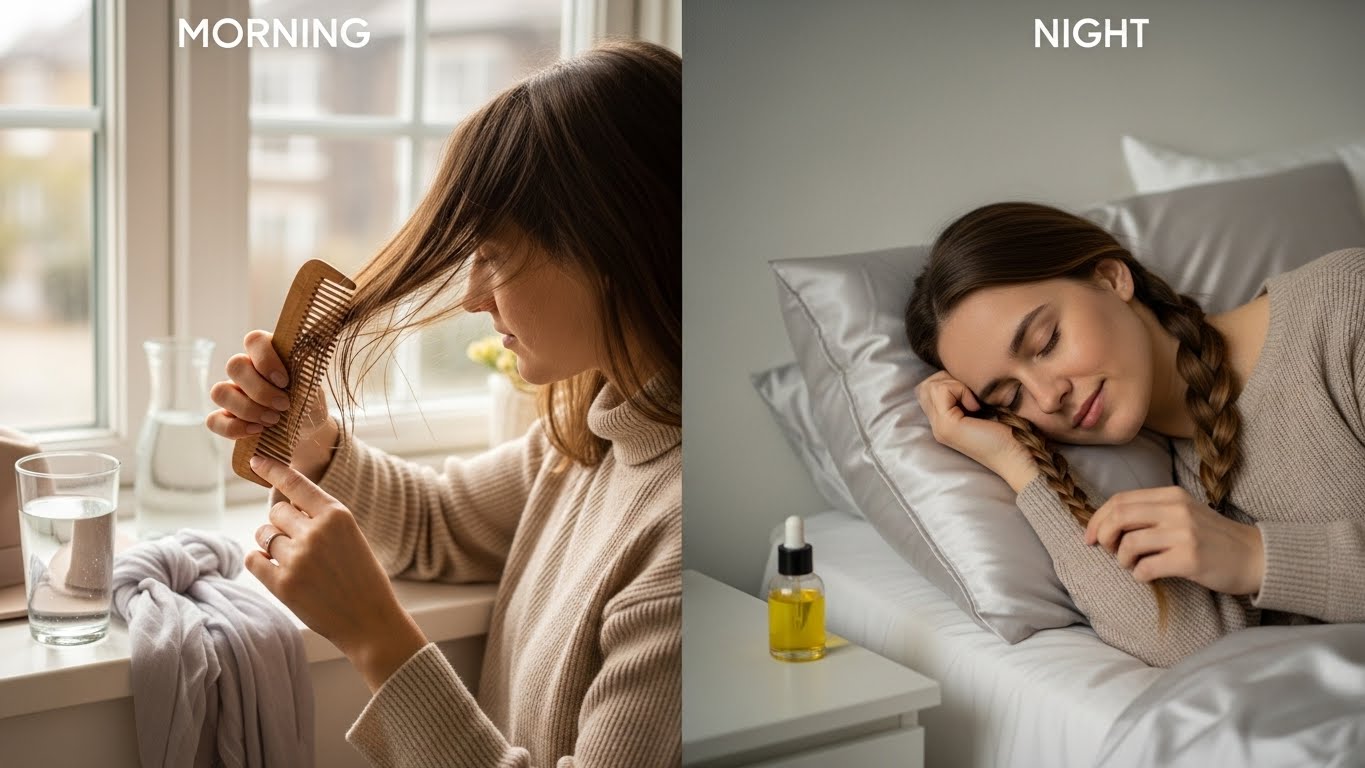
If you want to try home care, keep it simple:
- Wash when your scalp needs it. Shampoo the scalp, conditioner on the lengths.
- Once a week, apply a small amount of coconut oil to the lengths before washing, if you like it. This is the one remedy in this article with good evidence behind it.
- Detangle gently from the ends up, with a wide-tooth comb when hair is wet.
- Keep heat low, hairstyles loose, and towel-drying gentle.
- Eat a balanced diet, and do not start any supplement without a blood test.
That is a routine, not a treatment — and that is the honest way to describe it.
The short version
Coconut oil protects the hair shaft; it does not grow hair. Rosemary oil has one small study behind it, and a rosemary rinse is not the same thing. Castor oil, fenugreek, hibiscus, aloe vera, egg masks, apple cider vinegar, green tea and homeopathy have no good evidence for growing hair or stopping hair fall. Most home remedies are conditioning at best. Eat well, be gentle with your hair, and see a doctor if the hair loss does not fit ordinary shedding.
Sources: Rele & Mohile 2003 (coconut oil and protein loss); Panahi et al. 2015 (rosemary oil vs minoxidil 2%); 2022 systematic review of coconut, castor and argan oils; Patel et al. 2017 (biotin); US Food and Drug Administration (biotin and laboratory tests, 2017, updated 2019); American Academy of Dermatology (hair loss and shedding); NHS 111 Wales (hair loss).