Researched overview.
Table Of Content
- Quick answer
- Why dead skin builds up
- Signs of dead-skin build-up
- Before you start
- The two types of exfoliation
- Choosing a method
- How often
- What it should feel like
- Hydration after exfoliation
- Mistakes to avoid
- Seasons
- Face, hands and body
- Gentle facial massage
- A weekly plan
- By skin type
- When to change the routine
- Patch test
- When to get help
- Frequently asked questions
Quick answer
Dead skin cells build up on the surface when the skin does not shed them fully. The build-up makes the skin look dull and rough, and products and makeup sit on top instead of spreading evenly. The fix is gentle exfoliation — once or twice a week for most people — followed by hydration and moisturiser. Scrubbing harder or exfoliating every day does not work faster; it irritates the skin and damages the barrier.
If your skin is red, painful, flaking badly, or has a rash, blisters or open sores, skip exfoliation and ask a dermatologist or pharmacist first. This guide is general information, not medical advice.
Contents: Why dead skin builds up · Signs · Before you start · The two types · Choosing a method · How often · What it should feel like · Hydration after · Mistakes · Seasons · Face, hands and body · Massage · A weekly plan · By skin type · When to change the routine · Patch test · When to get help
Why dead skin builds up
The skin renews itself: old cells die and new cells come up to replace them. Problems start when shedding is incomplete. Common reasons are age, dehydration, weather changes, stress, or rough products. When dead cells stay on the surface, they block moisture, make the texture uneven, and make makeup settle into patches. The instinct is to scrub more — but scrubbing harder only makes it worse.
When shedding is healthy, the skin cycle is not forced. Exfoliation should help the process along, not fight it.
Signs of dead-skin build-up
Common signs include:
- Skin that feels rough even after moisturising
- A dull, flat look with no natural glow
- Makeup that looks patchy or sits on the surface
- Products that sit on the skin instead of spreading evenly
Redness, burning or stinging are not signs of dead skin — they are signs of irritation. More exfoliation at that point will make things worse.
Before you start
Whether the routine helps or harms depends on preparation. Do not exfoliate stressed, dry or irritated skin.
Start with a clean, calm face. Wash with lukewarm water and a mild cleanser, using your fingertips. Hot water damages the skin barrier and makes the skin more sensitive. If the skin feels tight after washing, the cleanser is too strong. Do not exfoliate skin that is broken, cracked or sunburned.

The two types of exfoliation
- Physical exfoliation uses fine particles or soft tools to lift dead cells off the surface. It is about pressure, not product: scrubbing hard can irritate and redden the skin. Use light pressure.
- Chemical exfoliation uses weak acids or enzymes to loosen the bonds between dead cells so they shed. It suits roughness and clogged pores. Overuse causes burning and peeling, so start slowly. Salicylic acid products commonly list 0.5–2%.
Neither type is better than the other in general. The right one depends on how your skin reacts.
Choosing a method
Choose by skin reaction, not by trends or labels:
- Physical exfoliation suits skin that tolerates light friction without turning red.
- Chemical exfoliation suits skin that cannot tolerate much rubbing.
Whichever you choose, follow the same rules: use light pressure, do not exfoliate broken skin, and stop if it burns. More pressure is not a sign of better results.
How often
Frequency matters more than product choice. For most skin types, once or twice a week is enough. Sensitive skin may need less. Oily skin can usually manage the same frequency, but it still needs rest days. Daily exfoliation damages the skin and slows healing.
Exfoliation is not the only thing that matters — preparation and hydration matter just as much.
What it should feel like
A good exfoliation leaves the skin feeling comfortable, not tight, oily or sore. There should be no burning, stinging or tightness. A little freshness is normal; redness is not. If there is pain a couple of hours afterwards, the routine was too strong.
Comfort is the measure of success, not how much the skin tingles.
Hydration after exfoliation
Exfoliation also makes the skin easier to hydrate, so hydrate right after. Skipping hydration after exfoliation leaves the skin dry and sensitive. Use a light hydrating product, such as a water-based serum, then a moisturiser to seal the water in and protect the newly exposed skin.
Use a moderate amount — one product, applied gently, is enough. Do not rub hard or press aggressively. Gentle upward strokes are fine; pulling the skin is not.
Because exfoliated skin is more sensitive to the sun, wear a broad-spectrum sunscreen of SPF 30 or higher afterwards, and reapply every two hours if you stay outdoors.
Mistakes to avoid
Common mistakes include:
- Rubbing harder when results take time
- Exfoliating swollen, dry or broken skin
- Using several exfoliating products at the same time
- Skipping moisturiser after exfoliation
- Treating irritation as a sign of progress — it is not
Seasons
The skin does not behave the same way all year. Cold, dry air dries the skin, so in winter use less vigorous exfoliation, fewer sessions per week, and richer creams to support the barrier. In hot weather, oil and sweat increase, and pores can clog more easily — a little lighter exfoliation can help, but hydration still has to come first. Adjusting the routine to the season is not optional; it is what keeps the skin smooth and healthy all year.

Face, hands and body
The same rules apply to hands and body: gentle exfoliation, then hydration. Do not use a face exfoliant on the body at the same strength, and do not use a body scrub on the face — the skin on the face is thinner and more reactive.
Gentle facial massage
Facial massage can help you apply products evenly and relax, but it does not “cure” anything and there is no good evidence it improves circulation. Keep it slow and light: fingertips or palms, no pulling, stop if redness increases. A few minutes is enough — more time does not mean better results.
A weekly plan
Consistency matters more than intensity. A simple week looks like this: one or two light exfoliation days, and the rest of the week spent on hydration and barrier support. That rhythm lets the skin adapt and recover.
By skin type
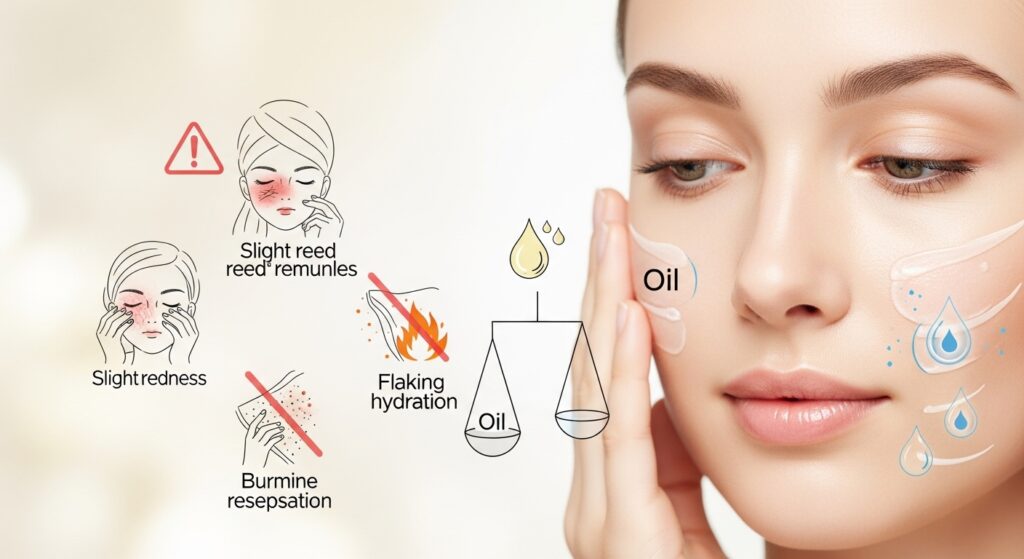
- Dry and sensitive skin: sheds dead cells slowly and reacts quickly to irritation. Keep exfoliation gentle and infrequent, and prioritise hydration.
- Oily and combination skin: build-up can grow faster, but over-exfoliation irritates the skin rather than fixing it. A balanced frequency keeps pores clear without causing breakouts.
- Ageing skin: cell turnover slows with age, so light exfoliation helps — but harsh exfoliation thins the skin. Gentle help beats force.
When to change the routine
Stressed skin shows it clearly. Warning signs include burning after exfoliation, persistent redness, peeling or flaking, and sudden breakouts. When they appear, reduce exfoliation and focus on hydration until the skin settles. The skin recovers better when you stop over-treating it than when you add more products.
Patch test
Try any new exfoliant on a small patch of skin first, before using it on your face. Apply a small amount to a quarter-sized area on the inside of your arm or the bend of your elbow, twice a day, for 7 to 10 days. If there is redness, itching or swelling, do not use it on your face. For rinse-off products, about five minutes of contact is enough for the test.
This is the AAD 7–10 day patch-test method — the site-wide rule for BeautyKob.
When to get help
Stop exfoliating and ask a dermatologist or pharmacist if you notice burning that does not fade, persistent redness, peeling, blistering, or breakouts that get worse instead of better. Do not try to treat a rash, open sores or spreading redness with more products.
You can also read Home Spa Beauty Routine for a slow weekly session built around the same gentle steps.
Frequently asked questions
Q1: How often do I exfoliate my face?
Most skin types do well once or twice a week. That gives the skin time to renew without irritation or barrier damage.
Q2: Can removing dead skin cause breakouts?
Yes, usually because of irritation rather than dirt. Gentle methods and the right frequency prevent most of it.
Q3: Which is better, physical or chemical exfoliation?
Both can work well. The choice depends on your skin’s reaction, comfort and sensitivity, not on the method itself.
Q4: Should I moisturise right after exfoliation?
Yes. Moisturisers seal in hydration and protect the newly exposed skin.
Q5: How do I know if I am damaging my skin?
Warning signs are redness, burning, peeling or tightness. They mean the routine should be reduced or simplified.
Sources: American Academy of Dermatology, 7 Rosacea skin care tips (patch-test method: apply a new product to a quarter-sized patch of skin on the inside of the arm every day for 7–10 days); American Academy of Dermatology, How to select anti-aging skin care products (broad-spectrum sunscreen, SPF 30 or higher, reapply every two hours outdoors). This is a researched overview, not a hands-on review.