Researched overview.
Table Of Content
- Quick answer
- What damaged hair is
- What protein treatments actually do
- Protein vs moisture: the balance
- When protein helps — and when it does not
- How to use a protein treatment at home
- How often
- Protein overload: signs and fix
- What about DIY protein masks?
- What protein cannot do
- When to see a doctor
- Summary
Quick answer
A protein treatment does not make your hair grow faster. It does not speed up the scalp. What it does is patch damaged hair temporarily, so the hair snaps less — and when less hair snaps off, the length you grow is kept.
That is the whole point of protein treatment: length retention, not faster growth. It is a maintenance routine, not a one-time fix, and it only helps hair that actually needs protein. Used too often, or on hair that does not need it, protein makes hair stiff and brittle — the opposite of what you want.
Contents: What damaged hair is · What protein does · Protein vs moisture · When protein helps · How to use it at home · Frequency · Overload · What protein cannot do · When to see a doctor
What damaged hair is
Hair is mostly keratin, a protein. The shaft has an outer layer, the cuticle — overlapping scales like roof tiles — and an inner core, the cortex. Heat, bleach, colour, relaxers, perms and rough handling lift, chip or wear away the cuticle, and the cortex underneath loses protein and moisture.
Damaged hair looks dull, feels rough, tangles easily, stretches too much when wet and snaps when brushed. Split ends appear. The damage is wear to dead tissue: the visible hair shaft has no living cells, so it cannot heal the way skin does. Nothing you put on it repairs it permanently. It can only be made softer, smoother and less likely to snap, until new hair grows out to replace it.
What protein treatments actually do
A protein treatment uses hydrolysed proteins — keratin, wheat, silk or soy proteins broken into small fragments. What they do is temporary and specific:
- Small fragments (under 1,000 Daltons) can enter the outer cortex of porous, damaged hair and associate with the hair’s own keratin, temporarily reinforcing it.
- Larger fragments stay on the surface, forming a thin film that fills microscopic cracks in the cuticle, smooths rough scales and reduces friction when you comb.
- The result is hair that feels stronger, tangles less and snaps less — for a few washes. The deposits wash out gradually with shampooing, which is why the treatment needs repeating.
What protein does NOT do: it does not rebuild broken internal bonds permanently, it does not regenerate the cortex, and it does not “bind weak spots” into a repaired strand. Think of it as filler in cracked plaster, not as rebuilding the wall.
Protein vs moisture: the balance
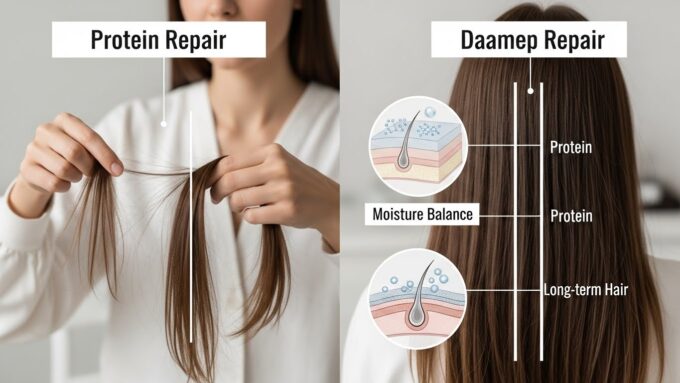
Hair needs both strength and flexibility. Protein gives strength. Moisture gives flexibility — the ability to stretch slightly without breaking.
- Too much moisture and too little protein: hair feels soft, mushy and stretchy when wet, and snaps easily.
- Too much protein and too little moisture: hair feels stiff, dry and straw-like, and snaps when stretched instead of flexing.
- The goal is balance, not maximum protein. A treatment that is all protein and no moisture should be used rarely and carefully.
When protein helps — and when it does not
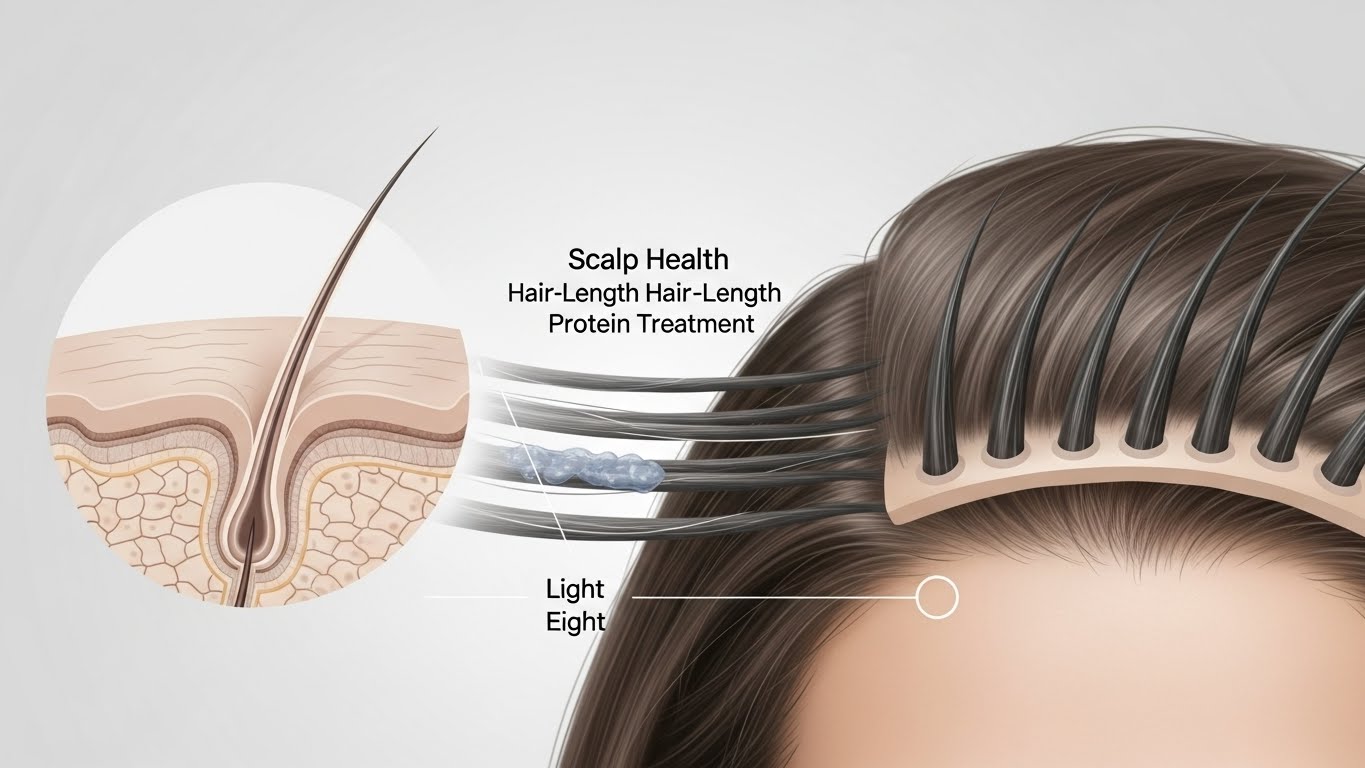
Protein is likely to help when hair is: too soft and weak; very stretchy when wet; breaking during brushing or styling; damaged by heat or chemicals; and no longer responding to moisture-only care.
Protein will not help, and may make things worse, when hair is: already stiff, dry or brittle; rough and coarse from too much protein already; or breaking because of a scalp problem or medical hair loss. In those cases, moisture and gentle handling come first, not more protein.
Protein works on the shaft, not the scalp. It does nothing for the follicle, so it does not treat shedding, thinning or patchy loss. If your hair is falling out from the root, see “When to see a doctor” below.
How to use a protein treatment at home
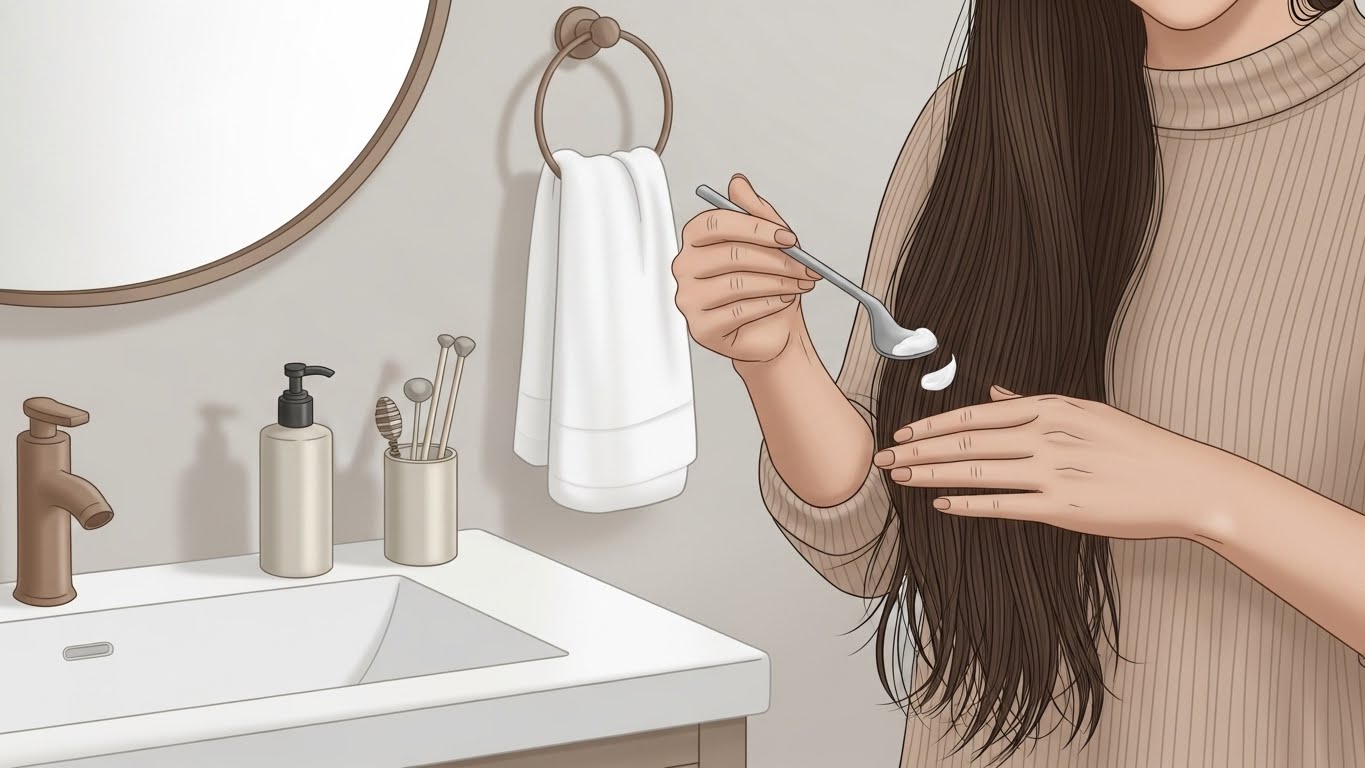
- Start with clean, damp hair. Wash gently first, then blot out excess water. Do not scrub roughly — weak hair is at its most fragile when wet.
- Apply to the lengths, not the scalp. Work the product through from mid-length to ends, where the damage is. Heavy product on the scalp weighs hair down and can cause buildup.
- Follow the product’s own label. Leave it on for the time the label says, no longer. More time does not mean more repair.
- Rinse, then moisturise. Follow with a moisture conditioner. Protein without moisture afterwards is what leaves hair stiff.
- Detangle gently afterwards. Damp hair coated in conditioner, fingers first, then a wide-tooth comb from the ends up. Never detangle dry hair.
Before using a new protein treatment, patch test it: put a small amount on the inside of your arm or the bend of your elbow, twice a day for 7 to 10 days. If the skin turns red or itchy, do not use it. (This is the American Academy of Dermatology patch-test method.)
Do not use a protein treatment on the same day as a chemical service such as bleach or a relaxer, and do not use high heat straight after a treatment.
How often
There is no fixed schedule that suits everyone, and this guide does not invent one. Follow the product’s own label, start with the least frequent option, and watch how your hair responds.
As a rough guide, an intensive protein treatment every few weeks is plenty for most damaged hair, with moisture-focused care in between. If your hair starts feeling stiff, dry or straw-like even after conditioning, you are using protein too often — stop and switch to moisture-only care for a few weeks. If your hair still feels weak and stretchy after several treatments, protein alone is not the answer; cut back heat and chemical damage and trim the worst ends.
Protein overload: signs and fix
Overload happens gradually, which is why it surprises people. A treatment makes hair feel better, so it gets repeated, then a protein shampoo and a protein leave-in are added, and the hair gets worse.
Signs of overload: hair feels stiff, dry and straw-like even right after conditioning; it tangles more, not less; it snaps when stretched instead of stretching; it looks dull despite conditioning. Overload mimics damage, so people add more protein — which makes it worse.
The fix is simple: stop all protein for two to three weeks. Use moisture-focused products only, clarify once to remove accumulated film, and reintroduce protein slowly, at a lower frequency, only if the hair still needs it.
What about DIY protein masks?
Egg, yogurt and mayonnaise masks are conditioning only. Whole food proteins are far too large to enter the hair shaft — they dry into a stiff film on the surface and rinse away without changing the fibre. They do not repair hair, they do not reduce split ends, and they are not a substitute for a hydrolysed protein product. If you enjoy them as a conditioning treatment, that is fine, but do not expect them to strengthen the hair.
What protein cannot do
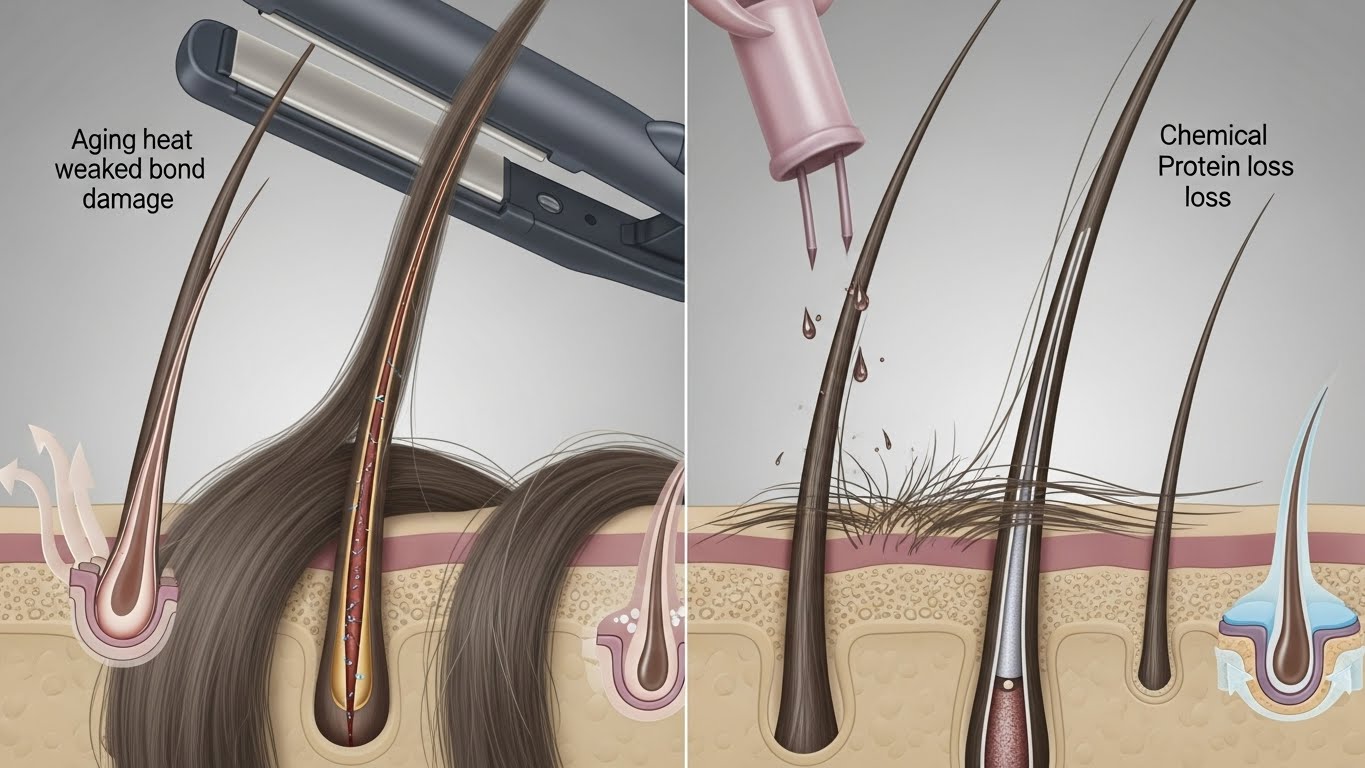
- It cannot make hair grow faster or thicker from the scalp.
- It cannot permanently fix damaged hair, and it cannot glue split ends back together. Only trimming removes split ends — every 6 to 12 weeks.
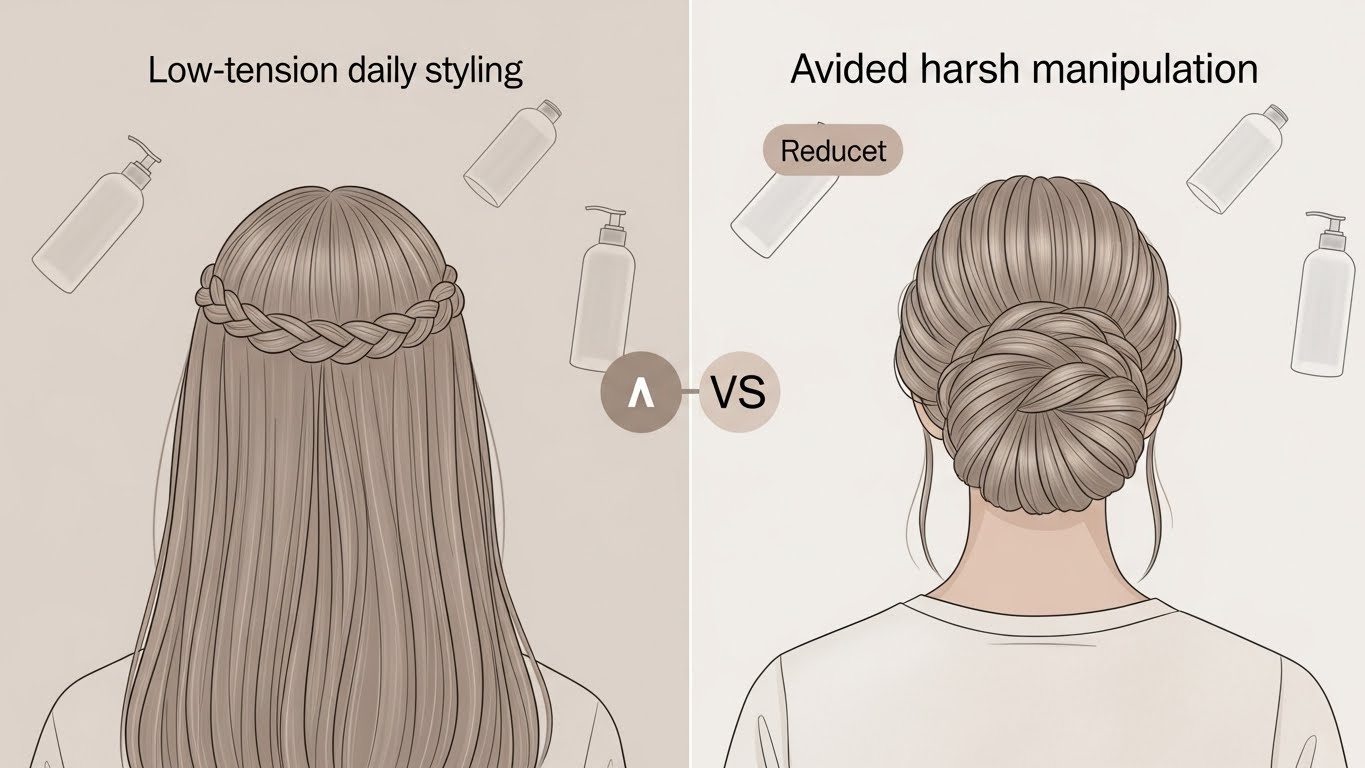
- It cannot fix breakage caused by tight styles, high heat or chemical damage. Those causes have to stop first.
- It cannot treat hair loss from the scalp. Shedding, thinning and patchy loss need a doctor, not a treatment.
When to see a doctor
See a doctor or dermatologist if you notice: sudden or heavy shedding; patchy hair loss; a widening part or receding hairline; scalp pain, sores, scaling or scarring; or breakage so severe that large sections snap off despite gentle care. Bring a list of products and any supplements you use, including biotin, which can interfere with lab tests.
Summary
Protein treatment does not grow hair. It temporarily patches damaged cuticle with small hydrolysed protein fragments, so weak hair snaps less and the length you grow is kept. Use it on clean, damp lengths, follow the product label, moisturise afterwards, and keep it infrequent — an intensive treatment every few weeks is plenty for most damaged hair. If hair turns stiff, dry and straw-like, that is protein overload: stop protein, use moisture only for a few weeks, then reintroduce it slowly. Damaged hair cannot be repaired permanently; protein buys time while new hair grows out and split ends are trimmed away. The scalp is skin too — an exposed parting can sunburn, so use broad-spectrum SPF 30+ sunscreen on it, or cover it with a hat.
Sources: cosmetic-science literature on hydrolysed proteins (peptides under 1,000 Daltons entering the outer cortex; larger fragments forming a temporary surface film; deposits washing out over a few shampoos; overuse causing stiffness and breakage); AAD guidance on stopping hair damage (lowest heat setting, air-dry at least partway, never flat-iron damp hair); AAD shedding guidance (50–100 hairs a day); Rele & Mohile 2003 on coconut oil and protein loss. This is a researched overview, not a hands-on review.