Researched overview.
Table Of Content
- Quick answer
- What severe damage is
- Step 1: Stop making it worse
- Step 2: Wash gently
- Step 3: Dry and detangle safely
- Step 4: Moisture and strength in balance
- Step 5: Oils — seal, do not repair
- Step 6: Trim split ends
- Step 7: Protect while it grows out
- Food and water
- What to expect — honestly
- When to see a doctor
- Summary
Quick answer
Severely damaged hair cannot be repaired. The visible hair shaft is dead tissue with no living cells, so it cannot heal the way skin does. No mask, oil or treatment puts the cuticle back together permanently.
What home care CAN do is three things: stop new damage, make the hair you have softer and easier to handle so it snaps less, and protect it while new, healthy hair grows out — at about half an inch a month. Split ends cannot be glued back; only trimming removes them.
If that sounds disappointing, it is still the fastest honest route: most people feel the texture improve within days to weeks of gentler care, and length follows over months as breakage falls and new growth is kept.
Contents: What severe damage is · Step 1: stop making it worse · Step 2: wash gently · Step 3: dry and detangle safely · Step 4: moisture and strength · Step 5: oils · Step 6: trim · Step 7: protect · Food and water · What to expect · When to see a doctor
What severe damage is
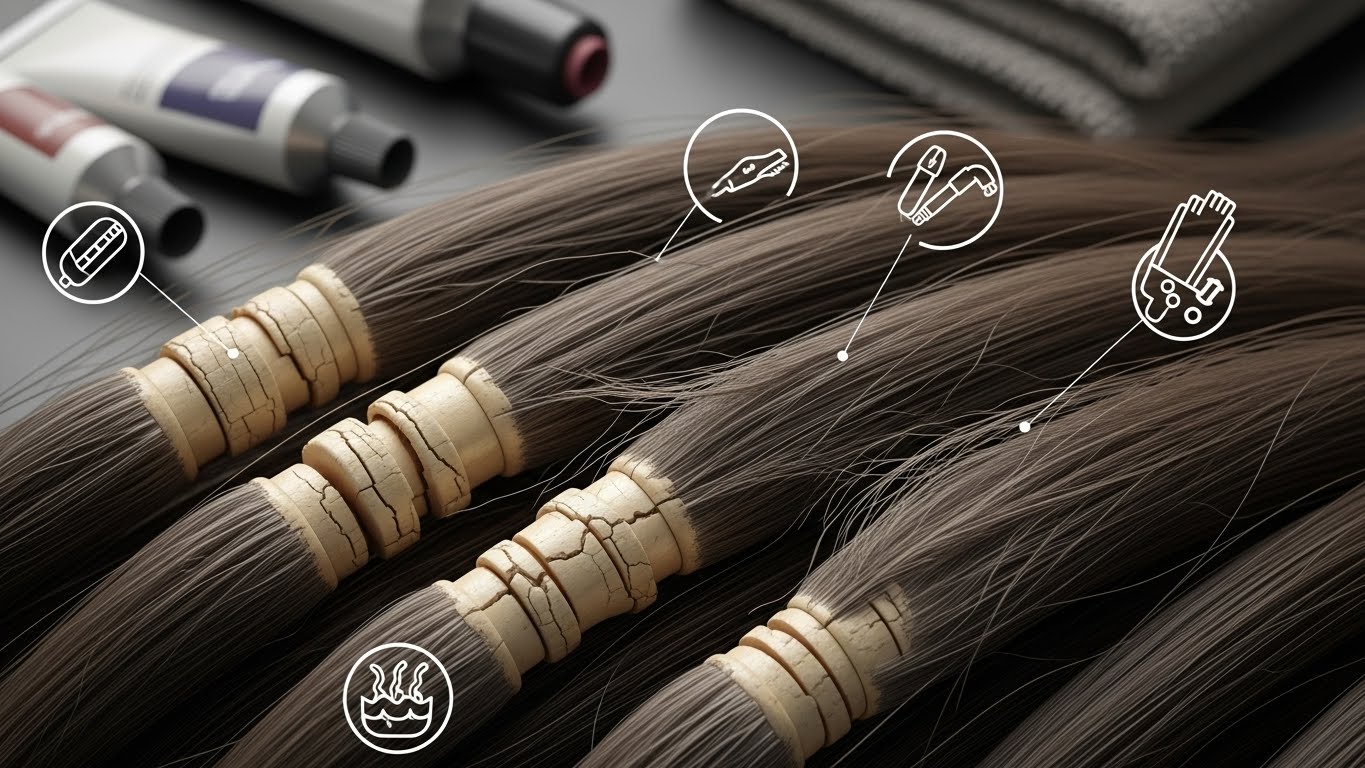
Hair is mostly keratin, a protein. The shaft has an outer layer, the cuticle — overlapping scales like roof tiles — and an inner core, the cortex. Heat, bleach, colour, relaxers, perms and rough handling lift, chip or wear away the cuticle, and the cortex underneath loses protein and moisture.
Severely damaged hair snaps instead of bending. It stays dry even after conditioner, looks dull and uneven, tangles easily, and the ends split. Damage is worst at the ends because they are the oldest part of the hair and have had the most wear.
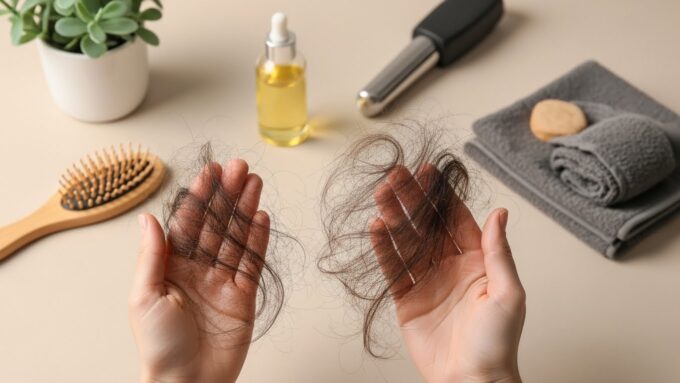
Two things are often confused. Shedding is hair falling out from the root. Breakage is hair snapping along the shaft. Severely damaged hair usually still grows from the scalp at a normal rate — it just snaps off, so it gets shorter and thinner instead of longer. Fix the breakage and the length appears.
Step 1: Stop making it worse
Repair starts with stopping the damage. Nothing else works while heat and chemicals keep breaking the hair down.
- Heat. Cut back sharply. Use the lowest heat setting that works, keep the tool moving, and never use a flat iron on damp hair — water trapped in the strand turns to steam and damages it from the inside. Let hair air-dry at least partway when you can. Heat protection reduces risk; it does not make high heat safe.
- Chemicals. Pause bleach, relaxers, perms and frequent colour while the hair recovers. Do not overlap bleach on already lightened hair, and do not use high heat straight after a chemical service.
- Rough handling. No scrubbing the scalp with nails, no rubbing wet hair hard with a towel, no yanking through knots, no tight styles that pull at the roots.
Step 2: Wash gently
- Use lukewarm water and a mild shampoo. Hot water strips the scalp and dries the hair further.
- Wash when your scalp needs it — for most people with damaged hair, two or three times a week is enough, but judge by scalp comfort, not by a fixed rule. Over-washing dries the hair; under-washing lets buildup sit and makes hair look dull.
- Lather gently with your fingertips and rinse well.
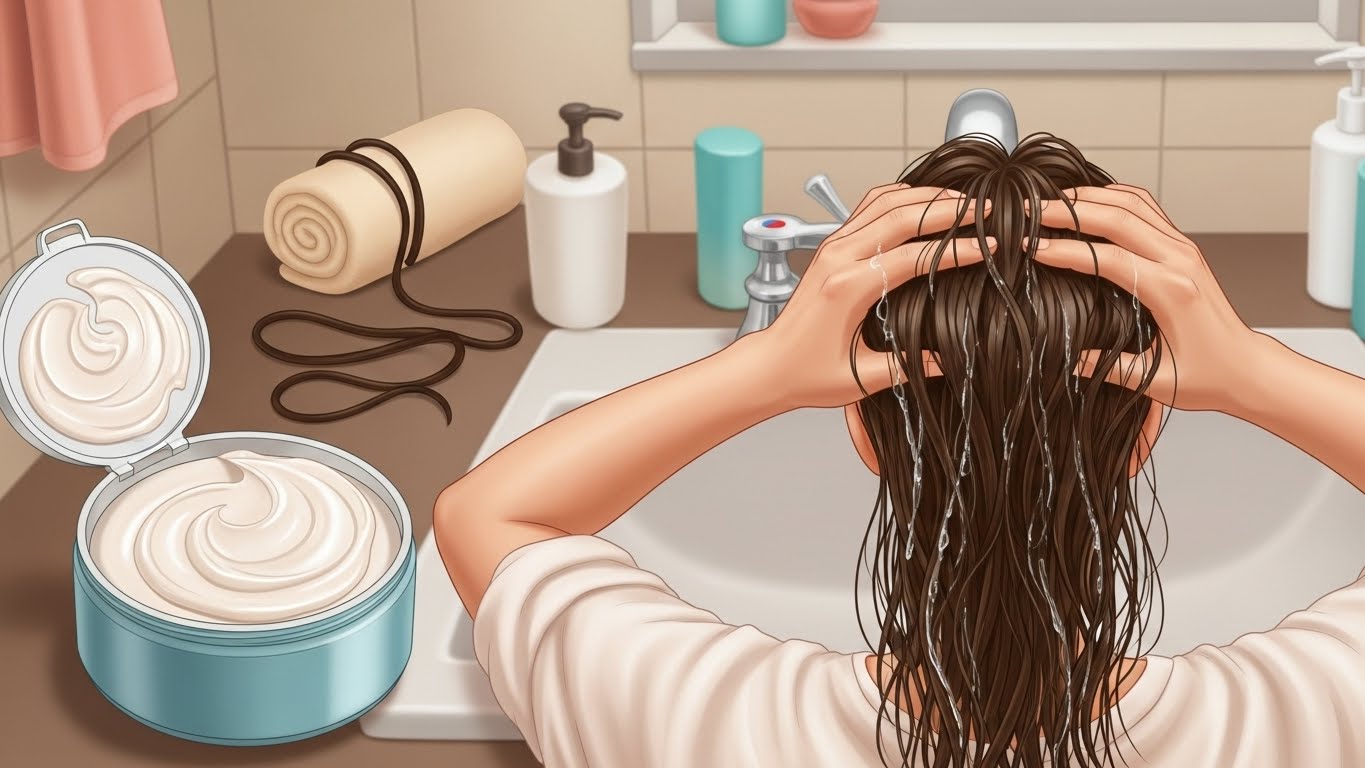
- Apply conditioner to the lengths, from mid-length to ends, not heavily on the scalp. Conditioner will never restore damage, but it reduces friction when you brush and style, which is how it prevents further breakage.
- A hair mask once or twice a week adds moisture and slip so damaged hair is easier to handle. Masks soften the hair; they do not harden it, and they do not repair the shaft.
Step 3: Dry and detangle safely
This step matters most, because most breakage happens here — and the old article got it wrong.
- Blot, do not rub. Press water out gently with a towel or a soft cloth. Rubbing roughs up the cuticle and snaps weak strands.
- Detangle damp hair, never dry hair. Wet hair is MORE fragile, not less — water weakens the hydrogen bonds between keratin chains, so wet hair stretches further but snaps under less force. The safe way is damp hair coated in conditioner: the conditioner gives slip, so strands slide past each other instead of catching. Work in small sections, loosen knots with your fingers first, then use a wide-tooth comb starting at the ends and working up. Never yank through a knot from the roots down, and never drag a fine-tooth comb or stiff brush through wet hair.
- Dry gently. Air-drying is fine. If you blow-dry, use a low or medium setting, keep the dryer moving and at a distance, and stop when the hair is dry rather than baking it.
Step 4: Moisture and strength in balance
Damaged hair needs both moisture (flexibility) and protein (strength), in balance.
- Moisture comes from conditioner and masks. It makes the hair pliable so it bends instead of snapping.
- Protein comes from hydrolysed protein treatments. Small protein fragments temporarily patch gaps in the cuticle and make weak hair snap less. They wash out over a few shampoos, so the effect is maintenance, not repair. Follow the product’s own label, use an intensive treatment only every few weeks, and always moisturise afterwards. (See the companion guide, Protein Treatment for Damaged Hair Growth.)
- Too much protein is a real problem. Hair that feels stiff, dry and straw-like even after conditioning is overloaded. Stop all protein for two to three weeks, use moisture-only care, then reintroduce protein slowly. Adding more protein to overloaded hair makes it worse.
Step 5: Oils — seal, do not repair
Oils are not medicine and they do not repair the shaft. They coat it, reduce friction, seal in moisture and make damaged hair easier to handle.
- Coconut oil reduces protein loss from the hair shaft during washing (Rele & Mohile 2003). A small amount on the lengths before washing, then washed out, is enough.
- Castor oil has no strong evidence for regrowing hair (2022 systematic review). Used lightly, it is a moisturiser, not a treatment.
- Use a little, not a lot. Heavy oiling leaves buildup that makes hair look dull and feel weighed down.
Before using a new oil or treatment, patch test it: put a small amount on the inside of your arm or the bend of your elbow, twice a day for 7 to 10 days. If the skin turns red or itchy, do not use it. (This is the American Academy of Dermatology patch-test method.)
Step 6: Trim split ends
Split ends cannot be repaired, glued or sewn back together. A split end travels up the shaft and causes further breakage, so the only fix is to cut it off.
Trim every 6 to 12 weeks, and trim more off the worst ends first if the damage is severe. Cutting the ends does not make hair grow faster — hair grows from the follicle, not from the ends — but it stops splits from travelling up, so the length you grow is kept. If the ends are badly damaged, a bigger trim now saves months of breakage later.
Step 7: Protect while it grows out
- Loose styles. Loose braids and low buns reduce friction and pulling. Tight styles pull at the roots and can cause traction alopecia — thinning at the hairline, soreness or bumps. Early cases can recover when the tension stops, but long-standing traction can permanently damage follicles.
- Night. A satin or silk pillowcase, or a loose braid, reduces friction while you sleep.
- Sun and friction. Long hair rubs against clothes, bags and chairs. Keep it loosely contained when you can, and be gentle when you take it down. The scalp is skin too — an exposed parting can sunburn, so use broad-spectrum SPF 30+ sunscreen on it, or cover it with a hat.
Food and water
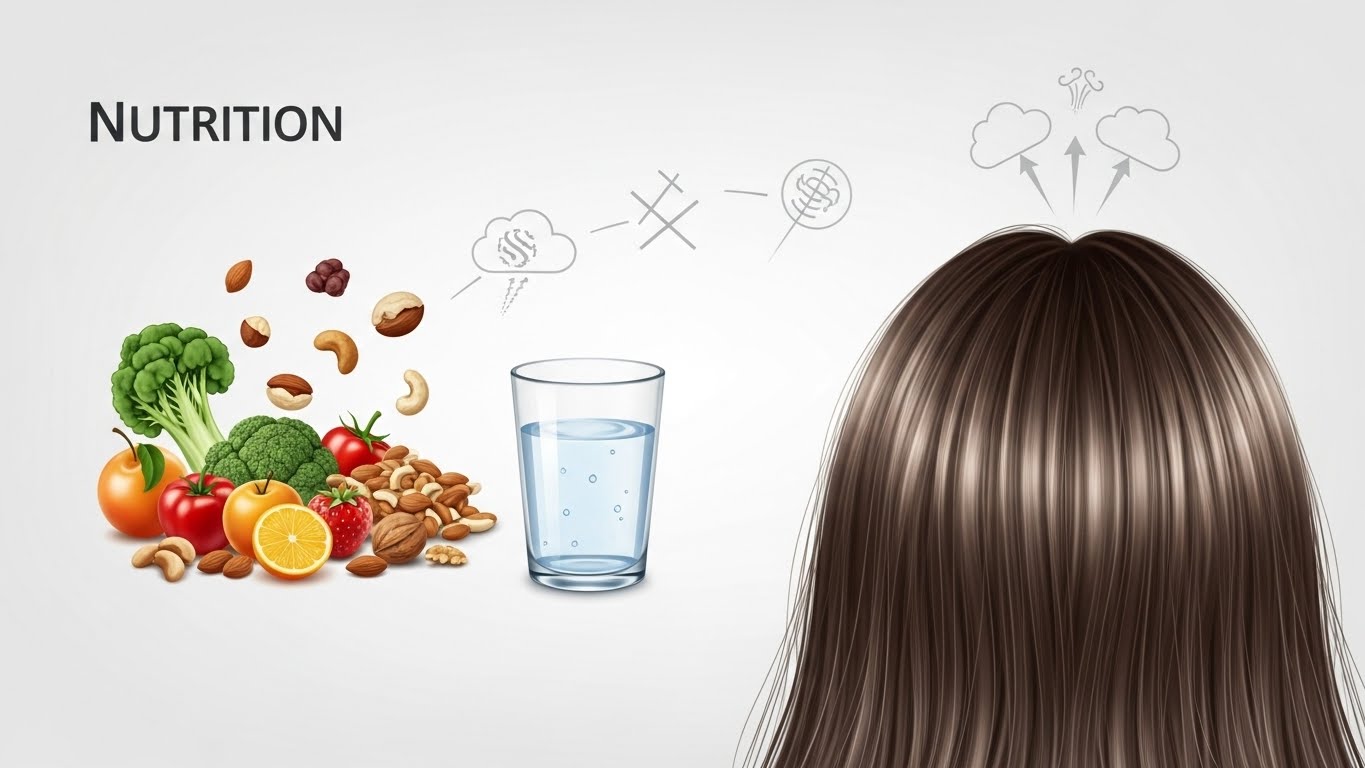
A balanced diet with enough protein supports normal growth, because hair is mostly keratin. That is a general health point, not a treatment for damage, and diet is not a treatment for hair loss.
Drinking more water does not hydrate the hair shaft. Water supports general health; it does not make damaged hair stronger. No supplement, dose or brand is recommended in this guide — supplements help only where a deficiency exists, and the only way to know is a blood test. Biotin is vitamin B7, not B1, and high-dose biotin can interfere with lab tests, including the heart-attack test — tell your doctor if you take it.
What to expect — honestly
- Days to weeks: texture feels softer, tangling reduces, fewer hairs break during brushing. These are the first signs the routine is working.
- Months: length becomes visible, because hair grows about half an inch a month and breakage has fallen. There is no fixed timeline — “two weeks for texture, two to three months for strength” is a guess, not a fact, and your hair may take longer.
- What will not happen: the damaged lengths will not become undamaged. They will look and feel better, and then they will be trimmed away as new hair grows out. That is what repair means for hair.
When to see a doctor
Home care improves comfort and reduces breakage; it does not treat medical hair loss. See a doctor or dermatologist promptly if you notice: sudden or patchy hair loss; a widening part or receding hairline; scalp pain, sores, scaling or scarring; or hair loss after starting a new medicine. Bring a list of any supplements you take.
Summary
Severely damaged hair cannot be repaired — only managed. Stop the heat and chemicals that caused the damage, wash gently with lukewarm water, condition the lengths, and detangle damp hair with conditioner, ends first, never dry. Balance moisture and protein, use oils lightly to seal in moisture, and trim split ends every 6 to 12 weeks. Texture improves in days to weeks; length takes months, because hair grows about half an inch a month. Protect the hair while new growth replaces the damaged lengths, and see a doctor for sudden, patchy or scalp-related loss.
Sources: AAD guidance on stopping hair damage (lowest heat setting, air-dry at least partway, never flat-iron damp hair; wet hair is fragile); AAD shedding guidance (50–100 hairs a day; telogen effluvium timing); AAD hair growth guidance (about half an inch a month); Rele & Mohile 2003 on coconut oil and protein loss; cosmetic-science literature on hydrolysed proteins (temporary cuticle patch, washes out, overuse causes stiffness); Philip Kingsley trichology guidance and Mayo Clinic on split ends (only trimming removes them). This is a researched overview, not a hands-on review.