Researched overview.
Table Of Content
- Quick answer
- What “natural skincare” means here
- The habits that matter most
- Washing
- Moisture and sun care
- Natural ingredients — what they can and cannot do
- Body skin
- Food, water and sleep — what they do and do not do
- By skin type
- Seasons
- Aging skin
- Mistakes that spoil a good routine
- Patch test — the AAD 7–10 day method
- When to get help
- Summary
Quick answer
Healthy skin is mostly the result of small, steady habits: wash gently, keep moisture in, protect against the sun every day, and change products slowly. “Natural” does not automatically mean safe or effective — the US Food and Drug Administration has never legally defined “natural” for cosmetics, so the word on a label tells you very little on its own. What matters is whether a product is gentle, suits your skin type, and does not irritate you.
If your skin is red, painful, flaking badly, or has a rash, blisters or open sores, skip the actives and ask a dermatologist or pharmacist first. This guide is general information, not medical advice.
Contents: What “natural skincare” means · The habits that matter most · Washing · Moisture and sun care · Natural ingredients · Body skin · Food, water and sleep · Stress · By skin type · Seasons · Aging skin · Mistakes · Patch test · When to get help
What “natural skincare” means here
In this guide, “natural skincare” means simple, gentle daily care: mild cleansers, plain moisturisers, a few well-known plant ingredients, and habits that protect the skin barrier — the outer layer that holds moisture in and keeps dirt, pollution and bacteria out. It does not mean that every plant ingredient is harmless, and it does not mean that natural products work better than other products. Some natural ingredients irritate skin; some synthetic ingredients are mild and well tested.
The skin makes its own oil, which helps slow water loss from the surface. Harsh soaps, very hot water and frequent scrubbing strip that oil and damage the barrier, leaving skin dry, tight or irritated. Gentle habits protect the barrier instead of fighting it.
The habits that matter most
Three habits do most of the work:
- Wash gently, twice a day. Morning washing removes the oil and sweat of the night; night washing removes sunscreen, makeup, dirt and pollution. More washing is not better — over-washing dries and irritates the skin.
- Moisturise while the skin is damp. Moisturiser holds water in the skin. Apply it after washing, while the skin is still slightly damp.
- Protect against the sun every day. Sun damage builds up over time and shows as dark spots, dryness and uneven colour. Use a broad-spectrum sunscreen with SPF 30 or higher every morning as the last step, including on cloudy days, and reapply every two hours when outdoors, or after swimming or sweating. (AAD sunscreen guidance)
Everything else — masks, exfoliation, extra steps — is optional and should be added one at a time, slowly.
Washing
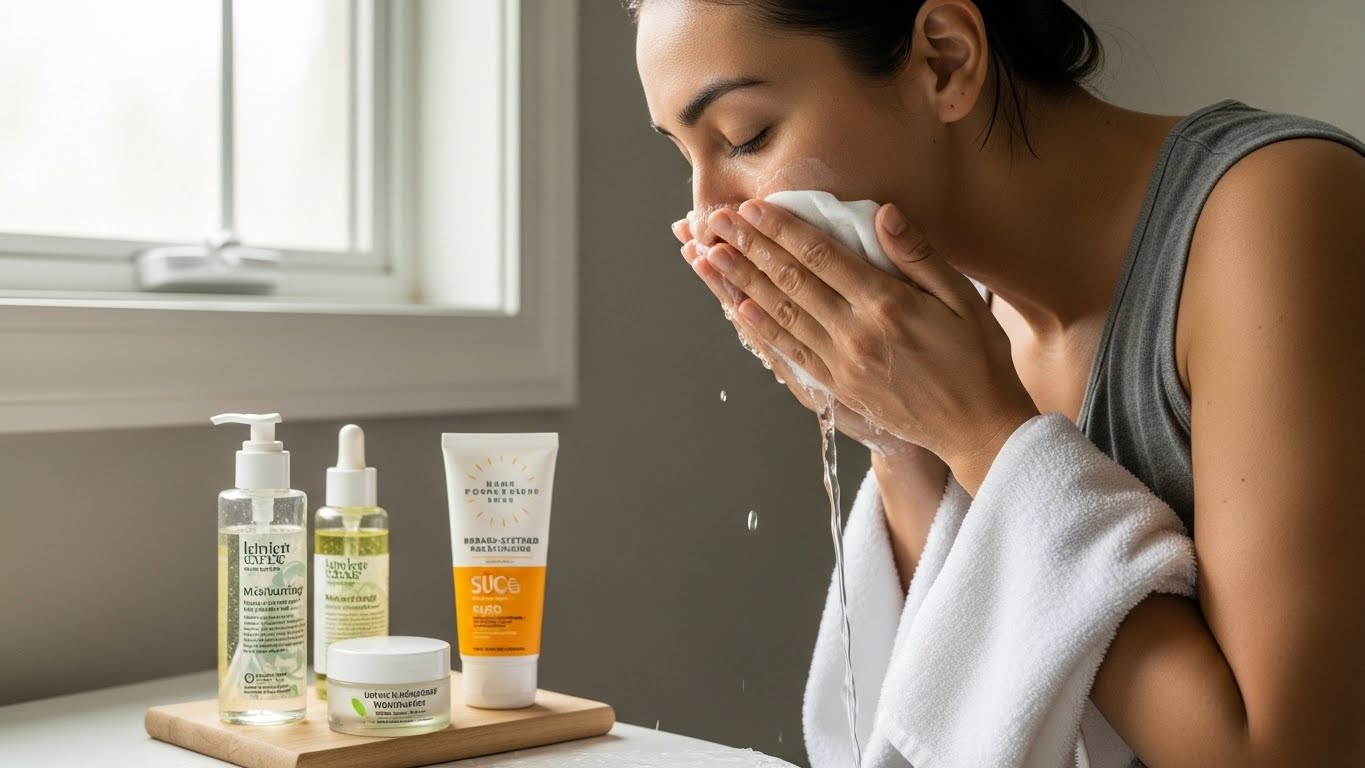
- Use lukewarm water, not hot water. Hot water dries the skin and damages the barrier; long hot showers strip natural oil and lead to dryness.
- Use a mild cleanser rather than a harsh soap. If your skin feels tight after washing, your cleanser is probably too strong.
- Wash with your hands, gently. Hard rubbing reddens the skin and does not clean it better.
- Pat the skin dry with a clean towel. Do not rub it dry.
- Wash your face twice a day. Some people with very dry or sensitive skin wash once a day and rinse with water in the morning — that is fine if it suits your skin.
Moisture and sun care
Moisturiser is needed by every skin type, including oily skin. Oily skin still needs hydration; a light lotion or gel usually suits it, while dry skin needs a richer cream. Moisturisers work best when they combine a humectant (draws in water, for example glycerin or hyaluronic acid), an emollient (softens, for example ceramides or squalane) and, for dry skin, an occlusive (seals water in, for example petrolatum or shea butter).
Apply moisturiser to slightly damp skin after washing. For the body, apply lotion daily, with extra attention to knees, elbows, hands and feet, which dry out first. Exfoliate the body gently about once a week if you like — it is optional, not essential.
Sun protection is a daily habit, not a summer habit. Hands, neck, arms and face are exposed during normal activities, and UV rays pass through cloud and windows.
Natural ingredients — what they can and cannot do
Aloe vera, honey and milk are commonly used in skincare to soothe or moisturise, and the evidence for them doing so is limited. They are not treatments for any skin condition, and they can still irritate some people.
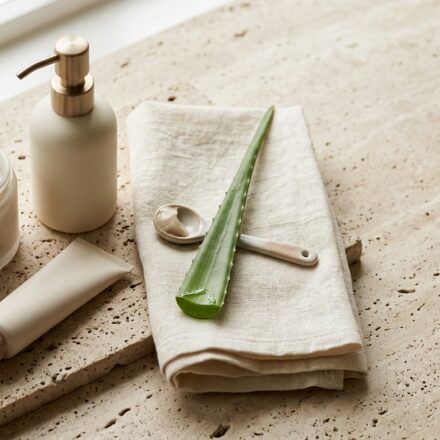
- Aloe vera is commonly used to soothe dryness and redness. The evidence is limited.
- Honey is a humectant — it draws water in — and is commonly used to keep skin feeling moist and comfortable. It is not a treatment.
- Milk is sometimes used to soften skin. The evidence is limited, and milk on the skin can irritate some people.
- Light plant oils (for example jojoba or squalane) can help seal moisture into dry areas. Oil is not hydration on its own — water moisturises, oil seals it in.
Use natural ingredients in small amounts, one at a time, and patch test first (see below). If an ingredient stings, reddens or itches, wash it off and do not use it again. Never put lemon or lime juice on your skin: the juice contains furanocoumarins, and with sunlight it can cause phytophotodermatitis — a burn-like reaction with redness, blisters and dark marks that can last for years. (Cleveland Clinic, phytophotodermatitis)
Body skin
Face care alone is not enough. Body skin needs the same habits: gentle washing with a mild soap, moisturiser after bathing, and sun protection on exposed skin. The neck and chest show sun damage early, so treat them like the face. Light body exfoliation once a week is enough; more often risks irritation.
Food, water and sleep — what they do and do not do
Food and water support general health, and healthy skin reflects general health. But diet is not a treatment for skin: no food or drink removes “toxins” from the skin, and no single food prevents breakouts. Water keeps the body hydrated; it does not wash waste out of the skin. A balanced diet with fruit and vegetables, enough water, and less very sugary or heavily fried food is a reasonable habit — it is not a skin treatment, and changing your diet will not by itself clear your skin.
Sleep supports the skin’s normal repair. Most adults need at least 7 hours of sleep a night. (CDC sleep guidance) Poor sleep can leave skin looking tired and dry. Stress can make breakouts worse for some people, and relaxing habits — walking, rest, time away from screens — can help. Stress does not directly cause breakouts by itself, and no relaxation technique treats acne.

By skin type
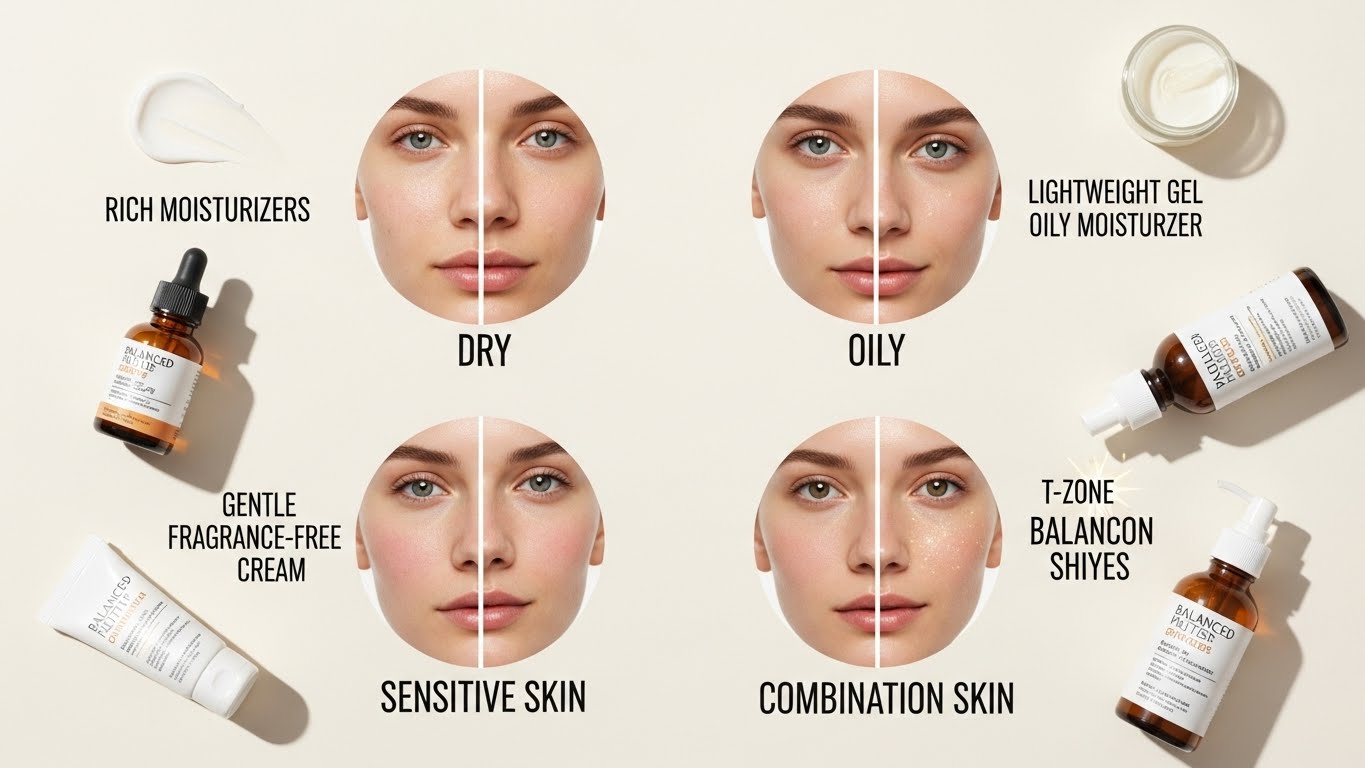
- Dry skin: Needs more moisture. Wash gently to protect natural oil, use a richer moisturiser, and keep showers short and lukewarm. Dry skin may need fewer washes, not more products.
- Oily skin: Still needs hydration. Wash twice a day with a mild cleanser and use a light, non-greasy moisturiser. There is no good evidence that drying the skin out makes it produce less oil — and harsh washing can irritate the skin, which the AAD notes can trigger increased oil production. The honest position is that the claim is disputed: avoid over-washing because it causes irritation and dryness, not because of a proven oil-rebound effect.
- Sensitive skin: Keep the routine shorter, not longer. Use fragrance-free products, introduce one product at a time, and patch test first. Fewer products means less chance of irritation.
- Combination skin: Dry and oily areas need different amounts of moisture — lighter moisturiser on oily areas, richer on dry areas. The same gentle routine works for the whole face.
Skin type can change with age, weather, stress and routine, so check how your skin feels rather than following a fixed label.
Seasons
- Cold, dry weather: Dry air causes tightness and flaking. Use a richer moisturiser, keep showers short and lukewarm, and moisturise bare skin straight after washing.
- Hot, humid weather: Sweat and oil increase. Cleanse gently, use light moisturisers, and take sun protection more seriously when you are outdoors for long periods.
- Rainy or humid weather: Skin may feel oilier. Keep the routine light and do not add extra steps to “fix” it.
Seasonal changes should be small. You do not need a new routine for each season.
Aging skin
With age the skin makes less natural oil, becomes thinner and loses moisture faster, which can lead to fine lines. Light, gentle routines keep older skin soft: mild washing to protect the barrier, good moisturising, and sun protection every day. Sunscreen is the single most effective anti-ageing step — in one study, daily sunscreen use was linked to 24% less skin ageing over four and a half years (Hughes et al. 2013). Retinoids are the strongest topical option for fine lines but take 3–6 months to show an effect, can irritate, and must not be used during pregnancy. Peptides have thin evidence. Gentle massage while applying moisturiser may feel pleasant, but there is no good evidence it improves circulation or firmness.
Mistakes that spoil a good routine
- Over-washing, which strips natural oil and irritates the skin.
- Switching products constantly, so you never learn what helps.
- Using several strong actives at once.
- Skipping sun protection, so damage builds up over time.
- Ignoring body skin while caring only for the face.
- Expecting a fixed result by a fixed date. Hydration can feel better within days, but changes in texture and tone take weeks of steady use and vary from person to person. No routine can promise a specific result by a specific week, and no routine gives permanent results — skin needs ongoing care.
Patch test — the AAD 7–10 day method
Before using any new product on your face, test it first. This is the site-wide rule for BeautyKob, following the American Academy of Dermatology:
- Choose a quarter-sized area where the product will not be rubbed or washed away, such as the underside of your arm or the bend of your elbow.
- Apply the normal amount and thickness twice a day for 7 to 10 days. For a rinse-off product such as a cleanser, leave it on for about five minutes, or as long as the label says, then rinse.
- If the area becomes red, itchy, swollen or painful, stop using the product. If it stays clear for the full 7 to 10 days, introduce it on your face.
A home test cannot guarantee that your face will never react, but it catches many reactions before they reach your face. A 24-hour test is not enough — allergic reactions can take several days to appear.
When to get help
Ask a dermatologist or pharmacist if: your skin is persistently red, sore, swollen or blistering; you have a rash that does not settle; you have a skin condition such as eczema, rosacea or acne that is getting worse; or you are unsure whether a product or ingredient is safe for you.
Summary
Wash gently with lukewarm water, moisturise on damp skin, protect against the sun every day, and keep the routine simple and steady. Natural ingredients can be part of that routine, but they are not treatments, and “natural” on a label guarantees nothing. Patch test every new product for 7 to 10 days. Change one thing at a time, and give it weeks — not days — before judging it.
Sources: AAD sunscreen guidance; AAD patch-test guidance; Mayo Clinic Health System on “natural” personal care products; Cleveland Clinic on phytophotodermatitis; CDC sleep guidance; Hughes et al. 2013 on sunscreen and skin ageing. This is a researched overview, not a hands-on review.