Researched overview.
Table Of Content
- Quick answer
- Slow growth or breakage?
- How hair grows
- The scalp: the foundation
- Oils: protection, not growth
- Scalp massage: pleasant, not a treatment
- Herbs and onion juice — one by one
- Masks: conditioning only
- Food: slow, real, and not a treatment
- A simple routine that actually helps
- Tracking real progress
- Natural does not mean safe
- When to get help
- Summary
Quick answer
Most “slow growth” is not slow growth at all. Hair grows about a centimetre a month, and if the ends keep breaking off at the same rate, length never shows. The first question is not “what makes hair grow faster?” but “is my hair breaking before the growth can show?”
No natural remedy makes hair grow faster than its normal rate. What natural care can do is real but modest: keep the scalp calm and clean, protect the hair you already have from breakage, and give new growth time to show. That is the honest summary — and it is the opposite of what most remedy articles promise.
This guide is general information, not medical advice.
Contents: Slow growth or breakage? · How hair grows · The scalp · Oils · Massage · Herbs and onion juice · Masks · Food · A simple routine · Tracking progress · When to get help
Slow growth or breakage?
Before trying any remedy, work out which problem you have:
- Slow growth: the hair is healthy but short, and it has always grown slowly. Growth rate is mostly set by genetics and the length of the growth phase.
- Breakage hiding growth: the hair grows but the ends are thin, split or uneven, and short broken strands appear on the pillow or in the brush. This is the most common cause of “my hair never gets longer”.
- Shedding: more hairs than usual fall out from the root, with the bulb attached. Normal shedding is 50–100 hairs a day (American Academy of Dermatology). Shedding that is sudden, heavy or patchy needs a clinician, not a remedy.
If your ends are the problem, the fix is protection — gentle detangling, less heat, trimming split ends — not a growth remedy. Split ends cannot be repaired; only trimming removes them (trim every 6–12 weeks).
How hair grows
Hair grows in cycles:
- Anagen — the growth phase. This lasts years on the scalp and decides how long hair can get.
- Catagen — a short transition of a couple of weeks.
- Telogen — the resting phase of around three months, after which the old hair sheds and a new one begins.
After a trigger such as illness, childbirth, surgery, crash dieting, severe stress or a new medicine, more hairs than usual can enter the resting phase at once — telogen effluvium. The shedding usually starts 2–3 months after the trigger, and hair tends to regain its normal fullness within 6–9 months once the trigger has passed.

Hair grows about a centimetre a month. Any remedy that promises visible length in weeks is promising something the hair cycle cannot deliver.
The scalp: the foundation
The scalp feeds the roots. A scalp that is dry, itchy, flaky or irritated is a poor base for growth, and heavy products, harsh shampoos and tight styles all make it worse.
What helps is simple: wash when the scalp needs it with a mild shampoo, use fingertips rather than nails, use lukewarm water, and do not leave heavy oils or products sitting on the scalp for days. A scalp that is calm, clean and comfortable is the foundation — everything else is secondary.
There is no such condition as “scalp general sclerosis” slowing growth.
Oils: protection, not growth
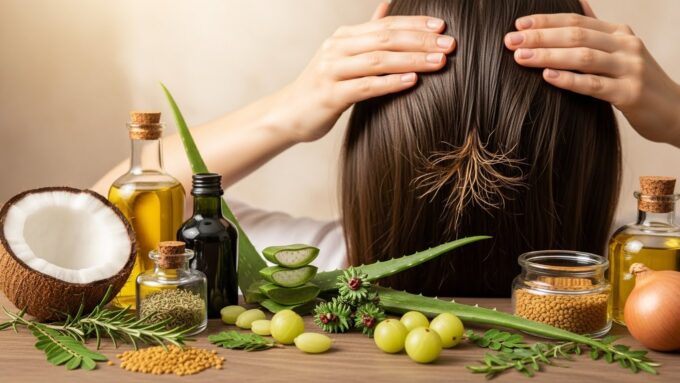
Oils do not make hair grow. They coat the hair, keep moisture in, reduce friction and protect the ends. That is useful — protected ends break less, so length is kept — but it is not growth.
- Coconut oil: reduces protein loss from the hair shaft during washing (Rele & Mohile 2003). It protects the shaft; it does not grow hair.
- Castor oil: a thick oil that moisturises. There is no strong evidence it regrows hair (2022 systematic review). It is a moisturiser, not a growth treatment.
- Olive oil and other light oils: coat and soften the hair. They do not stimulate the roots.
Use a small amount on the lengths, not a heavy layer on the scalp. Heavy oil left on the scalp traps dirt and can irritate it. Oil before washing, then wash it out — do not leave it on for days.
Scalp massage: pleasant, not a treatment
Massage feels good and can help spread oil evenly. It is not a growth treatment. The only study behind the massage claim (Koyama et al. 2016) had 9 men and no control group, and it cannot support a claim that massage grows hair.
If you enjoy massage, do it gently for a few minutes with your fingertips — never hard enough to hurt, and never with nails. Do not expect it to change your growth rate.
Herbs and onion juice — one by one
- Rosemary oil: one small study compared rosemary oil with minoxidil 2% (Panahi et al. 2015) and found similar results over six months — but it was a single study, and a rosemary rinse is not the rosemary oil that was tested. This guide does not present rosemary as a proven treatment.
- Fenugreek: no good human trials support it for hair growth. Removed as a growth claim.
- Amla: no good published evidence supports it for preventing breakage or growing hair. Removed as a growth claim.
- Onion juice: one small study from 2002 (Sharquie & Al-Obaidi, 38 people) found more regrowth with crude onion juice than with tap water — but it tested patchy alopecia areata only, a condition that often regrows on its own, the study was unblinded, and it has never been repeated in a larger trial. It says nothing about pattern hair loss or slow growth generally. Onion juice can also irritate the scalp, and it smells strongly. If you try it, patch test first and stop if it stings or reddens the skin.
- Green tea, hibiscus and other herbs: no good human evidence supports them for hair growth. Removed as growth claims.
Masks: conditioning only
Egg, yogurt, honey and aloe masks can make hair feel softer and smoother — they condition the hair that is already there. They do not repair damage, rebuild the shaft or grow hair. Damaged hair cannot be repaired; you can only stop new damage, trim split ends, and protect the hair while it grows out.
Use a mask once a week at most, rinse it out fully, and keep it off the scalp if your scalp is sensitive. Apple cider vinegar rinses have no good evidence for growth and can irritate — this guide does not recommend them.
Food: slow, real, and not a treatment
Hair is mostly keratin, a protein, so a very low-protein or crash diet can trigger shedding. Iron, zinc, biotin and vitamin D matter only where there is a deficiency — supplements help only when a test has shown you are low (see the companion guide on vitamins for hair growth). There is no food that makes hair grow faster, and diet changes take months to show because the hair cycle is slow.
Water does not change hair texture or prevent tangles, and sleep is not a growth stimulant. Sleep and a varied diet support general health; they do not speed up the hair cycle.
A simple routine that actually helps
- Wash gently when the scalp needs it, with a mild shampoo and lukewarm water.
- Condition the lengths, not the scalp.
- Detangle wet or damp hair with conditioner for slip, fingers first, then a wide-tooth comb, ends up. Never detangle dry curls.
- Protect the ends: a little oil on the lengths, low heat, loose styles. Tight styles pull the roots — repeated pulling can cause traction alopecia, and early cases can recover when the tension stops.
- Trim split ends every 6–12 weeks.
- Change one thing at a time and give it months, not days, before judging it.
The scalp is skin too — an exposed parting can sunburn, so use broad-spectrum SPF 30+ sunscreen on it, or cover it with a hat.
Tracking real progress
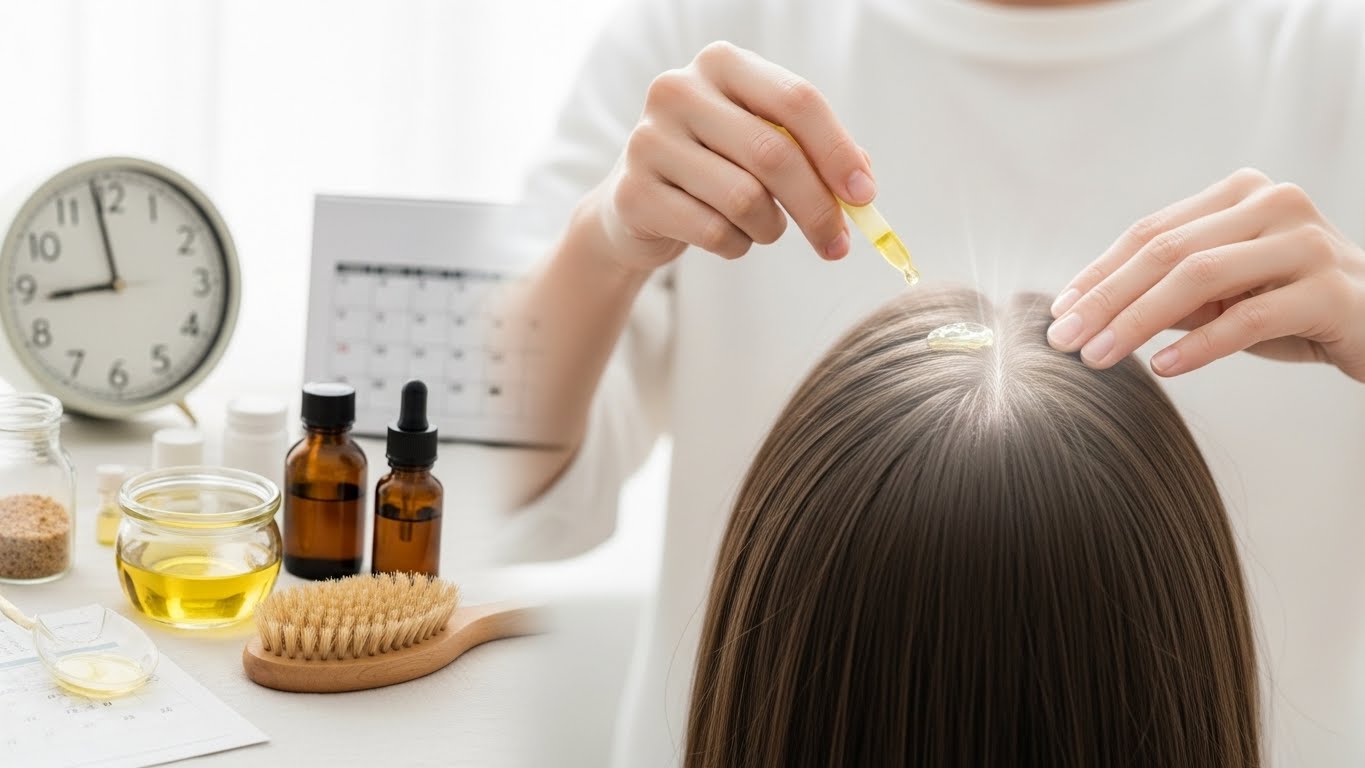
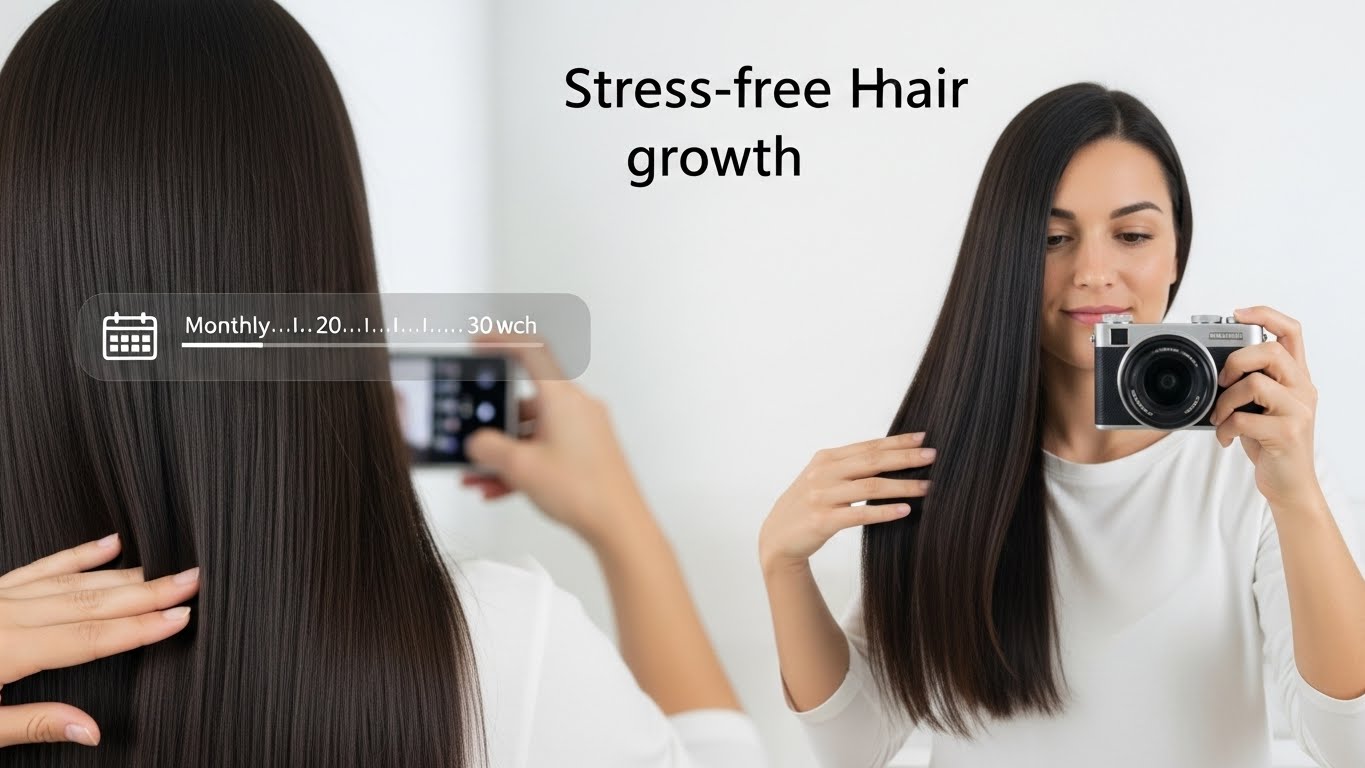
Do not measure daily — hair grows about a centimetre a month, so daily measuring only creates stress. Take a photo once a month in the same light and the same position, and compare. The first signs of progress are a calmer scalp and less breakage; visible length comes last.
Natural does not mean safe
Natural remedies can irritate. Onion juice, essential oils, strong herbal preparations and vinegar rinses can all sting, redden or dry the scalp. Introduce one remedy at a time, and patch test it first: apply a small amount to a quarter-sized area on the underside of your arm or the bend of your elbow, twice a day for 7–10 days, and stop if you get redness, itching or swelling. (This is the American Academy of Dermatology patch-test method.)
When to get help
See a clinician or dermatologist if: your shedding is sudden, patchy or heavy; you have bald patches, itching, pain, scaling or redness; your hair has not regained normal fullness after a year; you are losing hair and do not know why; or you are considering any supplement. The NHS advises seeing a GP before a commercial hair clinic, and notes that no treatment is 100% effective.
Summary
Slow growth is usually breakage hiding growth. No natural remedy makes hair grow faster than about a centimetre a month. Oils protect the hair you have; they do not grow new hair. Massage feels pleasant but is not a treatment. Fenugreek, amla, green tea and hibiscus have no good evidence for growth. Onion juice has one small, unreplicated 2002 study in patchy alopecia areata only. The real work is gentle care, trimming split ends, and patience — and a clinician’s advice if shedding is sudden, patchy or unexplained.
Sources: American Academy of Dermatology hair-loss and shedding guidance; Rele & Mohile 2003; Panahi et al. 2015; Koyama et al. 2016; 2022 systematic review on castor oil; Sharquie & Al-Obaidi 2002 (PMID 12126069); NHS 111 Wales hair loss; Almohanna et al. 2019. This is a researched overview, not a hands-on review.