Researched overview.
Table Of Content
Quick answer
No shampoo grows hair. Hair grows from the follicle, in a cycle, at about a centimetre a month — and no shampoo can change that cycle. What a shampoo can do is real but modest: keep the scalp calm and clean so the growth phase is supported, and keep the hair shaft from breaking so length is kept.
So the question is not “which shampoo grows hair fastest?” but “which shampoo is gentle enough for my scalp, and how should I wash?” This guide answers that.
This guide is general information, not medical advice.
Contents: What a shampoo can and cannot do · What “natural” means · Reading the label · Sulfates and harsh cleansers · Choosing by hair type · How to wash · Water and temperature · After washing · What does not help · When to get help
What a shampoo can and cannot do
A shampoo cleans the scalp and hair. That is all it does — and it matters, because a scalp that is dry, tight, itchy or irritated is a poor base for growth, while a calm, clean scalp supports the growth phase.
A shampoo cannot:
- Change the hair growth cycle or make hair grow faster.
- Repair damaged hair or split ends — only trimming removes split ends.
- Regrow hair lost to pattern hair loss. The treatment with the best evidence for pattern hair loss is topical minoxidil; the American Academy of Dermatology says results can take 6–12 months, and it does not work for everyone. Talk to a clinician before starting any hair-loss treatment.
A shampoo can:
- Clean away sweat, oil and build-up without stripping the scalp.
- Leave the scalp comfortable — not tight, itchy or flaky.
- Reduce breakage by keeping the hair shaft smooth and moisturised, so length is kept.
Judge a shampoo by comfort, not by length: the first sign it is working is a calmer scalp and less itching and flaking, not longer hair.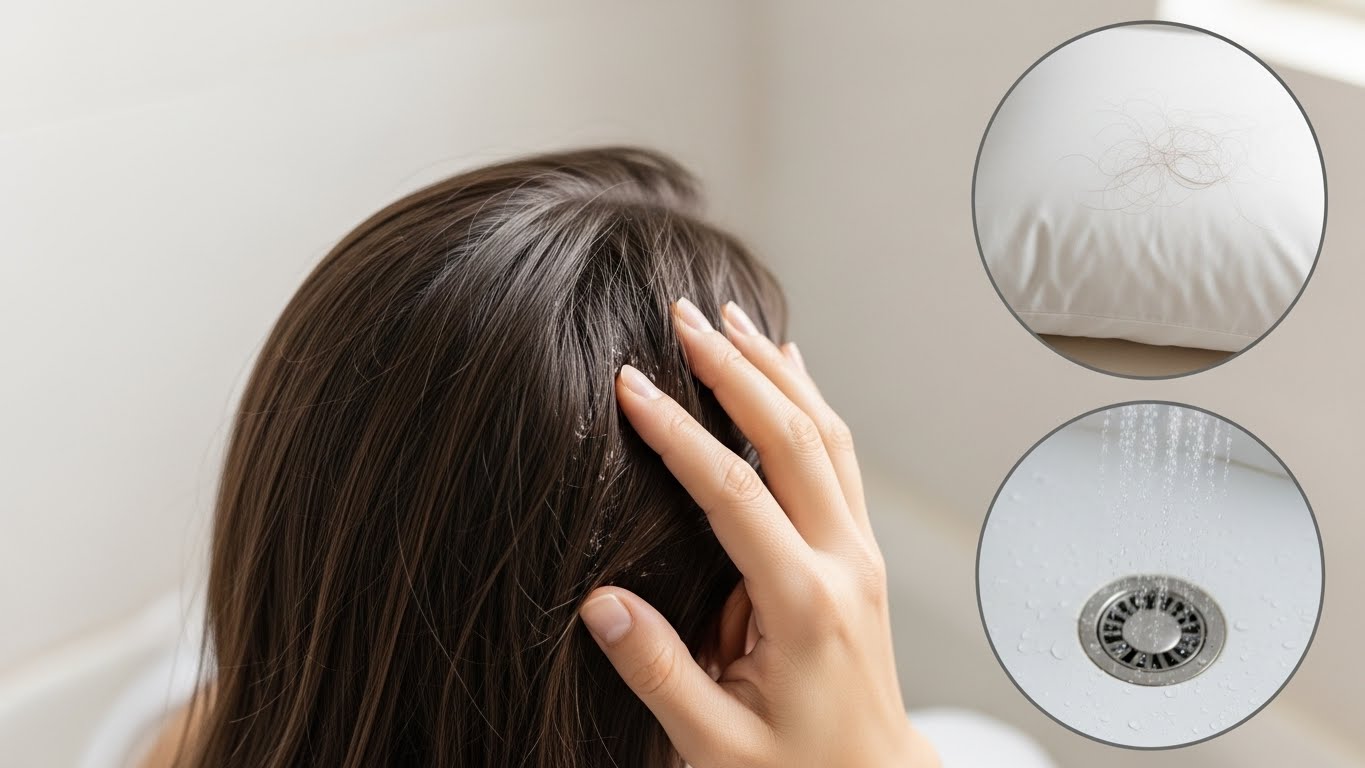
What “natural” means — and what it does not
“Natural” sounds like a promise, but it is not one. The US Food and Drug Administration has never legally defined “natural” for cosmetics, so a brand can use the word even if the product contains synthetic preservatives or irritants. “Natural” on a label guarantees nothing about gentleness, safety or effectiveness — and natural ingredients can irritate, especially on a sensitive scalp.
The same applies to “organic” on cosmetics, which is not regulated by the FDA in the same way as organic food. Look past the front of the bottle and read the ingredient list instead.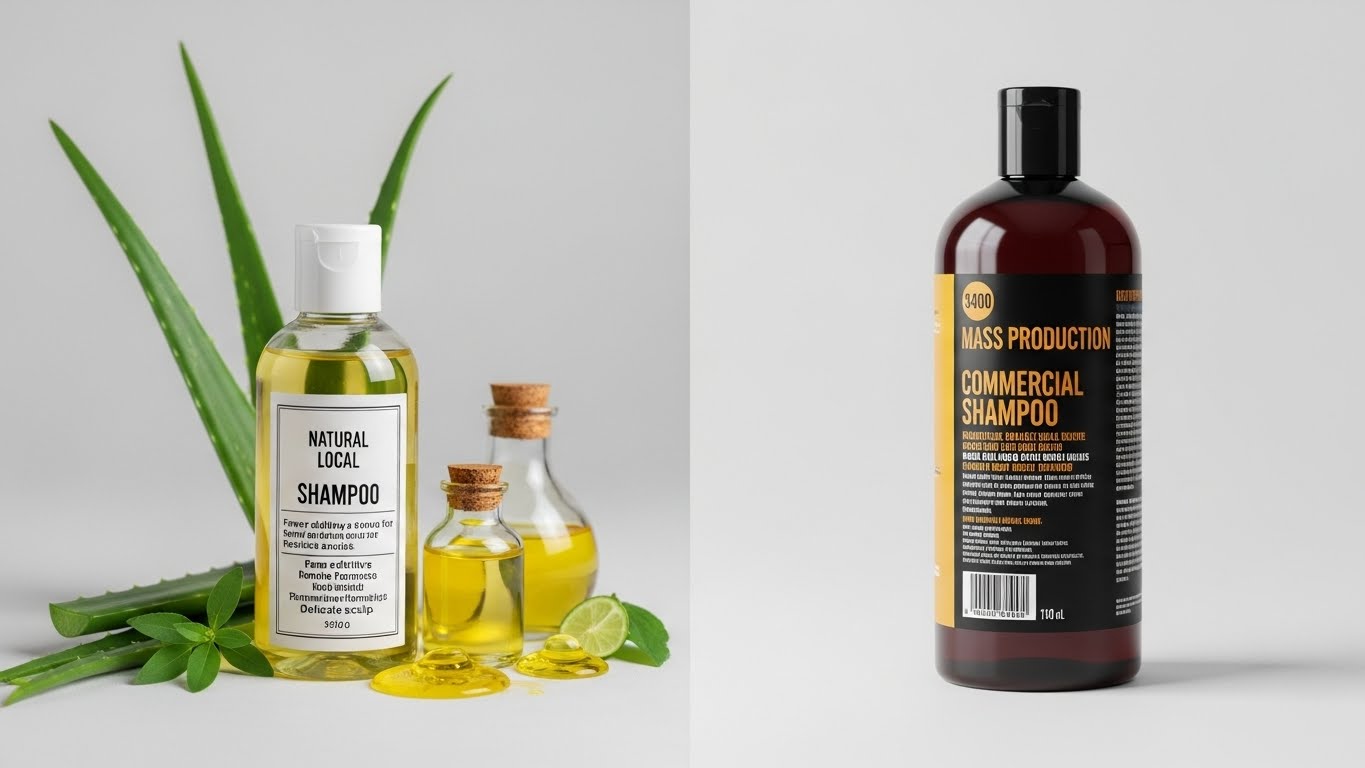
Reading the label
Ingredient lists are in order of quantity — the first ingredients are present in the largest amounts. That is the most useful fact on the whole bottle:
- If a plant extract or oil appears near the end of a long list, it is present in a tiny amount and will not do much.
- If a harsh cleanser appears near the top, the formula is likely to dry the scalp whatever the front of the bottle says.
- “Fragrance” or “parfum” on a label can hide many ingredients, including ones that irritate a sensitive scalp. A fragrance-free shampoo is the safer choice if your scalp is sensitive.
No product is named here.
Sulfates and harsh cleansers
Sulfates (such as sodium lauryl sulfate and sodium laureth sulfate) are strong cleansers. They make a lot of foam — but foam does not mean cleaning power. Foam only shows how fast a product reacts with water; it says nothing about how gentle it is.
Strong cleansers strip the scalp’s natural oils and leave it tight and dry. That dryness and irritation is the reason to avoid them — not a claim that they make the scalp produce more oil. Whether harsh washing triggers extra oil production is disputed, not proven: the AAD’s own 2018 press release says a harsh face wash “can irritate your skin and trigger increased oil production”, so this guide states neither direction as proven fact.
A “sulfate-free” label is a starting point, not a guarantee — a sulfate-free shampoo can still be harsh, and a shampoo with a mild sulfate can still be gentle. Read the full ingredient list, not the claim on the front.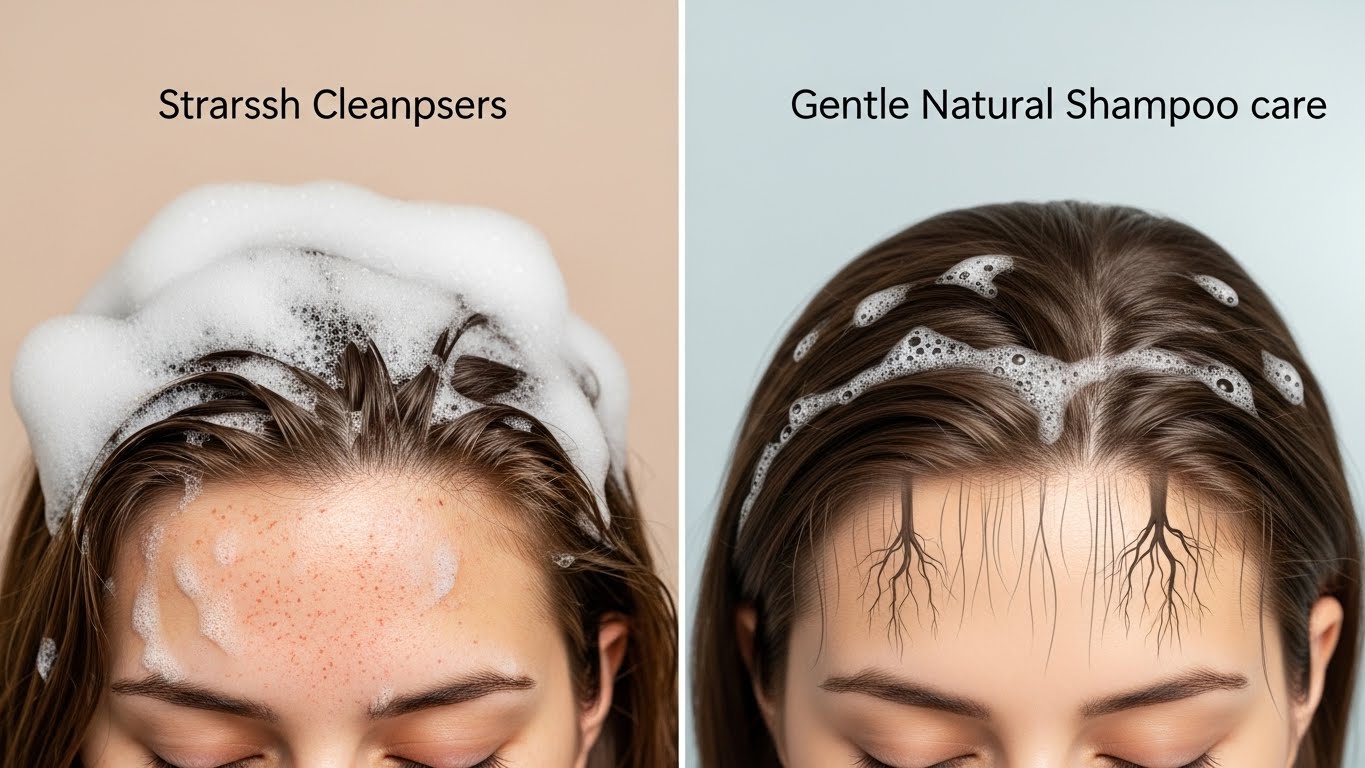
Choosing by hair type
- Dry hair and a tight scalp: choose a mild, moisturising shampoo and wash less often. Strong formulas make dryness and breakage worse.
- Oily scalp and flat hair: choose a light, gentle shampoo and wash when the scalp needs it. A greasy feeling does not always mean a dirty scalp, and harsh washing can leave the scalp irritated and dry.
- Sensitive scalp: choose fragrance-free and simple — fewer ingredients means fewer things that can irritate. Patch test a new shampoo on a small area first if your scalp reacts easily.
- Curly hair: curls dry out easily because scalp oils travel poorly down a twisted shaft. A gentle, moisturising shampoo and conditioner on the lengths matter more than any “growth” claim.
How to wash
- Wet the hair fully with lukewarm water.
- Use a small amount — a coin-sized amount is enough for most hair. More shampoo does not mean cleaner hair; it means more residue to rinse out.
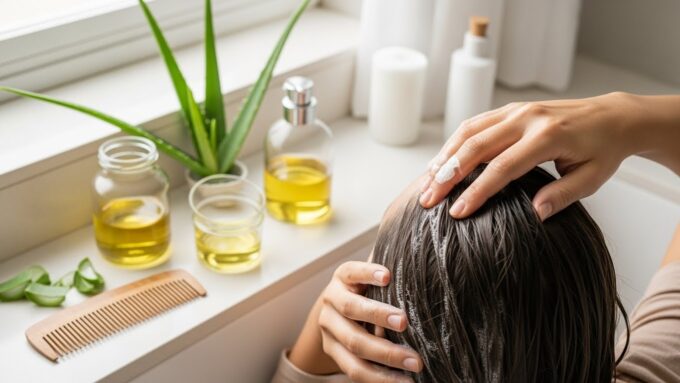
- Massage with your fingertips, not your nails. Nails scratch the scalp.
- Rinse thoroughly. Leftover shampoo dries the scalp and dulls the hair.
- Condition the lengths only, not the scalp. Conditioner helps strand health; it does not grow hair.
- Wash when the scalp needs it. Two or three times a week is a reasonable starting point for most people — not a rule. Wash more often if the scalp is sweaty or oily, less often if it is dry.
Before using a new shampoo all over, patch test it: put a small amount on the inside of your arm or the bend of your elbow, twice a day for 7 to 10 days. If the skin turns red or itchy, do not use it. (This is the American Academy of Dermatology patch-test method.)
Wet hair is at its weakest. Do not rub it hard with a towel or brush it roughly when wet — that causes breakage. Pat it dry gently, and let it dry before going to bed; sleeping with wet hair increases breakage.
The scalp is skin too — an exposed parting can sunburn, so use broad-spectrum SPF 30+ sunscreen on it, or cover it with a hat.
Water and temperature
- Lukewarm water is best. Hot water strips natural oils and dries the scalp; cold water does not clean as well.
- Hard water can leave mineral deposits that make hair feel rough and dull and make shampoo work less well. It does not “block follicles”. If your water is hard, a thorough rinse matters more, and a clarifying wash now and then can help.
- Rinse well after every wash. Residue is a common cause of a dull, heavy feeling.
After washing
- Oil on the lengths, not the scalp. A little light oil on the ends protects them from friction and breakage. Heavy oil left on the scalp traps dirt and can irritate it.
- Massage gently if you enjoy it, with fingertips. Massage feels pleasant and can help spread oil, but it is not a growth treatment — the only study behind the claim (Koyama et al. 2016) had 9 men and no control group.
- Keep heat low. High heat dries the shaft and causes breakage, which hides growth.
What does not help
- Changing shampoo every few weeks. Hair growth needs months to judge, and a new shampoo every few weeks never lets you learn what helps. Give one shampoo at least two months — unless it irritates you, in which case stop at once.
- Using too much product. More shampoo, more oil or more conditioner does not mean more growth; it means more residue and more irritation.
- Expecting a fixed result by a fixed date. Hair grows about a centimetre a month. Visible length takes months, and no shampoo can promise less hair fall in four to six weeks or new hair in three months.
- “Growth” shampoos with herbs or oils. Aloe, herb extracts and light oils can soothe a dry scalp, but there is no good evidence they improve blood flow to the roots or grow hair.
When to get help
See a clinician or dermatologist if: your shedding is sudden, patchy or heavy; you have bald patches, itching, pain, scaling or redness; your hair has not regained normal fullness after a year; or you are losing hair and do not know why. Normal shedding is 50–100 hairs a day (American Academy of Dermatology), and shedding that rises 2–3 months after an illness, childbirth, surgery or severe stress usually settles on its own within 6–9 months.
Summary
No shampoo grows hair — but a gentle one protects the scalp and the hair you already have, so length is kept. “Natural” has no legal definition in cosmetics, so read the ingredient list: the first ingredients matter most, and a plant extract at the end of the list is present in a tiny amount. Foam does not mean cleaning power. Wash gently with lukewarm water, condition the lengths only, dry hair gently, and judge a shampoo by comfort over months — not by a promised timeline.
Sources: American Academy of Dermatology hair-loss and shedding guidance; US FDA position on “natural” in cosmetics as reported by Mayo Clinic; Rele & Mohile 2003; Koyama et al. 2016; NHS 111 Wales hair loss. This is a researched overview, not a hands-on review.