This article is a researched overview. It is based on published guidance from dermatology and health organisations, not on personal testing. It does not replace advice from a dermatologist or a doctor. This article recommends no supplement, dose or brand.
Table Of Content
Seeing hair in the shower drain or on a brush is frightening, but some hair fall is normal. The hard part is knowing what is normal, what is temporary, and what needs a doctor. This article explains that, and what actually helps.
Shedding and breakage are different problems
Shedding is when a whole hair releases from the follicle. It is part of the normal hair cycle: old hairs fall out so new ones can grow. The American Academy of Dermatology (AAD) says it is normal to shed about 50 to 100 hairs a day, often without noticing.
Breakage is when the hair shaft snaps somewhere along its length. Broken hairs are shorter pieces, often with frayed or uneven ends. Breakage is a sign of damaged hair, not of hair falling out from the root.
You can have both at the same time — damaged ends that break, and increased shedding from an illness or a stressful event. Telling them apart matters, because the fixes are different: breakage is fixed by gentler handling, while shedding needs the cause to be found.
What causes increased shedding
The most common cause of a sudden increase in shedding is telogen effluvium — a temporary shedding that follows a shock to the body. The AAD lists the common triggers: childbirth, high fever, surgery, major weight loss, significant stress, and stopping birth-control pills. The shedding usually starts two to three months after the trigger, and once the trigger has passed, hair tends to regain its normal fullness within six to nine months. It is temporary, and it usually settles on its own.
Other causes include:
- Pattern hair loss (hereditary). This is gradual thinning, often at the crown or a widening part, and it runs in families. It is not the same as temporary shedding, and it does not settle on its own.
- Tight hairstyles. Hairstyles that pull the hair constantly can damage the follicles. This is called traction alopecia. Early on it can reverse if the pulling stops, but if it goes on for years the damage can become permanent.
- Harsh products and treatments. Frequent bleaching, perming, straightening and very hot styling damage the hair shaft and can make shedding worse.
- Medical causes. Thyroid problems, iron deficiency, some medicines and treatments, autoimmune conditions and scalp infections can all cause hair loss. These need a doctor, not a shampoo.
- Crash diets and major weight loss. Losing a lot of weight quickly is a recognised trigger for temporary shedding.
What actually helps
There is no home remedy that reliably reduces hair fall on a schedule. What helps is removing the things that damage hair and giving the body time.
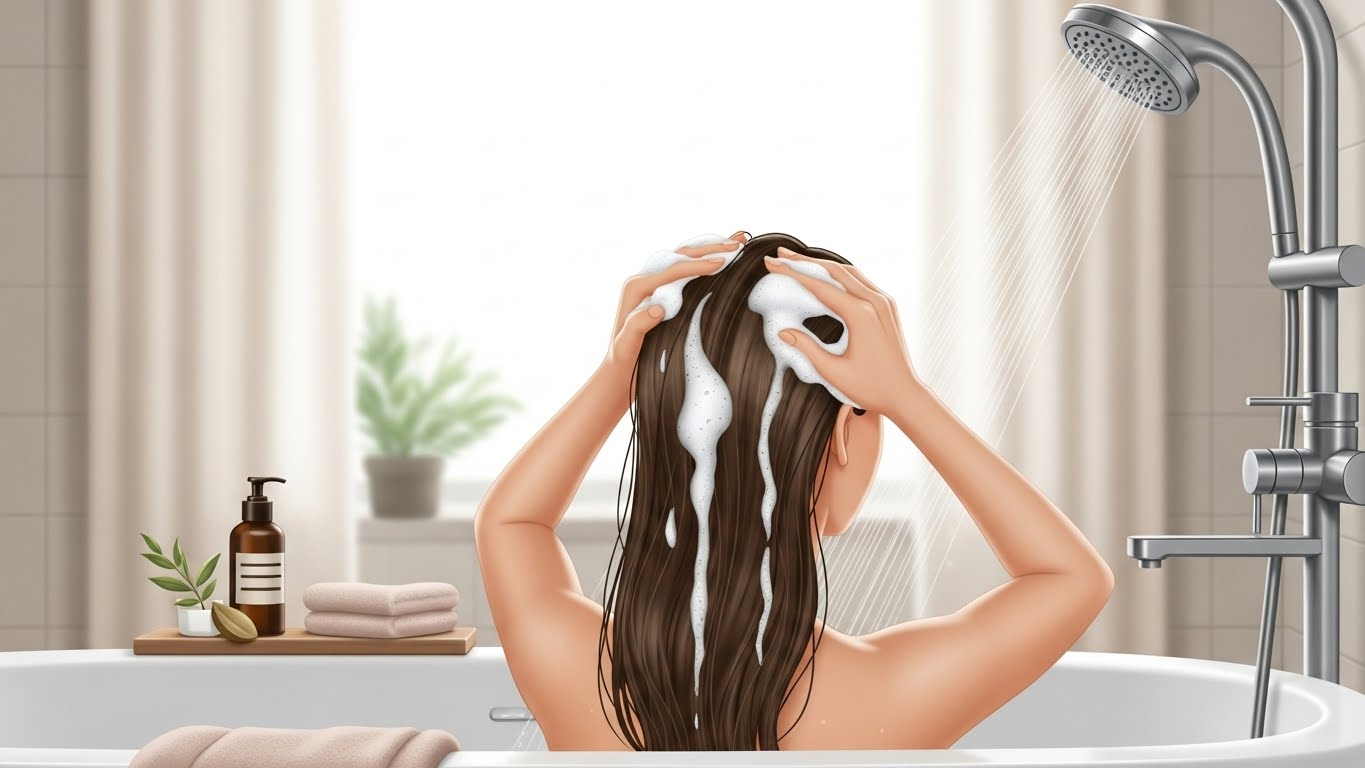
Be gentle with washing and drying. Shampoo the scalp with your fingertips, not your nails. Before using a new shampoo, oil or treatment on your scalp, patch test it: put a small amount on the inside of your arm or the bend of your elbow, twice a day for 7 to 10 days. If the skin turns red or itchy, do not use it. (This is the American Academy of Dermatology patch-test method.) Conditioner goes on the lengths, not the roots. Pat hair dry gently with a towel instead of rubbing it. Wet hair is fragile — detangle it gently with a wide-tooth comb, starting from the ends, rather than yanking a brush through it.
Limit heat. Heat damage builds up over time. Use the lowest heat setting that works, keep hot tools away from the same spot for too long, and use a heat protectant — it reduces some damage, but it does not make unlimited heat safe.
Wear looser hairstyles. Vary where you tie your hair, and avoid styles that pull. If a hairstyle hurts, it is pulling too hard. Protect your scalp from sunburn too — a hat, or broad-spectrum SPF 30+ sunscreen on an exposed parting, because the scalp is skin and can burn like any skin.
Eat a balanced diet. Hair is made of protein, and the body needs enough protein, iron and other nutrients to grow it. A normal balanced diet is usually enough. This article does not recommend any supplement, dose or brand, and neither should any article. Supplements are only useful when there is a real deficiency, and that needs a blood test first:

- Iron has the strongest link to hair shedding of any nutrient, but iron supplements must never be self-started. Too much iron is harmful, and iron poisoning is a common cause of accidental poisoning in children. Get a blood test first.
- Biotin is vitamin B7, not B1. It helps hair only when there is a deficiency, and deficiency is rare. There is no good trial showing biotin helps hair in people who are not deficient. High-dose biotin can also interfere with laboratory tests — the US Food and Drug Administration warns it can cause falsely low troponin results, the blood test used to diagnose a heart attack. Tell your doctor about any biotin you take.
- Zinc matters, but too much zinc blocks copper absorption. The NHS advises no more than 25 mg a day from supplements.
- Omega-3 is often sold for hair, but there is no good trial of omega-3 alone for hair growth.
What has no good evidence
- Scalp massage for hair growth. Massage feels pleasant and may help you relax, but there is no good evidence it grows hair. The only study often quoted is a tiny 2016 study of nine men who massaged their scalps for four minutes a day for 24 weeks. Their hair got slightly thicker, but there was no comparison group, so the result cannot be trusted.
- Sleep and “hair growth hormone”. There is no established mechanism by which sleep releases a hair growth hormone. Sleep matters for general health, and poor sleep can add to stress, but it is not a hair treatment.
- Oiling the scalp to “unblock follicles” or “feed the roots”. There is no good evidence that oiling the scalp unblocks follicles or grows hair. Over-oiling can leave residue on the scalp. Coconut oil does reduce protein loss from the hair shaft (see our article on home hair remedies), but that is about protecting the lengths, not growing new hair.
- “Natural” products that promise to reduce hair fall in weeks. No home remedy has good evidence for reducing hair fall on a fixed timeline. If a product promises results in two or three weeks, that promise itself is the warning sign.
Stress and hair fall
Stress can trigger temporary shedding — that part is real, and it is one of the triggers the AAD lists. But stress does not cause baldness, and “stop worrying and your hair will grow back” is not useful advice. The shedding that follows a stressful event starts months after the event, which is why people often do not connect the two. If the stressful period has passed, the shedding usually settles within six to nine months.
What to expect — realistically
There is no fixed timeline for improvement, and any article that gives one is guessing. Hair grows about 1 cm a month. If shedding was triggered by an illness or a stressful event, the shedding itself usually starts two to three months after the event and settles over the following months. Breakage improves faster than shedding, because gentler handling stops new breakage straight away — but the damaged hair that is already there still needs to grow out or be trimmed.
If nothing has changed after six months, or if the shedding is getting worse, that is a reason to see a doctor, not a reason to try another product.
When to see a doctor
See a doctor promptly if you notice any of these:
- Sudden hair loss, or hair coming out in clumps
- Patchy bald spots, or a rapidly widening part
- Shedding that has gone on for more than six months
- Scalp pain, itching, scaling, redness or sores
- Hair loss together with other symptoms, such as fatigue, weight changes, or changes in your periods
- Hair loss that is causing you distress
The NHS advises getting a clear idea of the cause from a GP before going to a commercial hair clinic. A dermatologist can tell whether you have shedding, hair loss, or both, and can find the cause. That may involve examining the scalp and nails, a hair pull test, and blood tests — and sometimes a scalp biopsy if a disease is suspected.
The short version
Losing about 50 to 100 hairs a day can be normal. A sudden increase is often temporary shedding that follows a trigger two to three months earlier, and it usually settles within six to nine months. Gentle handling, less heat, looser hairstyles and a balanced diet are the sensible basics. No home remedy or supplement has good evidence for reducing hair fall on a schedule, and no supplement should be started without a test. If the picture does not fit ordinary shedding, see a doctor.
Sources: American Academy of Dermatology (hair loss and shedding; diagnosis and treatment); NHS 111 Wales (hair loss); Patel et al. 2017 (biotin); US Food and Drug Administration (biotin and laboratory tests, 2017, updated 2019).