Researched overview.
Table Of Content
- Quick answer
- Why morning care matters
- What happens overnight
- How to read your morning skin
- Washing gently in the morning
- Hydration and moisturiser
- Sunscreen — the step to never skip
- Eyes and lips
- Morning hair, quickly
- Light makeup, if you want it
- By skin type
- 5, 10 and 15 minutes
- Who benefits most
- Mistakes to avoid
- What a steady morning routine can do
- FAQs
- Summary
Quick answer
A good morning routine does not need many steps. It needs the right order: wash gently, add moisture, protect with sunscreen, then take care of eyes, lips and hair.
Morning care is about balance and protection. Night care is about repair. Heavy products in the morning can leave skin shiny and block pores, and the one step to never skip in the morning is sunscreen.
If your skin is red, painful, flaking badly, or has a rash, blisters or open sores, skip the extras and ask a dermatologist or pharmacist first. This guide is general information, not medical advice.
Contents: Why morning care matters · What happens overnight · How to read your morning skin · Washing gently · Hydration and moisturiser · Sunscreen · Eyes and lips · Morning hair · Light makeup · By skin type · 5, 10 and 15 minutes · Who benefits most · Mistakes to avoid · What a steady routine can do · FAQs
Why morning care matters
Some people think night care matters more than morning care. Night care is important for repair, but morning care protects the skin from what the day brings: pollution, sun exposure, sweat and touch.
Skipping morning care can mean more oil and dullness by midday, and makeup that does not last. Overdoing it in the morning can mean irritation and sensitivity. The aim is balance, not extremes.
What happens overnight
While you sleep, your skin makes oil, and sweat and oil collect on the surface. Dead skin cells shed. Even if your face looks clean in the morning, a gentle wash refreshes it.
Sleep position can also leave temporary marks or puffiness, and skin can feel tight in the morning if it lost moisture overnight. These changes are normal, and they are why the morning routine starts with a gentle wash rather than a strong one.
How to read your morning skin
Before applying anything, notice how your skin feels, not just how it looks. Looking alone is a poor guide.
- Tight or dry — it needs moisture, not more washing.
- Shiny or greasy — it needs a light cleanse and a light moisturiser, not harsh drying.
- Red or sensitive — keep it simple: water or a very gentle cleanser, moisturiser, sunscreen.
Over-cleansing and overloading are both avoidable if you listen to what your skin is telling you. Your skin changes from day to day — sleep, stress, weather and hormones all play a part — so keep the same basic steps and adjust the details, not the whole routine.
Washing gently in the morning
Washing is the foundation of the morning. Done well, it refreshes the skin. Done harshly, it damages the skin barrier.
- Use lukewarm water and a gentle cleanser. Apply it with your fingertips, not a washcloth or scrubbing tool, and rinse fully. Pat dry with a soft towel. Hot water can dry the skin, and scrubbing irritates it rather than cleaning it better (AAD face-washing guidance).
- A tight, squeaky feeling after washing is a warning sign. It usually means the cleanser is too strong, not that the skin is extra clean.
- If your skin is very dry or sensitive, water alone in the morning may be enough. That is a choice based on how your skin responds, not a rule. If water alone leaves your skin comfortable, it is fine.
The AAD recommends limiting face washing to twice a day — morning and night — plus after heavy sweating.
Hydration and moisturiser
Washing removes some moisture from the skin. Replacing it quickly keeps the skin comfortable and prevents tightness later in the day.
- Hydrate first, then moisturise. Apply a hydrating product (for example one with glycerin or hyaluronic acid) to slightly damp skin, then moisturiser on top. Moist skin is smoother, makeup applies better, and fine lines look softer — because dry skin makes foundation look uneven, not because hydration removes lines.
- Use a moderate amount. Spread it gently; do not pull at the skin. Wait a moment before the next step. Using too little leaves skin tight; using too much leaves it greasy. Frequency and consistency matter more than quantity.
Hyaluronic acid and glycerin are humectants — they attract and hold water. They are hydration, not a treatment for ageing or oiliness.
Sunscreen — the step to never skip
Sunscreen is not optional, and it is not only for sunny days. It is one of the most effective beauty steps there is.
- Sun exposure causes uneven tone, dark spots and early fine lines. The damage accumulates over time and shows later, so daily protection is a long-term habit, not a quick fix.
- UVA rays pass through windows and cloud. Skin is affected by indoor exposure too, and sun damage happens in bad weather as well as good.
- How to use it: apply broad-spectrum sunscreen with SPF 30 or higher after moisturiser, over the face, neck and ears. Let it settle for a few minutes before makeup. Reapply every two hours when outdoors, or after swimming or sweating. Sunscreen is the single most effective anti-ageing step there is: in one study, daily sunscreen use led to 24% less skin ageing over 4.5 years (Hughes et al. 2013).
- Price does not decide whether it works. A cheap sunscreen used properly protects better than an expensive one used sparingly.
Eyes and lips
Tiredness shows first around the eyes and lips. Gentle care is enough.
- Morning puffiness: puffiness is usually fluid and sleep position. A cool temperature can make it look less swollen, and a light touch is better than rubbing, which makes it worse. Use light products rather than heavy ones around the eyes. Tapping or massage is not presented here as improving circulation.
- Eye safety: keep products out of your eyes. See a doctor promptly if you have swelling that lasts more than 24–48 hours, pain, or any change in your vision.
- Lips: lips dry easily overnight. A light balm in the morning prevents cracking and adds comfort. You do not need a long-lasting lipstick for lips to look cared for.
Morning hair, quickly
Hair frames the face, and morning hair care should be quick and comfortable, not stressful.
- You do not need to wash your hair every morning. Overwashing dries the scalp. On non-wash days, dampen the hair lightly to refresh it, smooth the hairline gently, and style as usual. Wash when the scalp needs it.
- Wet hair is more fragile than dry hair. Detangle damp hair coated in conditioner, starting at the ends, and never detangle dry hair roughly.
- Keep it simple: a light refresh, a gentle comb, and no tight pulling at the roots. Repeated pulling over time can damage hair follicles (traction alopecia).
Light makeup, if you want it
In the morning, less makeup usually looks fresher. Well-groomed brows, clear skin and a light touch are enough for most days.
If you wear makeup, apply it after sunscreen has settled. A light approach — brows, a little lip colour, a touch of concealer where needed — suits a morning routine. Heavy layers in the morning can look uneven by midday, especially if the skin underneath is not hydrated.
Makeup is optional. The routine works with or without it.
By skin type
Not all skin is the same. Adjust the same basic steps to your skin:
- Oily skin: use a light, water-based moisturiser and a sunscreen labelled oil-free or matte finish. Wash gently; do not over-clean or use heavy creams. Whether dry skin then produces more oil is disputed — the honest reason to wash gently and moisturise is comfort and barrier support, not oil control.
- Dry skin: use a gentle cleanser and a richer moisturiser. Products with glycerin or hyaluronic acid help hold water in the skin. Avoid strong cleansers that strip natural oils.
- Sensitive skin: use fragrance-free cleansers and moisturisers, introduce new products one at a time and in small amounts, and patch test first. Avoid harsh formulas and exfoliants until your skin is settled.
- Combination skin: balance the two. The T-zone may need a lighter touch; the cheeks may need a little extra moisturiser. Use a light moisturiser on the oily areas and a slightly richer cream on the drier areas. Sunscreen covers the whole face.
Patch test anything new: apply a quarter-sized amount to the inside of your arm or the bend of your elbow, twice a day, for 7–10 days (the AAD method). If you get redness, itching or swelling, do not use the product.
5, 10 and 15 minutes
Pick the version that fits your morning. All three use the same foundations.
5-minute routine (rushed mornings):
– Gentle cleanser
– Lightweight moisturiser
– Sunscreen
– Optional lip balm
10-minute routine (most days):
– Gentle cleanser
– Hydrating serum
– Moisturiser
– Sunscreen
– Light eye care (gentle tapping, no rubbing)
– Quick hair refresh
15-minute routine (slow mornings):
– Gentle cleanser
– Hydrating serum or essence
– Moisturiser
– Sunscreen
– Light eye cream
– Lip balm
– Light hair styling
– Light makeup if you want it (brows, lip colour)
The 15-minute version is for days with more time. It covers the same foundations and adds the optional steps, not extra actives.
Who benefits most
Anyone who wants better skin, hair and confidence can benefit from an orderly morning routine, but it helps some people most:
- Students: routines are inexpensive, easy to adjust to a changing schedule, and simple enough to keep.
- People who work: the same steps every day save time, and there is less need to touch up during the day.
- Beginners: there is nothing confusing in it, and it teaches what actually matters, which avoids wasted money and time.
- Anyone tired of waste: consistency saves money on unnecessary products and new trends.
The benefit is not perfection. It is a routine that fits real life and builds confidence without pressure.
Mistakes to avoid
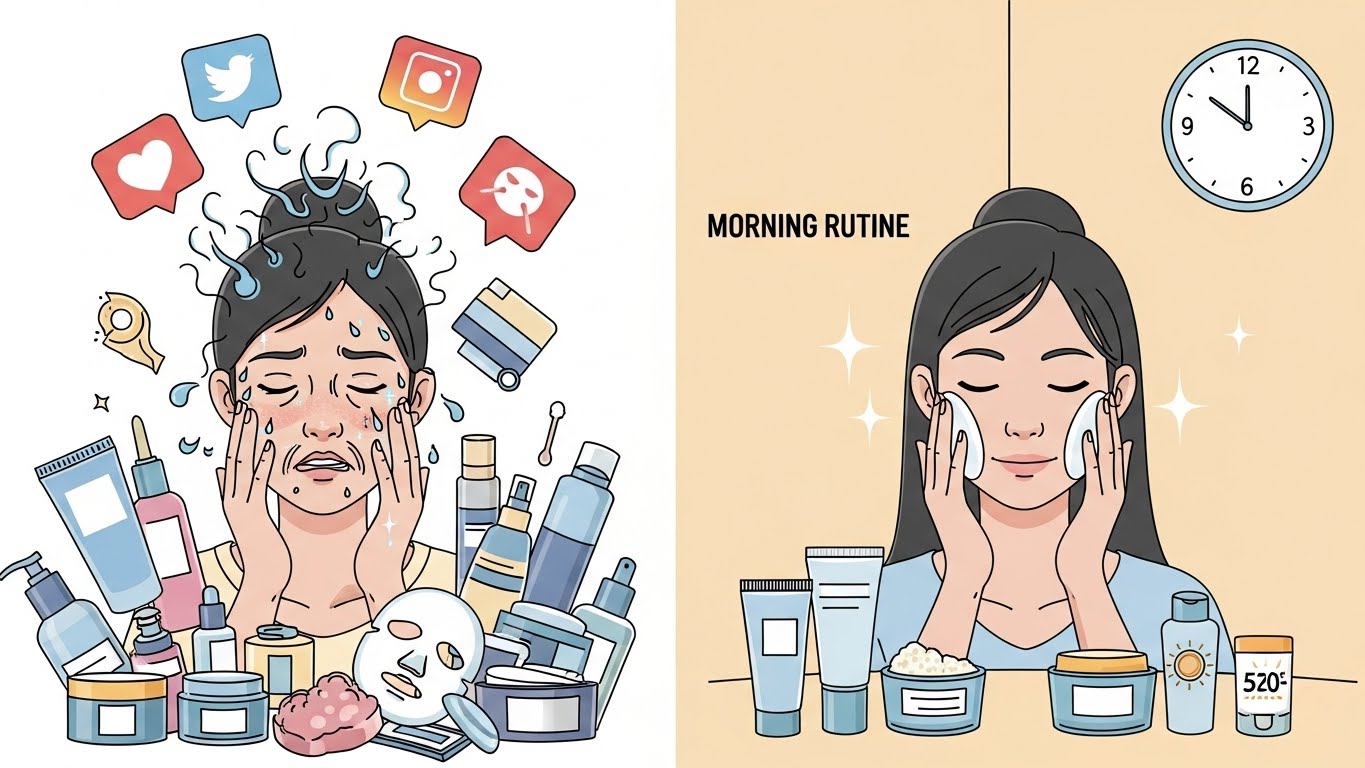
- Skipping moisturiser: the result is dry, tight skin. Moisturiser is a foundation step, not an optional one.
- Over-washing: removes the skin’s protection and leaves it inflamed. Twice a day is enough, plus after sweating.
- Using too many products: confuses the skin and wastes money. Three or four steps are enough.
- Skipping sunscreen: daily exposure adds up to damage that no serum can undo.
- Copying trends from social media: another person’s routine is not necessarily right for your skin or your life.
- Expecting a fixed result by a fixed date: improvement is gradual and varies from person to person. Consistency, not speed, is what works.
What a steady morning routine can do
A simple, organised morning routine does more than make the morning easier:
- Softer, smoother skin — recent hydration improves roughness and unevenness.
- Better makeup application — foundation and other products last longer on hydrated, balanced skin.
- Fewer breakouts — gentle, steady care avoids the irritation that makes breakouts worse.
- More confidence — healthy, calm skin supports self-esteem naturally.
- Prevention — daily sunscreen and regular skin checks slow the visible effects of sun damage over time.
The cost of the products matters less than the consistency. Even cheap, simple products give good results when the routine is steady.
FAQs
Q1. What are the main morning skincare steps?
Wash gently, moisturise, wear sunscreen, and add eye, lip and hair care if you like. That is the whole routine.
Q2. Should I wash my face in the morning?
Yes. A gentle wash removes the oil, sweat and dirt that collected overnight and leaves the skin fresh.
Q3. Do I need sunscreen if I am not going outside?
Yes. UVA rays pass through windows, and daily sun protection prevents damage that accumulates over time.
Q4. How long before I see results?
Gradually, and the timing varies from person to person. Hydration can feel better within days. Changes in tone or texture take weeks of steady use. No routine can promise a result by a fixed date.
Q5. Do minimal products really work?
Yes. A few plain, simple products used every day work better than many products used irregularly or changed constantly.
Summary
A calm morning routine is a short one: wash gently with lukewarm water, hydrate, moisturise, and wear broad-spectrum SPF 30+ every day. Add light eye and lip care and a quick hair refresh, and adjust the same steps to your skin type. Pick the 5, 10 or 15-minute version that fits your day. Keep it regular, keep it gentle, and let the morning set up the rest of the day.
Sources: AAD sunscreen guidance; AAD face-washing guidance; Hughes et al. 2013; AAD patch-test method; AAD acne guidance; Rele & Mohile 2003 (coconut oil); AAD traction alopecia guidance; Batch 11 eye-safety wording. This is a researched overview, not a hands-on review.