


Researched overview.
Table Of Content
Quick answer
Good skin and hair do not come from expensive products. They come from a short routine you actually follow: wash gently, moisturise, protect from the sun, and repeat it every day.
Price is a poor guide to whether a product works. A cheap gentle cleanser used properly beats an expensive one used once a week. What matters is the habit, not the label.
If your skin is red, painful, flaking badly, or has a rash, blisters or open sores, skip the extras and ask a dermatologist or pharmacist first. This guide is general information, not medical advice.
Contents: Why price is not the point · The one thing skin needs · Morning and evening · When skin goes wrong · Hair care on a budget · Body, hands, nails and lips · Lifestyle habits that cost nothing · Shopping smart · A sample week · Mistakes that waste money · FAQs
Why price is not the point
Most overspending starts with advertising. Ads promise quick results and perfect skin, and the photos create urgency: buy this now, or your skin will suffer. The result is a shelf full of products, a thinner wallet, and skin that never gets a steady routine.
The cycle is familiar: buy a new product, use it for two weeks, decide it is not working, buy another. The skin never has time to settle, so it stays unstable — breakouts appear, dryness increases, hair loses shine — and the next purchase feels necessary. The routine, not the product, is what was missing.
Two things are worth knowing before you buy anything:
- Pain is not proof a product works. If a product stings, burns or leaves your skin red, that is irritation, not effectiveness. Stop using it.
- “Purging” is often just irritation. Some products can cause a temporary flare, but if your skin is sore, swollen or getting worse after a couple of weeks, the product is not right for you. Ask a pharmacist or dermatologist rather than pushing through.
A simple routine done daily protects your skin and hair better than a shelf of expensive products used irregularly.
The one thing skin needs
Skin does not need many things. It needs to be clean but not stripped, hydrated, and protected from the sun. Everything else is support.
- Clean, gently. A gentle cleanser removes dirt, sweat and excess oil without drying the skin. Wash twice a day — morning and night — and after heavy sweating. Use lukewarm water and your fingertips, not a washcloth or scrubbing tool, and pat dry with a clean towel. Hot water can dry the skin, and scrubbing irritates it rather than cleaning it better (AAD face-washing guidance).
- Hydrated. Moisturiser on slightly damp skin traps water and keeps the day comfortable. Even oily skin needs moisturiser. Skipping it can leave skin dehydrated and looking flat. Whether dry skin then produces more oil is disputed — the honest reason to moisturise is comfort and barrier support, not oil control.
- Protected. Sunscreen is the single most effective anti-ageing step there is: in one study, daily sunscreen use led to 24% less skin ageing over 4.5 years (Hughes et al. 2013). Use broad-spectrum SPF 30 or higher every morning, and reapply every two hours when outdoors. A cheap sunscreen used properly works; an expensive one left in the drawer does not.
Over-cleansing damages the skin barrier. Skipping moisturiser leaves skin tight. Skipping sunscreen lets sun damage accumulate. Those three mistakes cost nothing to fix.
Morning and evening
Morning (under five minutes): wash gently, moisturise, sunscreen. That is the whole routine. Layers are unnecessary in the morning; what matters is doing the same steps every day.
Evening (under five minutes): wash off the day’s dirt, oil and pollution, then moisturise. Night is when skin carries out repair processes, but no product works “faster” at night, and a heavy night routine is not better than a light one. Keep it the same as the morning, minus sunscreen.
Use the same products morning and night to start. Changing products every few days means you never learn what helps.
When skin goes wrong
Breakouts from overuse: too many products, or strong actives mixed together, can irritate the skin. The fix is to simplify: go back to cleanser, moisturiser and sunscreen only, and let the barrier rest. Calm skin heals faster than irritated skin.
Dry patches and tight skin: usually a sign of moisture lost at the wrong time, or too much oil removed by harsh washing. Wash more gently, use a milder cleanser, and apply moisturiser to slightly damp skin.
If it does not settle: if redness, soreness or breakouts keep getting worse, or a rash appears, stop the newest product first and ask a dermatologist or pharmacist. Do not add more products to fix a reaction.

Hair care on a budget
Hair care follows the same rule: simple habits beat expensive products.
- Wash as often as your scalp needs. Most people do not need to wash daily. Overwashing dries the scalp and can leave it flaky and itchy. Wash when your scalp feels oily or dirty — for many people that is two or three times a week — and adjust to your own hair. Use a mild shampoo, focus on the scalp, rub with your fingertips, and rinse thoroughly.
- Condition the lengths, not the scalp. Conditioner helps prevent drying and splitting by smoothing the cuticle and reducing friction. Apply it to the mid-lengths and ends, leave it briefly, and rinse well.
- Light oil, once a week. A small amount of light oil on the scalp or ends can make hair feel more comfortable. Use a little, massage gently, and avoid heavy layers — heavy oil can trap sweat and dirt against the scalp. Oil seals in moisture; it does not hydrate on its own. Water moisturises, oil seals.
- Massage is relaxing, not a growth treatment. Gentle scalp massage feels good and can help you relax. There is no good evidence it grows hair — the only study often cited is Koyama et al. 2016, with 9 men and no control group.
- Damaged hair cannot be repaired. Oils and masks can make it feel smoother and reduce further breakage, but only trimming removes split ends. Trim every 6–12 weeks.
Body, hands, nails and lips
Body care gets less attention than the face, but the same rules apply — gentle washing, moisture on damp skin, and attention to the parts people forget.
- Body: wash daily with a plain, mild soap. Use lukewarm water, not hot — hot water increases dryness. Apply lotion or oil to damp skin after bathing.
- Areas people forget: knees, elbows and heels dry out fast. A little extra moisturiser at night prevents cracks and roughness.
- Hands and nails: wash hands as needed, and apply cream after chores or washing — frequent washing strips moisture. Trim nails weekly, file gently, and do not tear them. Do not use nails as tools.
- Lips and mouth: brush your teeth gently twice a day and replace your toothbrush regularly. Good oral care and clean skin both show in your appearance. Use clean towels, touch your face as little as possible, and change pillowcases regularly — these small habits reduce avoidable breakouts at no cost.
Lifestyle habits that cost nothing
Skin and hair reflect sleep, hydration, food and stress. These habits cost nothing and support the routine:
- Sleep: most adults need 7 or more hours a night on a regular basis (CDC). Poor sleep shows as dull skin and dark circles. Regular sleep supports general health.
- Water: drink water through the day. It supports general health and helps with elasticity and comfort. It does not directly moisturise your skin.
- Food: a balanced diet with protein, fresh vegetables and fruit supports general health and skin repair. No food lightens skin or grows hair, and diet is not a treatment for skin or hair problems. Very sugary, heavily processed food is not good for general health, but it is not the cause of every breakout either.
- Stress: stress, comparison and insecurity drive a lot of unnecessary buying. Social media shows edited results, not real skin. Before buying, pause and ask whether the product solves a real problem. In most cases, improving the routine does.
Shopping smart
- Read labels. Look for short, simple formulas. A long list of actives is not better than a short one.
- Focus on simple formulas. One gentle cleanser, one moisturiser, one sunscreen. That is a complete routine.
- Avoid impulse purchases. If a product promises a result in days, it is probably overstating it.
- Replace only when needed. Running out is the time to buy, not a sale.
- Patch test anything new. Apply a quarter-sized amount to the inside of your arm or the bend of your elbow, twice a day, for 7–10 days (the AAD method). If you get redness, itching or swelling, do not use the product.
A sample week
A weekly shape keeps the routine from becoming a burden:
- Every day, morning and evening: gentle wash, moisturiser, sunscreen in the morning.
- Hair: wash when the scalp needs it, usually two or three times a week; condition the lengths and ends each wash.
- Once a week: one gentle exfoliation to remove dead skin and improve texture, and one light oil massage or deep conditioning for the hair. Over-exfoliating irritates the skin, and once a week is enough for most people.
- Once a week: trim and file nails, moisturise hands after washing, and pay attention to dry areas such as knees, elbows and heels.
- Every day: sleep, water, balanced food, clean pillowcases and towels.
The point is not to do everything. It is to do the right things at the right time, and to keep the routine light enough that you keep doing it.
Mistakes that waste money
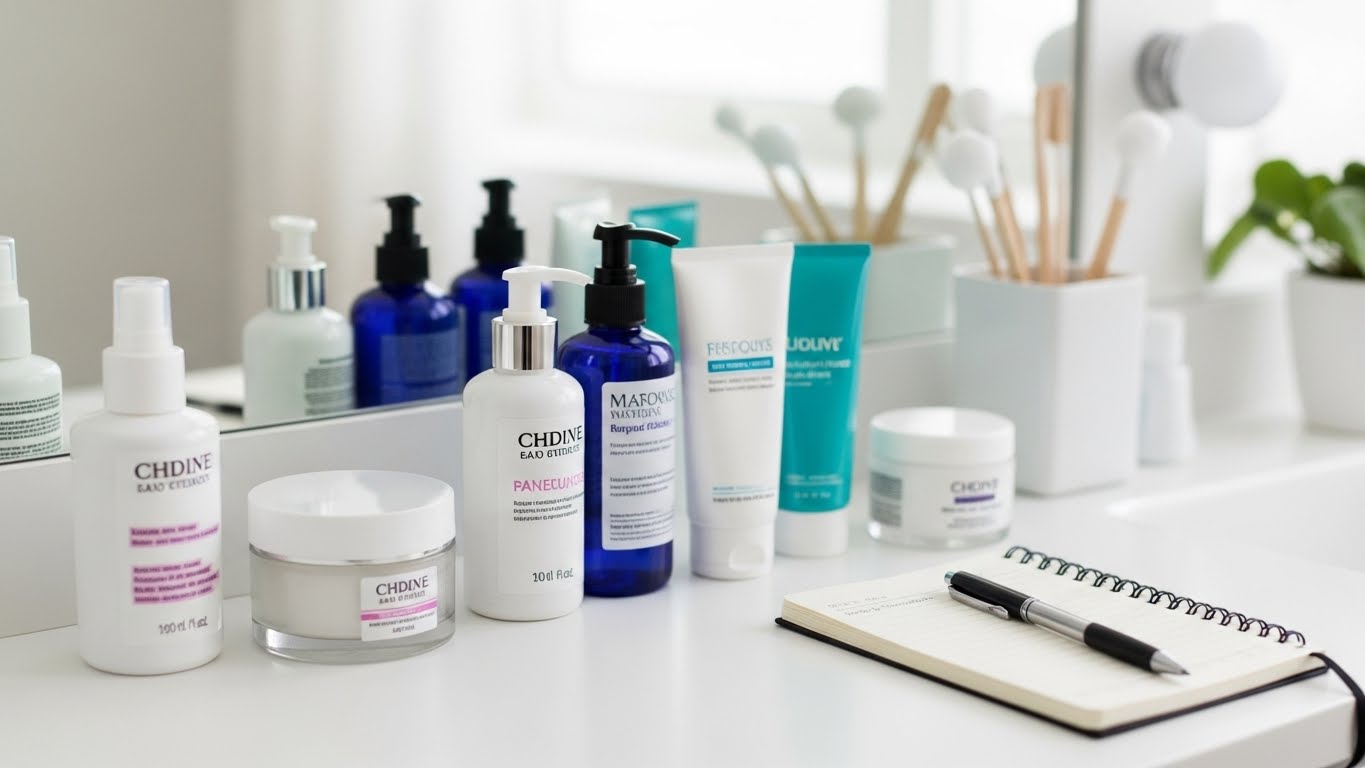
- Changing products too often. Skin needs time. Switching every two weeks means you never learn what works.
- Using too much product. More is not better. Excess product wastes money and can clog pores.
- Ignoring the instructions. Using too little, or using a product the wrong way, lowers results and can irritate the skin.
- Buying for the packaging. A plain bottle with a simple formula is often the better buy.
- Skipping the basics to afford a luxury product. Sunscreen and moisturiser matter more than any serum.
FAQs
Q1. Can a cheap routine really work?
Yes — if it is consistent. A gentle cleanser, a moisturiser and a sunscreen used every day do more than an expensive shelf of products used irregularly. Price does not decide whether a product works.
Q2. How many products do I actually need?
Three to start: a gentle cleanser, a moisturiser, and a broad-spectrum sunscreen (SPF 30+). Add one thing at a time only when you have a clear reason.
Q3. How long before I see a difference?
Gradually, and the timing varies from person to person. Hydration can feel better within days. Changes in tone or texture take weeks of steady use. No routine can promise a result by a fixed date.
Q4. Should oily skin skip moisturiser?
No. Oily skin still needs moisture. Use a light, non-greasy lotion or gel. Skipping moisturiser can leave skin dehydrated and looking flat.
Q5. Is it worth buying expensive sunscreen?
No. A cheap sunscreen used properly — enough product, reapplied every two hours outdoors — protects better than an expensive one used sparingly or left unused.
Summary
A beauty routine without expensive products is a routine built on habits: wash gently with lukewarm water, moisturise on damp skin, wear SPF 30+ every morning, wash hair when the scalp needs it, and keep the extras — sleep, water, balanced food, clean towels — steady. Read labels, buy simple formulas, and replace products only when they run out. Progress builds quietly, and confidence follows when the routine is easy enough to keep.
Sources: AAD sunscreen guidance; AAD face-washing guidance; AAD exfoliation guidance; Hughes et al. 2013; CDC sleep guidance (7+ hours for adults); AAD patch-test method; Koyama et al. 2016 (scalp massage, 9 men, no control group); Rele & Mohile 2003 (coconut oil); AAD acne guidance. This is a researched overview, not a hands-on review.