Researched overview.
Table Of Content
Quick answer
Curly hair is usually drier than straight hair, because the scalp’s natural oils cannot travel easily down a twisted hair shaft. That is why the ends of curls dry out first.
A lightweight oil cannot fix that dryness on its own, because oil is not water. What an oil can do is coat the hair and slow down water loss after you have already added water — by washing, conditioning, or using a leave-in conditioner on damp hair. Used that way, a few drops of a light oil on the mid-lengths and ends can make curls feel softer, look shinier, and tangle less. Used the wrong way — too much, on the scalp, or instead of conditioner — it will make hair look greasy and flat.
This guide names no “best” oil and recommends no brand. It explains how to choose and how to use one.
If your scalp is red, sore, flaking badly, or you have patches of hair loss, skip new oils and ask a dermatologist or pharmacist first. This guide is general information, not medical advice.
Contents: Why curls dry out · What oils can and cannot do · Choosing a light oil · How to use it · Daily and weekly routine · Mistakes · When to get help
Why curls dry out
Each curl bends the hair shaft, and at every bend the cuticle — the overlapping outer layer of the hair — sits slightly lifted. The scalp’s natural oil, sebum, travels down a straight shaft easily and down a twisted one poorly, so the lengths and ends of curly hair get very little of it. The American Academy of Dermatology (AAD) states that people with curly or tightly coiled hair are more prone to breakage and dryness than people with other hair types, and advises keeping curly hair moisturised. (AAD, 6 curly hair tips from dermatologists)
Dryness matters because dry hair is less flexible. It tangles more, breaks more easily when pulled, and its lifted cuticle lets moisture from the air into the inner part of the hair, so strands swell unevenly — which is what frizz is. The fix is not one product. It is a short routine: wash gently, condition every time, add water-based moisture to damp hair, and only then seal it with a little oil.
What oils can and cannot do
| What an oil can do | What it cannot do |
|---|---|
| Coat the hair surface and slow water loss, so damp hair stays damp longer | Add water to hair — only water and water-based products do that |
| Reduce friction between strands, so detangling and styling pull less | Repair damage or rebuild the hair shaft — damaged hair cannot be repaired, only protected while it grows out |
| Add shine by smoothing the cuticle surface | Grow hair, stop hair fall, or prevent breakage on its own |
| Help curls clump and hold their shape for a few hours | Replace conditioner — conditioner is what softens and detangles |
The one oil fact with a published study behind it is narrower than most hair articles claim: coconut oil reduced protein loss from the hair shaft in a study by Rele & Mohile (2003). That means it protects the shaft during washing — it does not grow hair, and it does not make hair stronger “from the inside”. Most coconut oil is heavy for fine curls; fractionated coconut oil stays liquid and feels lighter, but it is a different preparation and was not the oil in that study.
There is no published evidence that any oil “penetrates” the hair shaft in a way that strengthens it, or that the vitamin E and fatty acids in an oil feed the hair from within. Hair is dead tissue. Oils work on its surface.
Choosing a light oil
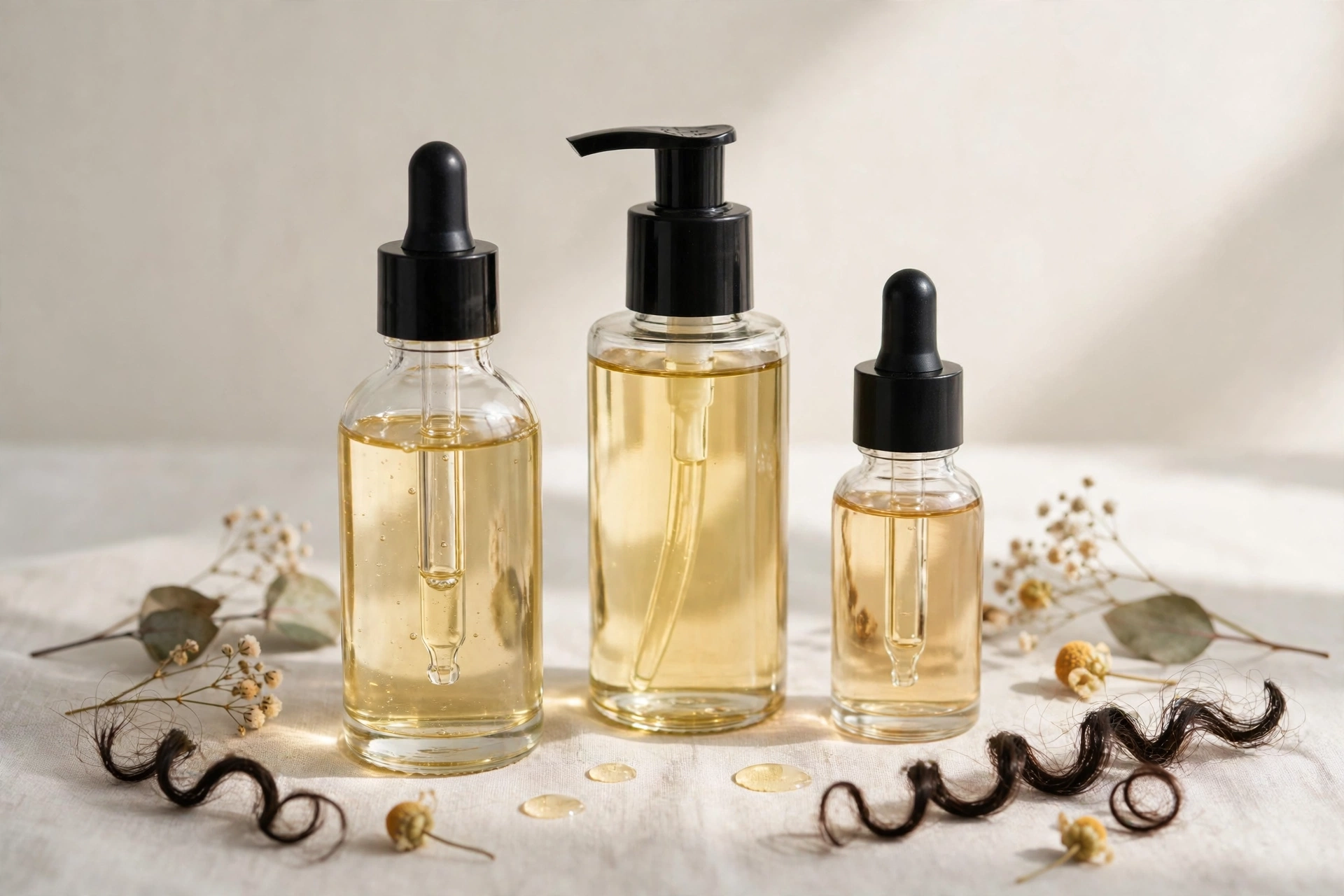
A “lightweight” oil is simply one that spreads thinly, absorbs into the surface coating quickly, and does not leave a heavy film. There is no official list and no ranking. The oils below are commonly used on curls because they feel light; which one suits you depends on your hair, not on a claim.
- Argan oil — light, spreads easily, commonly used as a finishing oil on the lengths. The AAD lists argan oil as an ingredient to look for in a conditioning product for curly hair.
- Jojoba oil — light and similar in feel to the scalp’s own oil. Often used on the lengths; it does not moisturise on its own.
- Grapeseed oil — very light, almost no scent, a common choice for fine curls that are easily weighed down.
- Sweet almond oil — light and softening. Do not use it if you have a tree-nut allergy, and keep it off the scalp if your scalp is sensitive.
- Fractionated coconut oil — stays liquid and feels lighter than ordinary coconut oil. Ordinary coconut oil is heavier and can weigh fine curls down; it is also the form used in the protein-loss study above, not the fractionated form.
Buy plain, single-ingredient oil with no added fragrance if your scalp is sensitive. A blend is fine, but a blend is not better than a single oil — it is just a different feel. Do not buy an oil because it promises growth, repair, or frizz elimination. No oil can promise any of those.
Patch test first
Before using a new oil on your hair, test it the way the AAD advises for new hair and skin products: apply a small amount to a quarter-sized patch of skin on the inside of your arm or the bend of your elbow, twice a day, and watch for 7–10 days. If you get redness, itching, bumps or swelling, do not use it. This is the same 7–10 day method used across this site’s drafts.
How to use it
- Start with damp, conditioned hair. Wash, then condition all of your hair — the AAD advises conditioning all curly hair, not just the ends — and rinse. Oil goes on after water, never instead of it.
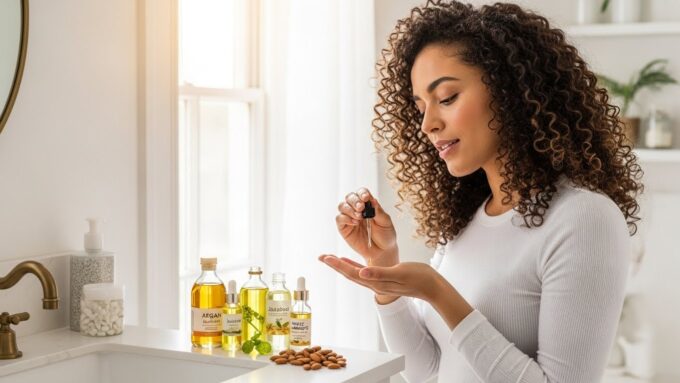
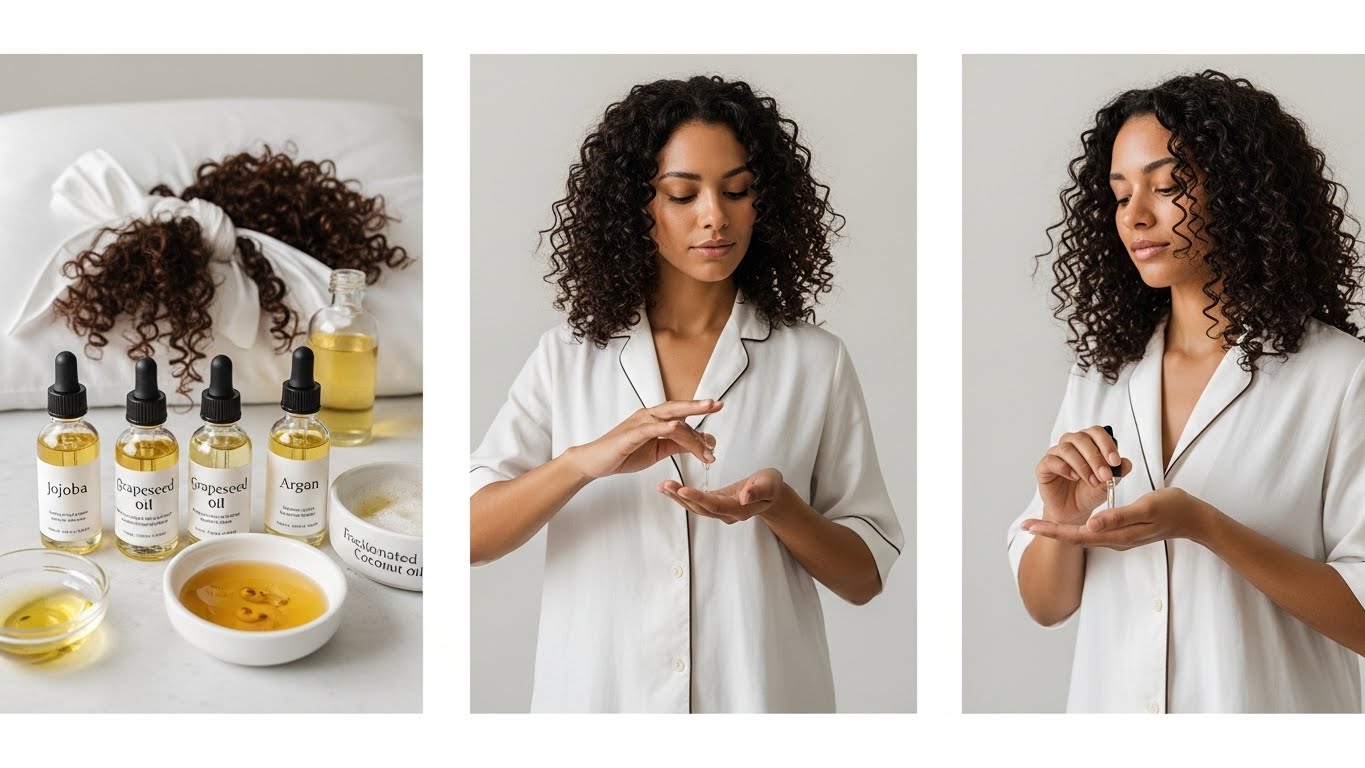
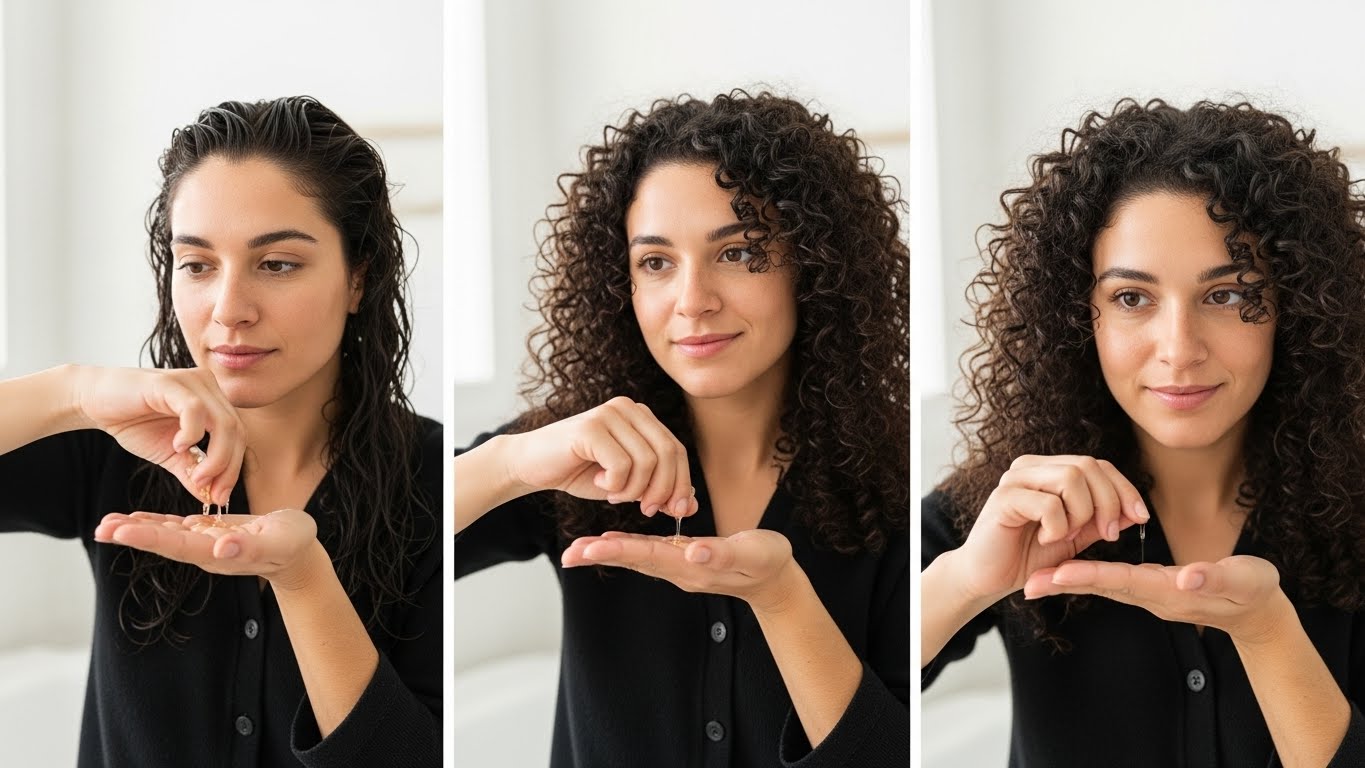
- Use a few drops, not a palmful. Warm 2–4 drops between your palms. Fine or wavy curls need less; thick or coily curls may need a little more. You can always add another drop. You cannot easily remove too much without washing again.
- Mid-lengths and ends only. Smooth the oil over the lengths and ends, where curls are driest. Keep it off the scalp: oil on the scalp can look greasy, trap product, and irritate some scalps.
- Detangle first, or use it to detangle. Wet hair is fragile. Detangle with your fingers or a wide-tooth comb, starting at the ends and working up. A little oil on damp hair can help the comb slide through.
- Leave-in first, oil last. If you use a leave-in conditioner or curl cream, apply that first, then the oil. Water-based product first, oil last — the oil seals in what is underneath. Reversing the order puts a barrier between your hair and the moisture.
- A drop as a finishing touch. Once hair is dry, rub a single drop between your palms and smooth it over flyaways. This is for shine and smoothing, not for moisture.
Daily and weekly routine
On wash days: Wash only when needed — the AAD advises washing curly hair only when needed, and at minimum every 2–3 weeks for scalp health, with most people washing far more often than that minimum. Shampoo the scalp, let the suds run down the lengths, condition all the hair, then apply leave-in and a few drops of oil to damp hair. Let hair air-dry when you can, or use a diffuser on low heat.
Between washes: If curls feel dry, dampen them lightly with water first, then smooth a drop of oil over the ends. Oil on dry hair without water adds shine but very little moisture.
The scalp is skin too — an exposed parting can sunburn, so use broad-spectrum SPF 30+ sunscreen on it, or cover it with a hat.
Once a week (optional): A deeper condition — a moisturising mask or a longer leave-in on damp hair — does more for dryness than any oil treatment. An oil treatment before washing (a small amount on the lengths, left while you do something else, then washed out) is a common routine step, but there is no published evidence for a fixed duration such as “30–60 minutes”. Use it as a conditioning step, not as a treatment with a proven result.
Overnight: A loose pineapple (hair gathered loosely on top of the head with a soft scrunchie) or loose braid, plus a silk or satin pillowcase, reduces friction while you sleep. The evidence for silk or satin pillowcases is weak — it is a reasonable friction-reducing step, not a proven treatment.
Seasons: Cold, dry air and indoor heating dry curls out; you may need oil slightly more often in winter. Humid summers may need less. Watch how your hair feels rather than following a fixed seasonal schedule.
Mistakes that make oils fail
- Using oil instead of conditioner. Oil seals moisture in; it does not add it. Without water underneath, oil just coats dry hair.
- Using too much. Heavy, limp curls are almost always too much product, not the wrong oil. Start with fewer drops than you think you need.
- Oiling the scalp. The scalp makes its own oil. Adding more can cause greasiness and, if you go a long time between washes, scalp irritation.
- Expecting the oil to do the routine’s job. If hair is still dry, the problem is usually washing too often with a harsh shampoo, skipping conditioner, or heat damage — not the choice of oil.
- Mixing many products at once. Adding oil to leave-in, cream, gel and serum in one routine makes it impossible to tell what helps. Change one thing at a time and give it a few washes.
- Believing “natural means harmless”. Natural oils can irritate skin and scalp, and nut oils can trigger allergies. Patch test, and stop using an oil that causes itching, redness or flaking.
When to get help
Ask a dermatologist or pharmacist if: your scalp is persistently itchy, red, sore or flaking; you have patches of hair loss or shedding that lasts more than six months; or a new product causes a reaction that does not settle after you stop using it. Shedding about 50–100 hairs a day is normal, according to the AAD.
Summary
Water moisturises curly hair; oil seals that moisture in. Condition all your hair after washing, apply leave-in to damp hair, then smooth a few drops of a light oil over the mid-lengths and ends. Keep oil off the scalp, start with less than you think you need, and patch test a new oil first. No oil grows hair, repairs damage, or removes frizz — and any product that promises those things is making a claim it cannot support.
Sources: AAD curly hair tips; AAD hair shedding guidance; IADVL Hair Care Basics; Rele & Mohile 2003 (coconut oil and protein loss); Monselise et al. 2015 (frizz mechanism). This is a researched overview, not a hands-on review.