Researched overview. This guide is based on published dermatology guidance, not on hands-on product testing by BeautyKob. No product in this guide was tested by us, and no product or brand is recommended.
Table Of Content
- Quick answer
- What Korean skincare devices are
- The five device families
- Devices by skin concern
- How to choose one
- Realistic expectations
- Mistakes that cause most of the problems
- Cleaning and storage
- Korean vs Western devices
- Cost vs value
- Building a simple routine
- Patch testing and sunscreen
- When to see a dermatologist
- FAQ
- Summary
Quick answer
Korean skincare devices are home tools built around one idea: gentle, low-intensity, regular use rather than occasional strong treatment. They support a routine — cleansing, hydration, barrier care — instead of trying to correct damage in one session. The common types are cleansing brushes, gentle exfoliation tools, firming devices, LED lamps, and massage tools.
None of them is a treatment. No device removes wrinkles, clears acne, slims the face, or changes skin structure. What they can do, slowly and with consistency, is help skin feel smoother, more hydrated and more comfortable. The best device is usually the simplest one you will actually use every day, not the most advanced one you buy and abandon.
This guide covers the device types, how to choose one for your skin, the mistakes that cause most of the problems, and how to keep the tools clean. It is general information, not medical advice.
Contents: What they are · The five device families · Devices by skin concern · How to choose one · Realistic expectations · Mistakes · Cleaning and storage · Korean vs Western devices · Cost vs value · Building a simple routine · Patch testing and sunscreen · When to see a dermatologist · FAQ
What Korean skincare devices are
Korean skincare, as a philosophy, is built on prevention, barrier care, layered hydration and daily sun protection — not on strong treatments used occasionally. The devices follow the same idea: they are designed for low stress and repeated use, and most are meant to be used daily or weekly without overloading the skin.
That is the real difference from many Western devices, which are often built around correction — stronger settings, used less often, aimed at a visible change. A Korean device is usually gentler, quieter, simpler to operate, and meant to become part of a routine rather than an event. That does not make it more effective; it makes it easier to use consistently, and consistency is where any small benefit comes from.
Devices support products; they do not replace them. Cleanser, moisturiser and sunscreen do the actual work of a routine. A device can help a routine feel more pleasant and can support the skin’s surface, but it cannot fix a routine that is missing those basics.
The five device families
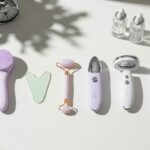
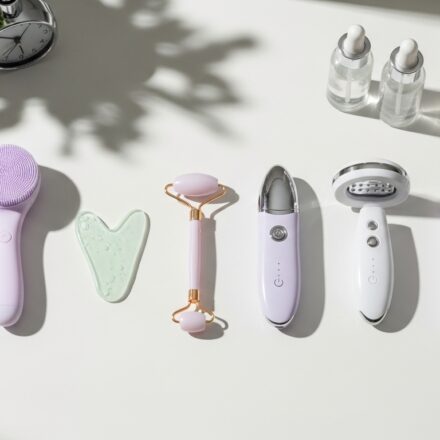
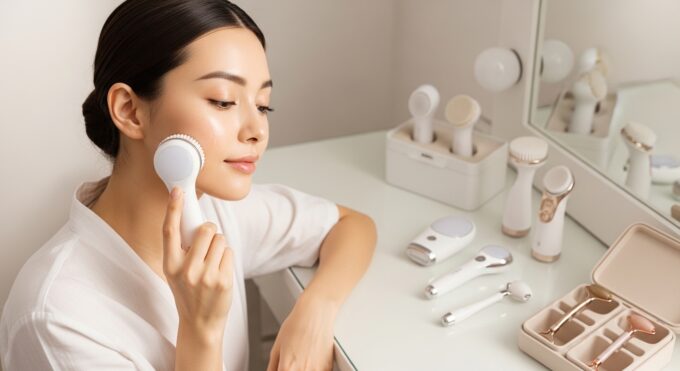
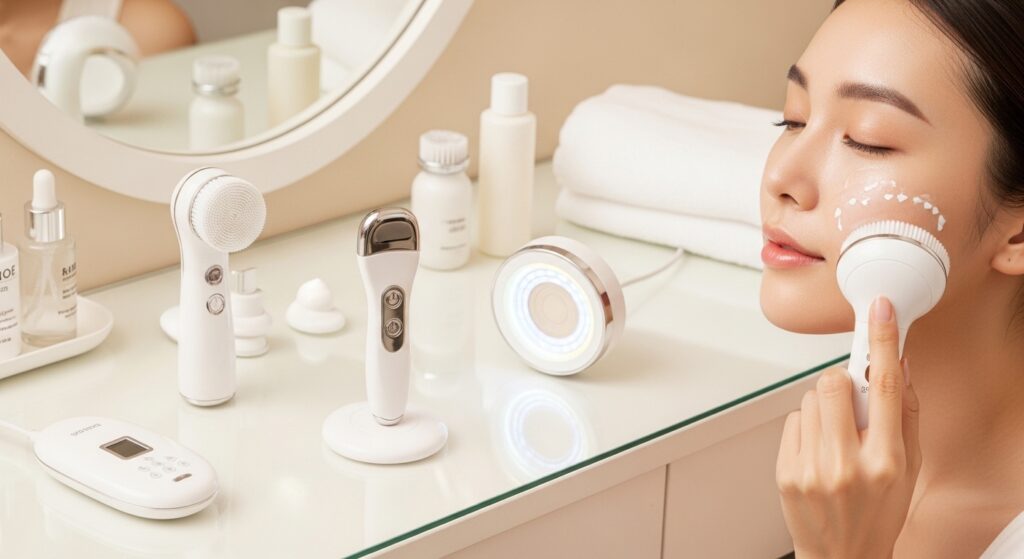
Cleansing and prep devices. Silicone or soft-bristle brushes with gentle vibration. They help remove leftover sunscreen, makeup and daily grime that hands alone may miss. Use low pressure and short cycles. They do not make products absorb better — they clean the surface, and that is all.
Exfoliation and resurfacing devices. Gentle powered exfoliators and microdermabrasion-style tools. They remove surface build-up slowly, without harsh scrubbing. Use them at most once or twice a week, never on broken or irritated skin, and never on the same day as a chemical exfoliant. Home devices are much weaker than clinic machines and are maintenance tools, not a substitute for professional treatment.
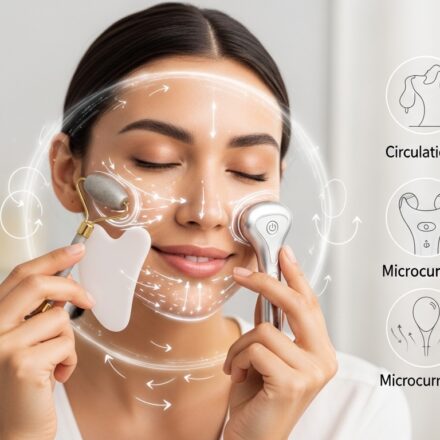
Firming and skin-tightening devices. Microcurrent and radiofrequency tools, and vibration devices. The honest position: no home device tightens skin structurally. Microcurrent has only small studies behind it, with modest and temporary effects. Home radiofrequency results are modest and device-specific. These tools may make skin feel firmer for a short time; they do not lift, slim or reshape the face, and they do not change bone structure or genetics.
LED light devices. Red and near-infrared light panels and masks. LED is the best-evidenced of the home devices (Wunsch & Matuschka), and even so the effects are modest and gradual — smoother-looking skin and comfort over weeks, not a visible change in days. Blue light is used for acne-prone skin, but it is a support for a routine, not an acne treatment. Wear the eye protection the manufacturer supplies, and never look directly into a bright LED panel.
Massage tools. Rollers, gua sha stones and powered massage heads. They relax facial muscles and can reduce morning puffiness for a short time, mainly by encouraging fluid to move and by the massage itself. They do not drain lymph, firm skin, or slim the face — those claims have no good evidence. Use light pressure and a slippery product so the tool glides; dragging a dry tool across the skin irritates it.
Devices by skin concern
- Acne and congested skin. The priority is balance, not drying the skin out. A gentle cleansing device can help remove build-up; a blue-light device may support a routine. Do not use any device over active inflamed breakouts, and do not expect a device to clear acne — that needs skincare and, for persistent acne, a dermatologist.
- Dry and dehydrated skin. Hydration comes from products, not devices. A gentle massage tool used with a hydrating serum can make the routine feel better, and a red LED device may support comfort. Avoid strong suction and harsh exfoliation, which dry the skin further.
- Ageing skin and fine lines. Sunscreen and moisturiser are, in the American Academy of Dermatology’s words, the two most effective anti-ageing products most people can buy. A retinoid is the strongest topical for fine lines, used slowly over 3–6 months. No device replaces either. A red LED or microcurrent device may soften the look of fine lines gradually, by improving hydration and surface smoothness — it cannot remove wrinkles.
- Sensitive and reactive skin. Low pressure, smooth surfaces and adjustable intensity matter most. Start with the gentlest device, test on a small area first, and use it less often than the manual suggests. If the skin stings, burns or flares, stop — healing comes first.
How to choose one
By skin type. Oily skin usually tolerates a cleansing device well. Dry skin suits massage and LED tools used with hydrating products. Sensitive skin needs devices with different intensities and smooth surfaces, and the gentlest setting. Mature skin benefits most from consistency, not intensity.
By experience. First-time users should start with a simple tool — a cleansing brush or a roller. Complicated devices increase the risk of overuse and frustration. An advanced device only makes sense once a simple one is already part of a routine.
By lifestyle. Choose the device you will actually use regularly, not the most advanced one. Short sessions and simple cleaning make consistency possible. If a device takes ten minutes to set up and clean, it will sit in a drawer.
By safety and build quality. Look for clear instructions, adjustable intensity, smooth surfaces with no sharp edges, safety certification marks, and a warranty. Avoid devices with vague claims, no instructions, or no way to clean them properly. Do not buy a device that promises to remove wrinkles, slim the face, or replace professional treatment — those promises are not honest.
Realistic expectations
- What improves first: texture, hydration and comfort. Skin feels smoother and softer before it looks different.
- What improves with time: with weeks of steady use, skin may look more even and feel more comfortable. These are slow, small changes.
- What never changes: devices cannot change bone structure or genetics, cannot remove wrinkles or scars, and cannot replace medical or professional care. Satisfaction comes from knowing those boundaries.
Do not judge a device after two days. The people who expect lifting or brightening within days are the ones who overuse the device, damage their barrier, and give up. Judge after a month of gentle, regular use — and judge by how the skin feels, not by a photograph.
Mistakes that cause most of the problems
- Too many devices at once. Adding several tools in one day overloads the skin. Overlapping functions — exfoliation plus stimulation, for example — cause strain instead of refreshment. Start with one device, and add a second only when the first is working well.
- Expecting rapid or radical change. Korean devices are designed for slow, gradual improvement. Coercing faster results by pressing harder or using a device longer causes redness and frustration.
- Skipping rest days. Even mild devices need rest days. Skin renews itself during rest, and using a device every day without a break can compromise the barrier — showing up as dryness, sensitivity or breakouts.
- Using devices over broken skin. Never use a device on broken skin, an acne flare, irritated or sunburnt skin. Stop if the skin stings, burns or becomes inflamed, and let it heal first.
- Not cleaning the device. Dirty devices undo progress: residue, oil and bacteria transfer back onto the skin and cause congestion and breakouts.
Cleaning and storage
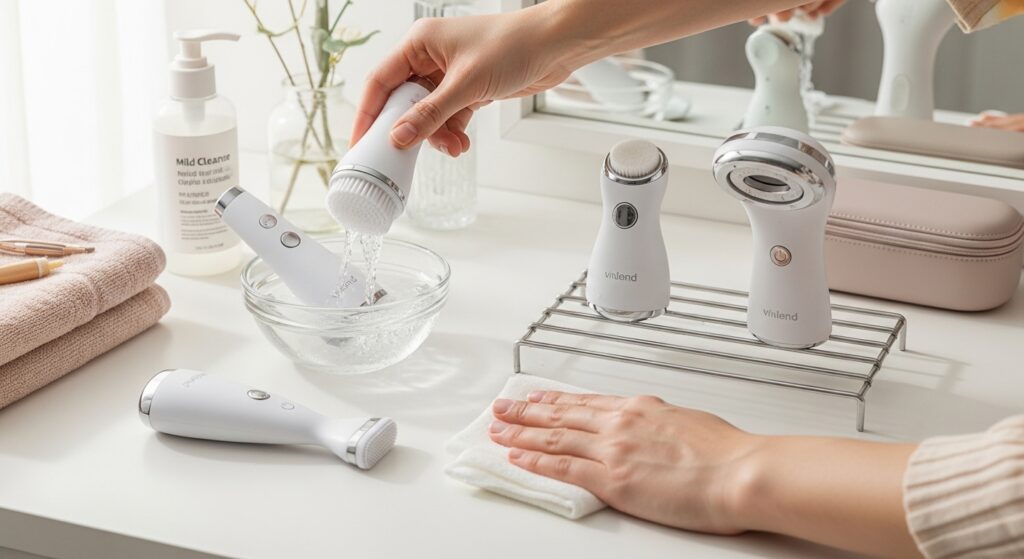
- After every use: wash the device gently with lukewarm water and a mild cleanser. Harsh cleaners damage surfaces and shorten the device’s life. Let it dry fully before storing — moisture left in a case encourages bacteria.
- Once a week: clean more thoroughly, including any removable heads, filters or tips, following the manufacturer’s instructions.
- Storage: keep devices in a dry, clean place. Very humid bathrooms are a poor choice. Dropping a device can damage its internal parts even when the surface looks fine.
- Clean is not sterile. Washing and disinfecting a home tool is not sterilisation — no home method sterilises, and only an autoclave does that. Do not share devices between people, and replace a head or tip that is damaged or cannot be cleaned properly.
Korean vs Western devices
The contrast is one of philosophy, not quality. Korean devices are oriented to daily support: soft touch, customisation, frequent use, and barrier safety. Western devices are often built around correction: stronger settings, used less often, aimed at a visible change.
Neither approach is superior. A person who wants gentle daily support will prefer a Korean-style device; a person who wants a stronger occasional treatment will prefer a Western-style one. What matters is matching the device to your skin and your habits, and knowing that neither type can do what only time, sunscreen and professional care can do.
Cost vs value
Korean skincare devices are often expensive, and price depends on use and durability. A device used once a year costs more per use than a professional treatment; a device used daily for a year costs less. That is the whole calculation — there is no shortcut to it.
A device makes sense when a routine is already consistent: cleansing, moisturising and sunscreen are already habits, and a device adds something to them. A device does not make sense when the basics are missing — no device replaces them. The most expensive device is not the best, and the cheapest is not the best value. A simple, well-made device used daily is worth more than an advanced one used twice.
Building a simple routine
- Start with one device that suits one main concern. Use it regularly for a couple of weeks and watch how the skin responds.
- Combine it with products, not instead of them. Light gels and serums work with devices; heavy creams can block movement. Use a retinoid after device use, not before it, because retinoids make skin more sensitive.
- Adjust over time. Skin changes with the seasons and with age. What suited it six months ago may not suit it now. Reduce frequency if the skin becomes dry or reactive; increase only if the skin stays comfortable.
- Keep rest days. Two rest days a week is a reasonable pattern for most people. Rest is when the skin recovers.
Patch testing and sunscreen
Patch test any new product before using it on your face. The AAD’s method is: apply the product to a quarter-sized patch of skin on the inside of your arm or the bend of your elbow, twice a day for 7 to 10 days. The AAD recommends this length because allergic reactions can take several days to appear, and a 24-hour test can miss them. If the patch becomes red, itchy, swollen or blistered, do not use the product on your face. The same caution applies to a new device: try it on a small area first, at the lowest setting.
Sunscreen every morning. Use a broad-spectrum sunscreen with SPF 30 or higher as the last step of the morning routine, and reapply every two hours when outdoors, or after swimming or sweating. Sunscreen is the single most effective anti-ageing step (Hughes et al. 2013), and no device replaces it.
When to see a dermatologist
See a dermatologist if: your skin condition is severe or keeps getting worse; you have acne that does not respond to consistent over-the-counter care; you have rosacea, eczema or another skin condition and are unsure whether a device is safe; you are pregnant or have a medical condition and a device manual warns against use (microcurrent devices, for example, are not suitable for people with pacemakers); or a device has caused blistering, swelling, or dark marks that do not fade. A dermatologist can also advise on professional treatments that home devices cannot replace.
FAQ
Do Korean skincare devices replace products?
No. They support a routine built on cleanser, moisturiser and sunscreen. A device without those basics adds little.
Which Korean skincare device is best?
There is no best device — only the device that suits your skin, your experience and your lifestyle, and that you will use regularly. Start simple.
Can a device remove wrinkles or slim my face?
No. No home device removes wrinkles, slims the face, or changes skin structure. Effects are modest, gradual and mostly about texture, hydration and comfort.
How often should I use a device?
Most are designed for daily or weekly use, but rest days matter. Start less often than the manual suggests, watch the skin’s response, and increase only if the skin stays comfortable.
Are Korean devices safe for sensitive skin?
They are often gentler than stronger Western devices, which suits sensitive skin — but “gentle” is not a guarantee. Test on a small area first, use the lowest setting, and stop if the skin reacts.
Do devices make products absorb better?
No. Tools do not increase product absorption. They clean or massage the surface; products work on the surface and in the upper layers regardless of the device.
Summary
Korean skincare devices are gentle, low-intensity home tools built for regular use: cleansing brushes, gentle exfoliators, firming devices, LED lamps and massage tools. They support a routine; they do not replace cleanser, moisturiser and sunscreen, and they cannot remove wrinkles, clear acne, slim the face or change skin structure. Choose one device that suits your skin and your life, start with the lowest setting, use it consistently with rest days, keep it clean, patch test new products for 7 to 10 days, and wear SPF 30+ every morning. If the skin reacts, stop and let it heal — and see a dermatologist if a condition is severe or keeps getting worse.
Sources: American Academy of Dermatology, 7 Rosacea skin care tips (patch-test method: apply a new product to a quarter-sized patch of skin on the inside of the arm for 7–10 days); American Academy of Dermatology, How to select anti-aging skin care products (broad-spectrum sunscreen, SPF 30 or higher, reapply every two hours outdoors). This is a researched overview, not a hands-on review.