Researched overview.
Table Of Content
Quick answer
No food makes hair grow faster. Scalp hair grows about half an inch (about 1.25 cm) a month on average, and that rate is set mostly by your genes and age. What food can do is stop your hair from growing slower than it should: if you eat too little protein, iron or energy, your hair can shed more and grow back weaker. Fixing a shortage helps. Eating extra on top of an already adequate diet does not speed growth up.
If you are losing hair in patches, losing hair suddenly, or your scalp is sore, itchy or inflamed, food is not the first step — see a doctor or dermatologist. This guide is general information, not medical advice.
Contents: How hair grows · What food can and cannot do · Protein · Iron · Healthy fats · Vitamins · What does not help · Supplements vs food · A simple plate · When to get help
How hair grows
Hair grows from the follicle under the scalp, not from the ends. Each hair grows for a few years (the anagen phase), then rests and sheds. It is normal to shed 50–100 hairs a day. Because growth is slow — about half an inch a month — anything that helps will only show after several months, and no food or product can honestly promise a fixed result by a fixed date.
Hair is made mostly of keratin, a protein. The follicle needs a steady supply of energy, protein, iron and other nutrients to keep producing it. When the body is short of something important, it prioritises vital organs over hair, and shedding can increase a few months later. That delay is why diet changes and shedding are hard to connect: the shedding you see today often follows a shortage from two or three months ago.
What food can and cannot do
Food can:
- Keep growth at its normal rate by supplying enough protein, iron and energy.
- Correct shedding that is caused by a genuine shortage — for example low iron or very low protein intake.
- Support general health, which is the only honest foundation for healthy hair.
Food cannot:
- Make hair grow faster than its normal rate.
- Fix pattern hair loss (the commonest cause of thinning, which is largely genetic and hormonal). For that, the best-evidenced treatment is minoxidil, and results take 6–12 months.
- Replace medical care for patchy loss, sudden shedding, scalp disease or a suspected deficiency — those need a blood test and a clinician, not a new diet.
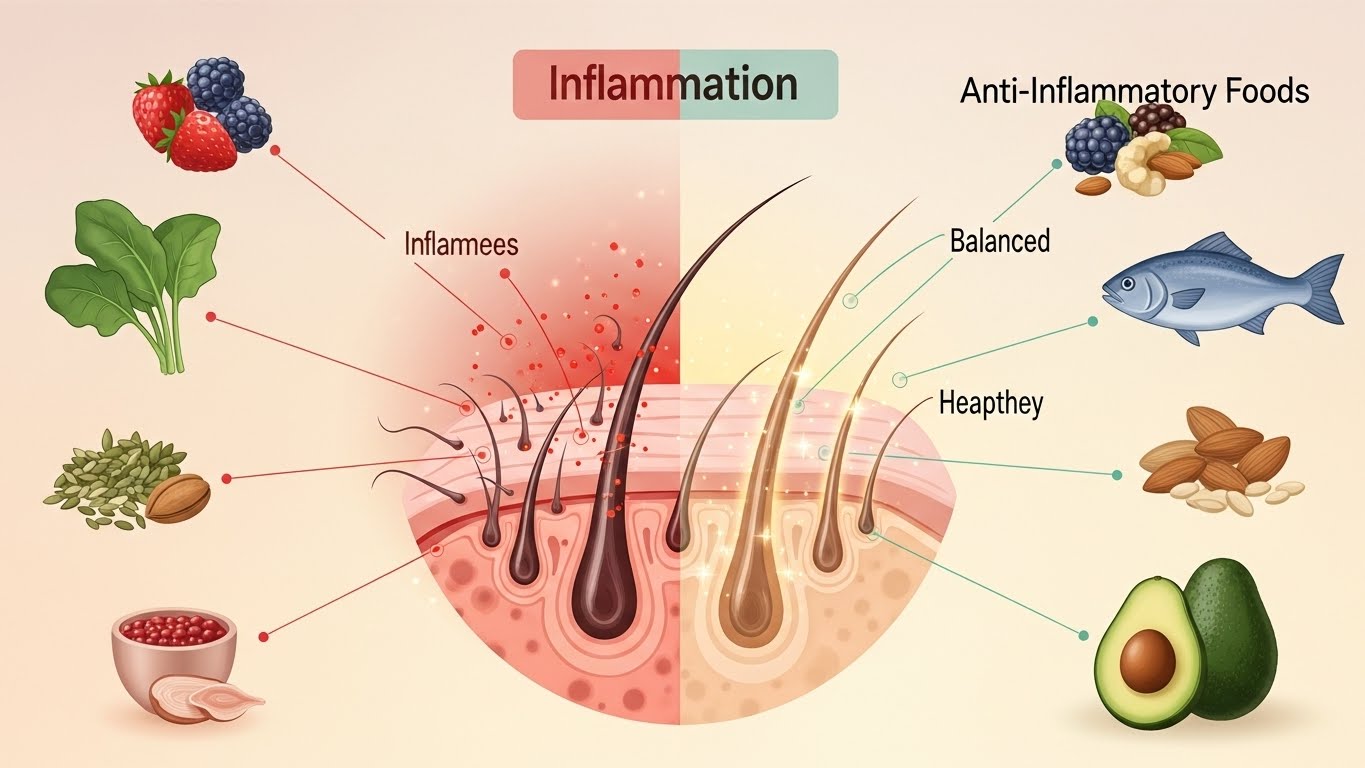
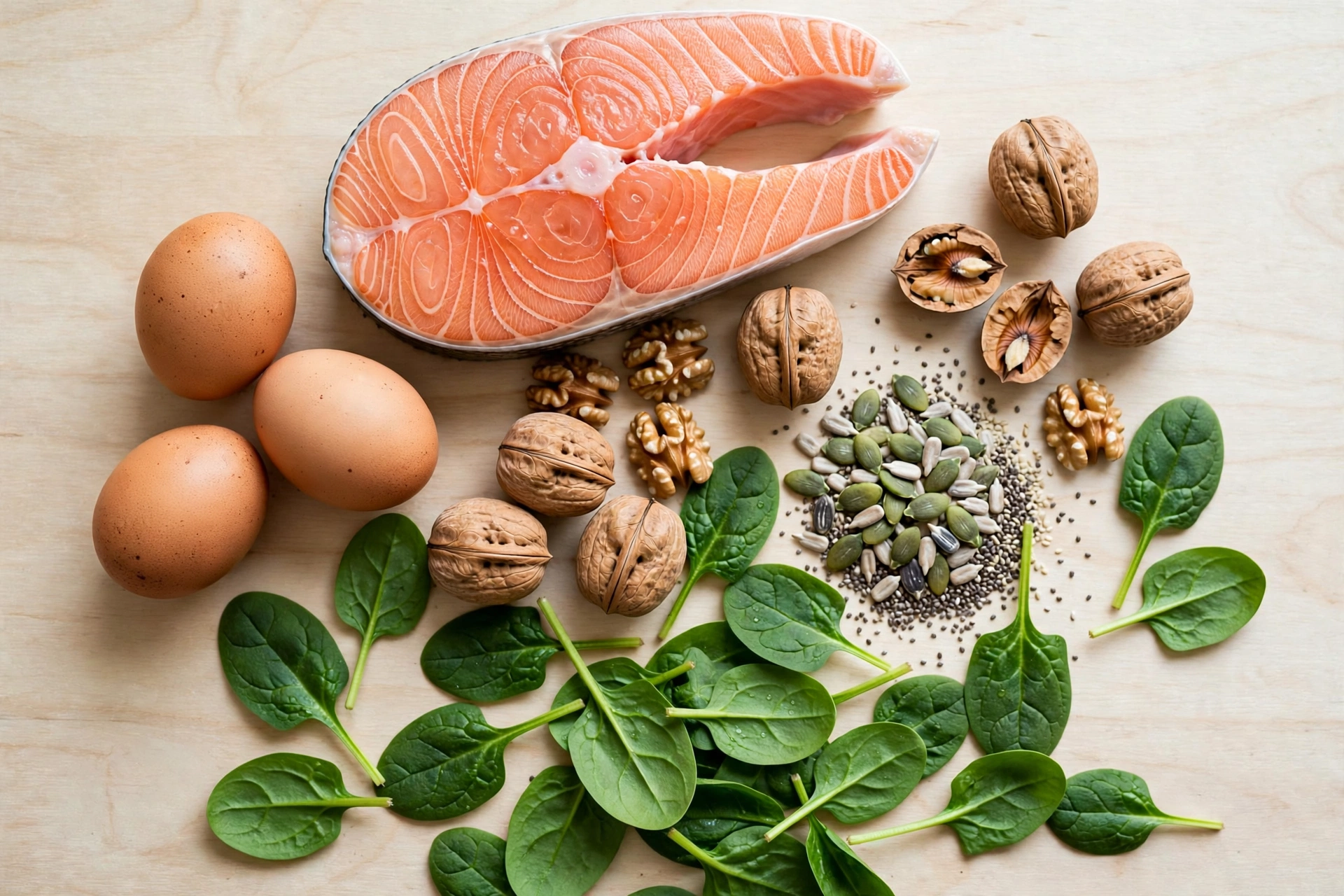
Protein
Hair is protein, so you need enough of it. Very low protein intake can contribute to shedding and weaker strands. But eating more protein than your body needs does not make hair grow faster or thicker.
Practical points:
- Eat protein at most meals — eggs, dairy, lentils, beans, fish, poultry or meat. Variety matters more than any single “hair food”.
- Vegetarian and vegan diets can support hair perfectly well as long as total protein is adequate; combine different plant proteins across the day (lentils, beans, soya, whole grains, nuts and seeds).
- Crash diets and very low-calorie eating are a common trigger for shedding a few months later. If you are losing weight, do it gradually and keep protein adequate.
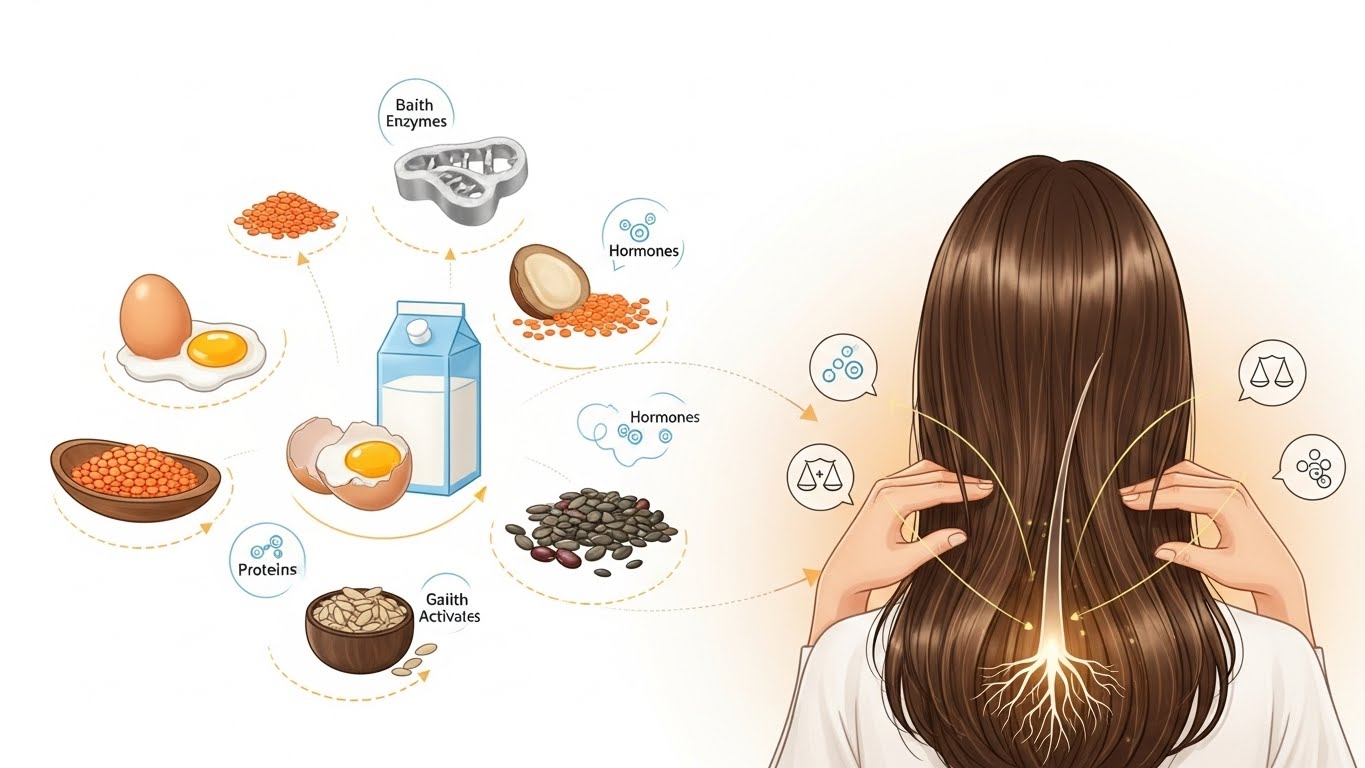
Iron
Iron helps your body make haemoglobin, which carries oxygen to cells including the follicle. Low iron is a recognised contributor to hair shedding, especially in women. A blood test (including ferritin, which reflects iron stores) is the only way to know if you are low — do not guess, and do not take iron tablets without a test, because excess iron is harmful.
Food points that are supported:
- Red meat is the best-absorbed source of iron. Plant sources — lentils, beans, leafy greens, fortified cereals — are useful but absorbed less well.
- Vitamin C helps your body absorb iron from plant foods. Eat fruit or vegetables rich in vitamin C (citrus, peppers, tomatoes, strawberries) with iron-rich meals.
- Tea and coffee with a meal reduce iron absorption. Drink them between meals rather than with food if your iron is low.
Healthy fats
Your scalp makes natural oil that protects the hair surface, and a very low-fat diet can leave hair and skin dry. That is not the same as fats “balancing hormones” to grow hair — there is no good evidence for that claim, and this guide does not make it.
Practical points:
- Include some unsaturated fats — nuts, seeds, oily fish, olive oil — as part of a normal balanced diet.
- Omega-3 supplements are not proven to grow hair. There is no good trial of omega-3 alone for hair growth. Eat oily fish if you like it; do not buy a supplement for your hair.
Vitamins
- Vitamin A: your body needs it, but too much causes shedding. Vitamin A excess can cause telogen effluvium (diffuse shedding), and it is reversible when intake falls. The NHS advises keeping long-term intake below 1.5 mg a day. Get vitamin A from food (liver, dairy, orange vegetables); do not take high-dose vitamin A supplements for your hair.
- B vitamins: biotin is vitamin B7. There is no trial showing biotin helps hair in people who are not deficient (Patel et al. 2017). Do not take high-dose biotin for hair growth — and note that high-dose biotin can interfere with laboratory tests, including troponin, the heart-attack test (FDA warning, 2017, updated 2019). Tell your doctor about any biotin supplement before blood tests.
- Vitamin C: it helps your body absorb iron from plant foods (see above). It does not build hair structure — hair is keratin, not collagen — and vitamin C supplements do not grow hair.
- Vitamin D: low vitamin D is associated with some kinds of hair loss, but association is not proof that taking vitamin D grows hair. If you are deficient, a clinician can advise; do not take high doses without a test.
- Zinc: zinc deficiency can contribute to shedding, but extra zinc does not help hair that is already adequate, and too much zinc blocks copper absorption. The NHS advises no more than 25 mg a day from supplements.
What does not help
- Meal timing. There is no evidence that eating at particular times, or eating a special evening meal, repairs hair overnight.
- Drinking more water. Staying hydrated is good for general health, but water does not speed hair growth and dehydration does not “thicken the blood” in the way the old article claimed.
- Sugar. There is no good evidence that sugar causes hair loss. Eating less sugar is reasonable for general health, but it is not a hair treatment.
- “Detox” or gut-cleanse foods. No food has been shown to “cleanse” the scalp or restart follicles. If you have persistent gut symptoms, see a doctor rather than changing your diet for your hair.
- Stress eating or guilt about food. Stress can contribute to shedding, but the answer is not a stricter diet — strict restriction itself is a common trigger for shedding.
Supplements vs food
Food first, supplements only for a confirmed gap:
- A varied diet supplies nutrients in moderate amounts together with fibre and other compounds. Supplements give isolated doses that can overshoot — iron, vitamin A and zinc are all harmful in excess.
- Supplements help only where a deficiency exists, and the only way to know is a blood test.
- No supplement, dose or brand is recommended in this guide. If you think you may be deficient, ask your doctor for a blood test before buying anything.
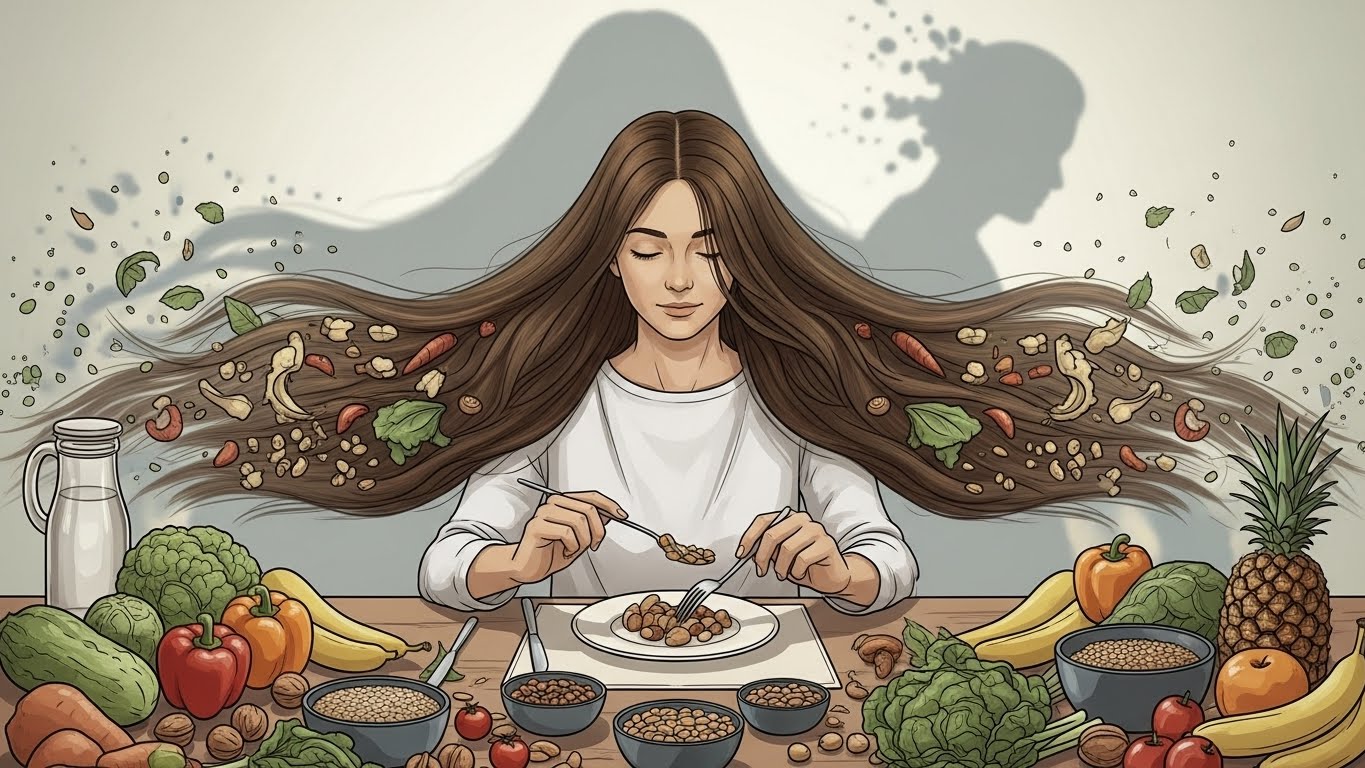
A simple plate
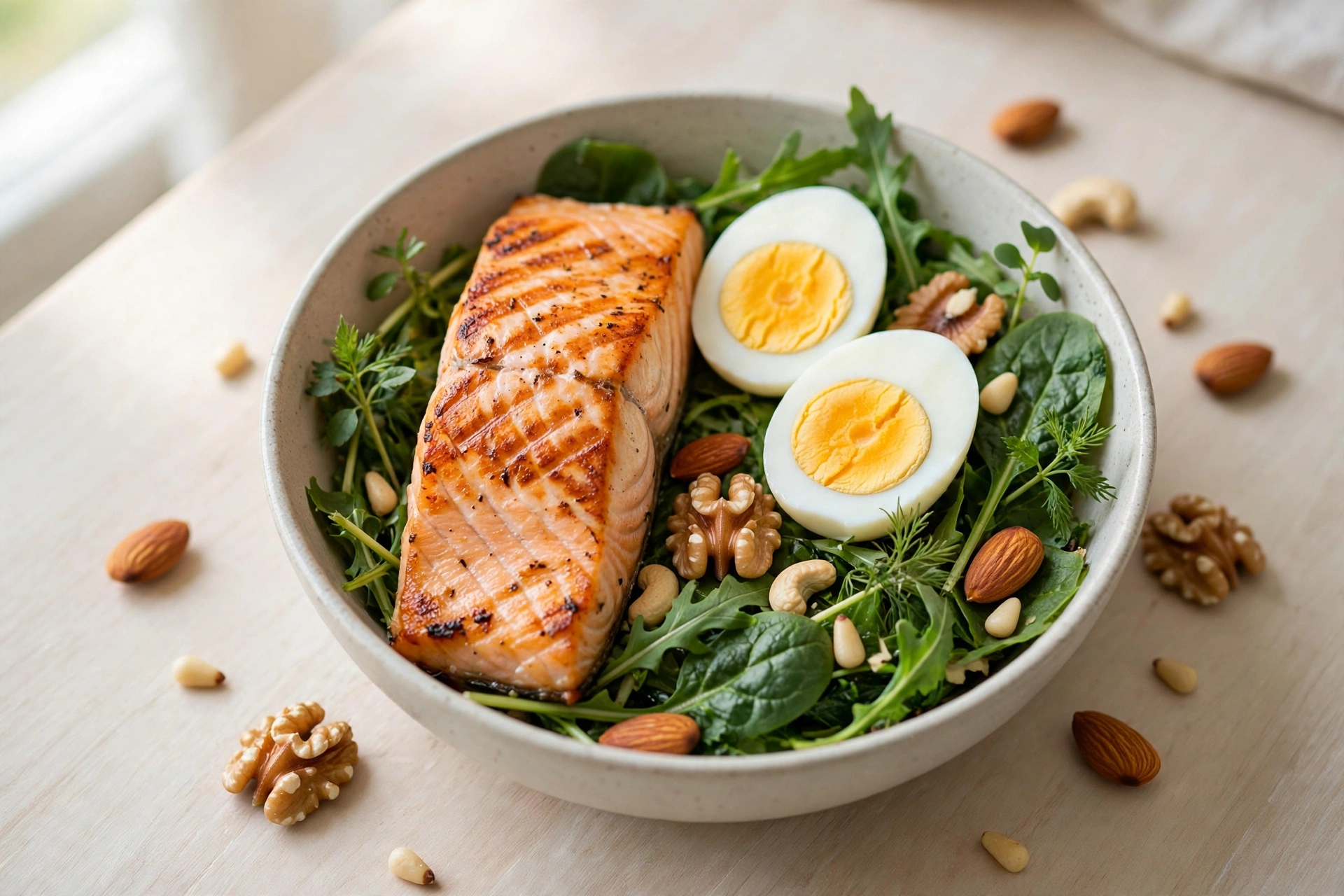
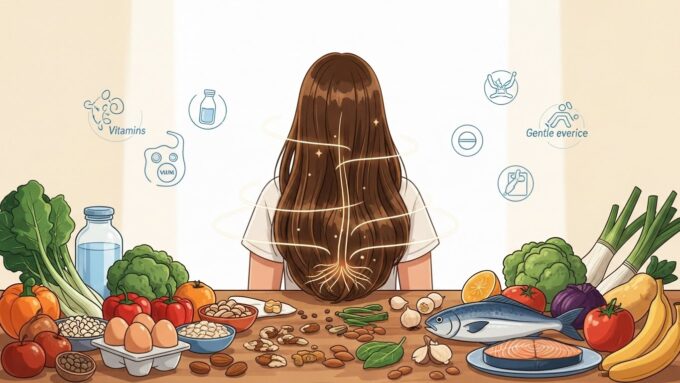
You do not need a special “hair diet”. A normal balanced pattern covers it:
- Protein at each meal.
- Iron-rich foods several times a week, with vitamin C foods alongside plant iron.
- Plenty of vegetables and fruit, whole grains, and some unsaturated fats.
- Tea and coffee between meals, not with them, if your iron is low.
- Steady, adequate eating — no crash diets.
When to get help
See a doctor or dermatologist if: hair is falling out in patches; shedding started suddenly or is much heavier than usual; your scalp is sore, itchy, red or scaly; you have heavy periods, fatigue or pale skin alongside shedding (possible low iron); or you have tried steady healthy eating for several months with no change. Bring a list of any supplements you take, including biotin, because they can affect blood test results.
Summary
Food cannot make hair grow faster than about half an inch a month. It can stop hair from growing slower than it should. Eat enough protein and iron, pair plant iron with vitamin C, keep tea and coffee away from meals if iron is low, and avoid crash diets and high-dose supplements. If shedding is sudden, patchy or persistent, get a blood test and a clinician’s advice rather than a new diet.
Sources: AAD hair growth rate and shedding (50–100 hairs/day); Cleveland Clinic on iron deficiency and hair loss; NHS iron guidance (vitamin C aids absorption; tea and coffee reduce it); NHS vitamin A intake limit; Patel et al. 2017 on biotin; FDA biotin laboratory-test warning. This is a researched overview, not a hands-on review.