Researched overview.
Table Of Content
Quick answer
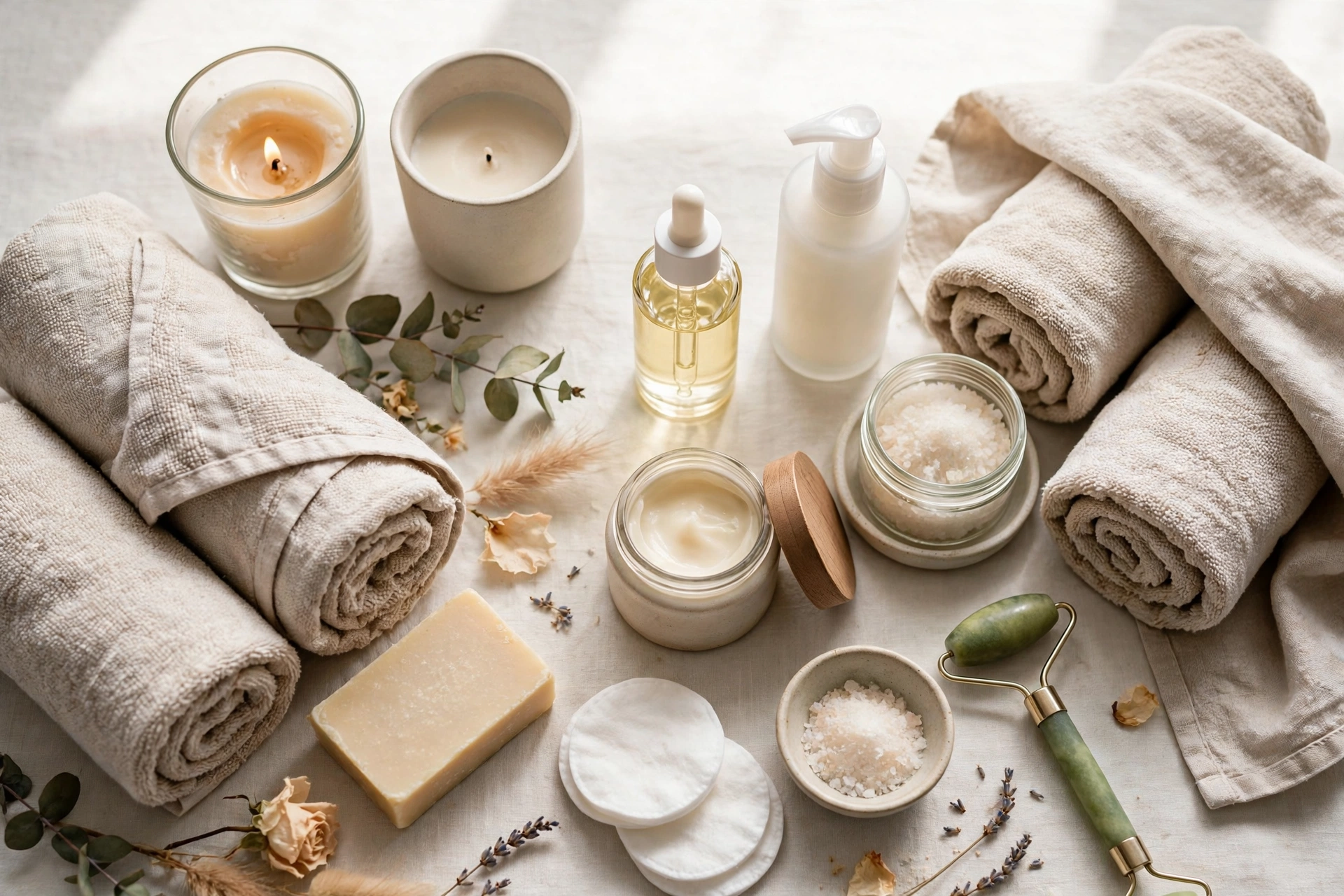
A home spa routine is not a copy of a professional spa. It is a slow, unhurried session at home — usually once a week — where you cleanse gently, rest with a mask, moisturise, and take care of your body and hair without rushing. The point is the slowness, not the products: a mild cleanser, a light moisturiser and a quiet hour do more than a shelf of expensive products used in a hurry.
If your skin is red, painful, flaking badly, or has a rash, blisters or open sores, skip the session and ask a dermatologist or pharmacist first. This guide is general information, not medical advice.
Contents: Why a slow session helps · Setting up · The face, step by step · Masks · Moisturising · Gentle facial massage · Body care · Hair care · A weekly rhythm · Mistakes to avoid · Patch test · When to get help
Why a slow session helps
Modern life is busy, and skin shows it: tiredness, dryness, breakouts that flare when you are stressed. A home spa session does not fix any of that by itself. What it does is give you an hour where nothing is rushed — and that makes the simple steps easier to do properly.
Stress can make breakouts worse for some people, and a calm routine can help you feel steadier. That is the honest limit of the claim: the session helps you feel calmer. It is not a treatment for stress, and being tense does not stop skincare products from working.
Setting up
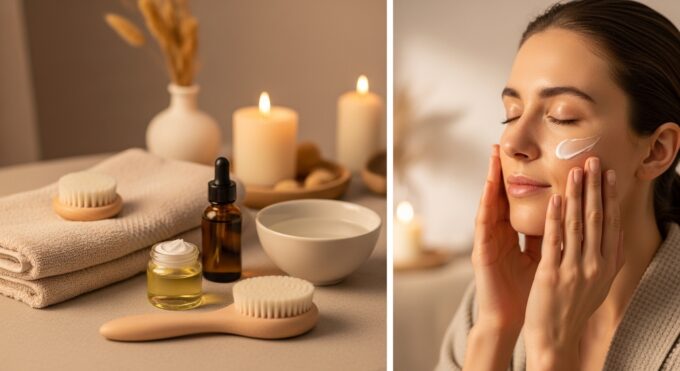
Prepare the space before you touch your skin. Pick a time when you are not in a hurry. Dim the lights a little. Have a clean towel ready.
Skip strong fragrance — unscented or lightly scented products are fine, and a strongly perfumed room is not needed. Put your phone away: checking messages during the session keeps you alert instead of resting, and that defeats the point.
Take a few slow breaths before you start. Let your shoulders drop. The session is about presence, not technique.
The face, step by step
1. Wash gently. Wash with lukewarm water and a mild cleanser, using your fingertips. Hot water dries the skin; if the skin feels tight after washing, the cleanser is too strong or the water is too hot. Rinse fully — leftover cleanser can irritate the skin — and pat dry with a clean towel. Do not rub.
2. Exfoliate — only sometimes. Exfoliation removes dead skin cells that make the surface look dull. A home spa session does not need exfoliation every time. Once or twice a week is enough for most people, and if the skin is red, dry or sensitive, skip it entirely. One gentle pass is enough. If it stings or burns, you are overdoing it.
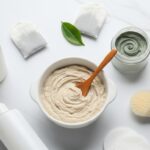
3. Mask — the rest phase. Choose a mask for what your skin needs that day: a hydrating mask for dry skin, a clay mask for oily skin. Do not let a clay mask dry out completely — it can dry and irritate the skin. Wipe the mask off and sit or lie down. This is not the time to multitask.
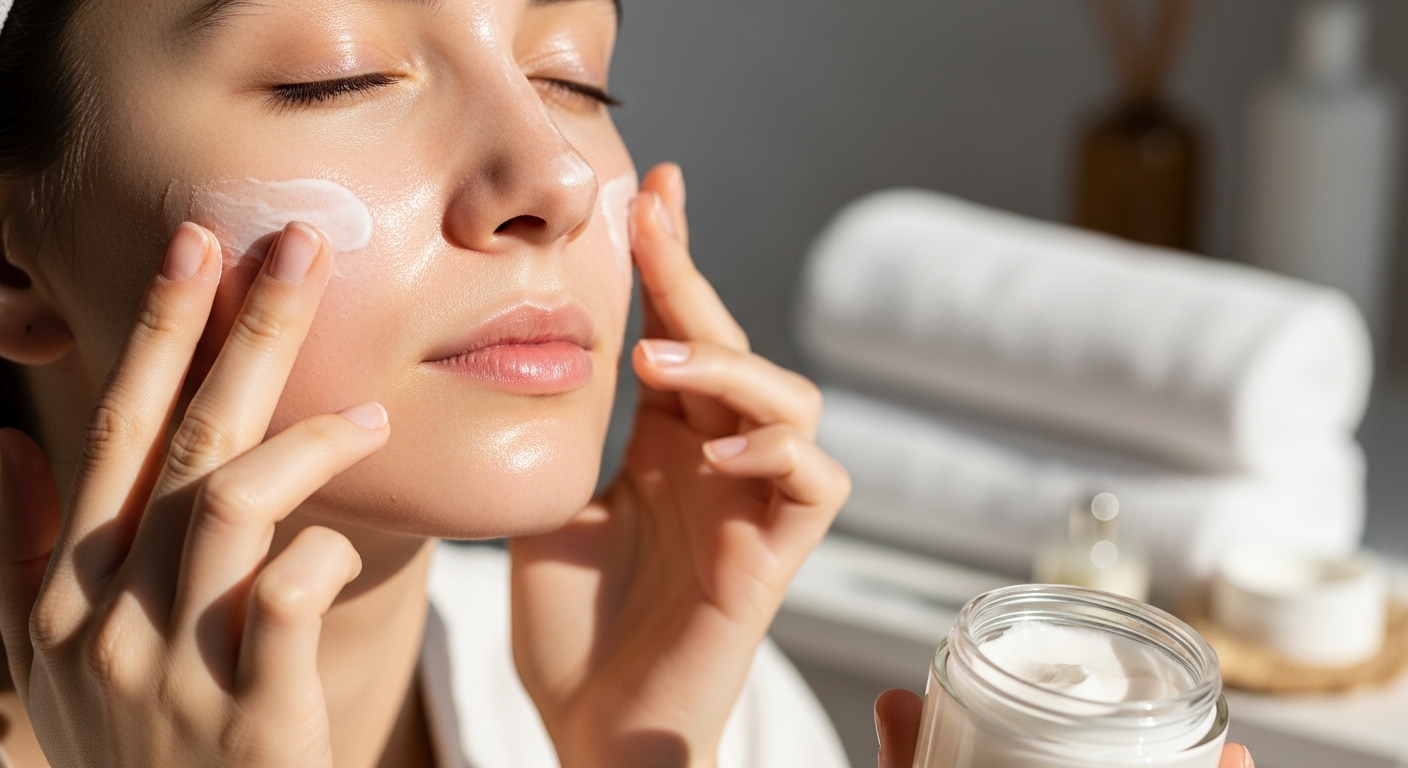
4. Moisturise. After the mask, the skin is ready for a light moisturiser to seal in water. Light, soft textures suit a spa session better than thick, heavy ones. Apply with gentle upward strokes. Do not pull or drag the skin.
If the session is in the morning or during the day, finish with a broad-spectrum sunscreen of SPF 30 or higher, and reapply every two hours if you stay outdoors.
Gentle facial massage
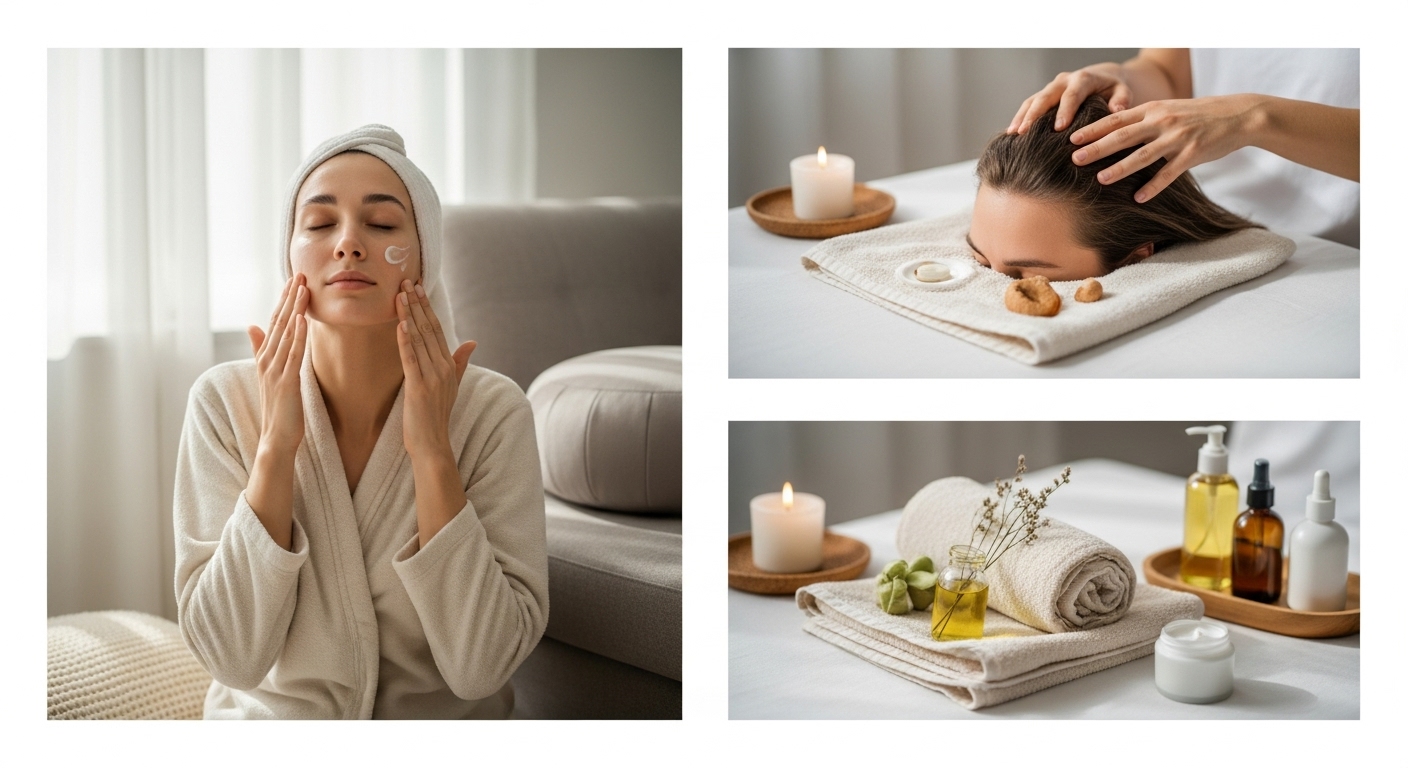
Facial massage can be part of a home spa session, but it is about relaxation, not results. Use your palms or fingertips, light pressure, slow movements. Do not tug or stretch the skin. A few minutes is enough.
There is no good evidence that facial massage improves circulation, firms the skin, or makes products absorb better. It helps you apply products evenly and it can help you relax. That is all it needs to do.
Body care
The body gets less attention than the face, but it carries the same daily stress — dry hands, sore shoulders, tired legs. A home spa session is a good time to give it some.
Wash with lukewarm water and a mild body wash. Hard soaps leave the skin tight and dry. Apply lotion or oil while the skin is still slightly damp — that helps trap water and improve texture. Slow, gentle movements are enough; there is no need for firm massage, and no product “flushes” anything out of the body.
Slow hands beat expensive products here. Slowness is what makes body care feel restful rather than like another chore.
Hair care
Hair care can be part of the same slow session. Wash the scalp gently with lukewarm water — hot water is harsh on the scalp and the hair. Use your fingertips, not your nails, and move slowly. Let conditioner sit for a few minutes while you breathe calmly, then rinse.
Hair does not have to be washed daily. Wash as often as it needs it — the AAD position is that washing frequency depends on your hair and scalp, not on a fixed rule. Natural oils do not strengthen the scalp, and washing “vigorously” is not better than washing gently.
A weekly rhythm
The most useful pattern is simple: a long session once a week, and a few small moments on other days.
- Once a week: a full session — face, body, hair, quiet rest. About 30 to 60 minutes is a common length, but shorter is fine too.
- Every day: wash morning and night, moisturise, and sunscreen in the morning.
- On busy days: even two minutes counts — applying moisturiser slowly, or a short scalp massage.
Consistency matters more than duration. Light, frequent care beats occasional intense sessions. Do not add more steps when you are stressed — reduce them instead, and let the skin rest.
Mistakes to avoid
- Turning the ritual into a goal. Trying to do too many things, or chasing social-media hype, removes the benefit. Keep it simple.
- Ignoring comfort signals. Burning, tightness or redness are warnings. A spa session should not hurt. If something feels wrong, simplify.
- Multitasking. Checking your phone or hurrying through the steps keeps the body alert. The session only works if you actually rest.
- Using strong products. A spa session is for relaxation and comfort, not for strong actives. Save those for your ordinary routine, introduced one at a time.
Patch test
Try any new product or mask on a small patch of skin first, before using it on your face. Apply a small amount to a quarter-sized area on the inside of your arm or the bend of your elbow, twice a day, for 7 to 10 days. If there is redness, itching or swelling, do not use it on your face. For rinse-off products, about five minutes of contact is enough for the test.
This is the AAD 7–10 day patch-test method — the site-wide rule for BeautyKob.
When to get help
Stop the session and simplify your routine if you notice burning that does not fade, persistent redness, peeling or flaking, or sudden breakouts. If the skin is painful, blistered, or has open sores, or if a rash spreads, ask a dermatologist or pharmacist promptly rather than trying more products.
You can also read Exfoliation and Cleansing Routine for the gentle washing and exfoliation steps in more detail.
Frequently asked questions
Q1: How often should I do a home spa beauty routine?
Once a week is a common rhythm for a full session, with small daily moments in between. Adjust to your skin — if it feels stressed, do less, not more.
Q2: Do I need special products for a home spa?
No. Familiar, mild products matter more than price. A gentle cleanser and a light moisturiser are enough.
Q3: Can I do a home spa with sensitive skin?
Yes, if you keep it gentle. Skip exfoliation, use fragrance-free products, focus on hydration and comfort, and patch test anything new first.
Q4: How long should a home spa session last?
About 30 to 60 minutes is common for a full session, but shorter sessions are fine too. The point is rest, not duration.
Q5: Does a home spa routine help with stress?
It can help you feel calmer, because it is an hour of slow, deliberate care. It is not a treatment for stress or for any skin condition.
Sources: American Academy of Dermatology, 7 Rosacea skin care tips (patch-test method: apply a new product to a quarter-sized patch of skin on the inside of the arm every day for 7–10 days); American Academy of Dermatology, How to select anti-aging skin care products (broad-spectrum sunscreen, SPF 30 or higher, reapply every two hours outdoors). This is a researched overview, not a hands-on review.