Researched overview.
Table Of Content
- Quick answer
- What cleansing does
- What exfoliation does
- The three types of exfoliation
- How to cleanse correctly
- Morning vs night
- Putting the routine together
- By skin type
- Sun protection after exfoliation
- When it is working — and when to change
- Patch test — the AAD 7–10 day method
- Choosing products
- Seasonal adjustments
- When to get help
- Summary
Quick answer
Cleansing and exfoliation do two different jobs. Cleansing removes the sweat, oil, sunscreen, makeup and pollution that sit on the skin each day. Exfoliation removes dead skin cells that washing leaves behind, which can make the surface look dull and rough. Both need to be gentle: harsh washing and frequent exfoliation damage the skin barrier and cause the very problems they are meant to fix. For most people, the routine is simple — wash twice a day with a mild cleanser, and exfoliate once or twice a week.
If your skin is red, painful, flaking badly, or has a rash, blisters or open sores, skip exfoliation and ask a dermatologist or pharmacist first. This guide is general information, not medical advice.
Contents: What cleansing does · What exfoliation does · The three types · How to cleanse · Morning vs night · Putting the routine together · By skin type · Sun protection · When it is working · Patch test · Choosing products · Seasons · When to get help
What cleansing does
Washing removes sweat, oil, sunscreen and pollution. Left overnight, these mix with oil and sit in the pores. Mild washing does not disturb the skin barrier. Vigorous washing strips natural oils and leaves the skin dry, tight and irritated.
There is no good evidence that washing makes the skin produce more oil to “compensate” — that claim is disputed, not disproven. The AAD’s own 2018 press release says a harsh face wash “can irritate your skin and trigger increased oil production”, so neither direction can be stated as proven fact. The reason to avoid over-washing is simpler: it causes irritation and dryness.
What exfoliation does

The skin renews itself: old cells die and new cells come up. Dead cells on the surface block light reflection and make the skin look dull and rough, and they make pores clog more easily. Washing cannot remove dead cells — that is what exfoliation does. Both matter, but timing and balance matter more than either one alone.
Exfoliation also helps moisturisers sit better on a smoother surface. It does not make products “penetrate” deeper into the skin, and it is harmful when done too often or too hard. Balance is essential.
The three types of exfoliation
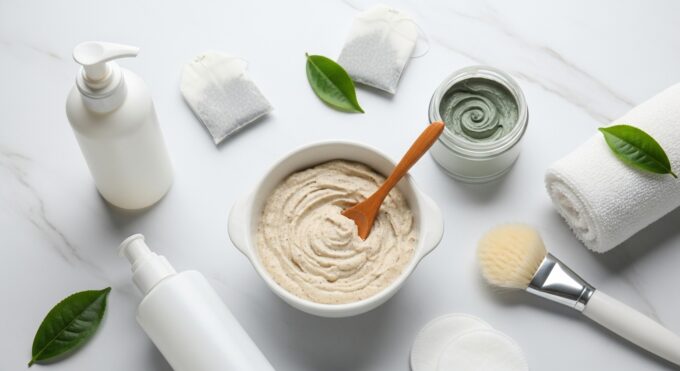
- Physical exfoliation uses fine particles, scrubs or textured tools to lift dead cells off the surface. It is about pressure, not product: scrubbing hard can irritate and redden the skin. Use light pressure, once a week at most for most people.
- Chemical exfoliation uses weak acids (AHAs such as lactic or glycolic acid, or BHAs such as salicylic acid) to loosen the bonds between dead cells so they shed. It suits roughness and clogged pores. Overuse causes burning and peeling, so start slowly — once a week — and increase only if the skin stays comfortable. Salicylic acid products commonly list 0.5–2%.
- Enzyme exfoliation uses fruit enzymes to dissolve build-up. It is often presented as the gentlest option and can suit sensitive skin, but it is not categorically “non-irritating” — enzyme products can still irritate, especially on reactive skin. Results are usually mild and gradual. Once or twice a week is enough.
Each type works differently and suits different needs. No one type fits everyone.
How to cleanse correctly
- Wash your hands first, then touch your face.
- Use lukewarm water. Hot water dries the skin; warm water cushions it.
- Use a mild cleanser. Choose by how the skin feels after use: clean and comfortable is right; tight, dry or stinging means the cleanser is too strong. Fragrance-free, low-surfactant formulas suit sensitive skin. Price does not matter — a mild cleanser that is used gently usually works better than an expensive harsh one.
- Wash for about a minute with gentle hand movements. Do not scrub.
- Rinse fully. Leftover cleanser can irritate the skin.
- Pat dry with a clean towel. Do not rub.
Morning vs night
Morning: The skin wakes up with light oil and sweat from the night, not pollution and sunscreen. A gentle wash is enough for most people — there is no need to cleanse heavily in the morning. Exfoliating in the morning needs care: it leaves the skin more sensitive to the sun, which increases the risk of redness and dark spots. If you exfoliate in the morning, wear sunscreen afterwards — without exception.
Night: Night cleansing removes the whole day — makeup, dirt, sunscreen, sweat and oil mixed together. Some people double cleanse: the first step lifts heavy residue such as makeup or water-resistant sunscreen, and the second step cleans the skin. It works well for people who wear makeup, and it must stay gentle. Night is also the best time to exfoliate for most skin types, because the skin then has hours to rest while you sleep, and there is no sun exposure straight afterwards.
Putting the routine together
A sustainable weekly routine is simple and repeated:
- Every day: wash morning and night; moisturise; sunscreen in the morning.
- One or two nights a week: exfoliate, then moisturise. The rest of the week, let the skin rest and heal.
- Do not change products often. A stable routine makes it easy to see what causes a reaction, and it stops panic switching and overcorrection.
If irritation appears, it is usually easy to find the cause with a stable routine: the newest product or the most recent extra step is the likely culprit.
By skin type
- Oily skin: Oily skin is often treated the worst — scrubbed hard and exfoliated often — which creates an irritation and breakout cycle. Oily skin still needs hydration and gentle care. Use a light cleanser that removes extra oil without stripping, and exfoliate gently so the pores stay clear. The goal is to manage oil, not to destroy it.
- Dry skin: Dry skin lacks natural oil and water-holding capacity. Over-washing makes dryness worse. Use a cream cleanser for comfort and less tightness. Exfoliate lightly and mildly — enzyme exfoliation is a good option because it does not press on the skin while removing dead cells. Moisturise immediately after cleansing and exfoliation; without it, the skin loses water quickly, which leads to flaking and irritation.
- Sensitive skin: Sensitive skin reacts faster — redness, stinging and itching appear sooner. Wash with a mild cleanser, once a day if that suits you, and keep exfoliation to once a week at most, gently. Patch testing matters most for sensitive skin (see below). Comfort matters more than trends and speed.
Sun protection after exfoliation
Newly exfoliated skin is more sensitive to the sun. Failing to apply sun protection after exfoliation can cause long-term damage, and it is the cause of many skin problems that people blame on products. Use a broad-spectrum sunscreen with SPF 30 or higher every morning as the last step, and reapply every two hours when outdoors, or after swimming or sweating. (AAD sunscreen guidance)
When it is working — and when to change
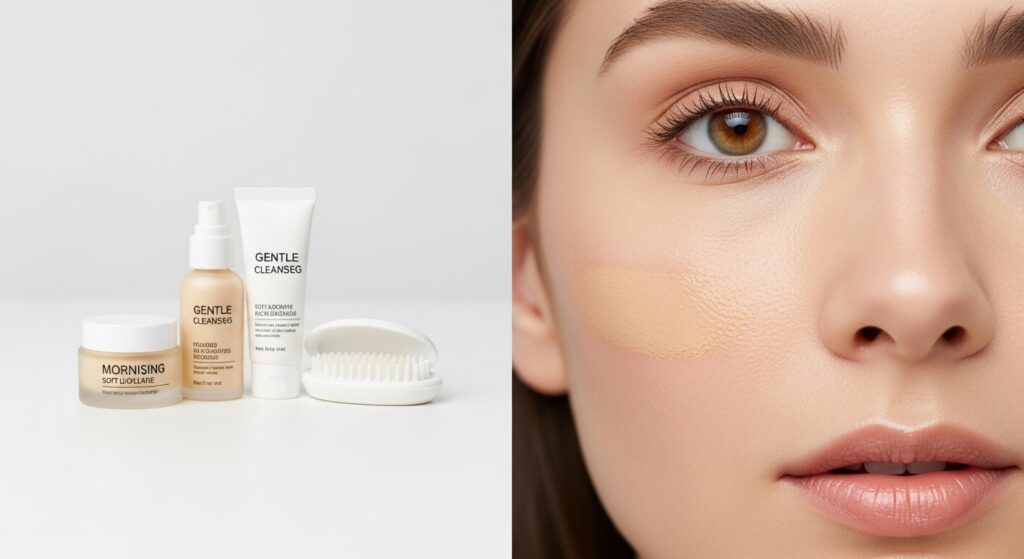
A cleansing and exfoliation routine works quietly. Change does not happen overnight; it settles in. Signs it is working: texture that feels softer but not tight; skin that feels comfortable morning and evening; products that spread easily; moisturiser that absorbs instead of sitting on the surface; oil that stays even through the day rather than swinging between shiny and dry; makeup that sits evenly, without sticking to dry areas or cracking. These changes mean dead-cell build-up is controlled and the barrier is stable.
Change the routine when the skin signals stress: pain, burning or stinging after cleansing; flaking or peeling from too much exfoliation; breakouts that appear after irritation rather than dirt. When the barrier is weakened, bacteria reach the skin more easily, which brings redness and clogged pores. The answer is to reduce, not to add: stop or slow exfoliation, wash more gently, increase moisture, and let the skin rest. The skin heals faster without stress than with more products.
Do not pop pimples. Picking or squeezing a pimple can make it more noticeable and increase the risk of infection, discoloration and scarring. If a spot is deep or painful, leave it alone and ask a dermatologist or pharmacist.
Patch test — the AAD 7–10 day method
Before using any new cleanser or exfoliant on your face, test it first. This is the site-wide rule for BeautyKob, following the American Academy of Dermatology:
- Choose a quarter-sized area where the product will not be rubbed or washed away, such as the underside of your arm or the bend of your elbow.
- Apply the normal amount and thickness twice a day for 7 to 10 days. For a rinse-off product such as a cleanser, leave it on for about five minutes, or as long as the label says, then rinse.
- If the area becomes red, itchy, swollen or painful, stop using the product. If it stays clear for the full 7 to 10 days, introduce it on your face.
A home test cannot guarantee that your face will never react, but it catches many reactions before they reach your face. A 24-hour test is not enough — allergic reactions can take several days to appear.
Choosing products
Price does not determine results. Skin responds to formulation, frequency and gentle use, not to cost. Ingredient lists are useful, but they do not replace observation: the same product can give two people different results, and how the skin feels after use is the best guide. A product fits the routine if the skin feels relaxed, soft and comfortable after using it. Using fewer products gives you more control — when irritation strikes, it is easier to know what caused it. Repetition builds results over time; variety is exciting sometimes, but consistency is what keeps skin healthy.
Seasonal adjustments

Skin changes through the year. Cold air and indoor heating evaporate moisture and worsen dryness — those are the months for gentle cleansing and less exfoliation, which protects the barrier. Hot weather boosts sweat and oil and clogs pores more easily; cleansing may need small changes and exfoliation can be used a little more, but sparingly — excess damages the skin even in oily conditions. Sudden irritation that appears with a season change is usually a routine problem, not a weather problem. Small, flexible changes prevent it. The routine is not fixed; it adapts.
When to get help
Ask a dermatologist or pharmacist if: your skin is persistently red, sore, swollen or blistering; you have a rash that does not settle; you have a skin condition such as eczema, rosacea or acne that is getting worse; or you are unsure whether a cleanser or exfoliant is safe for you.
Summary
Cleanse gently twice a day with a mild cleanser and lukewarm water, and pat dry. Exfoliate once or twice a week — physical, chemical or enzyme, whichever suits your skin — and do it at night when you can. Protect the newly exfoliated skin with SPF 30+ every morning. Watch the skin’s response: slow, steady improvement is success, and sudden brightness, peeling or tightening is irritation. Patch test every new product for 7 to 10 days, and do not pop pimples.
Sources: AAD sunscreen guidance; AAD exfoliation guidance; AAD patch-test guidance; AAD pimple guidance (Dr. Jacqueline Watchmaker, MD, FAAD). This is a researched overview, not a hands-on review.