Researched overview. This guide is based on published reviews of vitamins and minerals in hair loss, the US FDA’s safety communications on biotin, and dermatology guidance on hair shedding — not on hands-on testing by BeautyKob. No supplement in this guide was tested by us, and no brand paid to be mentioned.
Table Of Content
Quick answer
A supplement can help your hair only if you are actually short of that nutrient. If your levels are already normal — which is the case for most people eating a reasonably varied diet — there is little good evidence that topping up further grows more hair. That is the thread running through every nutrient below.
The safe order is: find out why you are shedding first, test before supplementing, add one thing at a time, and talk to a clinician or pharmacist before taking anything — especially if you are pregnant, breastfeeding, taking medicines, or have a thyroid or hormone condition. This guide is general information, not medical advice.
Contents: Why hair sheds · Test before supplementing · Biotin · Iron · Zinc · Vitamin D · Omega-3 · What “safe for a sensitive scalp” means · Food first · Introducing a supplement safely · When to see a dermatologist
Why hair sheds
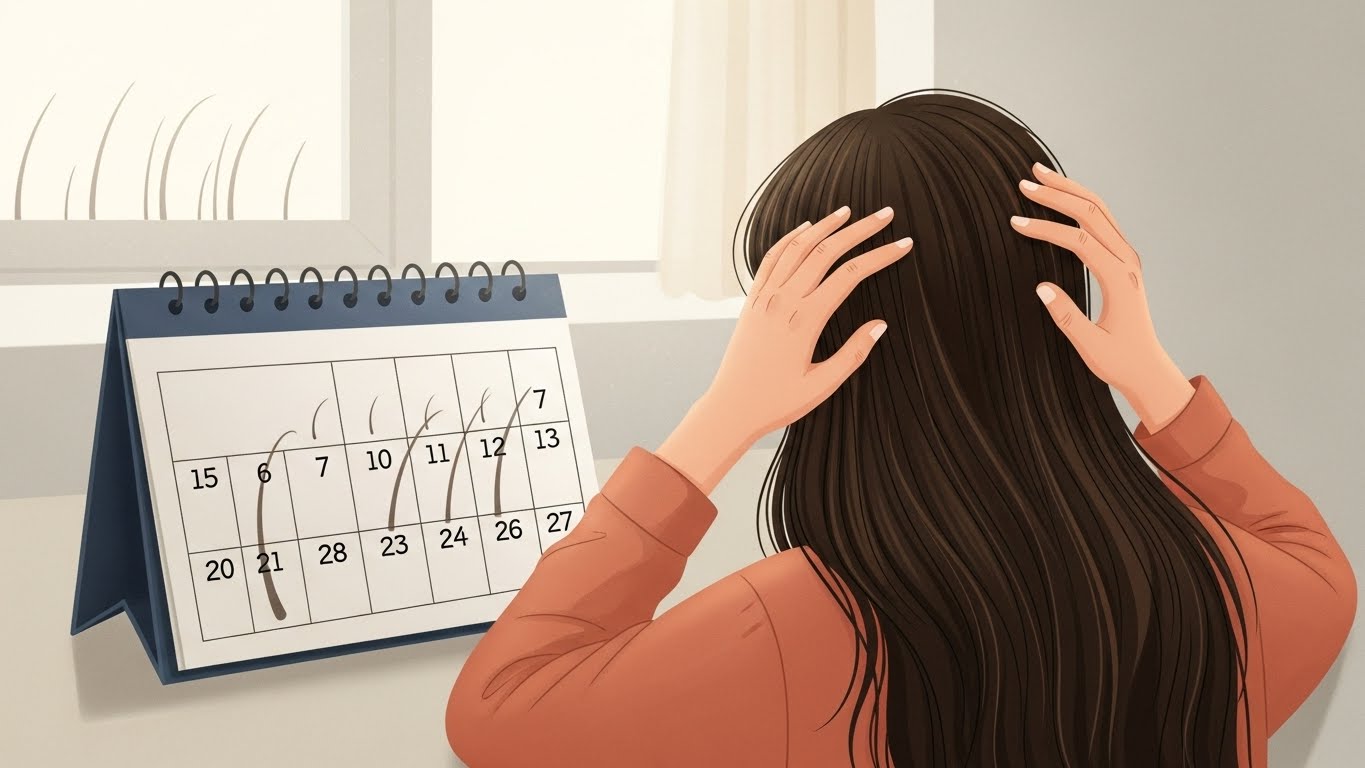
It is normal to shed between 50 and 100 hairs a day. Shedding is part of a healthy growth cycle: old hairs release so new ones can grow. The medical name for sudden, all-over shedding is telogen effluvium. It usually starts two to three months after a trigger — childbirth, a high fever or serious illness, surgery, major weight loss or a crash diet, significant stress, or stopping birth control pills — and it usually settles on its own, with hair tending to regain its normal fullness within six to nine months once the trigger has passed.
Hair loss is different from shedding: it happens when something stops the hair from growing, such as hereditary thinning, an immune reaction, or scarring. A sensitive scalp — one that itches, stings or turns red easily — is a separate issue from shedding, although the two often occur together and both deserve attention.
If your shedding lasts longer than six months, has no clear trigger, comes in patches, or comes with scalp pain, scaling, redness or other symptoms such as fatigue or weight change, that is a reason to see a dermatologist rather than to keep trying supplements.
Test before supplementing
The single most useful step is a blood test, not a shopping list. A clinician can check iron stores (ferritin), thyroid function, vitamin D and, where relevant, zinc and vitamin B12. The 2019 review of vitamins and minerals in hair loss (Almohanna et al., Dermatology and Therapy) puts it plainly: the evidence is sufficient for correcting a confirmed deficiency, but not for healthy people taking high doses preventively.
Do not diagnose the cause from the shape of your shedding alone. Diffuse shedding can come from telogen effluvium, iron deficiency, thyroid disease, medicines or a recent illness, and pattern hair loss can sit underneath it at the same time. Only a clinician can sort that out.
Biotin (vitamin B7)
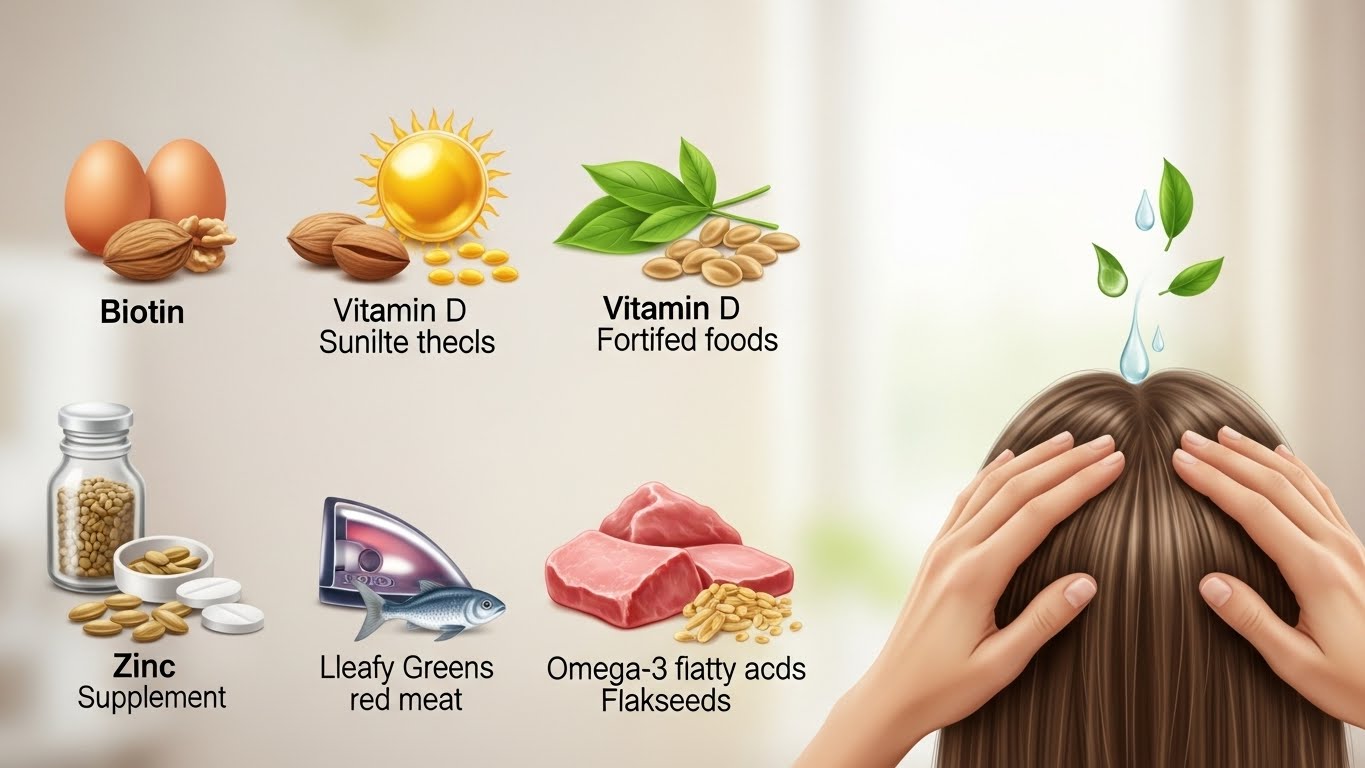
Biotin is the headline ingredient in most hair supplements, and it is also where the evidence is weakest.
- Biotin deficiency can cause hair loss, but genuine deficiency is rare in people eating a normal mixed diet. Biotin is widespread in food (eggs, nuts, seeds, salmon, sweet potato), and gut bacteria make some as well. The adult adequate intake is about 30 micrograms a day, and most people meet it without trying.
- A 2017 systematic review (Patel, Swink & Castelo-Soccio, Skin Appendage Disorders) found 18 reported cases of biotin improving hair or nails — and in every one, the person had an underlying cause of deficiency or a rare hair disorder. There is no randomised controlled trial showing that biotin improves hair growth in people who are not deficient.
- The real risk of high-dose biotin is not to your scalp. The US Food and Drug Administration warned in 2017 (updated in 2019) that high-dose biotin can interfere with many laboratory blood tests, giving falsely high or falsely low results — including falsely low troponin, the test used to diagnose a heart attack. Hair supplements commonly contain 5,000–10,000 micrograms, hundreds of times the daily requirement.
- If you take biotin, tell your clinician and the laboratory before any blood test, and ask how long to pause it beforehand. This guide does not recommend a biotin dose, and it does not claim biotin strengthens keratin in people who are not deficient.
Iron
Iron has the strongest deficiency link to shedding of any nutrient in this guide — and it is also the one you should never self-start.
- Iron deficiency can contribute to diffuse, non-scarring hair loss. A 2021 systematic review and meta-analysis of 36 studies found lower average ferritin (stored iron) in women with non-scarring hair loss than in healthy controls, although results varied widely between studies and the review did not prove that low ferritin caused every case.
- A normal haemoglobin result does not rule out low iron stores: ferritin can fall before anaemia develops. That is why a clinician checks ferritin, not just a blood count.
- Do not take iron “just in case”. Too much iron can cause side effects and, over time, can be harmful. Iron supplements are also a common cause of accidental poisoning in young children — keep them out of reach. Iron should only be taken after a blood test confirms a deficiency and a clinician has looked for its cause (heavy periods, diet, blood donation, gut conditions, and other causes all need different handling).
- If a deficiency is corrected, shedding usually becomes less intense over two to three months, because follicles that have already entered the resting phase finish it anyway. No iron supplement can promise thicker hair by a fixed date.
Zinc
- Zinc deficiency can cause diffuse shedding (telogen effluvium), and in severe deficiency it comes with a rash and diarrhoea. But true zinc deficiency is uncommon in people eating a normal mixed diet, and a single blood zinc result can be misleading, because inflammation and low albumin can lower it.
- In people who are not deficient, there is only limited evidence that taking zinc does anything for hair growth. A large 2025 study of nearly 24,000 adults found only a tiny, clinically unimportant difference in zinc levels between people with and without hair loss.
- More zinc is not better. The NHS advises adults not to take more than 25 mg of zinc supplements a day unless a doctor tells them to. High doses reduce how much copper the body can absorb, and copper deficiency can cause anaemia and nerve damage. Excess zinc has also been shown to cause hair loss in animal studies — the opposite of what the supplement is bought for.
- Only supplement zinc if a blood test has confirmed you are deficient, and only at a dose a clinician advises.
Vitamin D
- Low vitamin D is associated with several types of hair loss. A 2024 systematic review and meta-analysis (81 studies, more than 15,000 people) found low vitamin D more often in people with alopecia areata (patchy, autoimmune hair loss) and female pattern hair loss. But association is not proof of cause: people who are unwell or stay indoors may have lower vitamin D for other reasons.
- There is limited good-quality evidence that taking vitamin D supplements regrows hair. Correcting a genuine deficiency is worthwhile for your general health and may help shedding settle if low vitamin D was one of the contributors — but vitamin D is not a hair-loss treatment in its own right, and taking extra when your levels are already normal does not grow hair. Taking too much can be harmful.
- Deficiency is confirmed with a blood test that measures 25-hydroxyvitamin D. If you are deficient, a clinician should decide the dose; this guide does not give one.
Omega-3 fatty acids
- Omega-3 is good for your general health, and a healthy diet supports the general condition of your hair. What it is not, on the current evidence, is a proven treatment for hair loss.
- There is no large, well-controlled trial showing that fish oil or omega-3 regrows hair. The study supplement marketers cite most is a 2015 paper in which women with early female pattern hair loss took a mixed supplement (fish oil with blackcurrant seed oil, vitamin C, vitamin E and lycopene) or nothing for six months. Because several ingredients were given at once and there was no placebo group, the study cannot show that the omega-3 did anything on its own.
- Nothing about omega-3 has been shown to block DHT, the hormone that gradually shrinks follicles in pattern hair loss. If your hair loss follows the typical pattern of a receding hairline or a thinning crown, omega-3 does not address the underlying cause.
- High-dose fish oil can affect blood clotting. Tell your clinician before taking it, especially if you take blood-thinning medication or are due for surgery.
What “safe for a sensitive scalp” actually means
There is no supplement that is proven safe for every sensitive scalp. What you can do is reduce the chances of a reaction:
- Choose simple formulas. Fewer ingredients means fewer things to react to. Brand popularity is not a safety signal.
- Add one thing at a time. If you start two supplements together and your scalp itches, you will not know which one caused it.
- Watch for reactions. Itching, redness, swelling, flaking or new shedding after starting a supplement are reasons to stop it and talk to a clinician — not to push through.
- Gummies are not automatically gentler. They often contain sugar and colourings, and there is no good evidence these irritate the scalp — but they add nothing for hair either, and a gummy is still a dose of whatever active ingredient it contains.
- “Clean” and “natural” are not safety guarantees. Those words have no agreed definition on a supplement label.
Food first
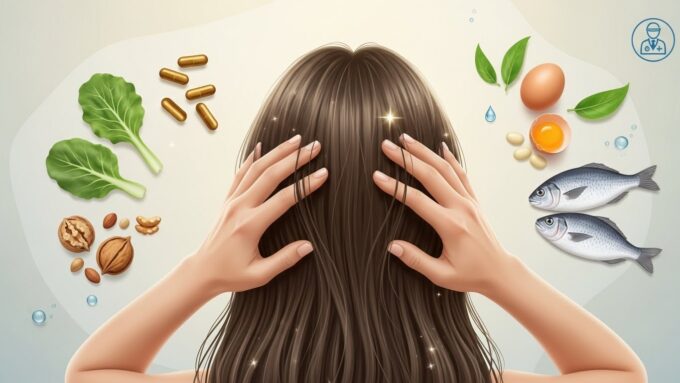
Supplements are meant to fill a gap, not to replace food. A varied diet with enough protein, leafy greens, nuts, seeds, eggs and oily fish supplies the nutrients above in the amounts most people need. There is no food that treats hair loss, and no diet that guarantees thicker hair — but a crash diet or severe calorie restriction can itself trigger shedding, because hair follicles are sensitive to sudden nutritional stress.
Cucumber and turmeric are sometimes promoted for the scalp. There is no good evidence either one helps hair growth, and this guide does not recommend them as scalp treatments.
Introducing a supplement safely
If a clinician has confirmed a deficiency and advised a supplement:
- Take only the one supplement, at the dose advised, and keep a short note of the date you started and any scalp or stomach symptoms.
- Give it weeks, not days. Hair grows on a slow cycle, and any change takes three to six months to show — and it is not guaranteed.
- Stop and seek advice if you develop itching, a rash, swelling, stomach pain or new shedding.
- Tell every clinician and pharmacist about all the supplements you take, including biotin, before blood tests and before any new medicine — supplements can interact with medicines.
- Do not stack several hair supplements at once. High doses of more than one nutrient can interact — for example, excess zinc reduces copper and iron absorption.
Pregnancy and breastfeeding: do not start any supplement without asking a clinician first. Some nutrients are unsafe in pregnancy at supplement doses, and hair shedding after childbirth is usually telogen effluvium, which settles on its own.
When to see a dermatologist
See a dermatologist (or your GP first, who can order basic blood tests) if: shedding lasts longer than six months; it has no clear trigger; it comes in patches; the scalp is itchy, scaly, inflamed or painful; hair is breaking rather than shedding from the root; you also have fatigue, weight change, heavy periods or other symptoms; or you are pregnant, breastfeeding, or have a thyroid or hormone condition. A dermatologist can examine the scalp, order the right blood tests, and rule out pattern hair loss and other causes that supplements cannot fix.
Frequently asked questions
Q1: Is low-dose biotin safe for a sensitive scalp?
Low-dose biotin is not known to irritate the scalp, but there is no good evidence it helps hair in people who are not deficient. The important safety issue is blood tests: tell your clinician about biotin before any blood work.
Q2: How long before a supplement shows results?
If a deficiency was the cause, shedding usually settles over months, not weeks, because the hair cycle is slow. No supplement can promise visible thickness by a fixed month.
Q3: Can food replace supplements for hair growth?
A varied diet can supply these nutrients without any supplement for most people. A supplement is only useful where a blood test shows you are actually short of something.
Q4: Should I stop a supplement if my scalp itches?
Yes — stop it and talk to a clinician, especially if the itching comes with redness, swelling or flaking. Do not push through a reaction.
Q5: Are hair gummies safe for a sensitive scalp?
Not automatically. A gummy is still a dose of its active ingredients, and it often contains sugar and colourings. There is no evidence gummies are gentler than capsules, and no evidence sugar in a gummy inflames the scalp.
Summary
Hair supplements help only where a deficiency exists — and the only way to know is a blood test. Biotin helps only in genuine deficiency, which is rare, and high doses distort blood tests. Iron has the strongest link to shedding but must never be self-started. Zinc and vitamin D help when deficient, not as top-ups. Omega-3 is not a proven hair treatment. If shedding lasts longer than six months or comes in patches, see a dermatologist instead of buying another supplement.
Sources: Patel, Swink & Castelo-Soccio 2017 (biotin review); Almohanna et al. 2019, Dermatology and Therapy (vitamins and minerals in hair loss); US FDA safety communications on biotin and laboratory tests (2017, updated 2019); 2021 systematic review and meta-analysis on ferritin and non-scarring hair loss; 2024 systematic review and meta-analysis on vitamin D and alopecia; Le Floc’h et al. 2015 (omega-3 combination study); NHS guidance on zinc upper limits; American Academy of Dermatology guidance on hair shedding. This is a researched overview, not a hands-on review.