Researched overview.
Table Of Content
- Quick answer
- What a mask can and cannot do
- Why hair gets dry, frizzy and damaged
- Moisture vs strength — the balance
- Two simple recipes
- Recipe 1 — Moisture mask (for dry, frizzy hair)
- Recipe 2 — Repair-support mask (for weak, breaking hair)
- How to use a mask
- How often
- Mistakes that delay repair
- Night care
- When to trim
- Summary
Quick answer
A DIY mask can help dry, frizzy, damaged hair feel softer, look smoother and break less. It cannot repair damage. Once hair is damaged, the damage stays until that hair is cut off and new hair grows in. What a mask does is add moisture, smooth the surface, and give weak strands a temporary patch so they snap less while they grow out.
If your scalp is sore, itchy, red or flaky, or hair is falling out in patches, a mask is not the answer — see a doctor or dermatologist. This guide is general information, not medical advice.
Contents: What a mask can and cannot do · Why hair gets dry, frizzy and damaged · Moisture vs strength · Two simple recipes · How to use a mask · How often · Mistakes · Night care · When to trim · FAQ
What a mask can and cannot do
A mask can:
- Add moisture to dry hair, so it feels softer and is easier to comb.
- Smooth the surface, so hair looks less frizzy and reflects light better.
- Give weak strands a temporary patch, so they bend rather than snap.
- Reduce friction while you detangle, which means less breakage.
A mask cannot:
- Repair split ends or chemically damaged hair. Only trimming removes split ends.
- Make hair grow faster. Hair grows about half an inch a month, and no mask changes that.
- “Rebuild” the hair shaft. The shaft is dead material; a mask works on its surface.
- Cure frizz permanently. Frizz is managed, not cured — it comes back when the hair dries out again.
Why hair gets dry, frizzy and damaged
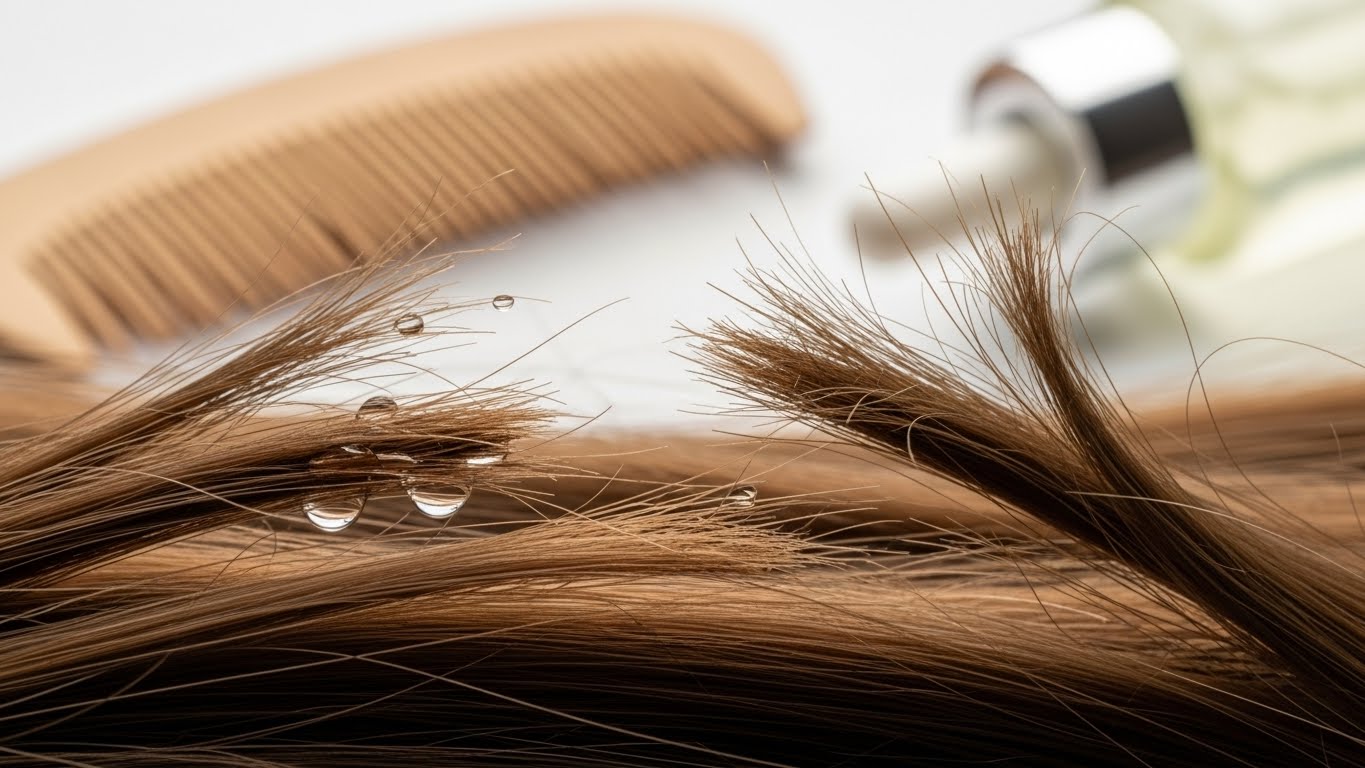
Hair has an outer layer, the cuticle, which lies flat when hair is healthy and keeps moisture in. Heat styling, colouring, perming, rough brushing and harsh cleansers wear that layer down. When the cuticle lifts or breaks, moisture escapes easily, the surface no longer lies flat, and the hair feels dry and looks frizzy.
Frizz is mainly a moisture problem. When the cuticle is raised, humid air lets water into the inner part of the hair unevenly, and strands swell and puff up. That is why frizz is worse in humid weather and better after deep conditioning.
Damaged hair also behaves differently: it soaks up water fast and loses it fast, it stretches less before breaking, and it tangles more. Hard water can add to the roughness — calcium and magnesium leave mineral deposits on the surface that make hair feel coated and dull. That is a surface effect; hard water does not block your follicles or stop hair growing.
Moisture vs strength — the balance
Dry hair needs moisture. Weak, breakable hair needs a little strength as well. The two are easy to confuse, and too much of either causes problems:
- Too little moisture: hair feels straw-like, dull and hard to comb.
- Too much protein: hair feels stiff, hard and snaps easily. This is called protein overload, and it is the commonest DIY mistake.
- The balance: most damaged hair needs moisture first, with protein used only occasionally and in small amounts.
How to tell what your hair needs most: if it feels rough and dull but does not snap easily, it mainly needs moisture. If it feels soft but tears easily and has many split ends, it needs a little strength as well as moisture. If it feels hard and stiff after a protein mask, stop the protein and go back to moisture-only for a few weeks.
Two simple recipes
Both recipes use ordinary kitchen ingredients. Make only as much as you will use at once — homemade masks have no preservative, so they spoil quickly and should not be stored.
Patch test first: before using any new mixture on your whole head, test a small amount on a quarter-sized patch of skin on the inside of your arm or the bend of your elbow, twice a day for 7–10 days. If the skin is red, itchy or sore, do not use it. This is the American Academy of Dermatology patch-test method.
Recipe 1 — Moisture mask (for dry, frizzy hair)
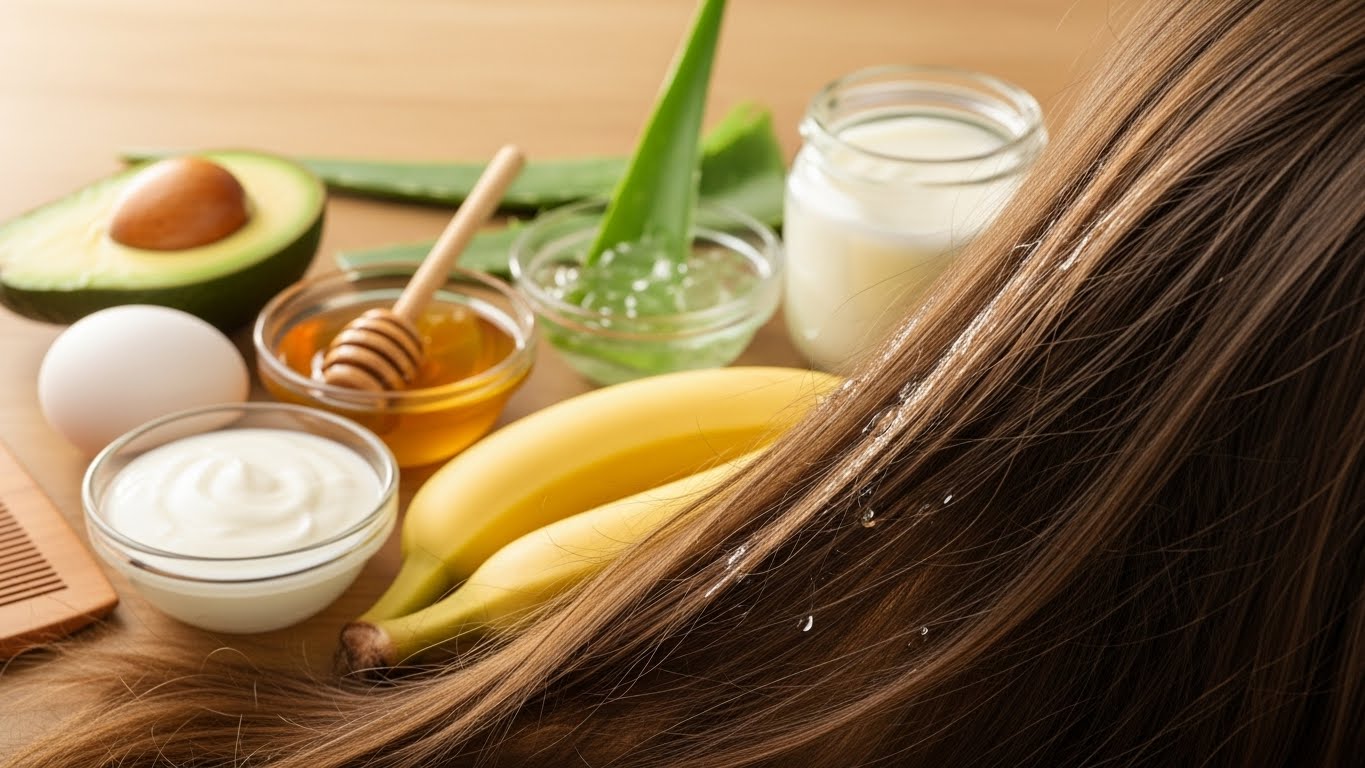
- Half a ripe avocado, mashed, or half a ripe banana, mashed
- 1 tablespoon honey
- 1 teaspoon of a light oil (olive, coconut or argan)
Honey and fruit pulp are humectants — they attract and hold water. The oil coats the surface and slows moisture loss after rinsing. Apply to damp, towel-dried hair from mid-length to ends. Leave for 20–30 minutes, then rinse with lukewarm water and condition as usual.
Recipe 2 — Repair-support mask (for weak, breaking hair)
- 3 tablespoons plain yogurt
- 1 teaspoon of a light oil (olive or coconut)
Yogurt gives a mild, temporary protein effect. Egg can be used instead of yogurt, but egg protein is made of large molecules that sit on the surface rather than entering the hair — it forms a temporary film and washes out. Either way, this is a patch, not a repair: it helps weak strands bend rather than snap, and it does not rebuild the shaft. Apply the same way as Recipe 1, once a week at most, and stop if hair starts to feel stiff.
Do not combine many ingredients at once. Simple masks are easier to rinse out, less likely to irritate, and easier to judge — if you change five things at once, you cannot tell which one helped.
How to use a mask
- Start with clean, damp hair. Wash first, then squeeze out excess water with a towel. A mask applied to dripping-wet hair is diluted before it can work; applied to dry, dirty hair it cannot spread evenly.
- Apply from mid-length to ends. The ends are the oldest and most damaged part. Use very little near the roots, especially if your scalp is oily.
- Leave it for 20–30 minutes. Longer is not better — leaving a mask on for hours does not add benefit, and a protein mask left too long can leave hair stiff.
- Rinse with lukewarm water. Hot water is harsher on already damaged hair. There is no good evidence that a final cold-water rinse closes the cuticle or removes frizz, so use water that feels comfortable.
- Condition after. A light conditioner after rinsing seals in the moisture and reduces friction while you detangle.
- Detangle gently, damp and coated in conditioner, ends first. Wet hair is more fragile than dry hair, so never pull at wet hair or drag a fine comb through it. Use fingers or a wide-tooth comb.
How often
Once a week is a reasonable starting point for dry or damaged hair. If hair starts to feel coated, heavy or greasy, use the mask less often. If it still feels rough, keep the weekly routine and check the rest of your habits — heat, brushing and tight styles matter more than any mask. There is no clinical rule for mask frequency; once a week is practical guidance, not a sourced prescription.
Mistakes that delay repair
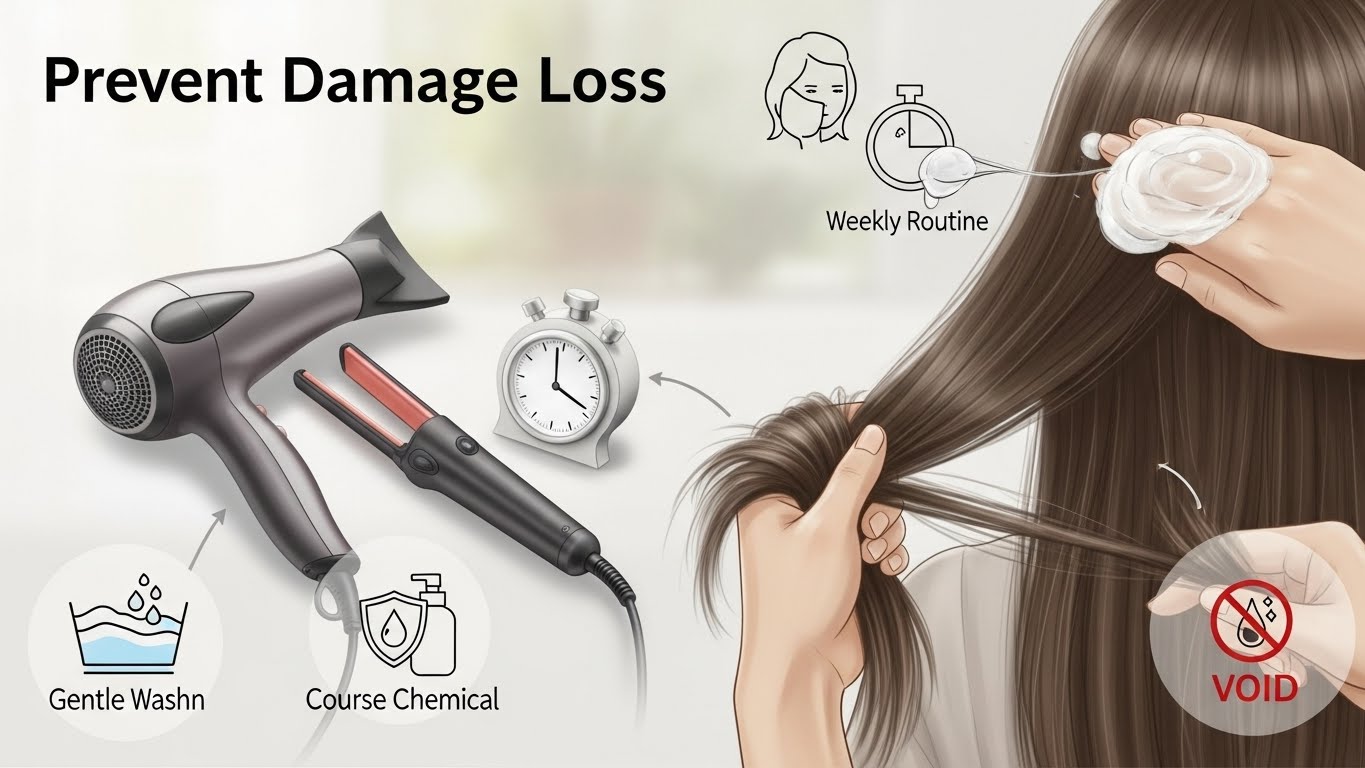
- Expecting salon results after one use. A mask changes how hair feels first; less breakage follows over weeks of gentle care, not overnight.
- Using protein masks too often. If hair turns stiff or straw-like after a protein mask, you have used too much protein. Switch to moisture-only.
- Applying a mask to dirty or dripping-wet hair. It will not spread or work properly.
- Leaving masks on for hours or overnight. Longer contact does not mean more repair, and it can leave residue that is hard to rinse out. (Overnight masks are covered separately — see the companion guide on overnight repair for brittle hair.)
- Using heat styling straight after masking. Let hair dry naturally when you can, and use the lowest heat setting when you cannot.
- Rough towel drying. Rubbing wet hair with a towel raises the cuticle and causes breakage. Press water out gently instead.
Night care
Hair breaks at night from friction against the pillow. Two simple habits help:
- Sleep on a silk or satin pillowcase, or wrap hair in a silk or satin scarf. Cotton creates more friction.
- Wear hair in a loose braid or loose bun. Tight styles pull at the roots and can cause traction hair loss — thinning at the hairline, soreness or bumps. If a style hurts, it is too tight: take it out.
Night is not a special “repair window” — sleep does not repair hair. The advantage of night care is simply longer contact with moisture and less friction and handling.
When to trim
Trim split ends every 6–12 weeks. A split end cannot be glued back together; left alone, the split travels up the strand and causes more breakage. Trimming does not make hair grow faster — hair grows from the follicle, not the ends — but it stops splits from breaking hair shorter, so length is kept.
See a doctor or dermatologist if: hair is falling out in patches; shedding is sudden or much heavier than usual; the scalp is sore, itchy, red or scaly; or breakage does not improve after several months of gentle care.
Summary
A DIY mask is a moisture and softness treatment, not a repair. Use a simple recipe once a week, 20–30 minutes on damp hair, rinse lukewarm, condition after, and detangle gently. Keep protein occasional and light. Trim split ends every 6–12 weeks, protect hair at night, and go easy on heat. The scalp is skin too — an exposed parting can sunburn, so use broad-spectrum SPF 30+ sunscreen on it, or cover it with a hat. If hair keeps breaking despite gentle care, get it checked rather than adding more products.
Sources: AAD hair-care and shedding guidance; Monselise et al. 2015 on frizz and humidity; Rele & Mohile 2003 on coconut oil and protein loss; Batch 20 protein position (hydrolysed peptides under 1,000 Daltons); hard-water mineral-deposit evidence (30-day soak study, International Journal of Trichology-cited). This is a researched overview, not a hands-on review.