Researched overview.
Table Of Content
- Quick answer
- What glow really means
- Morning habits: the first layer of glow
- Morning washing
- Why the temperature of water matters
- Morning moisture changes the texture
- Sun protection matters
- Everyday habits affect skin
- Avoid overloading skin with products
- Daily stress shows on skin
- How night care completes the daily routine
- Washing the skin at night
- Night moisture protects skin
- Do not overdo the night routine
- Exfoliation: light, with rests between sessions
- Skin masks do not heal — they add hydration and rest
- Sleep has a direct impact on glow
- Internal hydration helps surface smoothness
- Daily change in the skin and hormonal balance
- Changing the habits for different skin types
- Mistakes that slow down glow
- When to get help
- Frequently asked questions
- Summary
Quick answer
Glowing skin is not oily skin, and it is not something you buy in a bottle. It is skin that is smooth, hydrated and even, so it reflects light evenly. That comes from small habits repeated every day — gentle washing, moisturiser, sunscreen, and leaving the skin alone — not from weekly treatments or expensive products.
If your skin is red, painful, flaking badly, or has a rash, blisters or open sores, skip the extras and ask a dermatologist or pharmacist first. This guide is general information, not medical advice.
Contents: What glow means · Morning habits · Water temperature · Moisture · Sun protection · Daytime habits · Stress and sleep · Night care · Exfoliation · Masks · Internal hydration · Hormones · By skin type · Mistakes · When to get help
What glow really means
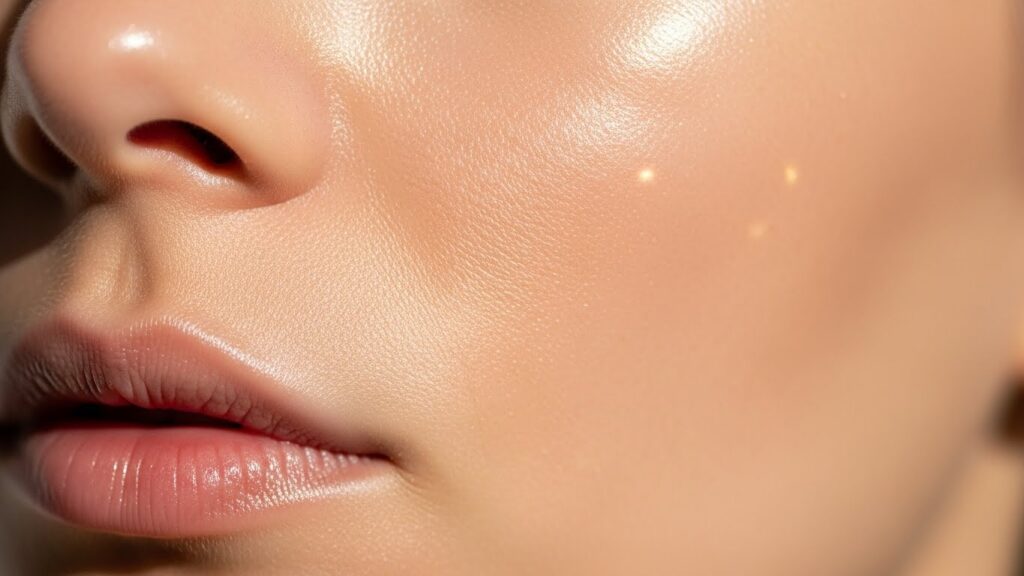
Many people mix up glow and oil. They think shine means health. Glowing skin is smooth, even and calm. It is not tight or itchy, and it is not greasy. The glow comes from a healthy surface: when the skin’s cells are hydrated and the surface is smooth, light reflects evenly. Dry or irritated skin scatters light, which makes it look dull.
Glow is not the result of hard work in a single week. It comes from balance — routines that do not harm the skin but protect it, repeated every day. With time, the skin settles into a smoother texture and a more even tone.
Morning habits: the first layer of glow
Morning care prepares the skin for the day — light, dust and movement. It also sets how much moisture and oil the skin holds. A calm morning routine needs only a few steps, done gently.
Morning washing
Overnight, the skin sheds oil and dead cells. A light morning wash removes that layer. Heavy cleansers strip away the natural oils that cushion the skin barrier; when the barrier is weakened, the skin loses water more easily and reacts more.
Wash with lukewarm water and a gentle, non-abrasive cleanser that does not contain alcohol, using your fingertips only, and pat dry with a soft towel. That is the American Academy of Dermatology’s face-washing guidance: washcloths, mesh sponges and scrubbing tools can irritate the skin. (AAD, Face washing 101)
Why the temperature of water matters
Hot water feels soothing but it takes oil away too quickly and dries the skin out. Very cold water is not needed either. Lukewarm water is the safest choice — it cleans without stripping the skin. Avoid switching between very hot and very cold water, which can leave the skin feeling tight and reactive.
Morning moisture changes the texture
The moisture between the skin cells is what makes the surface smooth and helps it reflect light. Many people with oily skin skip moisturiser, thinking it will make them oilier. That usually backfires: dry skin feels tight and looks dull, and a light moisturiser helps it look and feel better.
Use a light moisturiser in the morning. The skin should feel comfortable, not heavy or greasy. Comfort is the sign the balance is right.
Sun protection matters
The sun’s effects are slow and they add up. Over time, sun exposure causes dark spots and rough texture, even from everyday exposure — daylight through windows counts too. Sunscreen is the single most effective anti-ageing step: in a 4.5-year trial, people who used sunscreen daily had 24% less skin ageing than people who used it only when they thought of it (Hughes et al., 2013).
Use a broad-spectrum sunscreen with SPF 30 or higher every morning, and reapply every two hours when outdoors. (AAD sunscreen guidance)
Everyday habits affect skin
Small daily habits leave marks on the skin over time.
- Hands off the face. Hands carry oil and bacteria, and touching the face transfers them to the skin. Rubbing adds friction. Try to notice how often your hands touch your face, and wash your hands before you do.
- Phones touch skin too. Phone screens collect oil and residue. Wiping the screen regularly helps keep the skin cleaner.
- Wash with your hands, not tools. Clothes, sponges and brushes add friction to the skin every day. Washing with your fingertips is enough — light movement removes dirt without weakening the surface.
Avoid overloading skin with products
Too many products tire the skin out. Extra layers sit on the surface, can block pores and can irritate. More products do not mean better skin. A short routine the skin can rest with works better than a long one it has to cope with. When the skin is not overloaded, it looks smoother and more even.

Daily stress shows on skin
Stress can make breakouts worse for some people, and it can leave the skin looking dull. Short, calm moments in the morning help — slow breathing, a quiet few minutes before the day starts. Calm habits do not cure skin, but they support the body generally, and skin that is not under constant stress tends to look better.
The same applies to the working day: dust and pollution settle on the skin, and screen light late at night can disturb sleep. Gentle care and sun protection limit the damage, and small changes in daily habits add up.
How night care completes the daily routine
The skin is protected during the day and needs care at night. Night is when you clean off the day and let the skin rest.
Washing the skin at night
By night, the skin carries sunscreen, oil, pollution, sweat and the residue of everything it touched during the day. Left overnight, that layer can clog pores and dull the surface. A gentle night wash removes it so the skin can rest. Wash the same way as in the morning: lukewarm water, gentle cleanser, fingertips, pat dry.

Night moisture protects skin
The skin loses more water at night than during the day. That is normal, and it is one reason the skin can feel dry in the morning. A night moisturiser helps the skin hold water while you sleep, so it feels softer and less tight in the morning. It does not brighten the skin overnight — it quietly supports repair.
Do not overdo the night routine
Strong treatments every night do not speed things up. The skin has its own repair system, and when it is not interrupted, it works well. Signs you are overdoing it: frequent redness, stinging after applying products, uneven texture, or sudden breakouts. Using fewer products lets the skin settle. Rest helps the barrier recover, and a recovered barrier reflects light better.
Exfoliation: light, with rests between sessions
Dead skin cells build up on the surface and can make the skin look tired by blocking light. Light exfoliation removes that layer. The benefits of gentle, occasional exfoliation are a smoother texture, better light reflection, better moisture uptake and fewer clogged pores.
Too much exfoliation leaves the skin weak and tender. Leave rests between sessions so the skin has time to recover — once a week to start is enough for most skin. The AAD’s guidance is to choose a method that suits your skin type and to exfoliate gently, not aggressively. (AAD, How to safely exfoliate at home)
Skin masks do not heal — they add hydration and rest
Masks can help when the skin is dry, stressed or tired, after long days, seasonal changes, travel or poor sleep. They add hydration and a feeling of calm. They do not heal the skin and they do not replace daily habits. Use them occasionally, and keep the daily routine as the base.
Sleep has a direct impact on glow
Sleep supports the body’s normal repair, including the skin. Poor sleep over time can show on the skin as a dull tone, puffiness, uneven texture and more breakouts. Most adults need at least 7 hours of sleep a night. (CDC) Less screen time before bed can help sleep, and better sleep helps the skin look rested. Sleep is not a treatment on its own — it is one of several habits that support the skin.
Internal hydration helps surface smoothness
The amount of water you drink affects general hydration, and dehydrated skin can look tired. Drinking water through the day supports the body, but it does not replace moisturiser, and it does not “flush toxins” out of the skin. Small, regular amounts of water through the day are better than large amounts at once.

Daily change in the skin and hormonal balance
Hormones influence oil production and sensitivity, and they change with stress, sleep and diet. Some people notice monthly breakouts, sudden oil changes or extra sensitivity at certain times of the month. Noticing those patterns can help you understand your skin — a change in the skin is often a sign of something changing inside, not a sign the skin itself is failing.
Changing the habits for different skin types
There is no single routine for everyone. Adjust the habits to your skin:
- Oily skin: light, gentle cleansing and a light moisturiser. Do not skip moisturiser, and do not over-wash.
- Dry skin: steady moisture and less friction. A richer moisturiser and gentle washing suit dry skin.
- Sensitive skin: fewer products, gentle handling, and slow changes. Patch test new products before using them on your face.
Patch test first. The AAD method is: apply a small amount to a quarter-sized patch of skin where it will not be rubbed off (the underside of the arm or the bend of the elbow is a good spot), twice a day, for 7 to 10 days. If there is no reaction, the product is less likely to irritate your skin. Stop using it and wash the area if you get redness, itching, swelling or a rash.
Mistakes that slow down glow
- Over-cleansing, changing products often, and over-treating. These slow improvement instead of speeding it up.
- Skipping sunscreen, including indoors near windows.
- Expecting a fixed result by a fixed date. Hydration can feel better within days, but visible changes in tone take weeks of steady use and vary from person to person.
When to get help
Ask a dermatologist or pharmacist if: your skin is persistently red, sore, swollen or blistering; you have a rash that does not settle; you have a skin condition such as eczema, rosacea or acne that is getting worse; or you are unsure whether a product is safe for you.
Frequently asked questions
Q1. How long before everyday habits show in the skin?
Some people feel their skin is calmer and less irritated within a few weeks. Visible changes in tone take longer and vary with skin type and lifestyle. No routine can promise a specific result by a specific week.
Q2. Do everyday beauty habits replace skincare products?
No. Habits and products work together. Gentle washing, moisture and sunscreen are the products that matter most, and habits protect the skin barrier so those products can work.
Q3. Can skin glow without expensive products?
Yes. Consistency, gentle treatment and a moderate routine matter more than cost. Simple steps done well beat complicated routines.
Q4. Should the routine change with the seasons?
Small adjustments help. In dry seasons the skin may need more moisture; in hot seasons, lighter products. The routine itself does not need to change — only the textures.
Q5. What is the most serious mistake people make when seeking glow?
Overdoing it. Over-cleansing, changing products and over-treating slow improvement rather than speeding it up.
Summary
Glow is smooth, hydrated, even skin — not oiliness. Keep the routine small and daily: gentle washing with lukewarm water, moisturiser, and broad-spectrum SPF 30+ every morning. Leave the skin alone during the day, wash and moisturise at night, exfoliate gently once a week to start, and sleep well. Give any change a few weeks before judging it, and if your skin becomes irritated, simplify back to cleanser, moisturiser and sunscreen.
Sources: AAD face-washing guidance; AAD sunscreen guidance; AAD exfoliation guidance; Hughes et al. 2013; CDC sleep guidance. This is a researched overview, not a hands-on review.