Researched overview.
Table Of Content
Quick answer
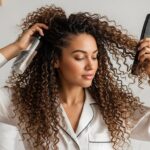
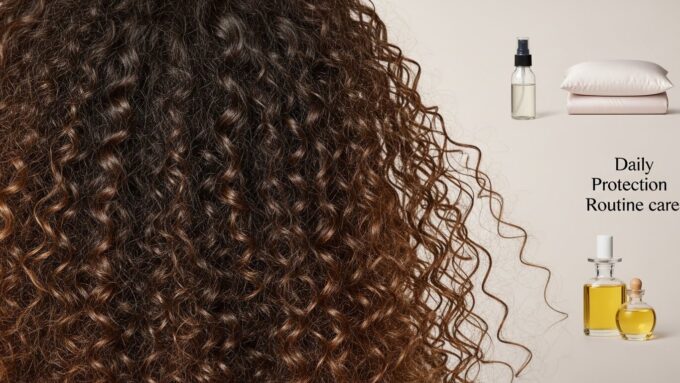
3A curls are loose, springy S-shaped spirals, about as wide as a piece of sidewalk chalk or a wine cork. They are usually fine to medium in texture, shine easily when wet, and are prone to frizz and dry ends. The routine that suits them is short and light: gentle washing, conditioner on the lengths, a little leave-in, and as little handling as possible. Heavy products weigh 3A curls down and pull the pattern open; rough handling and dry brushing break the pattern apart.
No routine can change your curl type, and no routine makes curls grow on their own. What a good routine does is keep 3A curls hydrated, defined and unbroken, so the length you grow is kept.
Contents: What 3A curls are · What they need · Wash day · Daily routine · Night care · Weekly care · Styling · Moisture and protein · Mistakes · Seasonal changes · When to get help
What 3A curls are
The curl types most people use come from the Andre Walker hair typing system, created by hairstylist Andre Walker. Type 3 is curly hair. Within it, 3A is the loosest pattern:
- Shape: a loose, complete S-shaped spiral, springy and bouncy.
- Width: about the diameter of a piece of sidewalk chalk or a wine cork — roughly an inch across.
- Texture: fine to medium. 3A hair is not coarse.
- Behaviour: shines when wet because the looser bend lets the cuticle lie flatter; frizzes easily because the curls are open and exposed; loses definition as it grows longer, because length and weight pull the coil open from the crown down.
Curl pattern is set by the shape of the follicle the hair grows from. Products and routines cannot change 3A curls into another type, and they cannot make the pattern tighter. What they can do is keep the pattern you have looking defined instead of pulled apart.
Two things make 3A curls dry. First, scalp oils travel poorly down a twisted shaft, so the mid-lengths and ends get less natural oil than straight hair. Second, the open curl pattern leaves the cuticle more exposed to wind, humidity and dry air. Frizz is what happens when the cuticle lifts and moisture from the air gets into the cortex, so strands swell unevenly.
What 3A curls need
Three things, in this order:
- Water. Water is what moisturises hair. Conditioner and leave-in products hold that water in the hair.
- Light products. 3A curls are weighed down easily. Light leave-ins, light creams and light gels keep definition without flattening the curl.
- Gentle handling. Every unnecessary touch, brush stroke and tight style pulls the pattern apart or snaps a strand.
What 3A curls do not need is a long list of products. If a routine has more steps than you can keep up, it will not last. Short and steady beats long and abandoned.
Wash day
Wash when the hair needs it. There is no single right frequency. The American Academy of Dermatology (AAD) advises washing curly hair only when needed, and at minimum every 2–3 weeks for scalp health — most people wash far more often than this minimum. A common starting point for 3A hair is once or twice a week; wash more often if your scalp feels oily or itchy, less often if your curls feel dry and stripped. Wash when your scalp tells you to, not on a fixed schedule.
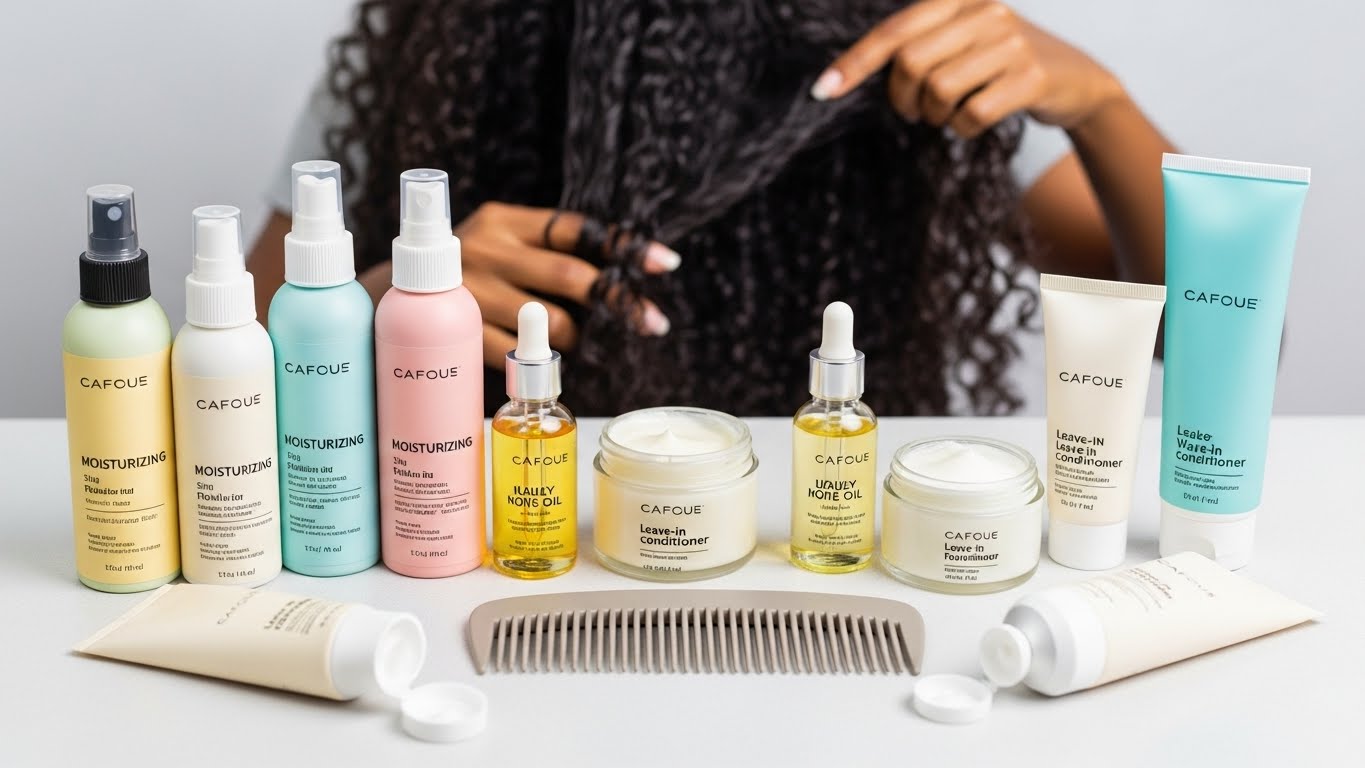
Shampoo the scalp, condition the lengths. Use a gentle, sulfate-free shampoo and work it into the scalp with your fingertips, not your nails. Rinse, then apply conditioner from the mid-lengths to the ends, where the hair is oldest and driest. Leave it in for the time on the label, then rinse.
Detangle while the conditioner is in. Detangle wet, conditioned hair with your fingers first, then a wide-tooth comb, starting at the ends and working up. Never detangle dry 3A curls and never brush them dry — dry brushing blows the spiral apart into frizz and snaps strands. (See the companion guide, “How to Detangle Curly Hair Without Breakage”.)
Rinse with lukewarm water. Hot water strips oils and roughs up the cuticle. Lukewarm water is enough.
Daily routine
Morning refresh. 3A curls flatten overnight. In the morning, mist the hair lightly with water or a little leave-in conditioner, then separate the curls gently with your fingers and scrunch to bring the definition back. That is usually all it takes. Adding more product in the morning flattens curls; adding too little leaves them dry and crisp.
Hands off during the day. Touching curls through the day pulls the pattern apart and adds frizz. Let them be.
Keep products light. If your curls look weighed down and flat by midday, you are using too much product or products that are too heavy. Use less next time, and change only one thing at a time so you know what helped.
Night care
Night care is what stops the morning being a rescue job:
- Pineapple method. Gather the hair loosely into a high ponytail on top of the head — a “pineapple” — so the curls are not crushed under your head while you sleep. It must be loose; a tight ponytail pulls at the roots and is not protective.
- Silk or satin pillowcase. A smooth pillowcase may reduce friction overnight, although the evidence for pillowcases is weak and it should not be relied on alone.
- Loose braids or twists. A loose braid or twist also keeps curls from tangling overnight. Take it out gently in the morning with your fingers.
Weekly care
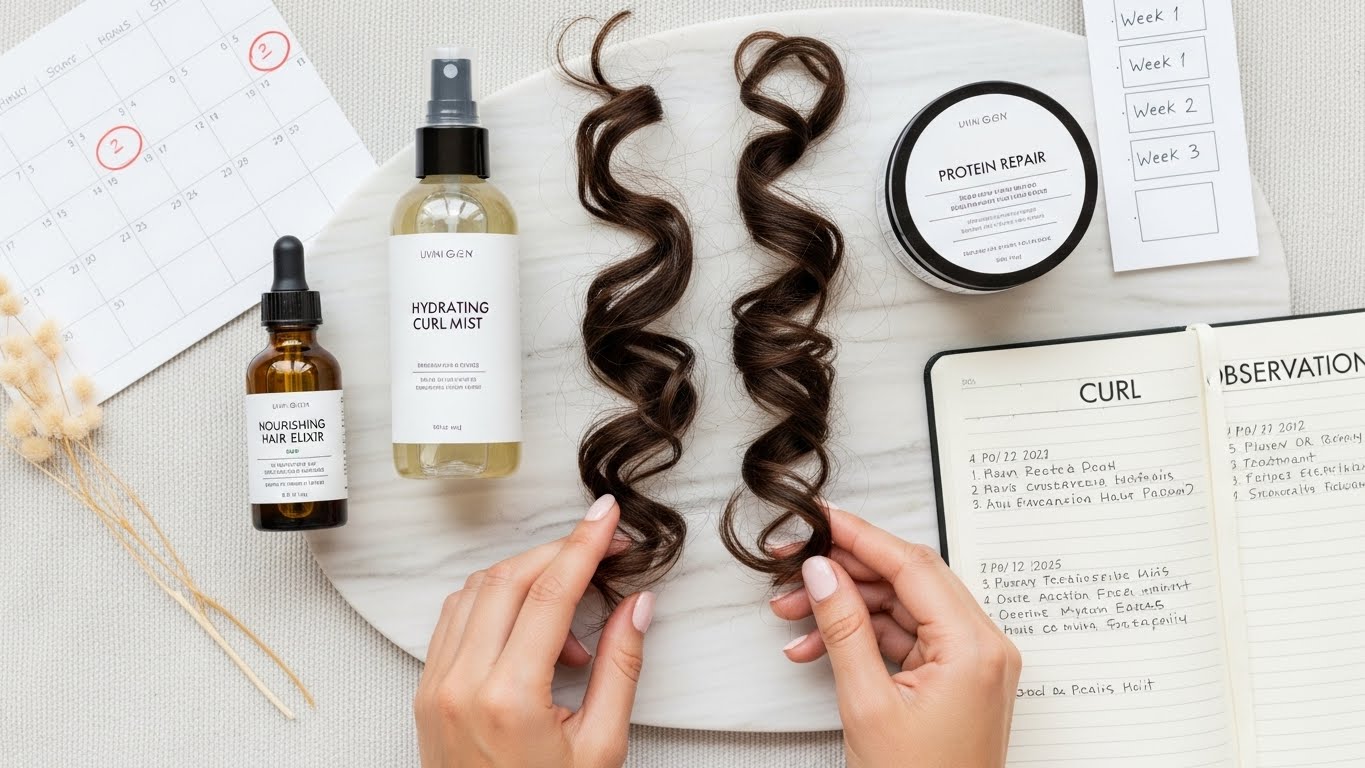
Deep condition once a week as a starting point. A deep conditioner is a richer conditioner left on for the time on the label, then rinsed out. It coats and softens the hair. It does not deliver nutrients into the shaft, and it does not repair damage — damaged hair cannot be repaired, and only trimming removes split ends. If your curls feel soft and defined without a weekly deep condition, you do not need one every week.
Protein: what it does and does not do. Protein products can make hair feel temporarily firmer, because hydrolysed protein coats the shaft. They do not repair damage and they do not strengthen hair from within. Too much protein makes hair feel stiff, hard and brittle. There is no fixed schedule for protein treatments — no source gives one. Use a light protein product only if your curls feel limp and overstretched, stop if the hair feels stiff or dry, and do not use protein and deep conditioning as if they were a matched pair on a timetable.
Clarifying wash now and then. If products build up and curls start looking limp and dull, a clarifying shampoo used occasionally, per its label, removes the build-up. There is no fixed monthly schedule for this either — use it when you notice build-up, not by the calendar.
Styling
- Finger styling. The gentlest way to shape 3A curls is with your fingers — finger-coiling a curl or scrunching product through damp hair. Fingers do not break the pattern the way a brush does.
- Diffusing or air-drying. Let curls air-dry, or use a diffuser on a low or medium heat setting. Never use a flat iron on damp hair, and keep heat low — high heat weakens the shaft.
- Light hold. A light gel or cream gives hold without weighing curls down. Heavy gels and creams pull 3A curls open and make them look flat. Whether a product holds your curls depends on the product, the amount and your hair — not on whether it is labelled heavy or light. Test one product at a time.
- Light protective styling. Loose braids, buns or twists protect the ends during the day or overnight. Tight styles strain the hairline and can cause hair loss over time (traction alopecia) — if a style hurts, it is too tight. (See the companion guide, “Protective Styles for Long Curly Hair”.)
Moisture and protein: keeping the balance
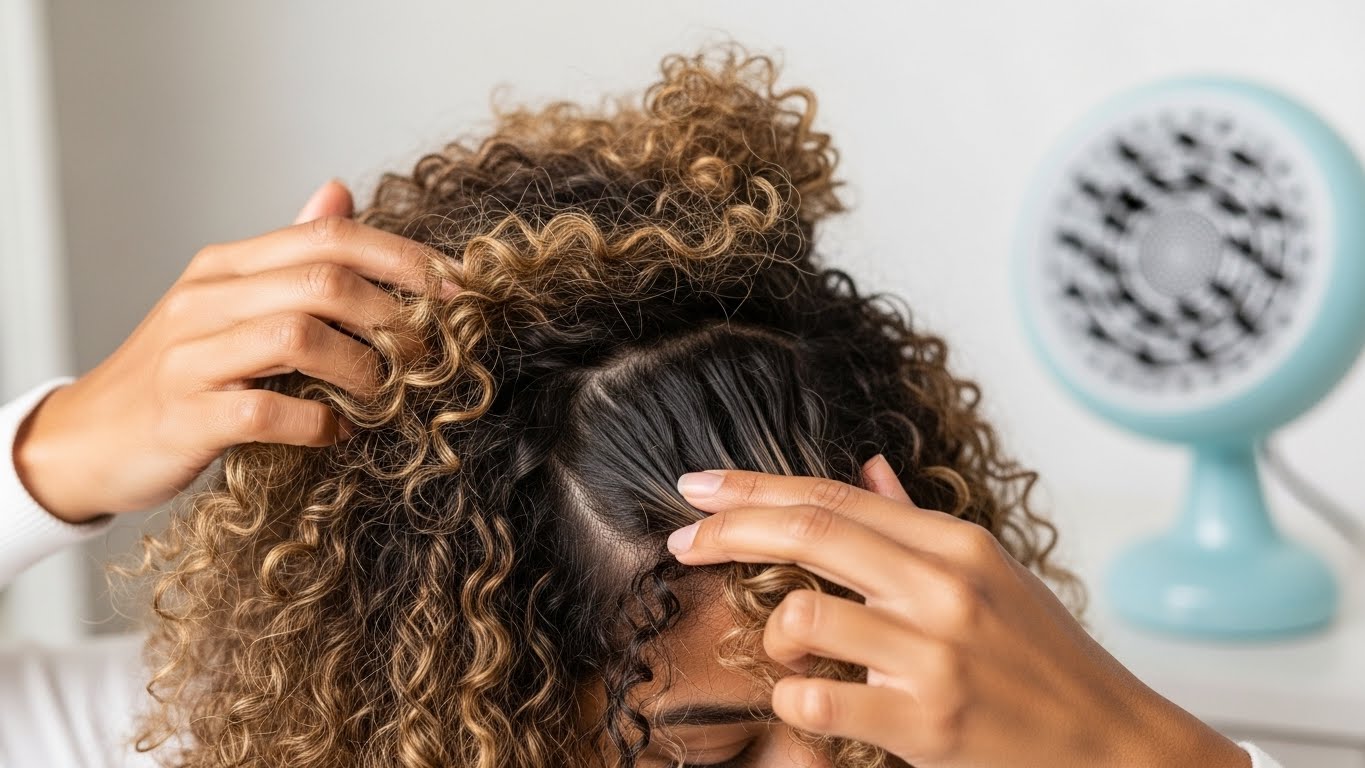
Curl care talks a lot about a “moisture-protein balance”. In plain words:
- Too much moisture, not enough structure: curls feel limp, soft and overstretched, and lose their spring. A light protein product may help them feel firmer — or it may be that you are simply using too much conditioner. Use less first.
- Too much protein: hair feels stiff, hard and brittle, and snaps more easily. Stop protein products and go back to conditioner until the hair feels soft again.
- Too little of either: dry, frizzy curls that will not hold a pattern. Start with water and conditioner, not with a new product.
There is no test that tells you your exact balance, and no schedule that fixes it. Judge by how the hair feels and change one thing at a time.
Mistakes that spoil 3A curls
- Brushing dry hair. The fastest way to turn defined 3A curls into frizz.
- Heavy products. Creams and gels that weigh the curls down and pull the pattern open.
- Over-washing. Stripping the hair of oils it cannot easily replace. Wash when the scalp needs it.
- Heat on damp hair. Flat irons and high-heat styling on damp hair damage the shaft.
- Tight styles. Buns and ponytails that pull at the roots and hairline.
- Changing everything at once. If you change five products in one week, you cannot tell which one helped and which one hurt. Change one thing, wait, and judge.
- Expecting a fixed result by a fixed date. Curls improve with steady care over weeks, and the timing varies from person to person. No routine can promise a result by a specific week.
Seasonal changes
- Humid summers: frizz increases because moisture from the air gets into the cortex. Use a little more leave-in and a light gel for hold, and accept that some frizz in humidity is normal — frizz can be reduced, not eliminated.
- Cold, dry winters: the air pulls moisture out of the hair. Use a slightly richer leave-in and protect the ends with loose styles.
- Sun and wind: both dry the hair out. A hat or a loose style helps on long days outdoors. The scalp is skin too — an exposed parting can sunburn, so use broad-spectrum SPF 30+ sunscreen on it, or cover it with a hat.
Patch test
Before using a new product all over your hair, test it on a small patch of skin first — the AAD method is a quarter-sized patch, applied twice daily for 7–10 days, on the underside of the arm or the bend of the elbow. Stop using the product if the skin becomes red, itchy or sore.
When to get help
Losing about 50 to 100 hairs a day is normal. See a doctor or dermatologist promptly if you notice:
- Shedding that lasts more than six months, or sudden heavy shedding.
- Bald patches, or thinning at the hairline.
- Scalp pain, sores, redness or flaking that does not settle.
- Hair that breaks off in large amounts despite gentle handling.
Frequently asked questions
How often should I wash 3A curls?
There is no single right answer. Many people wash once or twice a week. Wash when your scalp feels oily or itchy or your curls look limp — and at minimum every 2–3 weeks for scalp health (AAD).
Can I use protein treatments on 3A curls?
Yes, lightly, if your curls feel limp and overstretched. Protein can make hair feel temporarily firmer, but too much makes it stiff and brittle. There is no fixed schedule. Stop if the hair feels hard or dry.
How do I get rid of frizz in 3A curls?
You cannot eliminate frizz completely. You can reduce it: keep the hair moisturised, detangle wet, do not brush dry curls, use light products, and protect the hair at night. Humidity will still cause some frizz, and that is normal.
Which products define 3A curls best?
Light leave-ins, light creams and light gels, used on damp hair. No product is named or recommended here — what works depends on your hair, so test one product at a time.
Can 3A curls turn into a different curl type?
No. Curl pattern is set by the shape of the follicle. Length and weight can pull 3A curls looser so they look less defined, and damage can make them look undefined, but the pattern itself does not change type.
Summary
3A curls are loose, springy S-shaped spirals about as wide as sidewalk chalk, fine to medium in texture, prone to frizz and dry ends. Keep the routine short and light: gentle washing, conditioner on the lengths, detangle wet from the ends up, a little leave-in, and as little handling as possible. Do not brush dry curls, do not use heavy products, and do not expect a fixed result by a fixed date. Change one thing at a time and judge by how the hair responds.
Sources: American Academy of Dermatology curly hair tips and hair-loss guidance; Andre Walker hair typing system (via Hair.com and curl-type guides); Monselise et al. 2015 (frizz mechanism); Rele & Mohile 2003 (coconut oil and protein loss); Koyama et al. 2016 (scalp massage); Patel et al. 2017 (biotin); IADVL Hair Care Basics. This is a researched overview, not a hands-on review.