Researched overview.
Table Of Content
Quick answer
Curly hair is usually drier than straight hair, because the scalp’s natural oils cannot travel easily down a twisted hair shaft. Sulfates — the strong detergents in many shampoos, usually sodium lauryl sulfate (SLS) or sodium laureth sulfate (SLES) — clean well, but they do not distinguish between dirt and the little natural oil curly hair has. Used often, they can leave curls drier, frizzier and harder to manage.
A sulfate-free shampoo uses gentler surfactants instead. It cleans without stripping as much oil, and it usually foams less. That makes it a good fit for most curly hair for regular washing. It is not a treatment: it does not grow hair, repair damage, or remove frizz on its own. It is one step — gentle cleansing — inside a routine that also needs conditioner, careful detangling and protection from heat and friction.
If your scalp is red, sore, flaking badly, or you have patches of hair loss, ask a dermatologist or pharmacist before changing shampoo. This guide is general information, not medical advice.
Contents: Why curls dry out · What sulfates do · What sulfate-free means · Choosing a shampoo · How to wash · How often · What does not help · When to get help
Why curls dry out
Each curl bends the hair shaft, and the scalp’s natural oil, sebum, travels down a straight shaft easily and down a twisted one poorly. The ends of curls get very little of it. The American Academy of Dermatology (AAD) states that people with curly or tightly coiled hair are more prone to breakage and dryness than people with other hair types. (AAD, 6 curly hair tips from dermatologists)
Dry hair is less flexible. It tangles more, breaks more easily when pulled, and its lifted cuticle lets moisture from the air into the inner part of the hair, so strands swell unevenly — which is what frizz is. Gentle washing protects the little oil curls have; harsh washing removes it.
What sulfates do
Sulfates are surfactants — cleaning agents that lift oil, dirt and product off the hair and scalp so water can rinse them away. The two most common in shampoo are:
- Sodium lauryl sulfate (SLS) — the stronger one, very effective at cleansing, and more drying with frequent use.
- Sodium laureth sulfate (SLES) — a milder version of SLS, still effective but less stripping. This is what most mainstream shampoos use.
A sulfate does not distinguish between the sebum you want removed and the lipids on the hair and scalp you want left alone. That is the whole trade-off: stronger surfactants clean more thoroughly and carry more risk of dryness and irritation. Sulfates are not toxic and do not permanently damage hair — that is an internet myth with no good evidence behind it. What they can do, with frequent use on already-dry curly hair, is strip natural oils and leave curls dry and frizzy.
Sulfate-free shampoos are not automatically better for everyone. For fine, oily or straight hair that behaves well, a sulfate shampoo may do no harm at all. The people who notice the biggest difference from switching are those with dry, coarse, curly or coily hair, colour-treated hair, and sensitive scalps.
What “sulfate-free” means — and what it does not
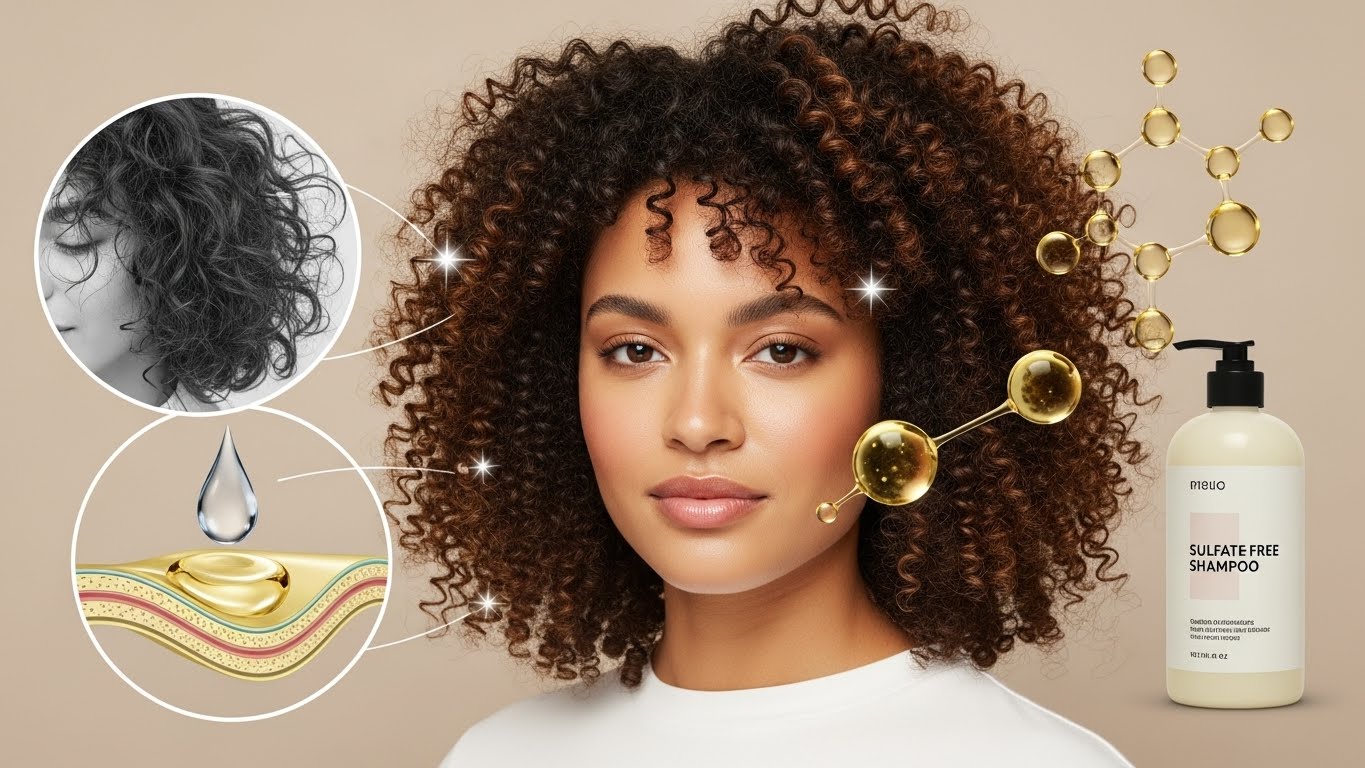
A sulfate-free shampoo cleans with milder surfactants instead of SLS or SLES. It usually produces less foam. Less foam does not mean less cleaning. Foam is produced by the surfactant, not by the cleaning itself; gentler surfactants clean perfectly well with far less lather. If you are used to a big lather, a sulfate-free shampoo can feel as if it is not working. It is working — it is just cleaning more gently.
What a sulfate-free shampoo does not do:
- It does not grow hair. No shampoo grows hair. Less breakage helps you keep the length you grow, which is not the same as faster growth.
- It does not repair damage. Damaged hair cannot be repaired. Protein in a shampoo can coat the surface and temporarily improve how hair feels, but it does not repair the shaft. Too much protein can also make hair feel stiff and brittle.
- It does not remove frizz on its own. Frizz comes from a lifted cuticle letting humid air into the hair. Gentle washing helps; it does not fix the cuticle.
- It does not remove all build-up. Gentle shampoos can leave residue from gels, oils, creams and silicones behind. If you style with those products, the AAD advises using a clarifying shampoo before your moisturising shampoo sometimes, to remove build-up properly.
Choosing a shampoo: what to look for on the label
No product is named here, because no product was tested. Use this checklist on any label instead.
Look for:
- “Sulfate-free” on the label, and no SLS/SLES in the ingredients list. Check the list rather than trusting the front of the bottle.
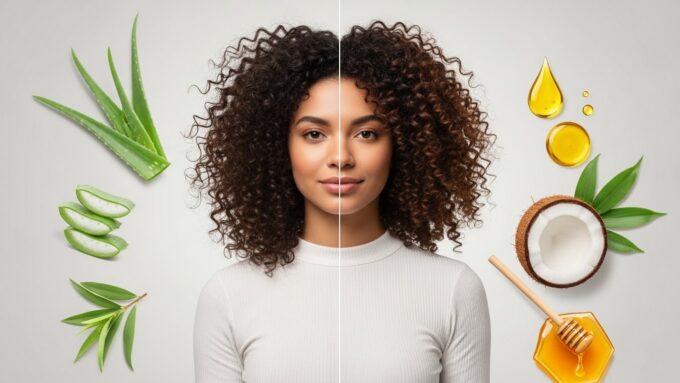
- Moisturising ingredients such as glycerin or aloe vera. Glycerin is a humectant — it draws water toward the hair. It helps in humid air and can draw water out of hair in very dry air, so it is a useful ingredient, not a guarantee.
- A fatty alcohol such as cetyl or stearyl alcohol. These are conditioning alcohols, not drying ones, and the AAD lists them as ingredients to look for in curly-hair conditioning products.
- A small amount of light oil such as argan or coconut oil. Coconut oil reduced protein loss from the hair shaft in one study (Rele & Mohile 2003) — it protects during washing; it does not grow hair.
- A formula made for your curl type. Wavy hair usually suits a lighter formula; tight curls and coils usually suit a richer, cream-based one. Fine curls are easily weighed down by heavy formulas.
Be cautious with:
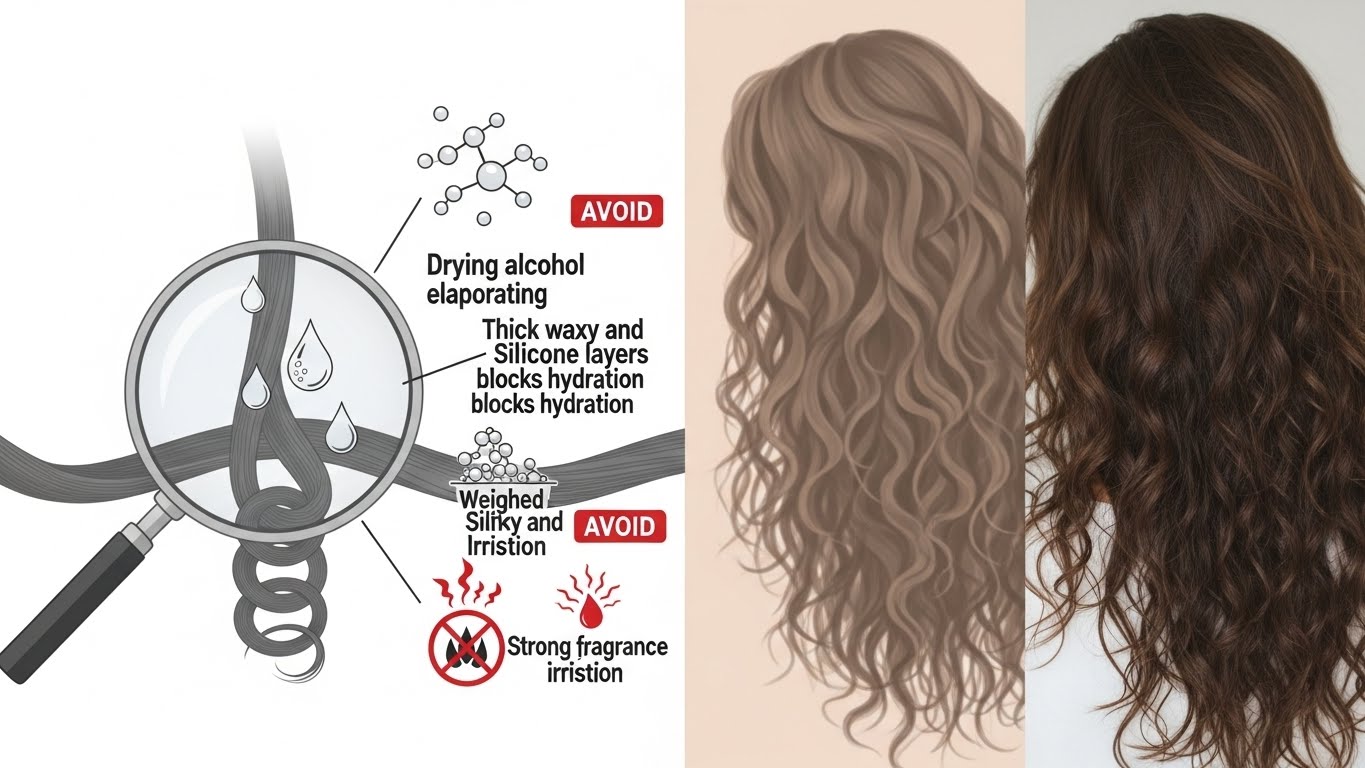
- Drying alcohols such as isopropyl alcohol high up the ingredients list. Short-chain alcohols are volatile and can dry hair out.
- Heavy waxes and silicones in a shampoo. Silicones coat the hair and can build up over time; they do not damage hair or make it “dead”, but build-up can leave curls dull and limp until it is clarified away.
- Strong fragrance if your scalp is sensitive. Fragrance can irritate a sensitive scalp, so fragrance-free or lightly scented is the safer choice. Fragrance does not make a shampoo clean better or worse.
Patch test a new shampoo. Before using a new shampoo all over, test it the way the AAD advises for new hair and skin products: apply a small amount to a quarter-sized patch of skin on the inside of your arm or the bend of your elbow, twice a day, and watch for 7–10 days. If you get redness, itching, bumps or swelling, do not use it. This is the same 7–10 day method used across this site’s drafts.
How to wash curly hair
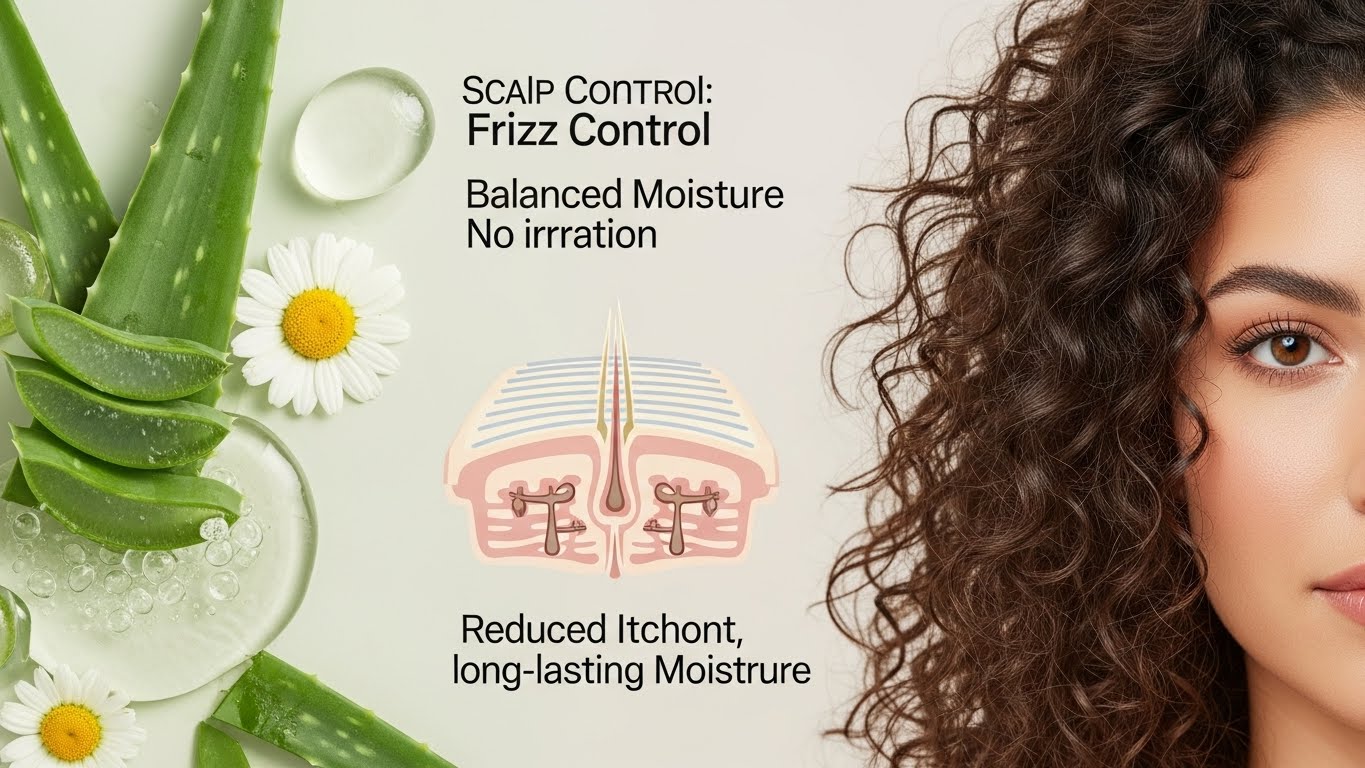
What you do matters at least as much as which shampoo you buy.
- Wet hair thoroughly with lukewarm water. Hot water strips natural oils and dries curls out. There is no good evidence that a cold-water rinse “closes” the cuticle.
- Use a small amount of shampoo. A squirt about the size of a quarter is enough for most people. More shampoo does not mean cleaner hair; it means more stripping.
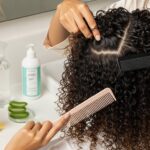
- Shampoo the scalp, not the lengths. Massage the shampoo into the scalp with your fingertips. Do not scrub hard, and do not pile the lengths on top of your head and rub them — that tangles and breaks curls. Let the suds run down the lengths as you rinse; that is enough to clean them.
- Rinse thoroughly. Shampoo left behind can leave hair sticky and the scalp itchy. If your scalp is itchy, dry and flaky, incomplete rinsing is one possible cause.
- Condition all your hair. Apply conditioner to all of your curly hair after every wash, not just the ends — this is the AAD’s advice for curly hair. Leave it in for a few minutes, then rinse.
- Detangle while wet. Detangle wet, conditioned hair with your fingers or a wide-tooth comb, starting at the ends and working up. Do not brush dry curls: it snaps hair and makes frizz worse.
- Style on damp hair. Apply leave-in conditioner or curl cream to damp hair, then a few drops of light oil to seal in the moisture. Air-dry when you can, or diffuse on low heat.
The scalp is skin too — an exposed parting can sunburn, so use broad-spectrum SPF 30+ sunscreen on it, or cover it with a hat.
How often to wash
There is no single right frequency. The AAD advises washing curly hair only when needed, and washing at minimum every 2–3 weeks for scalp health — that minimum is far less often than most people wash, and it is a floor for scalp health, not a recommendation. In practice, most people with curly hair wash once or twice a week, and people with an oily scalp or an active lifestyle may need to wash more often.
Judge by your scalp and your hair, not by a fixed schedule:
- Signs you may be over-washing: hair feels frizzy, tight or straw-like; it breaks easily when you detangle it.
- Signs you may be under-washing: scalp feels itchy, greasy or heavy; hair looks limp and weighed down; product build-up is visible.
- If you go a long time between washes, you may get dandruff from oil building up on the scalp. The AAD advises applying anti-dandruff shampoo only to the scalp and letting it sit for 2–10 minutes, or the time on the label, before rinsing, then using a moisturising shampoo on the rest of the hair.
When you switch to a sulfate-free shampoo, give it a few washes before judging it. There is no published “adjustment period” of two to three weeks and no result due in one to two months. A new shampoo either leaves your hair cleaner and softer after a few washes, or it does not.
What does not help
- Expecting foam. Less lather does not mean less cleaning. Do not add more shampoo to chase foam.
- Changing shampoo every week. Hair takes time to settle with a new formula. Changing constantly means you never learn what helps.
- Skipping conditioner. Conditioner is what restores softness after washing. Skipping it cancels most of the benefit of a gentle shampoo.
- Believing the shampoo will fix everything. If curls are still dry and frizzy, the problem may be heat damage, rough handling, or skipping conditioner — not the shampoo.
Hair growth and length
A sulfate-free shampoo does not make hair grow faster or stronger. What gentle washing can do is reduce breakage, and less breakage means you keep more of the length you grow. That is the honest version of the claim. Shedding about 50–100 hairs a day is normal, according to the AAD. If shedding lasts more than six months, or you have patches of hair loss, ask a doctor or dermatologist.
Colour-treated curls may keep their colour a little longer with gentler washing, because less stripping means less colour loss with each wash. That is a “may help”, not a promise.
When to get help
Ask a dermatologist or pharmacist if: your scalp is persistently itchy, red, sore or flaking; shampoo causes a reaction that does not settle after you stop using it; you have patches of hair loss; or shedding lasts more than six months.
Summary
Sulfates are strong detergents; sulfate-free shampoos clean more gently and foam less, which suits most curly hair for regular washing. Choose by the label — no SLS/SLES, moisturising ingredients, no drying alcohol high up the list, fragrance-free if your scalp is sensitive — and wash the scalp, condition all the hair, and detangle wet hair from the ends up. No shampoo grows hair or repairs damage, and no product deserves the word “best” without being tested. Judge a shampoo by how your hair feels after a few washes, not by its promises.
Sources: AAD curly hair tips; AAD hair shedding guidance; IADVL Hair Care Basics; Rele & Mohile 2003; Fluhr et al. 2008 (glycerin as humectant). This is a researched overview, not a hands-on review.