Researched overview.
Table Of Content
Quick answer
Hair oil smooths the surface of the hair, seals in moisture, and reduces friction — so hair breaks less and looks shinier. It does not repair damaged hair, thicken the hair shaft, or make hair grow. Damaged hair cannot be repaired; it can only be protected while it grows out, and split ends can only be removed by trimming.
If your hair is breaking badly, you have bald patches, scalp pain, or sudden or patchy hair loss, oil is not the answer — see a dermatologist or doctor first. This guide is general information, not medical advice.
Contents: What shine is · What oil can and cannot do · Choosing an oil · How to use it · How often · Oil and the scalp · Heat and styling · Porosity · Mistakes · When to get help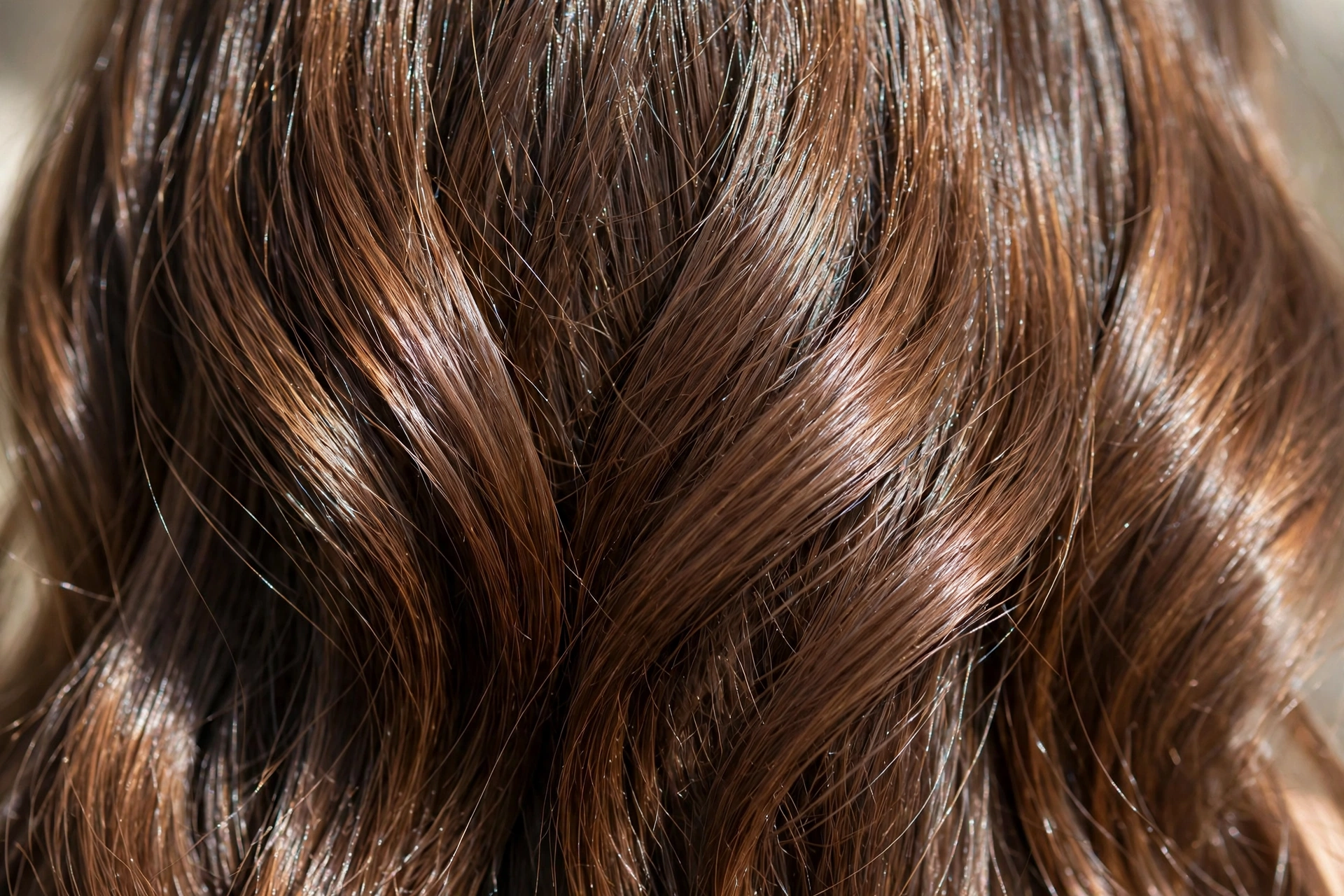
What shine is — and what it is not
Shine is light reflecting off a smooth surface. Smooth strands reflect light evenly and look shiny; rough, damaged strands scatter light and look dull. Shine is not grease. A thin, even coating looks shiny; a heavy coating looks oily.
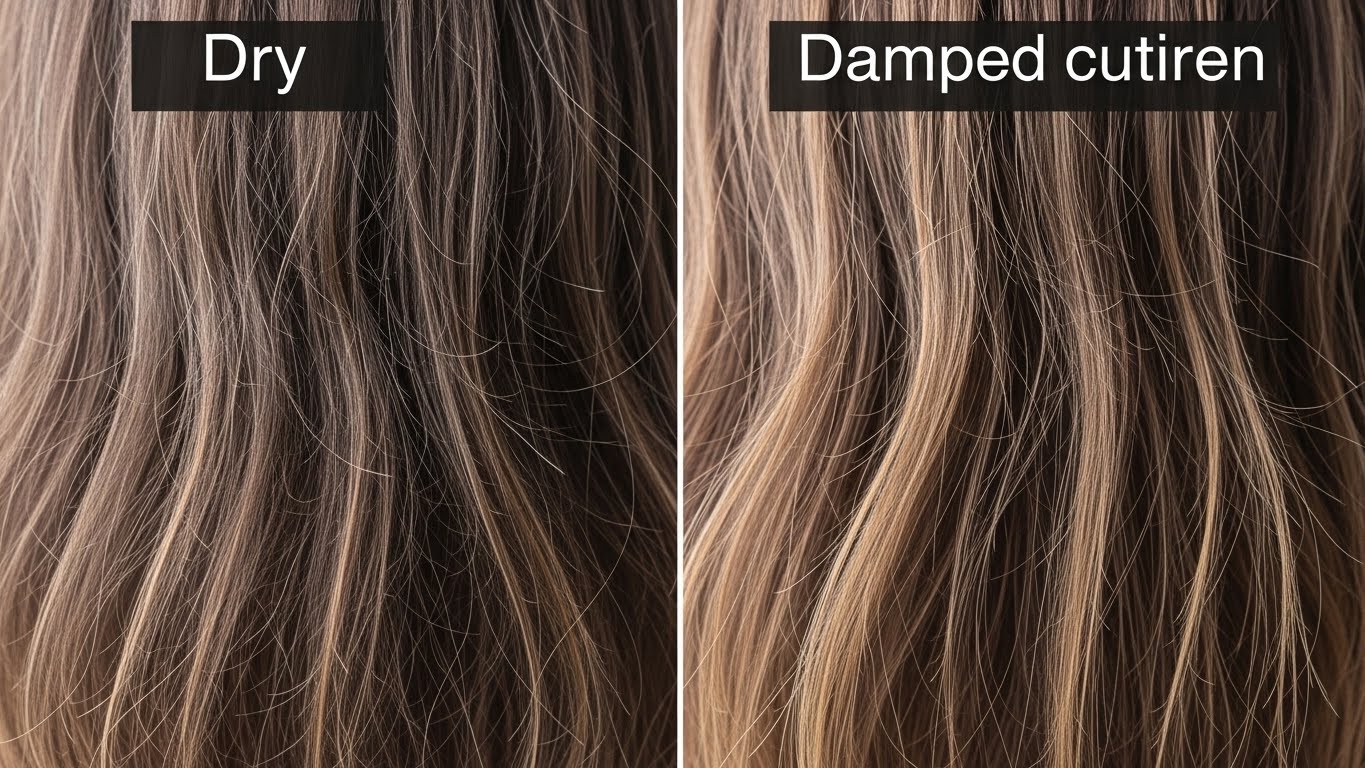
Damage raises the outer layer of the hair, the cuticle. Once raised, it catches on other strands, creates friction, and breaks more easily. That is why damaged hair feels rough, tangles easily, and loses shine first at the ends — the ends are the oldest part of the hair and have had the most washing, brushing and exposure.
What oil can and cannot do
| What oil can do | What oil cannot do |
|---|---|
| Coat the surface, smoothing the cuticle so light reflects evenly | Repair damaged hair or remove split ends |
| Seal in moisture, so hair stays flexible and bends instead of breaking | Add water to the hair — water moisturises, oil seals |
| Reduce friction between strands, so brushing and styling cause less breakage | Thicken the hair shaft or increase the number of hairs |
| Protect hair from daily wear — brushing, styling, wind, pillow friction | Make hair grow faster or grow back |
| Make hair look and feel smoother for a few days | Give permanent results — the effect washes out |
The one oil with research behind it is coconut oil, which has been shown to get inside the hair shaft and reduce protein loss (Rele & Mohile, 2003). That protects the shaft; it does not grow hair. There is no strong evidence that castor oil strengthens hair or promotes growth (2022 systematic review).
Choosing an oil
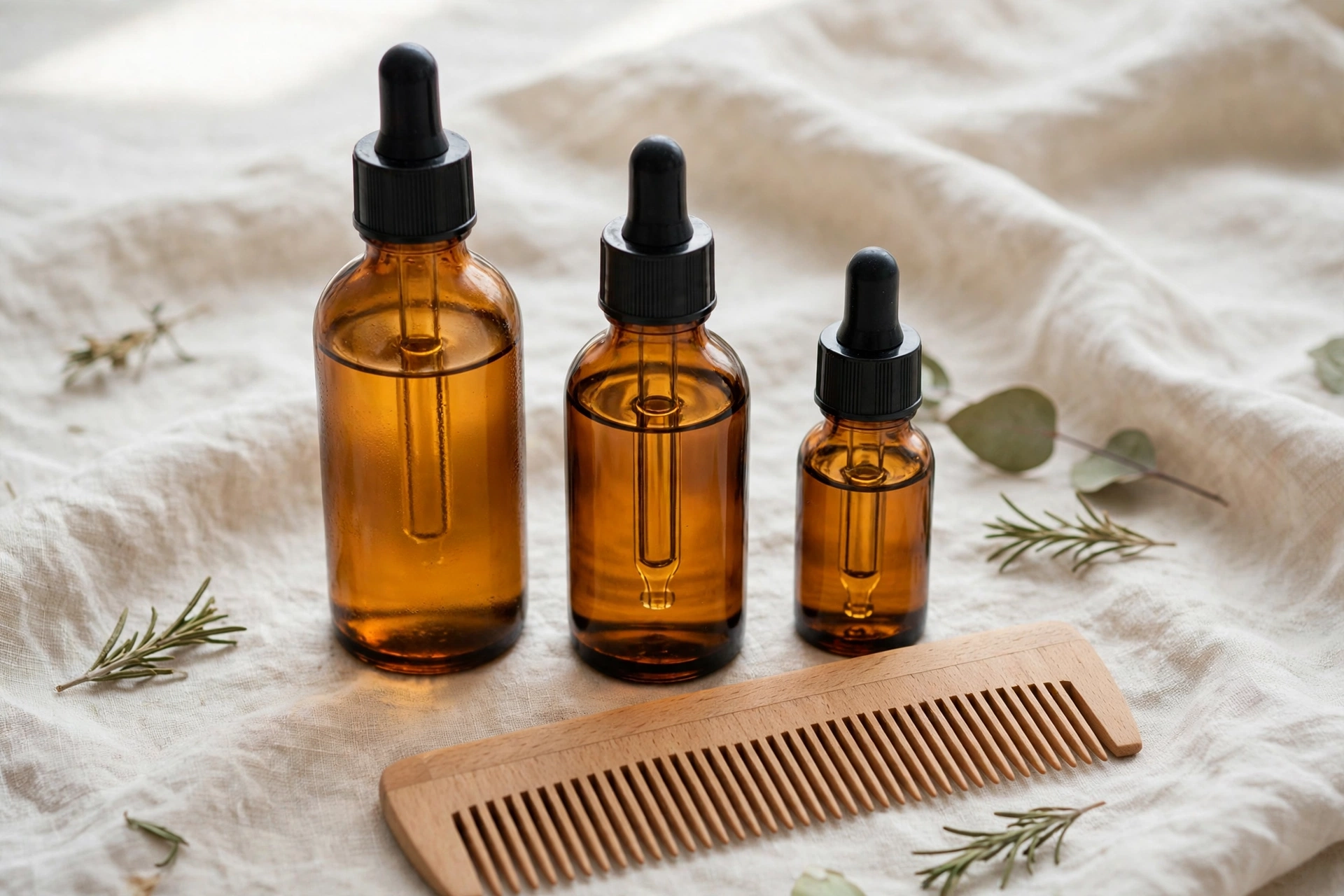 No oil is “the best” for everyone. Choose by hair type, and judge by how your hair responds — not by the brand name.
- Fine hair: a light oil, used sparingly. Heavy oils weigh fine hair down and make it look flat.
- Coarse or very dry hair: a heavier oil is usually better tolerated, and can be used more generously on the ends.
- High-porosity hair (hair that soaks up water fast and dries fast, often after colouring or heat damage): tends to absorb oil quickly and lose it quickly, so it usually needs oil more often, in light amounts.
- Low-porosity hair (hair that resists water and takes a long time to dry): oil tends to sit on the surface, so use very little or it will feel heavy.
Coconut, argan and jojoba oils are the common choices. Coconut oil is the only one shown to penetrate the shaft; the others mostly coat the surface, which is still useful — coating is what smooths the cuticle and reduces friction. No product is named or recommended here.
How to use it
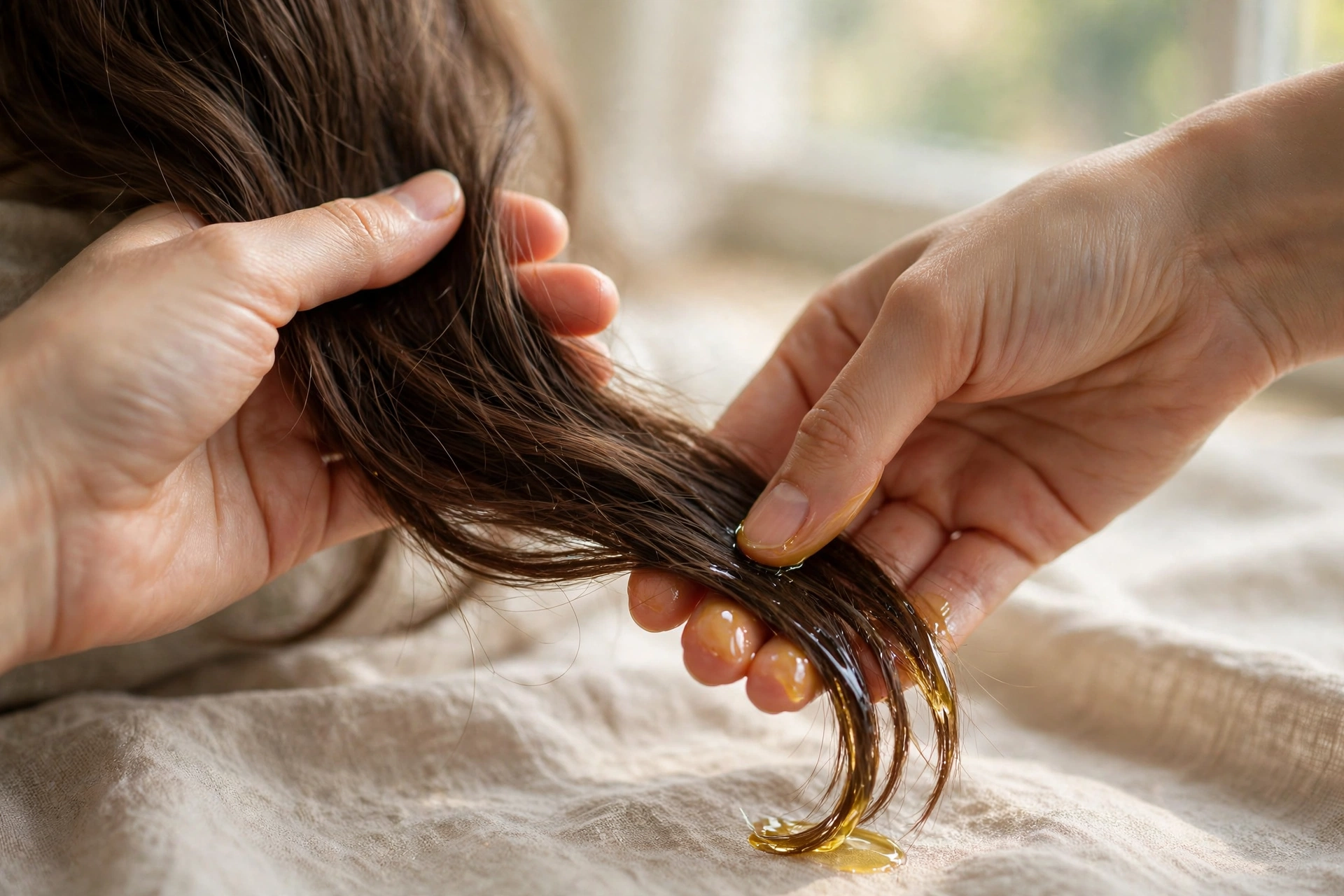
On damp hair. After washing, apply a small amount to damp hair, focusing on mid-lengths and ends. Rub the oil between your palms first, then smooth it through. Damp hair takes oil more evenly, and the oil seals in the water that is already there. Note: wet hair is more fragile than dry hair — water weakens the bonds inside the hair — so detangle gently, with a wide-tooth comb, ends first, and never roughly.
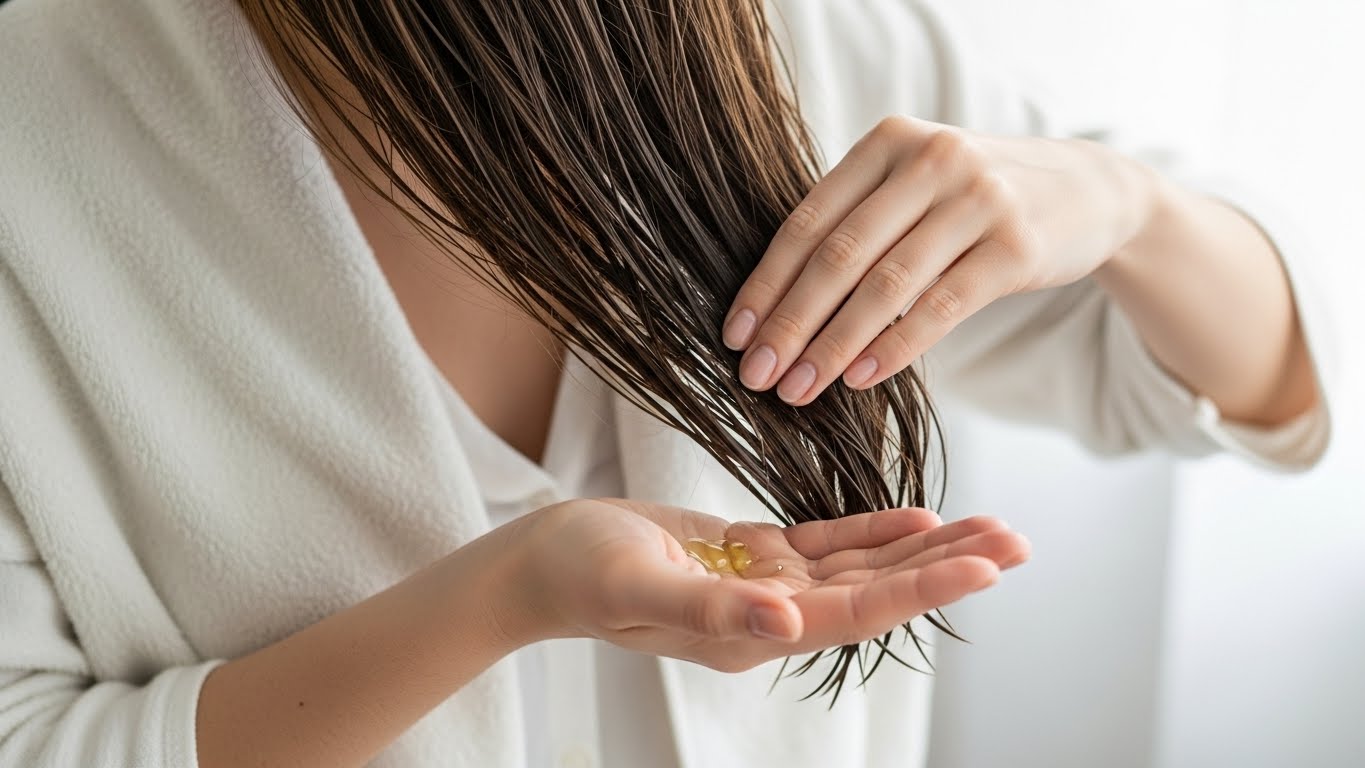
On dry hair. A tiny amount smoothed over the surface tames flyaways and adds shine between washes. The aim is to tidy the surface, not to coat the hair.
How much. Start with less than you think you need — a few drops for fine hair, a little more for thick or coarse hair. If the hair looks greasy, you used too much. If it still feels rough, add a drop more next time. There is no fixed amount that works for everyone.
Before using a new oil, patch test it: put a small amount on the inside of your arm or the bend of your elbow, twice a day for 7 to 10 days. If the skin turns red or itchy, do not use it. (This is the American Academy of Dermatology patch-test method.)
How often
Use oil as often as your hair needs it — daily in small amounts is fine for very dry hair; once or twice a week is enough for hair that is only mildly dry. Let the hair tell you: if it feels soft and manageable, you are using enough; if it feels heavy or greasy, use less or less often. Consistency matters more than quantity — a little oil regularly protects better than a large amount once in a while.
Oil and the scalp
Oil helps a dry scalp: a light massage with a small amount of oil can ease dryness and tension. It does not help an oily or sensitive scalp — oil there causes build-up and discomfort. Keep oil on the mid-lengths and ends in that case.
Oil does not grow hair. Scalp massage has no good evidence for growing hair (Koyama et al. 2016: 9 men, no control group). Gentle massage is fine as a relaxing habit, but it is not a treatment for hair loss.
Heat and styling
Oil on its own is not heat protection. Applying oil and then using high heat does not protect the hair — keep heat low and infrequent, and do not use a flat iron or curling iron on hair that is coated in oil. Gentle styling matters more than any product: loose styles, soft brushing, and avoiding tight bands all reduce the friction that causes breakage.
At night, a thin layer of oil before bed reduces friction against the pillow, and a silk or satin pillowcase reduces it further. Cotton pillowcases raise the cuticle and cause frizz and tangles.
Sun, wind and cold all dry hair out and increase the need for oil. Hard water can also leave mineral deposits on the surface that make hair look dull — those are surface deposits only, and do not block the follicles. The scalp is skin too — an exposed parting can sunburn, so use broad-spectrum SPF 30+ sunscreen on it, or cover it with a hat.

Porosity: what to expect
Porosity is simply how easily your hair absorbs and loses water. High-porosity hair absorbs oil fast and loses it fast, so it usually needs lighter, more frequent application. Low-porosity hair resists oil, so a little goes a long way and too much sits on top. Neither type is “better” — porosity just tells you how much oil to use and how often. If you are unsure of your porosity, start with a small amount and adjust by feel.
Mistakes that make oil fail
- Using too much. More oil does not mean faster repair. It means greasy, heavy hair.
- Putting it on the roots. Oil belongs on mid-lengths and ends. On the roots it causes build-up and makes hair look flat.
- Expecting repair. Oil protects; it does not repair. If your ends are split, only trimming removes them — trim every 6–12 weeks.
- Expecting growth. Oil does not make hair grow faster, thicker or longer. Length comes from less breakage, not from oil.
- Rough handling. Oil cannot undo damage from rough brushing, tight styles or daily high heat.
When to get help
See a dermatologist or doctor if: hair is breaking off in large amounts; you have bald patches or sudden hair loss; your scalp is painful, sore, blistered or has sores that do not heal; or you are unsure whether a product is safe for you.
Summary
Hair oil is a surface treatment: it smooths the cuticle, seals in moisture, and reduces friction so hair breaks less and looks shinier. It does not repair damage, thicken hair, or make it grow. Choose a light oil for fine hair and a heavier one for coarse or very dry hair, use a small amount on damp hair at the mid-lengths and ends, and keep expectations realistic — the effect lasts days, not permanently, and the real repair is trimming split ends and protecting the hair you have.
Sources: Rele & Mohile 2003 on coconut oil and protein loss; Monselise et al. 2015 on frizz mechanism; Koyama et al. 2016 on scalp massage; 2022 systematic review on castor oil; Batch 16/20 positions on damaged hair and wet-hair fragility. This is a researched overview, not a hands-on review.