Researched overview.
Table Of Content
- Quick answer
- What a salon keratin treatment is — and what it is not
- The formaldehyde question
- What home options can and cannot do
- Oils: sealants, not moisturisers
- Protein masks: a temporary patch, not a rebuild
- Aloe vera and honey: humectants
- Heat-free smoothing
- How to use home treatments
- Mistakes that make home treatments fail
- When a salon treatment is still the choice
- When to get help
- Summary
Quick answer
A salon keratin treatment smooths frizz and loosens curl for a few months. Home alternatives — oils, protein masks, aloe and honey, heat-free smoothing — cannot copy that result. What they can do is make hair softer, smoother and easier to manage, and protect it from further damage while it grows out.
If your hair is breaking badly, you have bald patches, scalp pain, or hair loss that is sudden or patchy, home care is not the answer — see a dermatologist or doctor first. This guide is general information, not medical advice.
Contents: What a salon keratin treatment is · What home options can and cannot do · Oils · Protein masks · Aloe and honey · Heat-free smoothing · How to use them · Mistakes · When a salon treatment is still the choice · When to get help
What a salon keratin treatment is — and what it is not
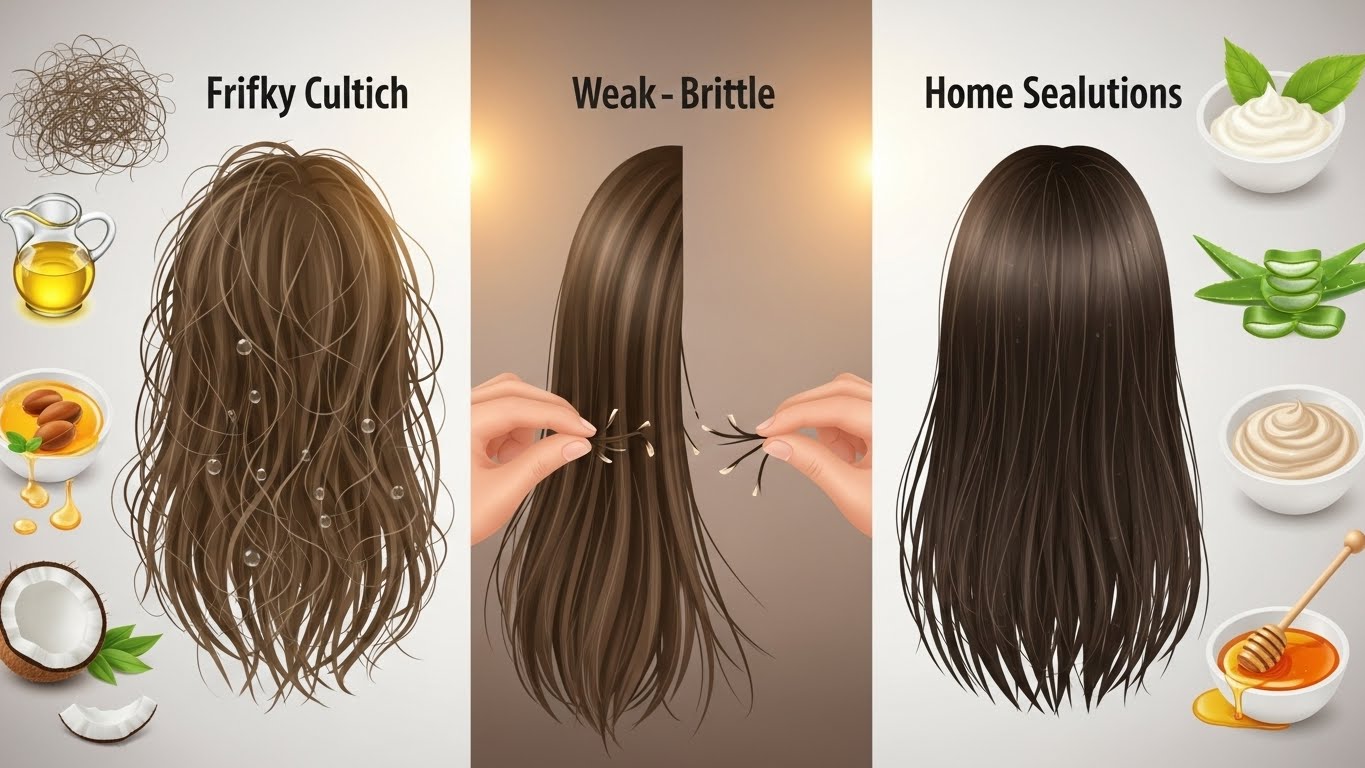
Keratin is a natural protein in hair that gives it structure and strength. A salon keratin treatment coats the hair with a keratin-based formula and seals it in with a flat iron. It smooths the cuticle, reduces frizz and loosens curl.
It is temporary. Results typically last 3 to 5 months and fade gradually with washing. It is not permanent straightening: unlike a relaxer or Japanese straightening, which permanently change the hair’s internal bonds, a keratin treatment does not permanently change your hair’s structure. When it wears off, your natural texture comes back.
It is also not a repair. A keratin treatment is cosmetic smoothing. It does not fix severe damage, and it will not make broken hair strong again. Damaged hair cannot be repaired — it can only be protected while it grows out, and split ends can only be removed by trimming.
The formaldehyde question
Some salon keratin treatments contain formaldehyde or chemicals that release it (formaldehyde, formalin, methylene glycol). When the solution is heated, formaldehyde is released into the air as a gas. The International Agency for Research on Cancer classifies formaldehyde as a human carcinogen, and the US Food and Drug Administration (FDA) has warned that many hair-smoothing products release formaldehyde when heated — including some labelled “formaldehyde-free”. The US Occupational Safety and Health Administration (OSHA) has found some salon products release formaldehyde at levels above workplace limits, and that some are mislabelled. Short-term exposure can irritate the eyes, nose and throat. The FDA has proposed a rule that would ban formaldehyde and formaldehyde-releasing chemicals in hair-smoothing products; as of this writing that ban has not taken effect.
That is a genuine reason to look for alternatives, or to ask questions before a salon treatment. It is not a reason to assume every salon treatment is dangerous, and it is not a reason to assume every home treatment is safe — “natural” does not mean harmless. Eggs, for example, can cause an allergic reaction, and any new mask should be patch tested first (see below).
What home options can and cannot do
| What home options can do | What they cannot do |
|---|---|
| Smooth the cuticle temporarily, so hair looks shinier and feels softer | Copy a salon keratin treatment or straighten hair permanently |
| Seal in moisture and reduce friction, so hair breaks less | Repair damaged hair or remove split ends |
| Make hair easier to detangle and style | Change your natural curl pattern |
| Protect hair from further damage while it grows out | Give results in a week, or on a fixed date |
Frizz happens when the hair cuticle is raised and moisture from the air enters the hair unevenly, so strands swell. Oils and conditioning treatments help by smoothing the cuticle and sealing in moisture. Shine is simply light reflecting off a smooth surface — rough, damaged hair scatters light and looks dull.
Oils: sealants, not moisturisers
Water moisturises hair; oil seals that moisture in. An oil on its own does not add water to the hair.
- Coconut oil is the one oil shown in research to get inside the hair shaft and reduce protein loss (Rele & Mohile, 2003). It protects the shaft; it does not grow hair.
- Argan oil mostly coats the surface, smoothing the cuticle and adding shine.
- Castor oil also coats the surface. There is no strong evidence that it strengthens hair or promotes growth (2022 systematic review).
Use a small amount on mid-lengths and ends, where damage is worst. Too much oil makes hair heavy and greasy, and oil on the scalp can cause build-up — keep it off the scalp unless your scalp is dry, and then use only a light touch.
Protein masks: a temporary patch, not a rebuild
Protein treatments work by leaving a thin, temporary coating on the hair. Very small hydrolysed peptides (under 1,000 Daltons) can enter the outer layer of the hair; larger fragments sit on the surface as a film. Either way, the deposit washes out — protein does not rebuild hair, and it does not make new hair grow. What it can do is reduce breakage for a while by making weak hair feel firmer.
Two simple recipes, as practical guidance rather than a sourced rule:
Egg and yogurt mask. Mix 1 egg yolk with 2 tablespoons of plain yogurt. Apply to damp hair, focusing on mid-lengths and ends. Leave for 20–30 minutes, then rinse with lukewarm water and follow with conditioner.
Milk and honey mask. Mix 2 tablespoons of milk with 1 tablespoon of honey. Apply to damp hair, leave for about 20 minutes, then rinse with lukewarm water.
Use a protein mask once a week at most. Too much protein without enough moisture makes hair stiff and easier to break — that is protein overload. If your hair starts feeling straw-like or snappy, stop the protein masks and go back to moisture for a few weeks. If you are allergic to eggs, skip the egg mask entirely. Patch test any new mask first: apply a small amount to the inside of your arm, leave it for 24 hours, and do not use it if the skin becomes red, itchy or sore. (For skincare products, the AAD patch-test method is twice daily on a quarter-sized area for 7–10 days; a 24-hour check is used here for a rinse-off hair mask.)
Aloe vera and honey: humectants
Aloe vera and honey are humectants — they attract and hold water. A mask made with aloe vera gel and a teaspoon of honey, left on damp hair for about an hour and rinsed with lukewarm water, can leave hair feeling softer and less frizzy. They are gentle and suitable for colour-treated hair, but they are not a treatment for damage, and no ingredient “cannot damage coloured hair in any way” — always patch test first, and rinse thoroughly.
Heat-free smoothing
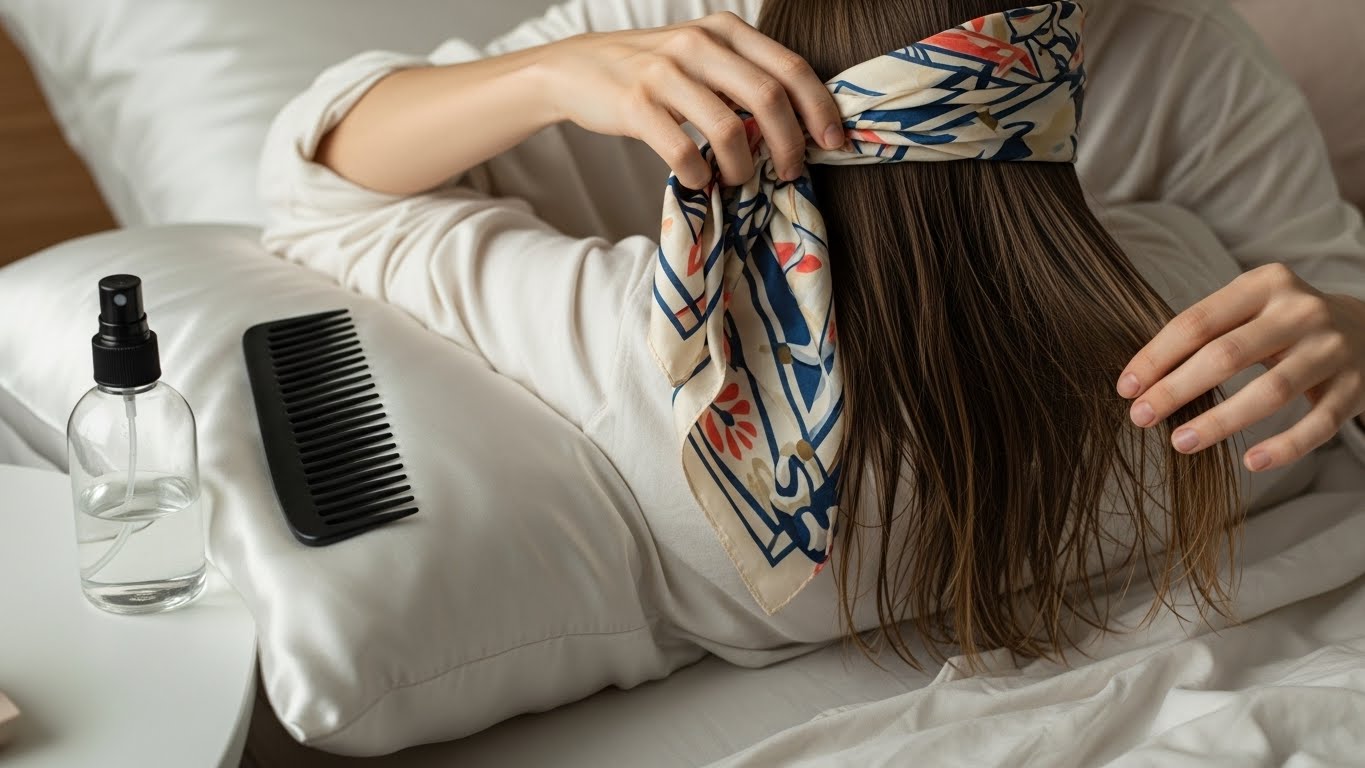
No heat-free method will straighten hair the way a flat iron does, and none of these should be presented as a guarantee. They can reduce frizz and make hair easier to manage:
- Overnight wrapping. Wrap damp hair loosely in a silk scarf overnight. It reduces friction and can leave hair smoother in the morning.
- Silk or satin pillowcase. Cotton pillowcases create more friction, which raises the cuticle and causes frizz and tangles. Silk or satin reduces that friction.
- Gentle brushing. Use a wide-tooth comb, starting at the ends and working up. Wet hair is more fragile than dry hair — water weakens the bonds inside the hair — so never detangle dry hair roughly, and detangle damp hair gently, coated in conditioner, ends first.
How to use home treatments
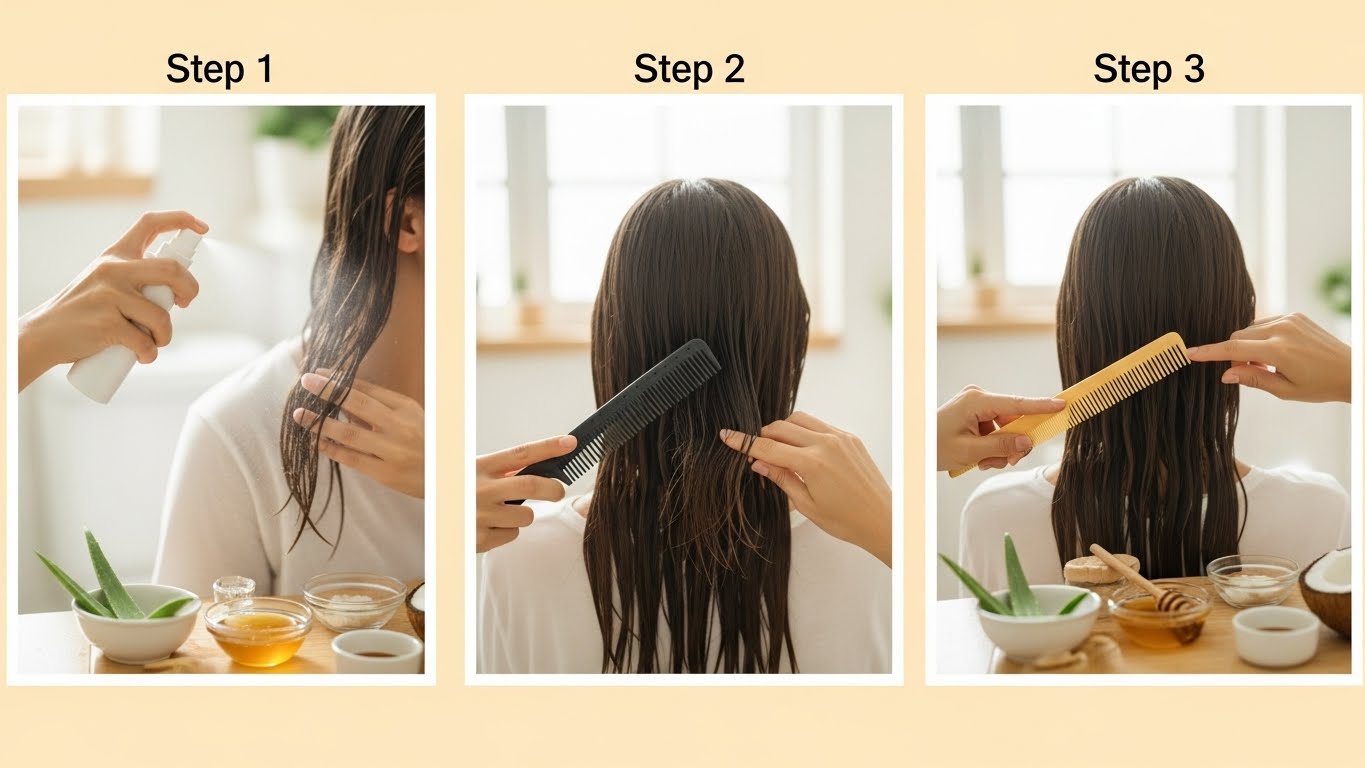
- Start with clean, damp hair. Wash first, then apply the mask or oil to damp hair so it spreads evenly.
- Work in sections. Part the hair so every strand gets covered, focusing on mid-lengths and ends.
- Time it. Protein masks: 20–30 minutes. Oil treatments: an hour or two, or overnight if you prefer. Longer is not better — leaving a protein mask on too long will not help and can make hair stiff.
- Rinse with lukewarm water. Hot water dries hair out; cold water does not seal anything.
- Once a week is enough. More frequent use makes hair sticky or stiff rather than healthier. Judge by how your hair feels: soft, firm and easy to manage means you are doing it right.
Protect your hair between treatments: use a sulfate-free shampoo if your hair is dry or colour-treated, limit heat styling, and protect hair from strong sun, which dries it out and fades colour. The scalp is skin too — an exposed parting can sunburn, so use broad-spectrum SPF 30+ sunscreen on it, or cover it with a hat.
Mistakes that make home treatments fail
- Protein overload. Too much protein, too often, makes hair stiff and breakable. Balance protein with moisture.
- Too much oil. Oil on the roots or in large amounts makes hair greasy and heavy. Focus on mid-lengths and ends.
- Expecting instant results. Home alternatives are gradual. They will not give salon results in a week, and changing products every few days means you never learn what helps.
- Skipping the patch test. Natural ingredients can still irritate skin or trigger allergies.
When a salon treatment is still the choice
Home treatments are enough for mild frizz and everyday manageability. A salon treatment may still be worth considering if you want strong smoothing or frizz control for months at a time, or if you have very curly hair that is hard to manage any other way. If you do go to a salon, ask three questions first: does the product contain formaldehyde, formalin or methylene glycol? Is the salon well ventilated? What aftercare does it need — usually a sulfate-free shampoo and less frequent washing, which helps the result last longer?
When to get help
See a dermatologist or doctor if: hair is breaking off in large amounts; you have bald patches or sudden hair loss; your scalp is painful, sore, blistered or has sores that do not heal; or you are unsure whether a treatment is safe for you.
Summary
A salon keratin treatment is temporary smoothing — typically 3 to 5 months — not a repair, and some formulas release formaldehyde when heated. Home alternatives cannot copy it, but oils, protein masks, aloe and honey, and heat-free smoothing can make hair softer, smoother and easier to manage, and protect it while it grows out. Use them once a week, balance protein with moisture, patch test anything new, and keep expectations realistic: gradual improvement over weeks and months, not a fixed result by a fixed date.
Sources: FDA and OSHA guidance on formaldehyde in hair-smoothing products; IARC classification of formaldehyde; Rele & Mohile 2003 on coconut oil and protein loss; Monselise et al. 2015 on frizz mechanism; Batch 20 position on protein treatments as a temporary patch. This is a researched overview, not a hands-on review.