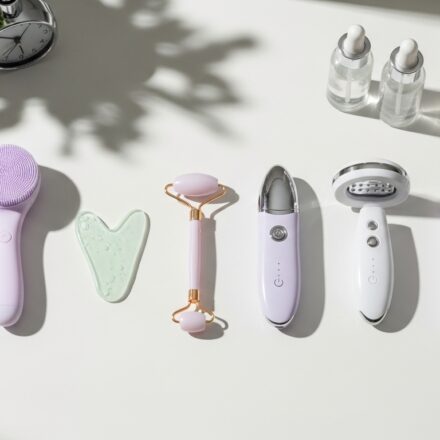
Researched overview. This guide is based on published dermatology guidance, not on hands-on product testing by BeautyKob. No product in this guide was tested by us.
Table Of Content
- Quick answer
- Why the order matters
- Before you start: two habits that come first
- Clean hands
- A quick tool check
- The four-step flow
- The morning routine, step by step
- Step 1: gentle cleansing with a tool
- Step 2: rinse and pat dry
- Step 3: morning massage (optional)
- Step 4: moisturiser, then sunscreen
- Hair in the morning (optional)
- The evening routine, step by step
- Step 1: remove makeup and sunscreen completely
- Step 2: cleanse thoroughly
- Step 3: exfoliation on selected evenings
- Step 4: evening massage
- Step 5: moisturiser
- The weekly rhythm
- Adjusting the routine by skin type
- Mistakes that break the sequence
- Cleaning and storing tools
- Patch test first
- Frequently asked questions
- When to get help
- The bottom line
Quick answer
A beauty tools routine works because of its order, not because of how many tools it has. The order is: clean the skin, prepare the surface, massage gently, then protect it. Each step prepares the next one — cleansing clears the way for massage, and massage comes before moisturiser and sunscreen, never after them.
The morning routine is short, about ten to fifteen minutes: gentle cleansing, a brief massage if you want one, moisturiser and sunscreen. The evening routine is slower: thorough cleansing, optional exfoliation on some evenings, a longer massage, then moisturiser. Not every tool is used every day. The weekly rhythm matters as much as the daily order — cleansing tools can be daily, massage tools most evenings, exfoliation tools only once or twice a week.
Tools do not increase how well products absorb, drain lymph, or firm skin. What they do is make each step more even and more consistent — and consistency is what shows up over weeks.
Why the order matters
Skin responds to patterns. When tools are used in a random order, the skin gets mixed signals — some days it feels smooth, other days it feels irritated — and that inconsistency is why people give up on tools.
A fixed order solves that. Washing first removes the build-up that would otherwise be pushed into the pores by a tool. A slippery surface — cleanser, serum or oil — lets the next tool glide instead of dragging. Massage comes after cleansing and before moisturiser, so the skin is clean and the product layer is thin. Sunscreen always comes last, after all tools, because tools used over sunscreen can disturb it.
The order below is a system. A tool used outside it is not necessarily harmful, but it does less good and is more likely to irritate.
Before you start: two habits that come first
Clean hands
Wash your hands with soap and dry them with a clean towel before touching your face or your tools. Hands touch phones, door handles and keyboards all day, and bacteria transfer easily from hands to face. This one habit prevents more breakouts and irritation than any tool choice.
A quick tool check
Before you use a tool, take a few seconds to check it. Ask yourself: was it cleaned after its last use? Is it completely dry? Does it feel smooth and clean? If a tool feels sticky or unpleasant, wash it before use. A dirty tool undoes the work of a clean routine.
The four-step flow
Every tool routine, morning or evening, follows the same four steps:
- Clean the skin — remove dirt, oil, sunscreen and makeup.
- Prepare the surface — make sure the skin is damp or slippery so tools glide.
- Massage gently — rollers or gua sha, with light pressure, for a few minutes.
- Protect the skin — moisturiser, then sunscreen in the morning.
Exfoliation is an extra step, not a daily one: it fits into the evening routine, once or twice a week, between cleansing and massage. Hair tools fit into the morning or evening around the face routine — detangling and scalp care need their own few minutes and should not be rushed.
The morning routine, step by step
Mornings are for waking the skin up, not for deep work. The skin is at its most sensitive in the morning, so everything here is gentle. Ten to fifteen minutes is enough; if it takes longer, simplify it.
Step 1: gentle cleansing with a tool
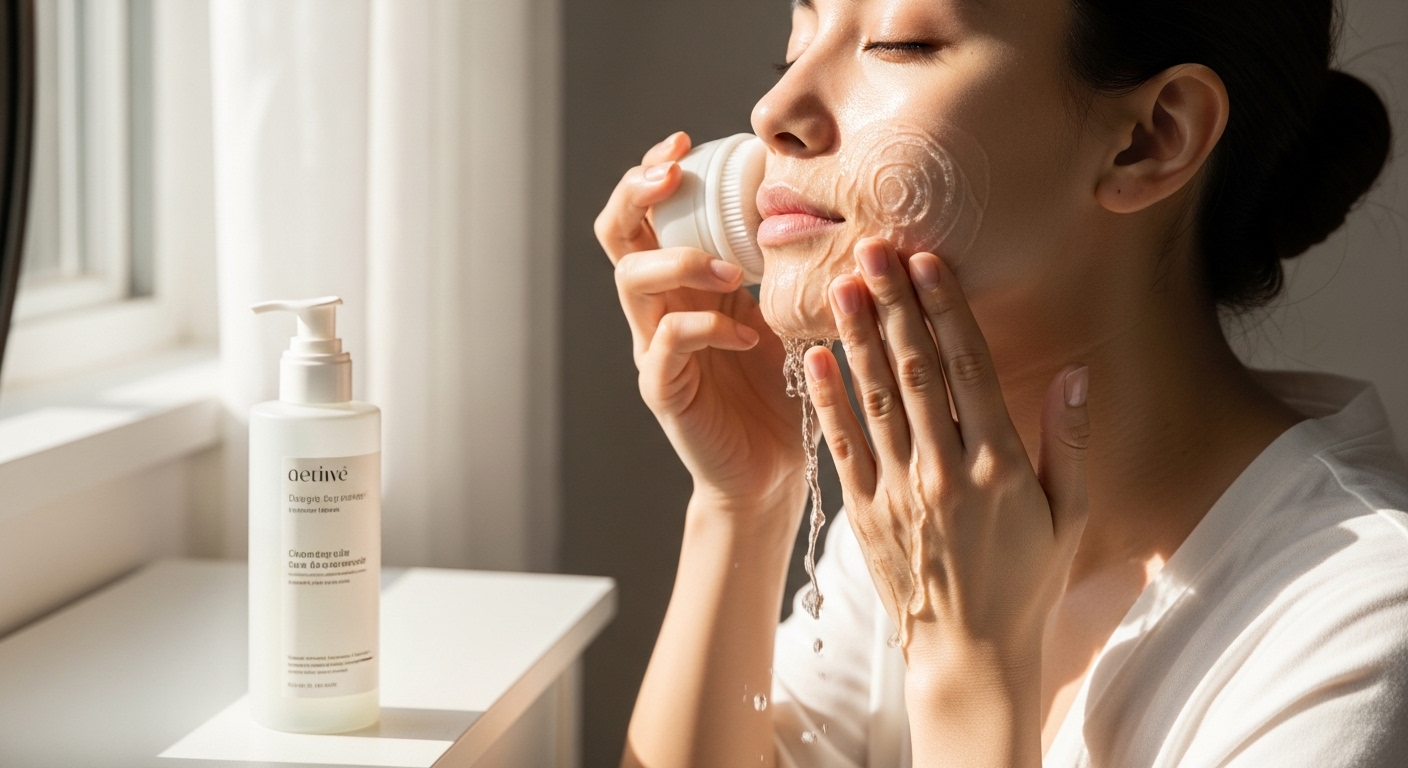
Start with a mild cleanse. Suitable morning tools are a silicone cleansing brush or a very soft manual brush. Do not use a harsh exfoliation tool in the morning — the morning is for refreshing the skin, not resurfacing it.
Wet your face with lukewarm water, apply a gentle cleanser, and use the tool in small circular movements with light pressure. Pay a little attention to oily areas, but keep the pressure light. This takes about a minute. More time on cleansing does not clean better — it irritates.
Why gentle pressure matters: pressing harder does not clean better. It damages the skin barrier and leaves the skin red. Tools are meant to slide over the skin, not scrape it. If your skin feels sore or looks red after washing, you are pressing too hard.
Step 2: rinse and pat dry
Rinse all the cleanser off — leftover cleanser can dry the skin out. Pat your face dry with a clean towel. Do not rub. Rubbing makes the skin more sensitive over time, and it leaves the surface uneven for the next step.
Step 3: morning massage (optional)
Morning massage is for reducing puffiness and waking the face up. A face roller is the best morning tool: it is simple, cool and quick. Apply a light serum or gel first, then roll outward and upward from the centre of the face, in short controlled strokes, focusing on the cheeks, jaw and forehead. One to two minutes is enough.
Keep the pressure light and the movements slow. If redness lasts more than an hour after massage, the pressure was too much. There is no good evidence that rollers drain lymph or firm skin — treat the roller as a soothing, optional step, not a treatment.
Deep massage tools belong in the evening, not the morning. Save gua sha for later in the day, when you have more time and the skin has the evening to settle.
When to skip morning massage: skip it if your skin feels irritated, if you have inflamed acne, or if you are short on time. Skipping a step is better than rushing it.
Step 4: moisturiser, then sunscreen
Apply moisturiser with clean hands, pressing it on gently. Tools are optional here — hands are fine.
Sunscreen is the final step, always: broad-spectrum SPF 30 or higher, applied with clean hands, after all tools. Sunscreen is the single most effective anti-ageing step. Never place tools on top of sunscreen.
Hair in the morning (optional)
Hair tools fit into the morning around the face routine. Detangle with a wide-tooth comb or a detangling brush: start at the ends and work upward slowly, never forcing through knots. Wet hair is more fragile than dry hair, so detangle damp hair with conditioner in it, and never detangle dry hair roughly. A short scalp massage with a dry scalp massager is a pleasant refresh — keep the pressure light. It is a comfort step, not a treatment for hair growth.
The evening routine, step by step
Evenings are slower. The skin has spent the day collecting product, pollution, oil and sweat, so the evening routine is more thorough — but still gentle. Night is a practical time for a longer routine, not a biological repair window: the evening works because you have time and the skin has hours without sun or makeup, not because the skin heals only at night.
Step 1: remove makeup and sunscreen completely
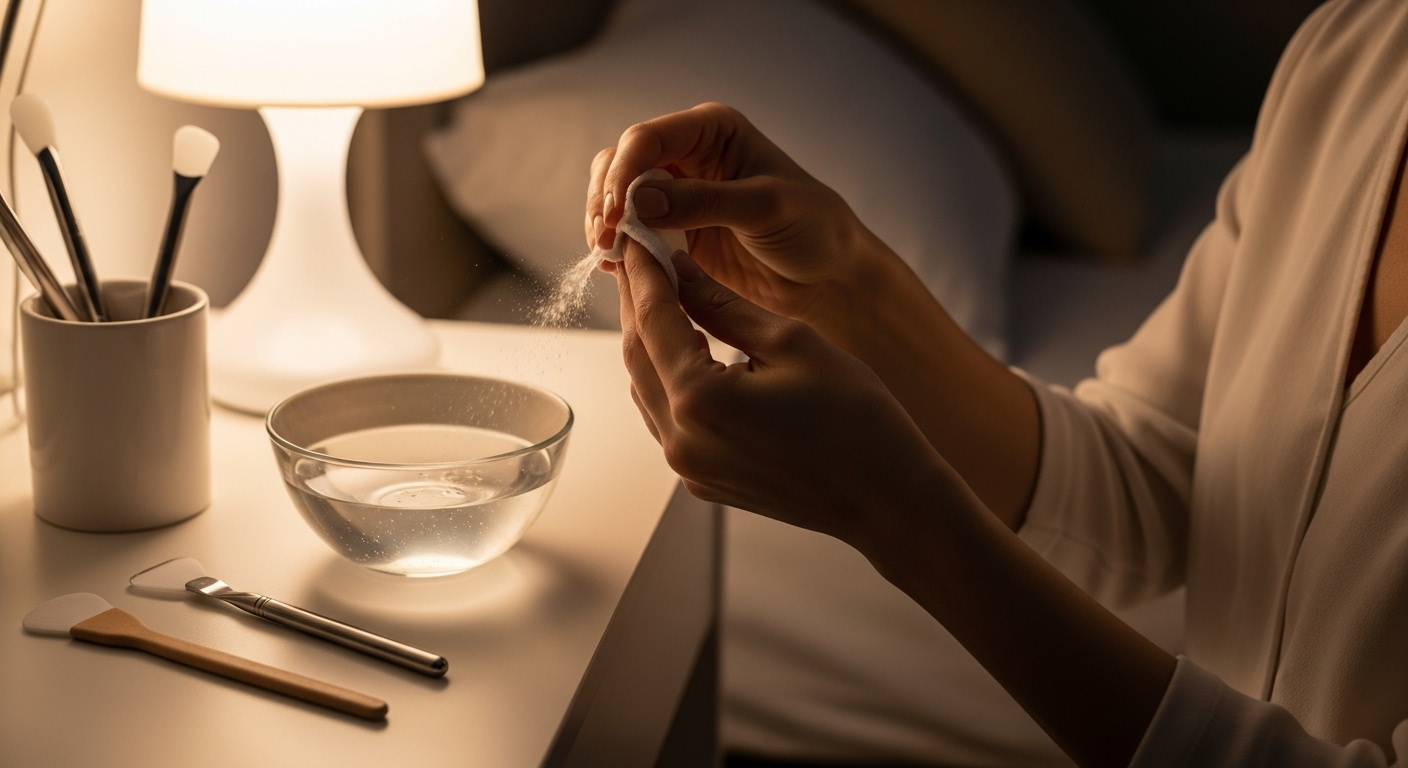
Before any tool touches the skin, remove makeup and sunscreen. This is not scrubbing — it is dissolving. Leftover product interferes with cleansing tools and gives uneven results. If the skin is clear first, the tools work on the skin instead of against it.
Step 2: cleanse thoroughly
Evening cleansing is more detailed than morning cleansing, and it must not be harsh. Its job is to remove what the day left behind, not to strip the skin. Cleansing tools help reach the hairline, jawline and sides of the nose that hands miss. Keep the pressure controlled and the tool sliding, not scratching. If the skin feels tight after cleansing, reduce the pressure or the time — comfort is the measure of success.
Let the skin settle for a few minutes after cleansing before the next step. A short pause reduces sensitivity and makes the rest of the routine gentler.
Step 3: exfoliation on selected evenings
Exfoliation is not a daily step. It belongs in the evening, once or twice a week, because the skin then has the night to settle. Use an exfoliation pad or sponge with light pressure and cleanser, and never use exfoliation tools on irritated, broken or reactive skin. Gentle exfoliation improves texture over time; frequent exfoliation damages the barrier and creates long-term sensitivity. If the skin feels sore, tight or red the next day, stop exfoliating and let it recover.
Step 4: evening massage
Evening massage is slower and longer than the morning version — five to ten minutes of slow movement. Facial muscles tighten during the day from expression, stress and posture, and that tension can make the skin look uneven and tired.
Apply a facial oil or serum first so the tool slides. Use a roller or a gua sha tool in slow, upward and outward strokes, following the shape of the face, without hurrying. Gua sha must not be painful — it should feel soothing, and the tool must always glide over a slippery surface. There is no good evidence that gua sha drains lymph, firms skin or changes face shape; treat it as a relaxing step, not a treatment.
Step 5: moisturiser
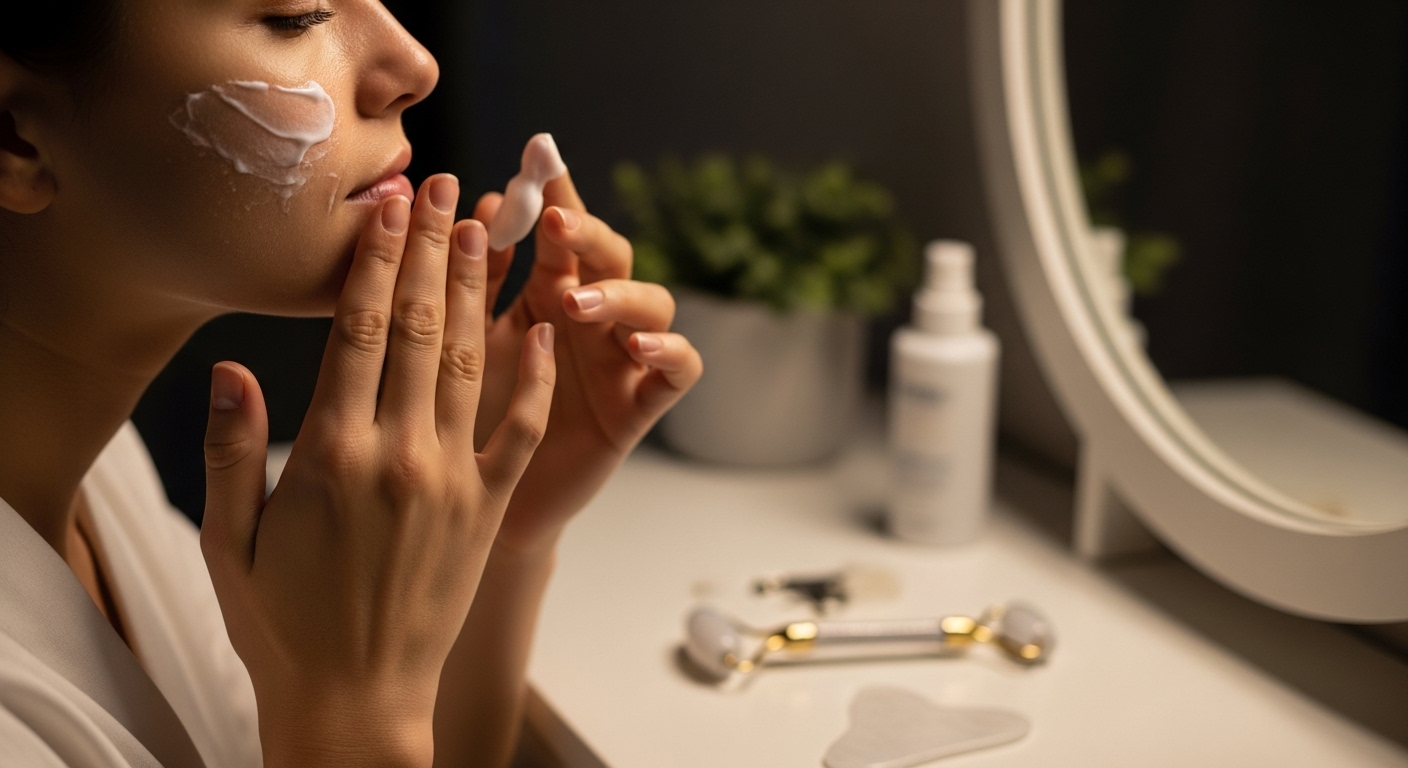
After the tools, apply a night cream or moisturiser. Apply it by pressing it on gently with clean hands rather than rubbing it in. The skin should not feel heavy or oily afterwards — a thin, even layer is enough.
The weekly rhythm
Not everything can be a daily routine. The most common mistake is using all the tools every day. That overloads the skin and causes sensitivity.
A weekly balance looks like this:
- Daily: gentle cleansing tools, moisturiser, sunscreen.
- Most evenings: massage tools (roller or gua sha), for a few minutes.
- Once or twice a week: exfoliation tools, in the evening only.
- As needed: extractors, occasionally — and never on an active breakout. The dermatology guidance is simple: do not pop a pimple.
This rotation gives the skin the benefit of every tool without tiring it. Consistency matters more than frequency — a routine kept for weeks does more than a heavy routine kept for days.
Adjusting the routine by skin type
No routine should be rigid. Skin changes with the weather, stress and health, so the order stays the same but the intensity changes.
- Sensitive skin: fewer tools and less pressure. Focus on cleansing and gentle massage. Exfoliation is rare, and only when the skin is stable. Rest days are essential.
- Oily and acne-prone skin: thorough cleansing helps, but over-cleansing irritates. Evening routines should focus on gently removing the day’s build-up and light massage around breakouts, never over active breakouts. Tool hygiene matters most for this skin type. Whether harsh cleansing increases oil production is disputed, not proven — the reason to stay gentle is to protect the skin barrier.
- Dry and dehydrated skin: hydration-focused routines and massage with oil or serum work well. Keep exfoliation minimal and avoid friction.
- Combination skin: treat different areas of the face differently. A gentle general routine works better than harsh spot treatments. Adjusting pressure is usually better than adding tools.
Mistakes that break the sequence
- Using tools on dirty skin. Tools applied to unwashed skin push debris into the pores. Always cleanse first.
- Using tools on dry skin. Dry skin creates friction, and friction damages the surface. Always use cleanser, water, serum or oil first so the tool glides.
- Putting tools over sunscreen. Sunscreen is the last step. Tools used over it disturb the layer.
- Using everything every day. Overuse causes sensitivity. The weekly rhythm exists for a reason.
- Pressing too hard. Pressure causes inflammation. A tool that leaves a mark or causes pain is being used too hard.
- Skipping tool cleaning. Dirty tools cause irritation and breakouts. Wipe tools clean and dry them after use, and never store them while damp.
Cleaning and storing tools
Clean tools last longer and are safer for the skin.
- Silicone and bristle brushes: wash with mild soap and warm water — not hot water, which can damage bristles — rinse thoroughly and air-dry out of direct sunlight.
- Stone tools: wipe clean and store in a dry place. Do not soak them for long periods.
- Extractors: wash and disinfect before and after use.
- Pads and sponges: rinse after use, let them dry fully, and replace them when they wear out.
Patch test first
Before you use a new product on your face — including any product used with a tool, such as a cleanser with a brush or a serum with a roller — patch test it. Apply a small amount to a quarter-sized patch of skin on the inside of your arm or the bend of your elbow, twice a day, for 7 to 10 days. If there is redness, itching or swelling, do not use it on your face. A short test of a day or two can miss a reaction that takes several days to appear.
Frequently asked questions
Does the order of tools really matter?
Yes. Cleansing first removes the build-up that tools would otherwise push into the skin, a slippery surface lets tools glide without friction, and sunscreen last means the protective layer is not disturbed. The order is the routine.
How long should the morning routine take?
About ten to fifteen minutes. If it takes longer, simplify it — a short routine done every day works better than a long one done occasionally.
Can I use all my tools every day?
No. Cleansing tools can be daily, massage tools most evenings, and exfoliation tools only once or twice a week. Using everything daily overloads the skin.
Should I use tools over sunscreen?
No. Sunscreen is always the final step, applied with clean hands after all tools.
What if I am short on time?
Skip a step rather than rushing it. Cleansing, moisturiser and sunscreen are the essentials; massage and exfoliation can wait.
When to get help
See a clinician promptly if you have a rash, blisters or open sores; swelling that lasts more than a day or two; pain or vision changes near the eyes; or a reaction to a new product or tool that does not settle after you stop using it. If a skin concern persists despite a steady routine, a dermatologist can identify causes a routine alone will not fix.
The bottom line
A beauty tools routine is a sequence, not a collection. Clean, prepare, massage gently, protect — in that order, morning and evening, with a weekly rhythm that gives the skin rest. The tools themselves are simple; the system is what makes them work. Be patient, repeat the order, and listen to your skin’s response. That is how a routine becomes a habit, and a habit becomes healthy skin.
Sources: American Academy of Dermatology, 7 Rosacea skin care tips (patch-test method: apply a new product to a quarter-sized patch of skin on the inside of the arm for 7–10 days); American Academy of Dermatology, How to select anti-aging skin care products (broad-spectrum sunscreen, SPF 30 or higher). This is a researched overview, not a hands-on review.