Researched overview. This guide is based on published dermatology and hair-science guidance, not on hands-on product testing by BeautyKob. No product in this guide was tested by us, and no product or brand is recommended.
Table Of Content
Quick answer
Greasy-looking hair is sebum — the natural oil your scalp makes — spread along the hair shaft. Sebum itself is normal and needed: it keeps the hair flexible and the scalp protected. Hair looks greasy when there is more oil on the lengths than the hair can carry without looking weighed down, which is why fine, straight hair shows grease fastest and curly or coarse hair shows it least.
You cannot change how much oil your scalp makes with shampoo, diet or willpower. What you can change is how the oil is managed: wash as often as your scalp needs, use light products, keep heavy products off the roots, and stop doing the things that spread oil or trap it. This guide is general information, not medical advice.
Contents: Why hair looks greasy · What does not work · How often to wash · Choosing products · Scalp care · Styling and daily habits · When it greases up fast · When to get help · FAQ
Why hair looks greasy
Sebum, and how it travels
Your scalp has sebaceous glands that produce sebum, an oily substance that coats the scalp and the hair near the roots. Sebum travels down the shaft over time. The speed depends on your hair type: on fine, straight hair it slides down easily, so the hair looks greasy within a day; on curly or coarse hair the curls slow it down, so the scalp can be producing the same amount of oil while the lengths still look fresh. That is why two people can have equally oily scalps and very different-looking hair.
Hair type and texture
Fine hair has less volume to absorb oil, so a small amount of sebum shows quickly. Straight hair lets oil travel in a straight line. Thick, curly or coarse hair hides oil better, but the scalp underneath can still be oily — and can still need washing just as often.
Hormones
Hormones are the main reason scalp oiliness changes over a lifetime. In teenagers, hormones increase sebum production, which is why greasy hair is common during puberty. Oiliness can also change during menstrual cycles, pregnancy and menopause. Stress is sometimes linked to oilier skin, but the evidence is limited — stress does not reliably make the scalp produce more oil, and it is not a cause you can fix with a shampoo.
Genes
Some people simply have more active sebaceous glands than others. If your hair has always greased up quickly, that is mostly your scalp, not something you did wrong. The goal is management, not a cure.
The environment and your products
Humidity, pollution and dust add to the build-up on the scalp. Heavy or badly matched products add to it too: a rich conditioner on the roots, a heavy oil or serum at the scalp, or a styling cream that never fully rinses out all make hair look greasy faster. So does residue from not rinsing properly.
What does not work
A lot of greasy-hair advice is wrong, and following it wastes time or makes things worse.
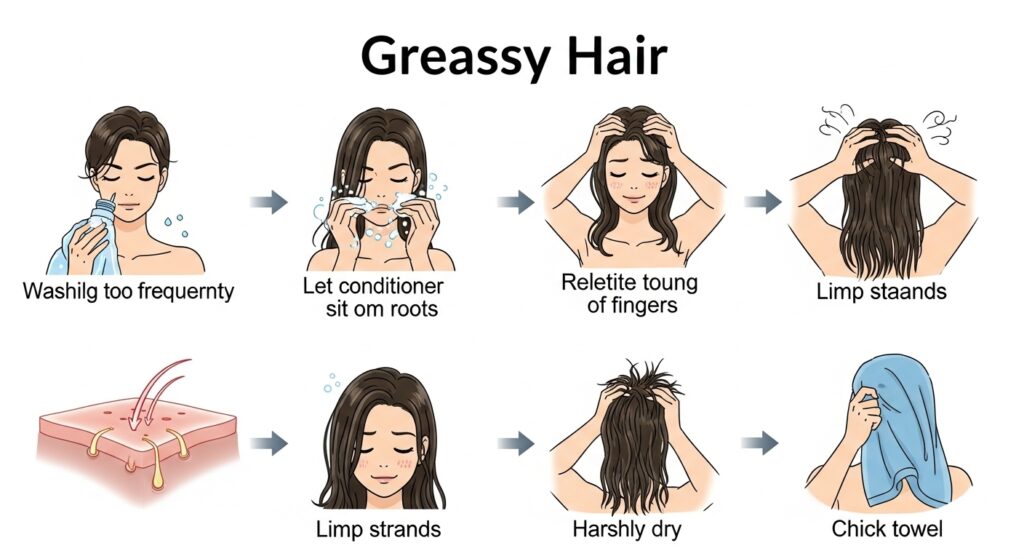
- “Washing more makes the scalp produce more oil.” There is no good evidence for this. The idea is that stripping oil makes the scalp “overcompensate”, but no reliable study shows the scalp adjusting its oil production to washing frequency. Wash as often as your scalp needs — daily washing is fine for an oily scalp.
- “Train your scalp” by washing less. This is the same idea in reverse, and there is no good evidence for it either. If you wash less, your hair will look greasier for longer, and the scalp can become itchy and flaky from build-up. Your scalp does not get “accustomed” to a washing schedule.
- Diet and water controlling sebum. No food has been shown to control scalp oil production, and drinking water does not change sebum levels. Eating a balanced diet and drinking enough water are good for your health, but they are not a treatment for greasy hair. The same applies to supplements — none is proven to reduce scalp oil in people who are not deficient, and no supplement or dose is recommended here.
- Harsh “clarifying” routines. Strong shampoos, baking soda, vinegar rinses and lemon juice strip the hair and irritate the scalp without changing how much oil it makes. Vinegar is a cleaner, not a treatment, and lemon juice is not a disinfectant and can irritate skin. Skip them.
- Scrubbing the scalp hard. Rough scrubbing does not remove more oil and does not make the scalp produce less. It irritates the scalp and breaks hair. Gentle massage is enough.
- A silk pillowcase stopping grease. Silk or satin pillowcases reduce friction, which can help with breakage and frizz, but they do not reduce oil. A clean pillowcase is good hygiene, not an oil treatment.
How often to wash
Wash as often as your scalp needs it. For most people with greasy hair that means every day or every other day. Daily washing with a gentle shampoo does not damage healthy hair and does not make the scalp oilier. What matters is how you wash, not how often:
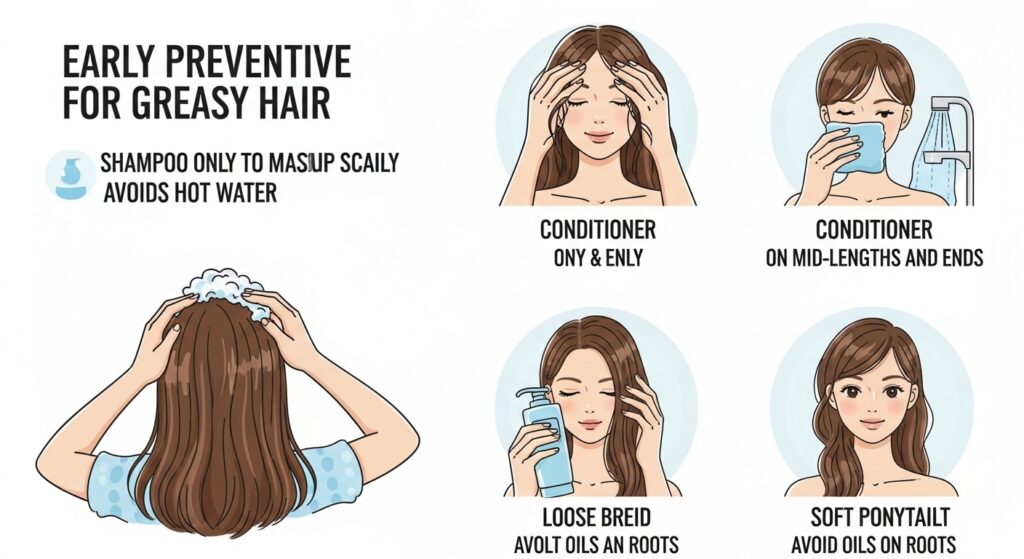
- Wet the hair with lukewarm water. Hot water does not clean better and can irritate the scalp. Lukewarm is enough.
- Apply shampoo to the scalp, not the lengths. That is where the oil is. Massage gently with your fingertips — not your nails — to loosen build-up without overstimulating the scalp.
- Rinse thoroughly. Residue left behind is one of the commonest reasons hair looks greasy soon after washing. Rinse until the water runs clear and the hair feels clean, not slippery.
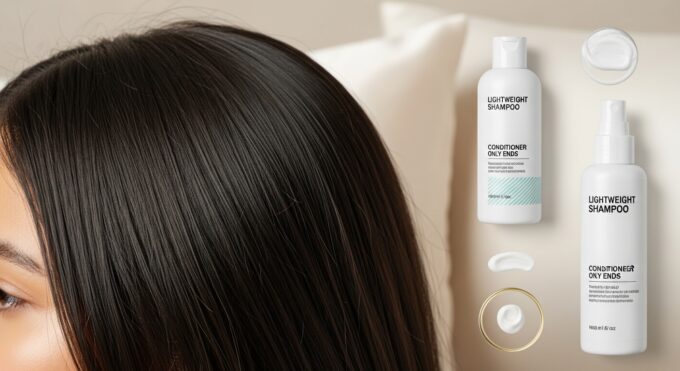
- Conditioner goes on the mid-lengths and ends only. Never on the roots. Conditioner on the scalp adds weight exactly where the oil already is.
- Let the hair dry properly. Hair that stays damp at the roots looks flat and greasy. Pat gently with a towel — do not rub hard, because wet hair is more fragile than dry hair — and let it air-dry, or blow-dry on a low or medium heat.
If your hair greases up within a day even with this routine, the problem is usually your scalp type or your products, not your washing frequency. Change the products before you change the frequency.
Choosing products
- A light shampoo for oily or combination hair. Look for a gentle, fragrance-free formula. You do not need a medicated shampoo unless you have dandruff or a scalp condition (see below).
- Skip heavy creams and oils at the roots. Rich conditioners, hair oils, serums and styling creams belong on the mid-lengths and ends. On the roots they mix with sebum and make the hair look greasy within hours.
- Silicones, in balance. Silicones coat the hair and can make it look smoother, but heavy silicone products can build up and weigh fine hair down. They do not permanently block moisture. If your hair feels coated or limp, switch to a lighter product and rinse well.
- Dry shampoo, used sparingly. Dry shampoo absorbs oil on the roots and buys a day between washes. Use a small amount, only on the roots, and brush it through. It is not a substitute for washing: used every day it builds up, clogs the scalp and can irritate it. Always wash it out within a day or two.
- Patch test new products. If a new shampoo or conditioner will touch your scalp, test it first: apply a small amount to a quarter-sized patch of skin on the inside of your arm or the bend of your elbow, twice a day for 7 to 10 days. If the patch becomes red, itchy, swollen or blistered, do not use the product. Allergic reactions can take several days to appear, and a 24-hour test can miss them. This is the American Academy of Dermatology’s patch-test method.
Scalp care
Greasy hair and an unhealthy scalp often go together, but they are not the same problem. Treat the scalp on its own terms:
- Dandruff or flaking. If the scalp is flaky and itchy as well as oily, that may be dandruff. The active ingredients dermatologists recommend are zinc pyrithione, salicylic acid, sulfur, selenium sulfide, ketoconazole and coal tar. Leave the shampoo on the scalp for 5 to 10 minutes before rinsing, and use it as often as your hair type needs. If there is no improvement after about a month, ask a doctor or pharmacist.
- Do not over-exfoliate the scalp. Scalp scrubs and exfoliating shampoos can irritate the scalp and do not reduce oil production. Gentle washing is enough for most people.
- Keep the scalp clean between washes. Sweat, dust and product residue build up on the scalp. Rinsing with water after exercise, and not piling styling products on the roots, helps more than any scrub.
- Do not scratch. Scratching spreads oil, irritates the scalp and can break the skin. If the scalp itches persistently, that is a reason to ask a doctor, not to scrub harder.
Styling and daily habits
- Touch your hair less. Your fingers carry oil and dirt. Running your hands through your hair during the day spreads oil along the shaft and makes it look greasy faster.
- Brush gently, and mainly to detangle. Brushing spreads sebum from the roots along the shaft, which is why over-brushing makes the lengths look greasier. Brush lightly, detangle damp hair with conditioner in it, ends first, and never brush dry hair roughly.
- Loose styles help. A loose ponytail or braid keeps hair off the face and hides oily roots on a bad day. Very tight styles pull on the strands and can cause traction alopecia — hair loss from pulling — so keep them loose.
- Keep heavy products off the roots. Oils, serums and leave-in creams go on the lengths and ends. At the roots they add to the sebum that is already there.
- Heat, in moderation. Blow-drying on a low or medium heat with a heat-protectant product is fine. Very hot styling dries the lengths out without changing the oil at the roots.
- Sun on the parting. The scalp burns where hair parts, so use a broad-spectrum sunscreen with SPF 30 or higher on the exposed parting when you will be outdoors, and reapply every two hours. A hat works too.
- Wash brushes and pillowcases. A dirty brush transfers oil and product back onto clean hair. Wash brushes regularly and change pillowcases often — good hygiene, not an oil treatment, but it stops you re-soiling freshly washed hair.
When it greases up fast
If your hair looks greasy within hours of washing, work through this list:
- Rinse. The commonest cause is residue — shampoo or conditioner not fully rinsed out. Rinse longer and check the hair feels clean, not slippery.
- Check the products. A heavy conditioner, oil or styling cream on the roots is the next most likely cause. Move them to the lengths and ends, or switch to lighter products.
- Check the scalp. Flaking, itching or soreness alongside the grease points to a scalp condition, not just oiliness. Treat the scalp (see above) or ask a doctor.
- Check for a sudden change. If your hair suddenly became much greasier than it used to be, and nothing in your routine changed, that is worth asking a doctor about — a sudden change in oiliness can have a medical cause.
- Accept your scalp type. If none of the above applies and your hair has always greased up quickly, that is your scalp. Wash as often as it needs, keep products light, and stop chasing a fix that does not exist.
When to get help
- A scalp that is sore, blistered, bleeding, or itchy for more than a few weeks despite gentle washing.
- Heavy flaking that does not improve after about a month of dandruff shampoo.
- Hair coming out in clumps, bald patches, or shedding well above the usual 50 to 100 hairs a day.
- A sudden, unexplained change in how oily your hair is.
- A rash or reaction after a new product — stop using it and ask a doctor or pharmacist.
A dermatologist can check for medical causes of scalp problems or hair loss. A hairdresser can advise on cuts and styling for your hair type, but cannot diagnose a medical problem.
FAQ
How often should I wash greasy hair?
As often as your scalp needs it — for most people with greasy hair, every day or every other day. Daily washing with a gentle shampoo does not damage healthy hair and does not make the scalp produce more oil.
Does diet control how oily my hair is?
No. No food has been shown to control sebum production, and drinking water does not change it either. A balanced diet is good for your health, but it is not a treatment for greasy hair.
Is daily dry shampoo safe?
It is fine occasionally, but not as a daily substitute for washing. Used every day it builds up, clogs the scalp and can irritate it. Use a small amount on the roots only, and wash it out within a day or two.
Does brushing make hair greasier?
Over-brushing does, because brushing spreads sebum from the roots along the shaft. Light brushing to detangle is fine. Detangle damp hair with conditioner in it, ends first.
My hair is greasy even though I just washed it. Why?
Usually residue — shampoo or conditioner not fully rinsed out — or a heavy product on the roots. Rinse thoroughly, keep conditioner off the roots, and if it still happens, check whether the scalp is flaky or sore, which points to a scalp condition.
Can I “train” my scalp to be less oily by washing less?
No. There is no good evidence the scalp adjusts its oil production to how often you wash. Washing less just leaves the hair looking greasier for longer.
Summary
Greasy-looking hair is sebum spread along the shaft, and you cannot change how much oil your scalp makes. What works is management: wash as often as your scalp needs it — daily is fine — with lukewarm water, shampoo on the scalp, conditioner on the lengths and ends only, and a thorough rinse. Keep heavy products off the roots, use dry shampoo sparingly and never as a substitute for washing, wear SPF 30+ on the exposed parting when outdoors, and patch test new products for 7 to 10 days before using them on your scalp. What does not work is washing less to “train” the scalp, changing your diet or water intake to control sebum, scrubbing the scalp hard, or using vinegar and lemon rinses — none of these has good evidence behind it. If the scalp is also flaky, sore or itchy, treat the scalp itself, and ask a doctor if it does not improve after about a month or if the oiliness changes suddenly.
Sources: American Academy of Dermatology, 7 Rosacea skin care tips (patch-test method: apply a new product to a quarter-sized patch of skin on the inside of the arm for 7–10 days); American Academy of Dermatology, How to select anti-aging skin care products (broad-spectrum sunscreen, SPF 30 or higher on exposed skin when outdoors, reapply every two hours). This is a researched overview, not a hands-on review.