Researched overview.
Table Of Content
Quick answer
Flakes on a man’s scalp usually come from one of two things: a dry scalp, or dandruff. They look similar but they are not the same problem, and they are not fixed the same way.
A dry scalp lacks moisture. It usually responds to gentler washing and lighter moisturising. Dandruff is usually driven by yeast on the scalp (seborrheic dermatitis), not by simple dryness. It needs a dandruff shampoo with a named active ingredient — moisturiser alone will not fix it, and neither will exfoliation alone.
The American Academy of Dermatology’s dandruff guidance is straightforward: choose a dandruff shampoo by its active ingredient, use it as directed, and give it a fair trial. The NHS advises using an anti-dandruff shampoo for a month to see if it helps, and seeing a GP if symptoms are still there after a month.
Contents: Dry scalp vs. dandruff · What causes dandruff · Choosing a dandruff shampoo · How to use it · Scalp care basics · What does not help · Hats and hair loss · Heat and styling · When to see a doctor
Dry scalp vs. dandruff — they look alike but aren’t
| Dry scalp | Dandruff | |
|---|---|---|
| Flakes | Small, dry, white | Larger, yellowish or oily-looking, often stuck to the scalp or hair |
| Scalp feel | Tight, dry, sometimes itchy | Oily in places, itchy, sometimes red |
| Hair | Usually looks dry too | Often looks oily at the roots |
| Main cause | Lack of moisture; cold weather, hot water, harsh shampoo can make it worse | Usually yeast (seborrheic dermatitis) plus excess oil |
| First step | Gentler washing, lukewarm water, light moisturising | A dandruff shampoo with a named active ingredient |
The two can overlap — a scalp can be both dry and flaky — and if you are not sure which you have, start with the gentler option and watch how the scalp responds over a few weeks. If flakes keep coming back despite gentle care, treat it as dandruff and use a dandruff shampoo.
What causes dandruff
Dandruff is usually seborrheic dermatitis: a common skin condition in which yeast that normally lives on the scalp grows more than usual, and the scalp reacts with flaking and itching. It is not caused by poor hygiene, and it is not contagious. It tends to come and go, and cold, dry weather can make it worse.
Dandruff is not the same as a dry scalp, and it is not fixed by adding oil. In fact, heavy oil can make some cases of seborrheic dermatitis worse.
Choosing a dandruff shampoo
Choose by the active ingredient on the label, not by the brand name. The AAD lists these actives:
| Active ingredient | What it does |
|---|---|
| Zinc pyrithione | Antifungal and antibacterial; one of the most common dandruff actives |
| Selenium sulfide | Antifungal; slows skin-cell turnover on the scalp |
| Ketoconazole | Antifungal; available over the counter at 1% and by prescription at 2% |
| Salicylic acid | Helps lift and remove scale so the shampoo can reach the scalp |
| Sulfur | Helps lift scale |
| Coal tar | Slows skin-cell turnover; can make the scalp more sensitive to sun, so protect it from UV while using it |
No single active works for everyone. If one shampoo does not help, try alternating between dandruff shampoos with different active ingredients. No product is named or recommended here — check the label for the active ingredient and use the product as directed.
How to use a dandruff shampoo
- Lather it onto the scalp, not just the hair lengths. The active ingredient needs to reach the skin.
- Leave it on before rinsing. Some dandruff shampoos need to stay on the scalp for about 5–10 minutes before rinsing. Follow the instructions on the bottle.
- Match frequency to your hair type. Fine or straight hair, or an oily scalp, can be washed often, with the dandruff shampoo about twice a week. Coarse, curly or coily hair can be washed when needed, with the dandruff shampoo about once a week if tolerated — apply it to the scalp only, since the active ingredients can dry the hair lengths.
- Give it a fair trial. The NHS advises using an anti-dandruff shampoo for a month to see if it helps, and trying more than one type if the first does not work. Do not judge a shampoo after one or two washes.
- Keep using it once it works. Dandruff tends to come back when treatment stops. Many men keep using a dandruff shampoo once or twice a week as maintenance, and use a regular gentle shampoo for other washes.
Before using a new scalp product, patch test it: put a small amount on the inside of your arm or the bend of your elbow, twice a day for 7 to 10 days. If the skin turns red or itchy, do not use it. (This is the American Academy of Dermatology patch-test method.)
Scalp care basics
- Wash as often as needed. There is no rule that washing daily is bad or that washing rarely is better. Wash when the scalp feels oily, sweaty or itchy, and use a gentle shampoo. Over-washing with a harsh shampoo can irritate the scalp — the reason to avoid it is irritation and dryness, not a proven “oil rebound”.
- Use lukewarm water. Hot water can dry out the scalp and the hair.
- Be gentle with towels. Blot the hair dry rather than rubbing it hard. Wet hair is more fragile than dry hair, so rough towel-drying causes more breakage.
- Put conditioner on the lengths, not the scalp. Conditioner is for the hair shaft. Applying it to the scalp can leave residue that makes flakes look worse.
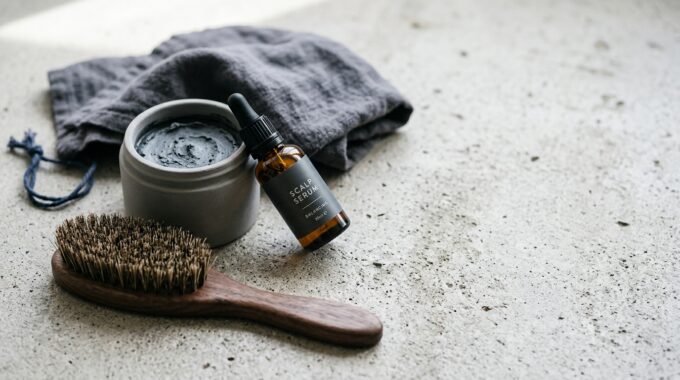
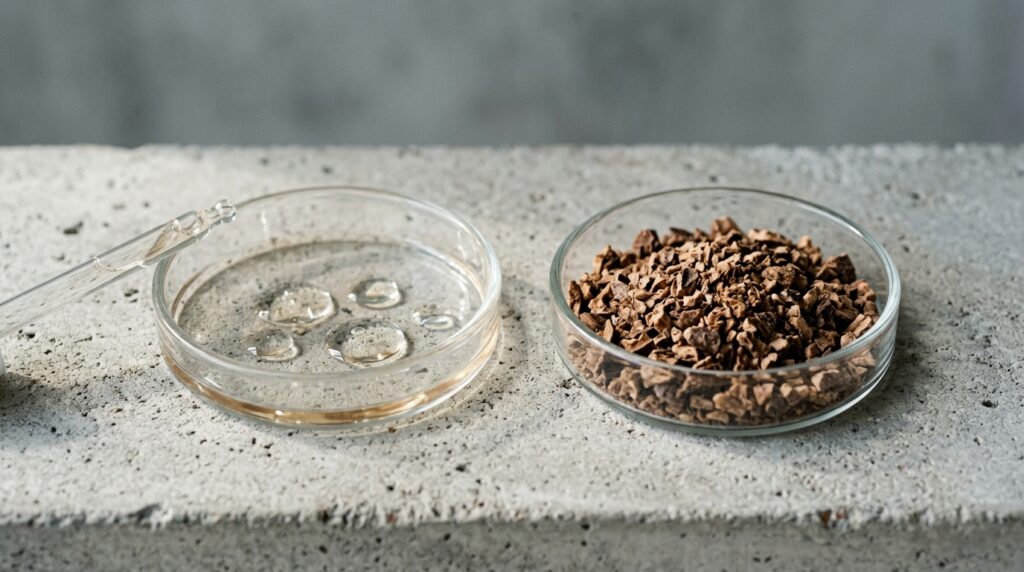
- Exfoliate gently, if at all. A light fingertip massage on damp hair before washing can help lift surface debris. Harsh scrubs — walnut shell, coarse salt, stiff brushes — can scratch and irritate the scalp. If the scalp is red, sore or broken, do not scrub it. A full guide to gentle scalp exfoliation is in our men’s scalp exfoliation guide.
- Rinse well. Shampoo and styling product left on the scalp can build up and irritate it.
What does not help

- Oil as a dandruff treatment. Oil does not treat dandruff, and heavy oil can make seborrheic dermatitis worse. A light oil can soften debris before washing on a dry scalp, but it is a pre-step, not a treatment.
- Petroleum jelly blocking oxygen. There is no evidence that petroleum jelly blocks oxygen from reaching the hair, and it is generally considered non-comedogenic. It is not a dandruff treatment either.
- Supplements without a test. Supplements help only where a deficiency exists, and the only way to know is a blood test. This guide recommends no supplement, dose or brand. Zinc and iron taken at the same time can interfere with each other’s absorption, so timing should be decided with a clinician or pharmacist, not from a grooming article. High-dose biotin can also interfere with lab tests — the FDA has warned that it can cause falsely low troponin, the heart-attack test — so tell your doctor about any biotin supplement before blood tests.
- Fixed timelines. No shampoo, oil or routine clears flakes in a set number of days. The only timeframe in this guide is the NHS one-month trial rule, and that is a trial period, not a promise of results.
- Diet and water as treatment. Eating well and drinking enough water support general health, including skin. But no food or drink is a treatment for dandruff, and no meal changes scalp condition on a fixed schedule.
Hats and hair loss
A normal, properly fitting hat does not cause pattern hair loss. Hair follicles get oxygen and nutrients through blood vessels under the scalp, not from outside air, and a hat does not change your hormones or your genes. Pattern hair loss is driven by genetics and by how sensitive your follicles are to DHT, a hormone derived from testosterone.
What a hat can do is trap sweat and oil against the scalp, which can make an existing scalp problem feel worse, and a very tight hat worn for long periods can contribute to traction alopecia — hair loss from repeated pulling — especially along the hairline. The practical advice is simple: wear a hat that fits comfortably, wash it regularly, and let the scalp breathe when you can. If thinning continues, the cause is almost certainly not the hat — see a dermatologist.
A hat also protects an exposed scalp from sunburn — the scalp is skin too, so use broad-spectrum SPF 30+ sunscreen on any exposed scalp or parting, or cover it with a hat.
Heat and styling
- Let hair air-dry when you can. If you use a blow dryer, use low or medium heat and keep the dryer moving — never hold it in one spot. A study of hair-dryer damage (Lee et al. 2011) found that drying from about 15 cm (6 inches) away with continuous motion caused less damage than other methods. The AAD advises limiting blow-dryer heat and using low or medium settings.
- Detangle damp, not dry. Wet hair is more fragile than dry hair. Detangle damp hair coated in conditioner, starting at the ends and working up, with a wide-tooth comb. Never detangle dry hair by force.
- Keep styling products light on the scalp. Heavy waxes and oils applied to the scalp can trap residue. Apply styling product to the hair lengths, and wash it out properly.
When to see a doctor
A consistent routine handles most day-to-day scalp issues, but some problems need more than a product swap. See a doctor or dermatologist if:
- Flakes or itching have not improved after about a month of using an anti-dandruff shampoo as directed (the NHS rule).
- The scalp is very itchy, red or swollen.
- There is redness, bleeding, bumps or persistent pain.
- There are flaky, itchy patches on the face or other parts of the body.
- You notice hair thinning or loss alongside the flaking.
A dermatologist can rule out conditions that look like ordinary dandruff but need targeted treatment — seborrheic dermatitis, scalp psoriasis, eczema, or a fungal infection.
Summary
Flakes usually mean dry scalp or dandruff, and the two need different fixes. For dandruff, choose a shampoo by its active ingredient — zinc pyrithione, selenium sulfide, ketoconazole, salicylic acid, sulfur or coal tar — lather it onto the scalp, leave it on for 5–10 minutes if the bottle says so, and give it a month. Wash as often as needed with a gentle shampoo and lukewarm water, be gentle with towels and heat, and do not treat flakes with oil or supplements. A normal hat does not cause hair loss. If flakes have not improved after a month, or the scalp is very itchy, red or swollen, see a doctor.
Sources: AAD dandruff guidance; NHS dandruff guidance; AAD hair-care guidance; Lee et al. 2011; NICE CKS male pattern hair loss. This is a researched overview, not a hands-on review.