Researched overview. This guide is based on published dermatology guidance, not on hands-on product testing by BeautyKob. No product in this guide was tested by us.
Table Of Content
- Quick answer
- Key takeaways
- Why skin and hair depend on the same systems
- The shared biology
- The scalp is skin too
- Building a daily skin routine that supports hair too
- Gentle cleansing over frequent cleansing
- Moisturising as barrier support
- Daily sun protection
- Patch test first
- Building a daily hair routine around scalp health
- Matching wash frequency to scalp type
- Conditioning and reducing heat damage
- Weekly support for skin and scalp
- Gentle exfoliation without overdoing it
- Scalp treatments and masks
- Comparison: weekly care practices by skin and hair type
- Nutrition and lifestyle habits that support both
- What the research actually shows on diet and hair
- Sleep and stress affect both systems
- Adjusting the plan by age and season
- Age-related changes
- Seasonal adjustments
- Mistakes that quietly undermine both skin and hair
- When to get help
- Frequently asked questions
- The bottom line
Quick answer
Most people keep separate routines for skin and hair, then wonder why one improves and the other doesn’t. They are not two distinct systems: skin and hair share the same water, food, blood supply, and hormones, and the scalp is skin. A plan that works for both is therefore mostly one plan — gentle cleansing, moisture, sun protection, and scalp care — with a few weekly extras.
Key takeaways
- Skin and hair depend on the same inputs, so a plan that ignores one usually short-changes the other.
- Daily basics (cleansing, moisturising, sun protection, scalp care) matter more for long-term results than any weekly treatment applied on a poor foundation.
- Wash hair as often as your scalp needs, not on a fixed schedule.
- Supplements that promise “regrowth” should be treated with scepticism. The one well-known marine-protein supplement was tested in two small, manufacturer-funded trials in women with temporary thinning — and no supplement is recommended in this guide.
- Over-use — new actives, multiple shampoos, excessive exfoliation — usually harms the skin and scalp barrier and causes more problems than it solves.
Why skin and hair depend on the same systems
Skin and hair are often treated as two distinct areas, but both are fed by the same internal processes. Both depend on proper hydration, nutrient delivery through the blood, and a balance of hormones. The same proteins, vitamins, and minerals that repair skin also build hair structure. If any of these inputs is consistently lacking, the effects are more likely to show up in both places.
The shared biology
Both tissues need water, nutrients and circulation. Hydrated skin looks plump and elastic; hydrated hair is flexible rather than brittle. That is the same biology, not two separate problems.
The scalp is skin too
The scalp is skin, so the same rules that govern facial skin apply to it: keep it clean, keep its oil balance, and treat it gently. A dry, tight scalp can make hair feel worse, and a scalp with heavy product build-up can make hair look flat and dull. Neither blocks hair growth — there is no good evidence that ordinary build-up stops follicles working — but both are worth dealing with because they affect how hair looks and feels.
The American Academy of Dermatology advises that washing frequency depends on how oily and dirty hair becomes: daily for oily, straight-haired people, and up to every two to three weeks for dry, curly or coily hair.
Building a daily skin routine that supports hair too
If you’re creating a combined plan, the basics will take up most of the weight — not because they are glamorous, but because they are repeated twice a day, every day.
Gentle cleansing over frequent cleansing
Harsh cleansers and hot water damage the skin barrier over time. Wash with lukewarm water and a gentle cleanser once or twice a day, using your fingertips, and pat dry. This keeps the barrier intact while washing away dirt, sweat, and pollutants.
Pro tip: If your skin feels squeaky or tight immediately after using the cleanser, it’s too rough for everyday use — change it before it harms you.
Moisturising as barrier support
Apply moisturiser to slightly damp skin; it helps to trap in moisture better than on dry skin. Ingredients such as panthenol are frequently found in skin and hair products — panthenol is a humectant, commonly used to soften skin and make hair easier to comb. It is not a treatment, and it does not “increase absorption” in any proven way.
Daily sun protection
The damage from UV exposure is cumulative, whether you’re sitting by the pool or doing other activities — it is one of the largest causes of premature ageing. A broad-spectrum sunscreen with SPF 30 or higher, applied in the morning, protects the work of all the other steps in the routine. Reapply every 2 hours when outdoors, or after swimming or sweating.
Patch test first
Before you use a new product on your face or scalp, patch test it. Apply a small amount to a quarter-sized patch of skin on the inside of your arm or the bend of your elbow, twice a day, for 7 to 10 days. If there is redness, itching or swelling, do not use it on your face or scalp. This matters most the first time you use a product, or when you use a higher strength.
Building a daily hair routine around scalp health
The health of hair begins at the source — the scalp — so it’s important to treat the scalp as much as the hair.
Matching wash frequency to scalp type
There isn’t a one-size-fits-all washing schedule. Oily, fine, or straight hair often benefits from washing every day or nearly so, and dry, curly, or coily hair often does well washed every 1–3 weeks. Both under- and over-washing can cause problems: too little leaves a build-up of oils that makes hair look flat, and too much removes the protective oils that keep hair healthy and less prone to breakage.
Conditioning and reducing heat damage
Conditioner used on the ends and mid-lengths (not the scalp) helps to minimise frictional damage and breakage while adding less oil at the scalp. Wherever possible, air-dry instead of heat-styling, and limit how often you heat-style — damage to hair structure is hard to undo once it has occurred. Damaged hair cannot be repaired; only trimming removes split ends, every 6 to 12 weeks if you have them.
Pro tip: Deep conditioners are best applied to the ends of the oldest, most damaged hair — piling them near the scalp will only weigh it down.
Weekly support for skin and scalp
Skin and scalp support is sometimes needed on a weekly basis. Weekly treatments are not an alternative to the daily treatments, and too many can cancel out the daily ones.
Gentle exfoliation without overdoing it
Exfoliation makes skin feel smoother, but it should only be done one or two times a week, or it can damage the barrier and leave skin red, flaky and irritated. When used at a reasonable frequency, chemical exfoliants (mild AHAs or BHAs) are generally less harsh than physical scrubs.
Scalp treatments and masks
Mild, calming shampoos used regularly can reduce irritation. Hydrating face masks are used once or twice a week as part of day-to-day care, not instead of it. A scalp massage can feel pleasant, but there is no good evidence it grows hair — the one often-cited study had nine men and no control group.
Comparison: weekly care practices by skin and hair type
| Practice | Recommended frequency | Best for | Risk if overdone | Time investment |
|---|---|---|---|---|
| Chemical exfoliation (face) | 1–2 times per week | Normal, oily, combination skin | Damage to the barrier; skin is red, flaky, and irritated | 5–10 minutes |
| Hydrating face mask | 1 per week | Dry, dull, dehydrated skin | Low risk (even if used frequently) | 10–15 minutes |
| Deep hair conditioning | 1x weekly | Dry, damaged, or chemically treated hair; product build-up; limp hair | Low risk | 15–30 minutes |
| Scalp treatment/massage | 1–2 times per week | Dry or irritated scalp | Low if gentle; no evidence it grows hair | 5 minutes |
| Hair trim | Every 6–12 weeks | Split ends, breakage-prone hair | None — purely preventative | 20–30 minutes (salon) |
Nutrition and lifestyle habits that support both
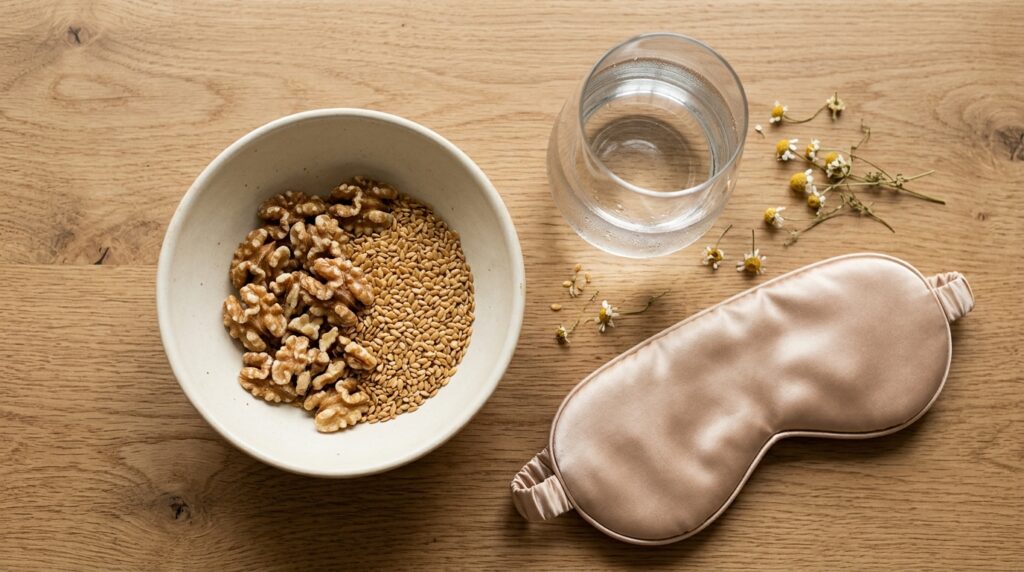
No skin or scalp regimen can make up for what is going on inside — skin and hair share their blood supply and diet.
What the research actually shows on diet and hair
Claims about hair growth tend to be exaggerated, and it’s important to be specific about what has actually been studied. The best-known supplement study in this area tested a marine-protein supplement (Viviscal) in women with self-perceived thinning hair:
- A 2012 trial with 15 women (10 on the supplement, 5 on placebo) over 180 days reported that the average number of terminal hairs in a small measured area rose from 271 to about 610 in the supplement group, while the placebo group stayed around 242–256.
- A 2015 trial with 60 women over 90 days reported significantly more terminal hairs and significantly less shedding than placebo.
Both trials were funded by the supplement’s maker, both were small, and both studied women with temporary thinning — not pattern hair loss. That is the whole evidence base for this supplement: two small, manufacturer-funded trials. It does not prove the supplement works for most people, and it does not justify a recommendation. No supplement, dose or brand is recommended in this guide. Keeping the hair you have is more achievable than regrowing hair from diet, and promises of dramatic regrowth from supplements should be viewed with scepticism.
For food itself: a balanced diet with enough protein, healthy fats and micronutrients supports general health, and that shows in skin and hair. Iron only helps hair when you are iron-deficient, and that needs a blood test first. Biotin is vitamin B7, and there is no good trial showing it helps hair in people who are not deficient. Zinc from food is fine; keep supplement intake below 25 mg a day. Too much vitamin A can itself cause hair shedding.
Sleep and stress affect both systems
Skin and hair repair activity is higher during deep sleep, which is one reason chronic short sleep is linked to dull skin and, over time, changes in shedding patterns. Most adults need at least 7 hours a night. Stress can make breakouts worse for some people, and a very stressful event can be followed by extra shedding two to three months later, with fullness usually returning over six to nine months. Treating sleep and stress directly usually helps both symptoms, because they are often two signs of the same thing.
Adjusting the plan by age and season
A consolidated plan still requires incremental changes from time to time; it is not a plan that should be overhauled every time something changes.
Age-related changes
As we get older, skin naturally produces less oil and less collagen, and we generally need more moisturisers and more barrier support, rather than a completely new plan. In the same way, hair gets drier and more brittle, and needs to be handled gently; like the skin, oil production of the scalp slows down.
Seasonal adjustments
In winter, cold dry weather removes moisture from skin and hair, and typically calls for more moisturising and soothing products, less cleansing, and more deep conditioning. In hot, humid conditions, there may be more oil production and sweat, which may call for lighter textures, washing as often as the scalp needs, and additional sun protection.
Mistakes that quietly undermine both skin and hair
Certain habits seem fine on their own but add up to obvious problems in the months that follow. Switching to a new cleanser, a new shampoo, and a new active ingredient all at once does not give skin and scalp time to adjust. Over-exfoliating and stacking strong actives weaken the barrier faster than most people realise.
There’s also a useful filter for product claims. In the U.S., products marketed for “hair growth” are classified as drugs, not cosmetics — the FDA’s guidance on telling cosmetic claims from drug claims lists “restore hair growth” as a claim that makes a product a drug. A shampoo that promises to regrow your hair is either a drug or it is breaking the rules.
When to get help
See a clinician promptly if you have a rash, blisters or open sores; swelling that lasts more than a day or two; pain or vision changes near the eyes; a scalp that is very itchy, red or swollen, or flaky patches elsewhere on the body; or hair shedding that is sudden, patchy, or does not settle after a few months.
Frequently asked questions
Q1: How many times per week is it okay to wash my hair?
Frequency is not a rule. If you have oily, fine, or straight hair, washing every day or almost every day is often right; if you have dry, curly, or coily hair, once a week or even once every three weeks can be right. Too much washing removes natural oils, and too little washing leaves a build-up that makes hair look flat and dull.
Q2: Is it possible to regrow thinning hair with diet?
No supplement has been shown to regrow hair reliably. The marine-protein supplement often cited was tested in two small, manufacturer-funded trials in women with temporary thinning hair: one with 15 women over 180 days and one with 60 women over 90 days. Both reported more terminal hairs and less shedding than placebo, but neither proves the supplement works for pattern hair loss, and neither justifies recommending it. Nutrition can help keep the hair you have; it cannot be relied on to regrow hair.
Q3: Can over-exfoliation cause skin to become worse?
Yes. More than once or twice weekly exfoliation can strip the skin barrier faster than it regenerates, leading to redness, sensitivity, and uneven texture. Chemical exfoliants, such as mild AHAs, are generally less abrasive than physical scrubs, but frequency matters more than the type.
Q4: Should my skin and hair care products change as I get older or as the seasons change?
Small differences — lighter products during the summer, more barrier protection after 30, and richer moisturisers during the winter — are part of normal long-term care and do not indicate failure of the original routine. Sudden changes over a season or a birthday usually irritate more than the gradual changes most dermatology guidance recommends.
Q5: Why does stress lead to both acne breakouts and hair loss?
Stress can make breakouts worse for some people, and a very stressful event can be followed by extra shedding two to three months later. Both are common responses to the same trigger, so treating sleep and stress directly usually helps both.
The bottom line
Since the foundation of the skin and the foundation of the hair are the same — hydration, nutrition, circulation and hormones — it is usually better to have a plan that works for both. The steps backed by the most research are regular and everyday: washing the scalp only as often as needed, cleansing gently, moisturising, protecting from the sun, and keeping the routine simple enough to repeat.
Sources: American Academy of Dermatology, 7 Rosacea skin care tips (patch-test method: apply a new product to a quarter-sized patch of skin on the inside of the arm for 7–10 days); American Academy of Dermatology, How to select anti-aging skin care products (broad-spectrum sunscreen, SPF 30 or higher, reapply every two hours outdoors); U.S. Food and Drug Administration, Is It a Cosmetic, a Drug, or Both? (Or Is It Soap?) (claims such as “restore hair growth” make a product a drug, not a cosmetic). This is a researched overview, not a hands-on review.