Researched overview. This guide is based on published dermatology guidance, not on hands-on product testing by BeautyKob. No product in this guide was tested by us.
Table Of Content
- Quick answer
- Know your hair before you buy tools
- The starter kit
- Wide-tooth comb
- Soft-bristle brush
- Manual scalp massager
- Soft scrunchies and clips
- Microfibre towel
- Satin or silk pillowcase
- How to use each tool for the first time
- Detangling for the first time
- Scalp care for the first time
- Styling for the first time
- The first month: a simple learning plan
- A daily and weekly rhythm
- The most common beginner mistakes
- Switching from heat to non-heat
- What tools cannot do
- Patch test first
- Frequently asked questions
- When to get help
- The bottom line
Quick answer
Hair tools matter more than most beginners realise. Shampoos and treatments get the attention, but the brush, comb and ties you use every day decide how much hair breaks, tangles and thins over time. The wrong tool — or the right tool used roughly — can undo months of careful hair care.
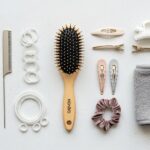
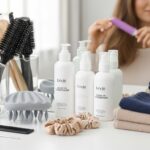
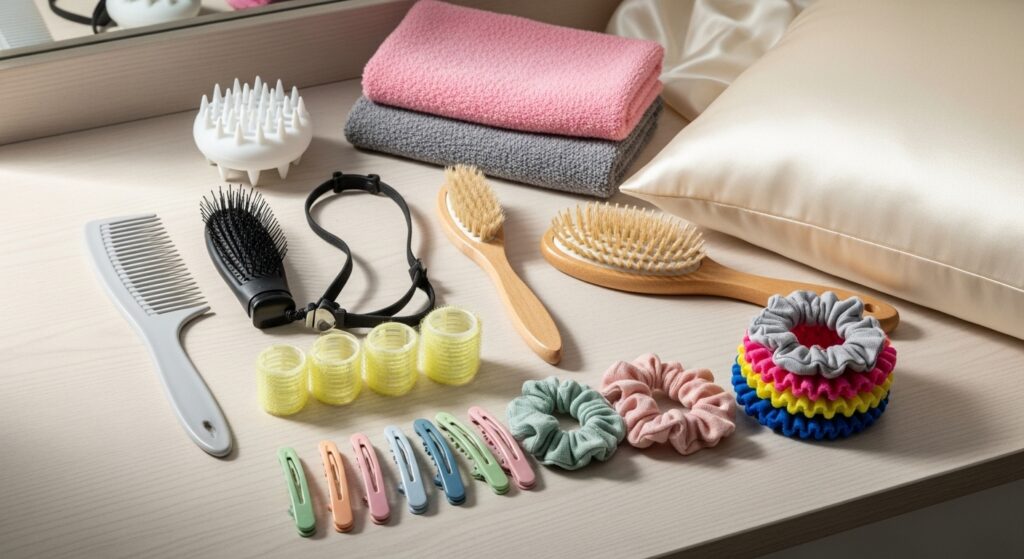
You do not need a drawer full of equipment to start. A beginner’s kit has six things: a wide-tooth comb, a soft-bristle brush, a manual scalp massager, a few soft scrunchies and clips, a microfibre towel and a satin or silk pillowcase. Learn those first. Everything else is optional until you know what your hair actually needs.
Tools cannot make hair grow, thicken it or repair damage. Damaged hair cannot be repaired — only trimming removes split ends. What tools can do is stop the daily damage that makes hair look worse: less breakage, fewer tangles, easier styling and a scalp that is clean and comfortable.
Know your hair before you buy tools
Before choosing anything, work out what kind of hair you have. The same tool behaves differently on different hair, and the most common beginner mistake is buying what worked for someone else’s hair.
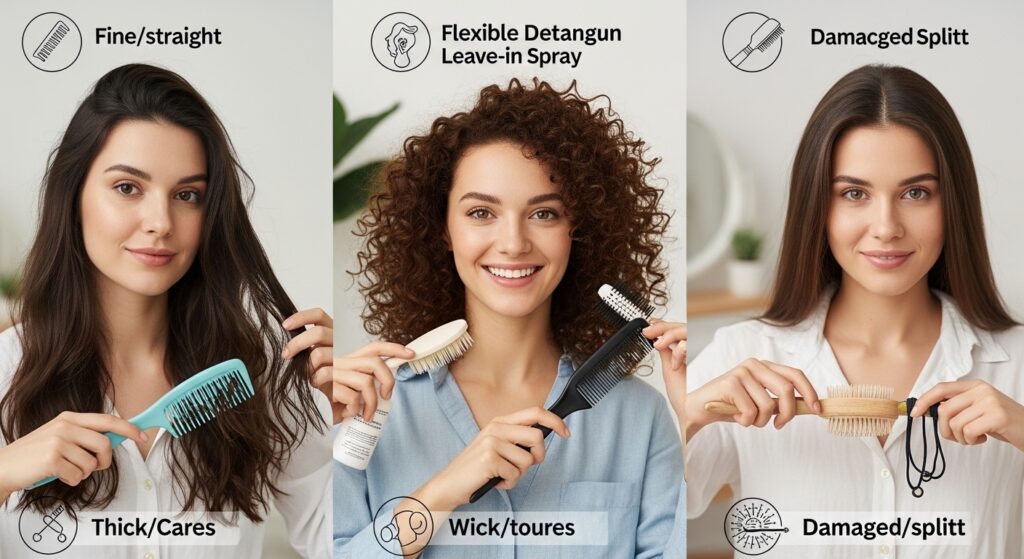
- Fine or straight hair: tangles easily, breaks easily, and goes flat when over-brushed. Use soft brushes and wide-tooth combs, and keep styles loose.
- Wavy hair: frizzes easily and loses its wave pattern when brushed hard. Use flexible detangling brushes or finger detangling, and a leave-in conditioner to ease the comb through.
- Curly or textured hair: needs the gentlest detangling of all, because the curl pattern catches and knots. Finger detangling first, then a wide-tooth comb, on damp hair with conditioner in it.
- Thick or coarse hair: needs a sturdy wide-tooth comb and a strong detangling brush to manage the density. Work in small sections so no single pass pulls too hard.
- Damaged or chemically treated hair: needs the lightest touch of all — soft tools, low tension, protective styles, and no heat until the hair has had time to recover.
Hair is made of keratin, a fibrous protein. Each strand has three layers: the cuticle on the outside, which protects the hair; the cortex, which gives it strength; and the medulla, which adds flexibility. When the cuticle is damaged, hair loses moisture, breaks more easily and looks dull. That is why gentle tools matter — they protect the cuticle instead of wearing it down.
Hair grows in cycles — anagen (growth), catagen (transition) and telogen (rest) — and each follicle runs its own cycle, so not all hairs grow at the same time. Hair grows about half an inch a month, and no tool changes that. Keeping length is mostly about not breaking what has already grown.
The starter kit
Six items. Buy these first and learn them well before adding anything else.
Wide-tooth comb
The single most useful tool for a beginner. Its teeth are spaced far apart, so it passes through tangles with less pulling than a fine comb or a brush. Use it for detangling and for spreading conditioner through the hair. Choose one with smooth, rounded teeth — rough or sharp edges catch and snap strands.
Soft-bristle brush
A soft-bristle brush smooths hair and spreads the scalp’s natural oils along the strands. It bends rather than dragging, which is why it suits beginners: it is hard to do much damage with it. Use it on dry or damp hair with light, short strokes. Replace it if the bristles become rough, sharp or broken.
Manual scalp massager
A soft manual scalp massager used during shampooing spreads shampoo more evenly and feels pleasant. It is a comfort and hygiene step, not a growth treatment: the evidence that scalp massage grows hair is very thin — the one study often cited had only 9 men and no control group — so do not buy one expecting new growth. Use light pressure for a few minutes, and stop if the scalp feels sore.
Soft scrunchies and clips
Fabric-covered ties and soft scrunchies hold a style all day with less friction than a thin elastic band. Smooth clips hold hair without sharp edges or a strong grip. Avoid tight elastics and metal clips that snag — they create pressure points that break strands.
Microfibre towel
A microfibre towel or hair wrap causes less breakage and frizz than an ordinary cotton towel, and is gentler on the hair shaft. Pat the hair dry rather than rubbing it.
Satin or silk pillowcase
A satin or silk pillowcase reduces friction overnight, which means fewer tangles and less breakage by morning. A loose braid or a silk scarf at night has the same effect.
How to use each tool for the first time
New tools feel awkward for a week or two. Go slowly, use a light hand, and let the tool do the work.
Detangling for the first time
Detangling is the first job and the one where most breakage happens. Wet hair is more fragile than dry hair, so never detangle soaking-wet hair roughly, and never detangle dry hair roughly either. The safest way is: damp hair, with conditioner or a leave-in conditioner in it, starting at the ends and working upward slowly. Hold the section above the tangle so the roots do not take the pull, and work the knot out a little at a time. Never force through a knot — forcing it breaks the strand.
Finger detangling is the gentlest method of all. Use your fingers first on delicate areas or fine sections, feeling for knots before a comb or brush touches them. It takes longer, but it causes the least breakage.
Scalp care for the first time
Use your fingertips, not your fingernails, on the scalp. Fingernails can scratch the scalp and cause irritation. The same applies to any scalp brush: it should have soft, rounded tips, never sharp points.
Massage for a few minutes with light, small circles. If you use a light oil, use a small amount and wash it out properly. If you use a new oil or treatment, patch test it first (see below). Do not leave heavy oils on fine hair — they weigh it down and make it look flat.
Styling for the first time
Non-heat styling is the safest place to start: rollers, clips, fabric ties, braids and twists let you style without heat and without much tension. Protective styles — loose braids, loose twists, low buns held with a soft scrunchie, silk or satin wraps at night — keep hair out of the way and reduce the friction and tension that cause daily damage.
Keep styles loose. Styles that pull at the roots — tight ponytails, tight braids, tight buns — can cause hair loss over time. This is called traction alopecia, and it happens when hair is pulled tightly for months or years. If a style hurts, pulls, or leaves bumps at the hairline, it is too tight. Vary where you part and tie the hair, and take styles down at night.
The first month: a simple learning plan
A routine you can keep will last. The first month is about learning the tools, not about results.
Week 1. Use only the wide-tooth comb, the soft brush and the microfibre towel. Detangle damp hair with conditioner in it, ends first. Wash the tools once at the end of the week with mild soap and warm water, and check for rough edges.
Week 2. Add the scalp massager during shampooing, a few minutes with light pressure. Add the satin or silk pillowcase at night. Notice how your hair feels in the morning — fewer tangles is the first sign the tools are working.
Week 3. Try one non-heat style: a loose braid overnight, or soft rollers for a couple of hours. Keep it loose. If a style pulls, take it down and try a looser version.
Week 4. Look at what has changed: less breakage when detangling, fewer tangles in the morning, easier styling. That is what progress looks like. Longer-term change — stronger-feeling hair, better texture — takes consistent care over months, not a fixed number of weeks.
A daily and weekly rhythm
Once the tools feel familiar, they settle into a short daily routine and a slightly longer weekly one.
Morning. Detangle gently with the wide-tooth comb or soft brush, starting at the ends and working upward. If the hair is damp, use a little water or leave-in conditioner first so the comb glides. Style loosely — a loose bun or a loose braid, held with a soft scrunchie. Avoid tight ties and clips that create points of stress at the roots.
Midday. Touch the hair as little as possible. Use soft clips if you need to keep it in place. A scarf or hat protects the hair from sun and wind — and a broad-spectrum sunscreen with SPF 30 or higher on the exposed parting protects the scalp itself, reapplied every 2 hours when you are outdoors. Do not pull at strands or roll them around your fingers — that weakens the roots and causes split ends.
Evening. Detangle gently before bed, then massage the scalp with your fingertips or a soft scalp brush for a few minutes. Wear a loose protective style and use the satin or silk pillowcase to reduce friction overnight.
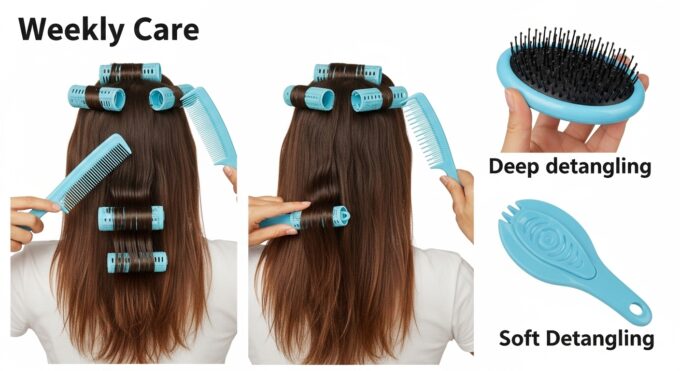
Weekly. Detangle thoroughly once or twice a week, section by section, ends first. Give the scalp a longer, gentle massage with or without a light oil. Wash brushes and combs with mild soap and warm water, check the bristles for rough edges, and replace any tool that snags.
The most common beginner mistakes
- Over-brushing. Stroking the hair too much breaks strands. Brush only as much as needed, and stop when the hair is smooth.
- Too much heat. Beginners often reach for straighteners and curling irons first. Heat damages weak strands. Keep heat low, brief and protected — or skip it while you are learning, and use non-heat styling instead.
- Ignoring the scalp. A dry or irritated scalp makes the hair weaker. Gentle scalp care is part of hair care, but it is not a growth treatment.
- Dirty or worn tools. Snagging and jagged edges increase breakage. Clean tools regularly and replace them when they wear out.
- Detangling the wrong way. Forcing through knots, detangling soaking-wet hair roughly, or starting at the roots all cause breakage. Ends first, damp hair, conditioner in — always.
- Tight styles. Pulling styles constrict the follicles and cause loss over time. Keep it loose.
- Buying everything at once. A drawer full of tools you do not know how to use is worse than six tools you use well. Learn the starter kit first.
Switching from heat to non-heat
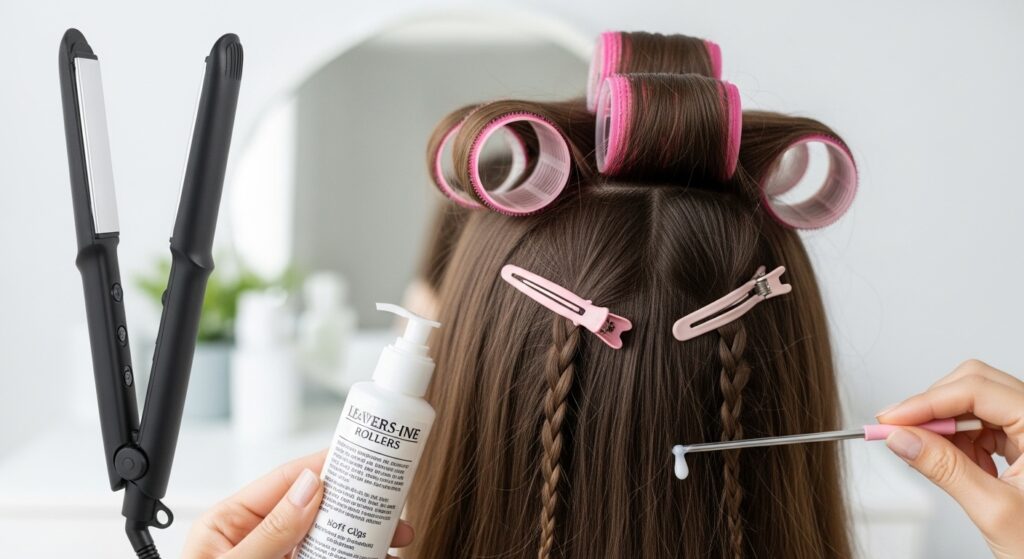
Many beginners start with heat tools because that is what they have seen used. Switching to non-heat styling protects the hair and prevents future damage, but it works best gradually: each week, replace one heat styling session with a non-heat one — rollers, twists, braids or soft clips — until you are using little or no heat. Use a leave-in conditioner to keep the hair smooth during the change. Non-heat styles take a little longer to set, so plan for that: rollers left in for a couple of hours or overnight, braids done the evening before.
What tools cannot do
This matters as much as what they can do. Tools cannot make hair grow faster, thicker or fuller — hair grows about half an inch a month, and no tool changes that. Tools cannot repair damaged hair — only trimming removes split ends. Tools cannot increase hair density — density is set by the number of follicles, which tools do not change. And scalp massage does not feed the follicles or unblock them: there is no good evidence that scalp build-up blocks follicles, or that clearing it promotes growth.
What tools can do is stop the daily damage that makes hair look worse: less breakage, fewer tangles, easier styling, and a scalp that is clean and comfortable. That is a real result, and it is enough.
Patch test first
Before you use a new oil, treatment or product on your hair or scalp — including any product used with a tool — patch test it. Apply a small amount to a quarter-sized patch of skin on the inside of your arm or the bend of your elbow, twice a day, for 7 to 10 days. If there is redness, itching or swelling, do not use it. A short test of a day or two can miss a reaction that takes several days to appear.
Frequently asked questions
What are the most useful beginner hair tools?
A wide-tooth comb, a soft-bristle brush, a manual scalp massager, non-heat rollers, soft scrunchies, sectioning clips, a microfibre towel and a satin or silk pillowcase. Start with those six and learn them well before adding anything else.
How often should a beginner use hair tools?
Detangle gently every day, and massage the scalp for a few minutes a day. Detangle thoroughly and care for the tools once or twice a week. More is not better — over-brushing and over-massaging cause damage.
Can hair look good without heat?
Yes. Non-heat rollers, braids, twists and soft clips can create waves, volume and curls with less breakage than heat styling. They take a little longer to set, so plan ahead.
Which tools suit my hair type?
Fine hair: soft brushes and finger detangling. Thick hair: wide-tooth combs and sturdy detangling brushes. Curly or textured hair: finger detangling first, then a wide-tooth comb on damp hair with conditioner. Damaged hair: the gentlest tools you have, low tension and protective styles.
When will I see results?
Less breakage and easier styling can show within a few weeks. Longer-term change — stronger-feeling hair, better texture — takes consistent care over months. There is no fixed date, and anyone who promises one is guessing.
When to get help
See a clinician promptly if you notice sudden hair loss, patchy bald spots, a painful or inflamed scalp, or scaling and sores that do not settle. Hair loss that starts suddenly, or shedding that is much heavier than usual for more than a few weeks, is worth a medical check — it can have causes a routine alone will not fix, such as thyroid problems, iron deficiency or a medication side effect. A dermatologist can identify causes a routine alone will not fix.
The bottom line
Start small: six gentle tools, learned well, used lightly, kept clean and never forced. Detangle damp hair with conditioner in it, ends first. Keep styles loose. Massage the scalp for comfort, not for growth. The tools do not change the hair. They stop the damage — and for a beginner, stopping the damage is the whole game.
Sources: American Academy of Dermatology, 7 Rosacea skin care tips (patch-test method: apply a new product to a quarter-sized patch of skin on the inside of the arm for 7–10 days); American Academy of Dermatology, How to select anti-aging skin care products (broad-spectrum sunscreen, SPF 30 or higher, reapply every two hours outdoors). This is a researched overview, not a hands-on review.