Researched overview. This guide is based on published dermatology guidance and makeup technique, not on hands-on product testing by BeautyKob. No product in this guide was tested by us, and no brand is recommended.
Table Of Content
- Quick answer
- Peach versus dusty rose: what to look for
- Six peach and dusty rose blush looks
- 1. Soft peach with a sheer everyday base
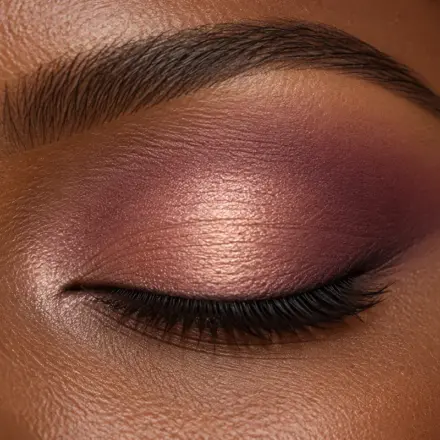
- 2. Dusty rose with softly defined eyes
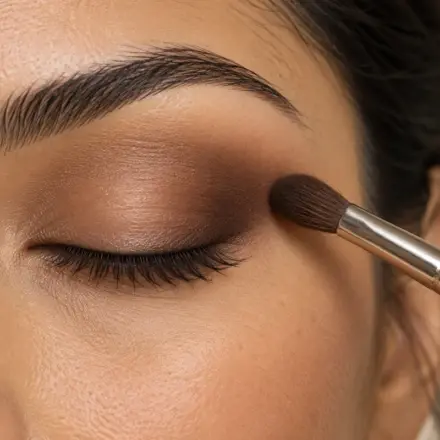
- 3. Peach blush with bronze-brown eyes
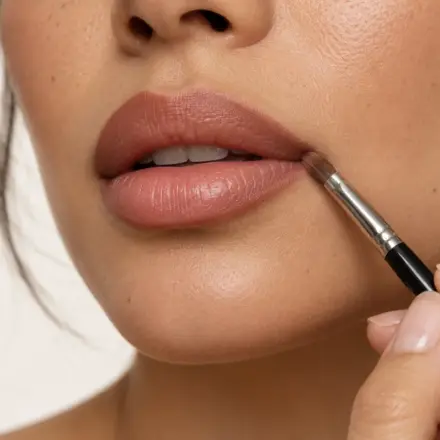
- 4. Rose blush with a deeper lip
- 5. Rich peach with minimal eye makeup
- 6. Deep dusty rose with a soft matte finish
- Choose placement by the effect you want
- How to apply without disturbing your foundation
- If the blush turns patchy
- If you applied too much
- Brush hygiene
- Sunscreen under makeup
- Patch test
- FAQ
- Summary
Quick answer
Peach and dusty rose blush can create different effects with the same simple technique. Peach adds a warmer, orange-pink note; dusty rose adds a muted rosy note that may lean neutral or cool. The shade name alone does not tell you how either will look on your cheeks. Depth, opacity and the color underneath matter just as much.
A quick way to choose: try peach when you want warmth alongside caramel, bronze or warm brown makeup. Try dusty rose when you want a muted flush alongside taupe, mauve or rosy lip colors. If either looks chalky, try a richer version of that color family rather than assuming the family is wrong for you.
If your cheek stings or reddens after using a blush, stop using it. This guide is general information, not medical advice.
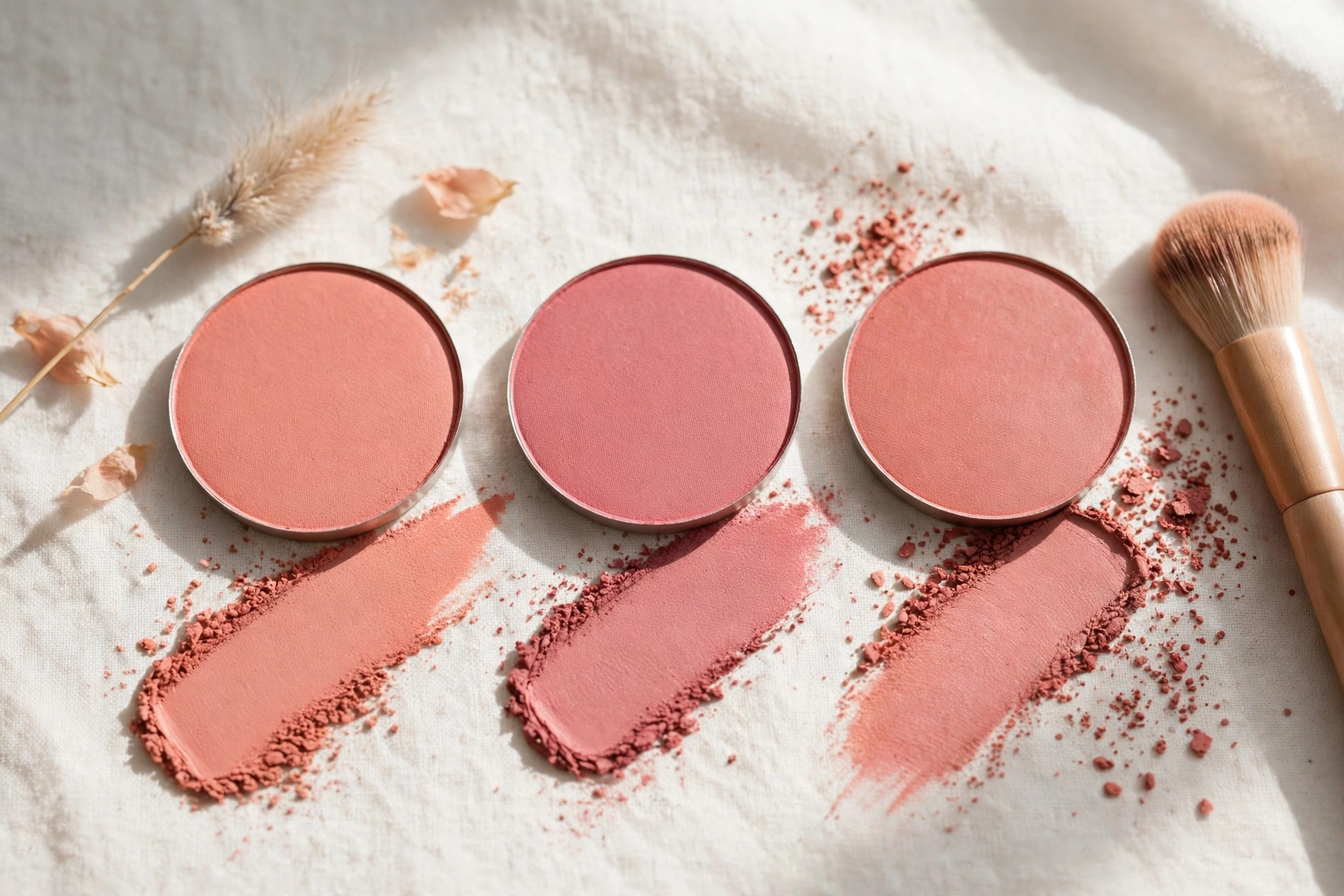
Contents: Peach versus dusty rose · Six looks · Placement by effect · Apply without disturbing foundation · Fix patchiness · Too much blush · Patch test · FAQ
Peach versus dusty rose: what to look for
Use the visible color, not just the shade name
| Choice | Look for | If it looks wrong |
|---|---|---|
| Soft peach | A muted orange-pink rather than an opaque pastel | If it looks orange, try a peach with more pink. |
| Rich peach or coral-peach | Enough depth to remain visible without a pale base | If too bright, use less product or choose a more muted shade. |
| Dusty rose | A muted rose with a depth close to the effect you want | If it looks gray, choose a less gray, more neutral rose. |
| Deep rose | A richer rosy or rose-berry tone | If too strong, sheer out a small amount before placing it. |
Warm shades are not restricted to warm complexions, and cool shades are not restricted to cool complexions. Use undertone as a starting point, then check the actual color in natural light. Undertone tests are rough guides only — the colour on your own cheek in daylight decides, not a wrist-vein or jewellery test. If your foundation is noticeably different from your neck, solve that mismatch first — the foundation shade guide in How to Choose the Right Foundation for Your Skin Tone covers it — before trying to correct it using blush.
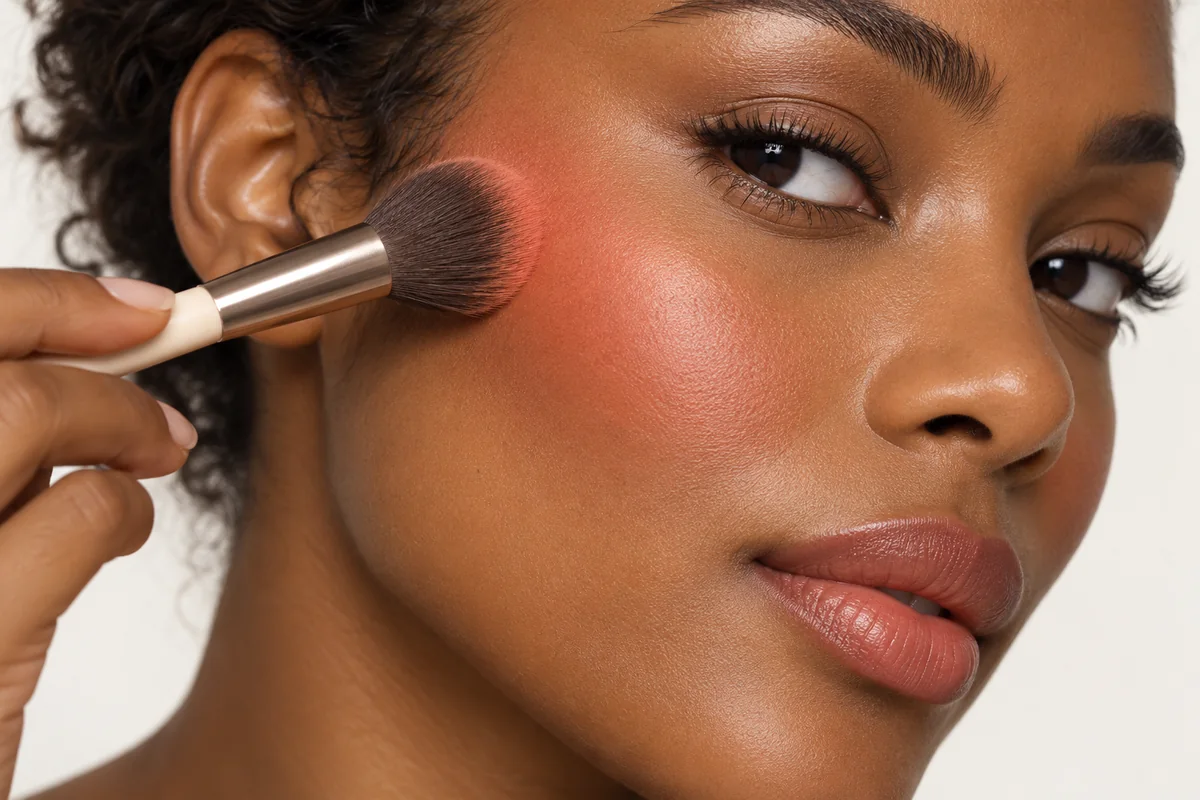
Six peach and dusty rose blush looks
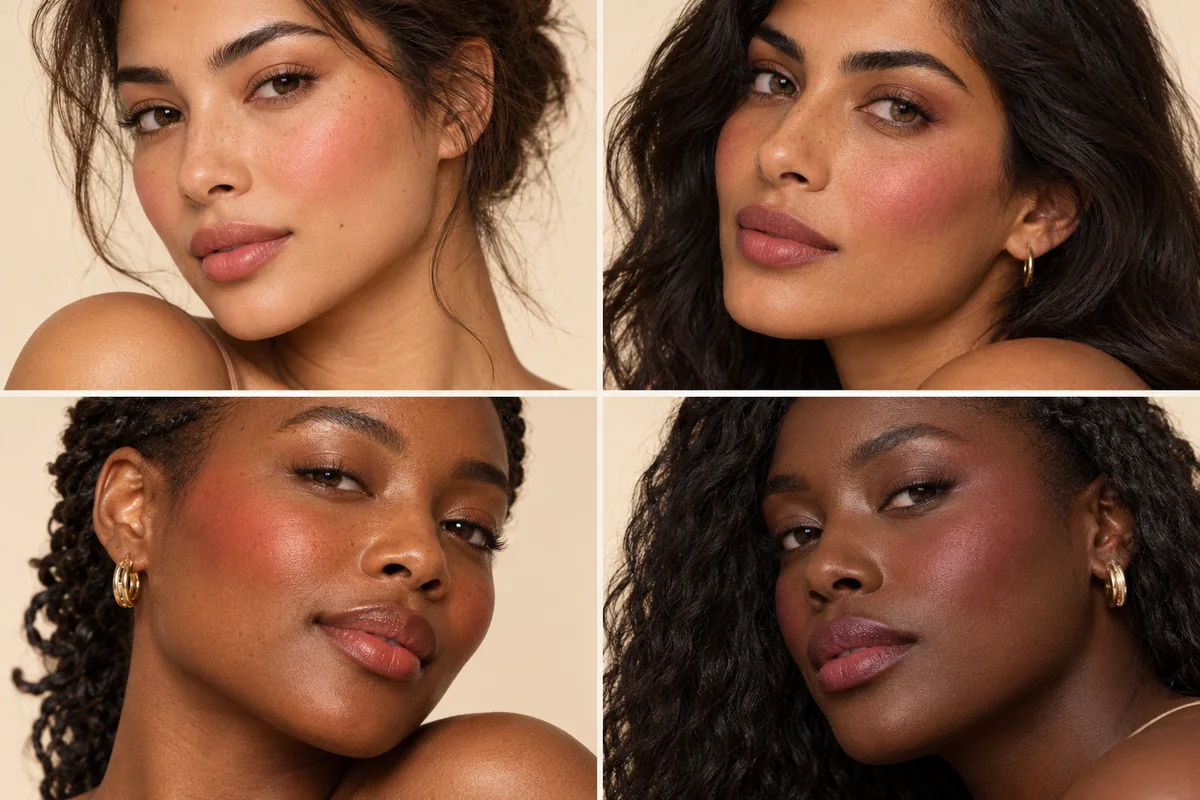
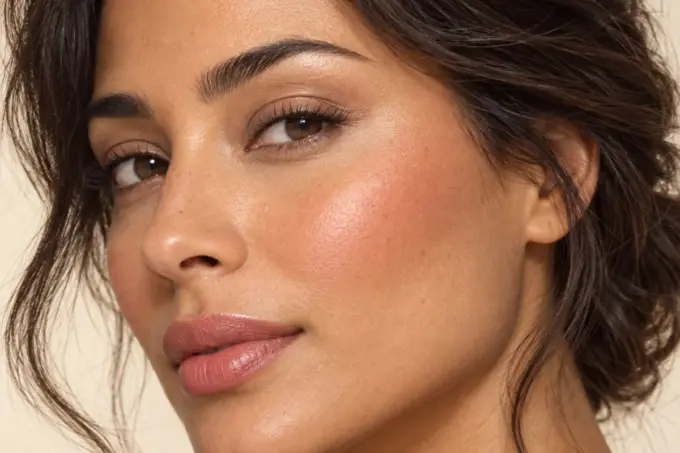
1. Soft peach with a sheer everyday base
Color and finish: Muted peach in a sheer cream or softly applied powder. Place a small amount on the outer part of the cheek and blend toward the temple. Keep the center of the face light. Add a tinted lip balm and neutral mascara for a simple, fresh-looking combination.
Make it yours: If the color disappears, build another thin layer. If it looks too orange, switch to a pinker peach rather than covering it with more foundation.
2. Dusty rose with softly defined eyes
Color and finish: Neutral dusty rose with a satin or soft matte finish. Blend from the mid-cheek outward without bringing the color too close to the nose. Pair with taupe or neutral brown eyeshadow and a rose-brown lip.
Make it yours: Choose a deeper rose if a pale dusty shade looks ashy. The muted effect comes from the color balance, not from making the blush as light as possible.
3. Peach blush with bronze-brown eyes
Color and finish: Warm peach with restrained shine. Keep blush on the cheeks and let a satin bronze lid be the reflective feature. A softly blended caramel lip can connect the warm tones without matching every product exactly.
Make it yours: If the full face feels too warm, use a more neutral lip or a less orange peach. Change one area first so you can see which adjustment helps.
4. Rose blush with a deeper lip
Color and finish: Sheer dusty or neutral rose. Start with less blush than you would normally use, then apply your deeper lip color before deciding whether to add more. This lets you balance the full face rather than making both features equally strong by default.
Make it yours: A berry-brown or rose-brown lip can work with this look. Keep the cheeks softly blended if you want the lip to remain the main feature.
5. Rich peach with minimal eye makeup
Color and finish: A richer peach or coral-peach that remains visible on your skin. Apply a thin layer, blend the border and leave the eyes simple. This makes the cheek color a deliberate focal point rather than a background step.
Make it yours: Avoid automatically reaching for an opaque pastel when you want a brighter cheek. A richer shade used lightly may give a clearer result with less visible pale pigment.
6. Deep dusty rose with a soft matte finish
Color and finish: A deeper muted rose or rose-berry. Place a small amount where you want the most color, then blend outward with a clean brush. Keep the outer boundary soft. A tinted balm and defined lashes can be enough to finish the face.
Make it yours: If you pick up too much powder, tap the brush before it reaches your skin. If using cream, work a small amount onto the brush first instead of stamping a thick dot directly onto the cheek.
Choose placement by the effect you want
For a higher, outward emphasis: Start on the upper outer cheek and blend toward the temple. Check the result with your face relaxed instead of holding a smile the whole time.
For a centered flush: Use a small amount over the middle of the cheek and soften the boundary outward. Keep the application controlled so the color does not spread farther toward the nose than you intended.
For a subtle cheek: Use the remaining product on your brush after testing it on the back of a clean hand. You can add more. Face-shape categories are optional styling tools; they do not determine one correct placement for your face.
How to apply without disturbing your foundation
- Let your base settle and check where it feels tacky.
- Pick up a small amount of blush. With strongly pigmented products, begin with less than you expect to need.
- Press cream blush gently rather than rubbing it across the cheek. For powder, use a soft brush and light pressure.
- Blend the boundary with a clean brush or the clean side of your sponge.
- Look at both cheeks in the same light before building another layer.
If the blush turns patchy
Check whether you applied a thick cream over a heavily powdered base, or a powder over an unevenly tacky surface. Let layers settle and test a thinner application. Formula compatibility varies, so try your combination on a small area rather than assuming every cream and powder pair will behave the same way.
If you applied too much
Soften the edge with a clean brush. If needed, lightly tap a little of your base over the strongest area, preserving the rest of your makeup. Avoid adding a heavy blanket of powder just to hide the blush.
Brush hygiene
Keep your blush brushes clean and do not share blush or applicators with anyone. A dirty brush can move oil and old product onto the cheek and make patchiness worse. Stop using a blush that stings, burns or leaves redness that does not settle, and do not keep using a product that smells different from when you bought it.
Sunscreen under makeup
Wear broad-spectrum sunscreen SPF 30 or higher every morning, as the last skincare step before makeup. Let it set for a few minutes before applying base and blush, so the blush has a dry surface to sit on. Reapply every two hours when outdoors. Sunscreen does not change how blush looks — a greasy or unset base does, so let each layer settle before the next.
Patch test
Before using a new blush more widely, patch test it: apply a small amount to the underside of your arm or the bend of your elbow, twice a day, for 7 to 10 days. If you get redness, itching, swelling or a rash, stop using it. A 24-hour test can miss an allergic reaction, which often takes several days to appear — that is why this guide uses the AAD 7–10 day patch-test method. This is the American Academy of Dermatology’s patch-test method. Patch testing on your arm does not guarantee a product will suit your cheek — if the cheek stings, burns or reddens, stop using the product even if the arm test was fine.
FAQ
Which should I choose, peach or dusty rose?
Try peach when you want warmth alongside caramel, bronze or warm brown makeup. Try dusty rose when you want a muted flush alongside taupe, mauve or rosy lip colors. If either looks chalky, try a richer version of that color family.
Does my undertone decide which blush suits me?
No. Undertone is a starting point, not a rule. Warm shades are not restricted to warm complexions, and cool shades are not restricted to cool complexions. Check the actual color on your own cheek in daylight.
Why does my blush look patchy?
Usually a thick cream over a heavily powdered base, or a powder over an unevenly tacky surface. Let layers settle, test a thinner application, and try the combination on a small area first — formula compatibility varies.
I applied too much. Do I have to start over?
Usually not. Soften the edge with a clean brush, and if needed lightly tap a little of your base over the strongest area. Avoid adding a heavy blanket of powder just to hide the blush.
Can blush replace foundation?
No. Blush adds color to the cheek; it does not even out skin tone or cover the way a base does. If your foundation is noticeably different from your neck, solve that mismatch first.
Summary
Peach adds warmth; dusty rose adds a muted flush. Choose by the visible color and depth, not by the shade name, and check the result on your own cheek in daylight. Place a small amount, blend the boundary, and build in thin layers rather than correcting with more product. Keep brushes clean, wear SPF 30+ under your makeup, and patch test a new blush before using it widely. No product in this guide was tested by us, and no brand is recommended.
Sources: AAD sunscreen guidance; AAD patch-test method; FDA eye cosmetic safety guidance (https://www.fda.gov/cosmetics/cosmetic-products/eye-cosmetic-safety). This is a researched overview, not a hands-on review.